PTFE labware releases samples easily because its surface is chemically nonpolar, weakly interacting, and exceptionally low in surface energy. Its fully fluorinated, linear carbon backbone presents a tightly packed fluorine-rich exterior with few opportunities for hydrogen bonding, dipole interactions, or strong dispersion forces. This produces a very low critical surface tension—about 18 dyn/cm—and a dynamic coefficient of friction commonly reported near 0.04, although the exact value depends on load, counterface, temperature, and test conditions.
The key is not friction alone: PTFE combines weak surface adhesion with low shear resistance. Liquids and solids therefore make limited molecular contact with the surface, while contacting PTFE interfaces can slide with relatively little force.
Why PTFE’s Molecular Structure Produces Low Friction
A fully fluorinated polymer backbone
PTFE consists of repeating –CF₂–CF₂– units. Fluorine atoms densely surround the carbon backbone, forming a fluorine-rich outer surface rather than exposing reactive hydrocarbon groups.
The strong carbon–fluorine bonds also give PTFE exceptional chemical stability. The surface is difficult for most laboratory chemicals to react with or chemically bond to.
A symmetric, electrically neutral surface
Individual carbon–fluorine bonds are polar, but the highly regular arrangement of fluorine atoms produces a surface with very little net permanent dipole character. As a result, PTFE offers few favorable sites for dipole–dipole attraction or hydrogen bonding.
Its low polarizability further limits dispersion and induction interactions compared with many less-fluorinated polymers. These weak intermolecular attractions reduce the force required to initiate and maintain sliding.
Linear, unbranched chain geometry
PTFE has a largely linear, unbranched molecular architecture. The absence of bulky side chains reduces geometric interference at contacting polymer interfaces and allows chains and surface regions to accommodate sliding without strong mechanical interlocking.
This contributes to PTFE’s low shear resistance, although the measured friction coefficient is also strongly influenced by surface finish, pressure, speed, temperature, and the material sliding against it.
Formation of a low-shear transfer layer
Under sliding contact, PTFE can transfer a thin PTFE-rich film to the opposing surface. This film can reduce direct interaction between the two bulk materials and help maintain low friction during continued motion.
This mechanism is particularly relevant to moving laboratory components such as stir-bar coatings, stopcocks, valves, and tubing interfaces.
Why Samples Do Not Adhere Easily
Low surface energy limits wetting
PTFE has a very low critical surface tension, approximately 18 dyn/cm or 18 mN/m. A liquid must effectively wet a surface before it can spread across it and establish extensive molecular contact.
Because many aqueous and organic liquids wet PTFE poorly, they tend to remain as discrete droplets or detach more readily during pouring, rinsing, or transfer.
Few sites for chemical adhesion
PTFE’s fluorine-covered surface contains no conventional hydrogen-bond donor sites and few favorable polar interaction sites. Biological materials, ionic compounds, and many organic residues therefore have limited opportunity to form strong specific interactions with the surface.
This reduces residue retention and supports more complete sample recovery, especially when the vessel is rinsed appropriately.
Weak van der Waals attraction
All condensed matter exhibits dispersion forces, but PTFE’s fluorinated surface has relatively low polarizability. The resulting attraction between PTFE and contacting molecules is weak compared with surfaces that present more polarizable or chemically interactive groups.
This is a major molecular reason PTFE resists adhesion, but it does not mean that adhesion is impossible. Surface roughness, contamination, concentrated residues, and mechanical entrapment can still cause retention.
Why Low Friction and Non-Stick Release Are Related—but Different
Friction concerns sliding
The coefficient of friction describes resistance to relative motion between contacting surfaces. PTFE’s low value makes it useful where a sample container, seal, stir bar, or valve component must move smoothly.
A reported dynamic coefficient near 0.04 is a useful reference value, not a universal specification. Real performance varies with the counterface and operating conditions.
Non-stick release concerns adhesion
Sample release depends primarily on the balance between adhesive forces, liquid wetting, mechanical interlocking, and the energy required to separate the sample from the surface. Low friction helps a residue slide, but it does not by itself explain why a liquid fails to spread or chemically attach.
The strongest explanation is therefore the combination of low surface energy, weak intermolecular interactions, and low interfacial shear strength.
What This Means for Laboratory Use
More complete fluid transfer
Low wettability and weak adhesion reduce the amount of sample left behind on vessel walls, tubing, stir bars, and other PTFE components. This is valuable when recovery matters, particularly in trace analysis or quantitative sample preparation.
PTFE can therefore support cleaner transfers and reduce the volume of rinse solvent needed to remove residual material.
Lower cross-contamination risk
Because residues are less strongly retained, PTFE labware is generally easier to rinse and clean than higher-energy surfaces. Its chemical inertness also reduces the likelihood that the material itself will react with the sample under appropriate operating conditions.
However, cleanliness still depends on the analytical method, cleaning protocol, surface condition, and any contamination introduced during manufacture or handling.
Smooth operation of moving components
In stir bars, stopcocks, valves, and tubing, low friction reduces torque and sliding resistance. This can improve ease of operation and reduce wear at contacting interfaces.
The benefit is mechanical as well as analytical: less sticking can make fluid handling more repeatable.
Understanding the Trade-offs
Low friction is condition-dependent
PTFE’s friction coefficient is not a fixed molecular constant. It changes with load, velocity, temperature, counterface material, surface roughness, and the presence of wear debris or liquid films.
Designs should therefore use application-specific friction and wear data rather than assuming that the nominal value of 0.04 will apply in every laboratory setup.
Non-stick does not mean zero retention
PTFE resists adhesion; it does not eliminate it under all conditions. Rough surfaces, scratches, dried or concentrated residues, particulate entrapment, and mechanical confinement can still produce measurable sample retention.
The easiest release is achieved when the PTFE surface remains clean, smooth, and undamaged.
Chemical inertness has practical limits
PTFE is highly chemically inert, but extreme temperatures, specialized reactive species, radiation exposure, and unsuitable processing conditions can alter performance. Labware should still be selected for the complete chemical and thermal environment.
“Low contamination” also requires attention to manufacturing residues, fillers, seals, and adjacent components—not just the PTFE itself.
Surface energy can complicate bonding
The same low surface energy that prevents sample adhesion also makes PTFE difficult to glue, coat, print, or bond. If a PTFE component must be permanently joined to another material, surface treatment or mechanical retention may be required.
How to Apply This to Your Project
PTFE’s molecular design is most valuable when low residue, chemical resistance, and smooth movement matter simultaneously.
- If your primary focus is sample recovery: Choose PTFE because its fluorine-rich, low-energy surface minimizes wetting and adhesive interactions, helping liquids and residues release during transfer and rinsing.
- If your primary focus is low-friction movement: Use PTFE for sliding or rotating components, but verify friction and wear under the actual load, speed, temperature, and mating-material conditions.
- If your primary focus is trace-analysis cleanliness: Use PTFE labware with a validated cleaning procedure and assess the entire assembly for contamination sources, not only the PTFE surface.
- If your primary focus is durable bonding or coating: Do not rely on PTFE’s non-stick surface without qualification; its low surface energy makes adhesion to PTFE inherently difficult.
PTFE’s low friction and non-stick behavior come from the same molecular foundation: a chemically inert, fluorine-covered surface that offers very few strong interactions and very little resistance to interfacial sliding.
Summary Table:
| Property | Molecular Basis | Effect |
|---|---|---|
| Low surface energy | Fully fluorinated backbone; critical surface tension ~18 dyn/cm | Poor wetting; liquids bead up and release easily |
| Weak intermolecular interactions | Symmetric, nonpolar surface; low polarizability | Reduced adhesion; fewer sites for hydrogen bonding |
| Low shear resistance | Linear chain geometry; transfer film formation | Dynamic coefficient of friction ~0.04; smooth sliding |
| Chemical inertness | Strong C-F bonds | No reaction with most chemicals; low contamination |
| Non-stick release | Combined low surface energy and weak adhesion | Minimal residue retention; easy cleaning |
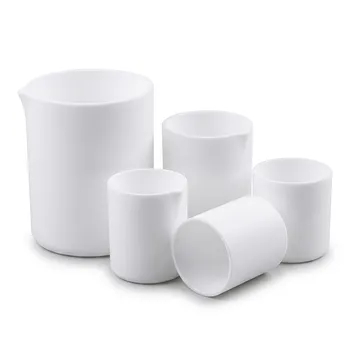
Enhance your lab's efficiency with KINTEK's high-performance PTFE and PFA labware. Our products are designed to exploit PTFE's low friction and non-stick properties for superior sample recovery and smooth operation. From beakers to custom machined parts, we offer a comprehensive range to meet your needs. Contact us today to find the perfect solution for your application and experience the KINTEK advantage!
Related Products
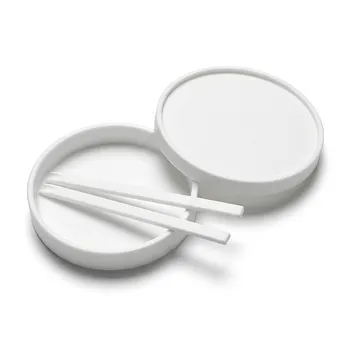
- Custom Polytetrafluoroethylene PTFE Petri Dishes 60mm Corrosion Resistant Low Background Labware
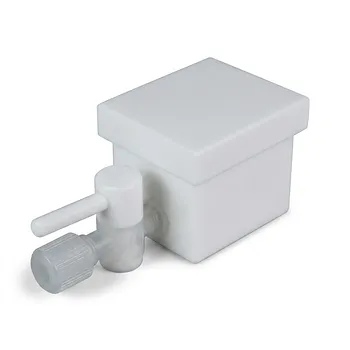
- Custom PTFE Laboratory Apparatus Corrosion Resistant Low Background Reaction Cells Precision CNC Fabrication
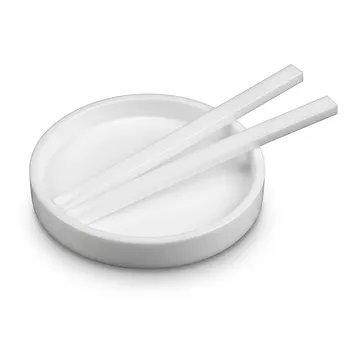
- Custom PTFE Petri Dishes Corrosion Resistant High Purity Low Background Labware
- Custom PTFE Petri Dish 120mm Diameter Corrosion Resistant Low Background High Purity Labware
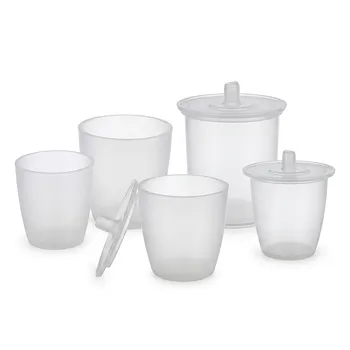
- High Purity PFA Crucible and Corrosion Resistant PTFE Beaker for Trace Analysis and Custom Laboratory Applications
People Also Ask
- Why are PTFE or PFA Petri dishes preferred for membrane casting? Ensure Damage-Free Recovery & Chemical Purity
- What types of labware or tools are commonly made from PTFE? Essential Chemically-Resistant Equipment for Your Lab
- What are the considerations for choosing PTFE or glass for Bi2O3/CeO2 synthesis? Ensure Purity and Precision.
- What are the key properties of PTFE that make it suitable for labware applications? Ensure Lab Integrity with Superior Material
- What types of PTFE labware are commonly available? Find the Right Tools for Your Lab