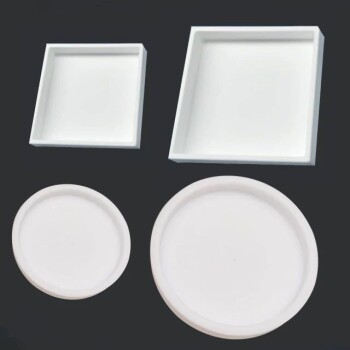
PTFE is suitable for these applications because it combines exceptionally low electrical losses with strong thermal endurance. Its low dielectric constant, approximately 2.1, reduces parasitic capacitance and signal distortion at high frequencies, while its very low dissipation factor minimizes energy converted into heat. PTFE also provides high dielectric strength, high volume resistivity, low flammability, and stable insulation performance across broad temperature and frequency ranges.
PTFE protects high-frequency signals by minimizing capacitance, leakage, and dielectric loss, while its thermal resistance and low heat-transfer behavior help insulate components and laboratory equipment exposed to elevated temperatures.
Why PTFE Performs Well Electrically
Low Dielectric Constant Reduces Signal Distortion
PTFE has an exceptionally low dielectric constant, approximately 2.1. This limits the amount of capacitance introduced by cable insulation, connectors, spacers, and other surrounding components.
Lower parasitic capacitance helps preserve signal timing, impedance characteristics, and waveform integrity in high-frequency circuits.
Very Low Dielectric Loss Limits Energy Dissipation
PTFE has a very low dissipation factor, also called the loss tangent. It absorbs and converts very little high-frequency electrical energy into heat.
This makes PTFE valuable in high-frequency cables, transmission lines, electronic shielding systems, and insulating coatings where dielectric losses can reduce efficiency and degrade signal quality.
High Dielectric Strength Resists Breakdown
PTFE can withstand strong electric fields without electrical breakdown. Its high dielectric strength allows it to isolate conductors and sensitive components even when systems operate at elevated voltages.
This property supports its use in wire coatings, connectors, cable assemblies, insulators, and high-voltage laboratory equipment.
High Volume Resistivity Limits Leakage
PTFE is highly non-conductive and has high volume resistivity. It therefore suppresses unwanted current leakage between conductors and helps maintain electrical isolation under changing operating conditions.
Its electrical stability across broad frequency and temperature ranges is particularly important where insulation must remain dependable near heat-generating or high-voltage components.
Hydrophobicity Supports Insulation in Humid Conditions
PTFE is strongly hydrophobic, so it absorbs very little moisture. This helps preserve its dielectric behavior in high-humidity environments, where absorbed water could otherwise increase leakage and alter capacitance.
The same environmental resistance complements PTFE's resistance to ultraviolet exposure and low flammability.
Why PTFE Handles Elevated Temperatures
Thermal Endurance Protects Equipment
PTFE can operate near heat-generating components without melting under ordinary high-temperature service conditions. Its thermal resistance makes it useful for electrically insulated heating elements, reaction equipment, microwave digestion vessels, tubing, gaskets, and laboratory fittings.
As a thermal insulator, PTFE can also reduce heat transfer through seals and insulating components. However, the actual surface temperature depends on geometry, contact area, heat source, pressure, and operating time.
Low Heat Transfer Helps Isolate Components
PTFE's relatively low thermal conductivity helps slow the movement of heat through a component. This can reduce heat flow between a heated apparatus and adjacent electrical, mechanical, or laboratory components.
Thermal insulation should not be confused with unlimited temperature capability: a PTFE part can still eventually reach the temperature of its surroundings if heat continues to enter the system.
Melting Range Defines a Critical Boundary
PTFE powders typically show melting peaks between approximately 317°C and 334°C, depending on material form and production history. Laboratory apparatus should be operated below the relevant thermal limit so the material retains its structural integrity, mechanical strength, and sealing performance.
In practice, the usable temperature limit is often lower than the melting peak because creep, deformation, pressure, thermal cycling, and dimensional stability can become limiting factors first.
Low Flammability Improves Safety
PTFE is characterized by low flammability and low smoke generation compared with many conventional insulating polymers. This is useful in laboratory, data-center, avionics, and other environments where electrical insulation may be located close to heat sources.
These safety characteristics do not eliminate the need for appropriate ventilation and temperature controls, particularly if PTFE is overheated.
How These Properties Translate Into Applications
High-Frequency Electronics
The combination of low dielectric constant, low loss tangent, high dielectric strength, and high resistivity makes PTFE effective in high-frequency cabling and insulation.
It minimizes signal attenuation and distortion while maintaining electrical separation between conductors.
Electrically Insulated Heating Equipment
PTFE can provide electrical isolation around heating elements and other energized components while tolerating substantial thermal exposure. Its resistance to moisture also helps maintain insulation performance in demanding laboratory environments.
Laboratory Reaction and Digestion Apparatus
PTFE is used in reaction vessels, tubing, gaskets, and microwave digestion equipment because it combines electrical insulation with thermal and chemical durability.
For these applications, designers must keep actual operating temperatures, pressure, load, and exposure time within the material's allowable limits.
Understanding the Trade-offs
Thermal Resistance Is Not Unlimited
PTFE's melting range is not a recommended continuous operating temperature. Prolonged exposure to high temperature can cause creep, loss of mechanical strength, deformation, or sealing failure before the material visibly melts.
Temperature ratings must therefore account for mechanical load and service duration, not just the nominal melting point.
Thermal Insulation Can Slow Cooling
Low heat transfer can be beneficial during operation, but it may also retain heat and slow cooldown. Components can remain hot after the heat source is removed, creating handling and thermal-management concerns.
Specialized Insulation Treatments Cost More
PTFE can be specially treated or combined with other designs when greater thermal insulation is required. These solutions can improve performance but generally increase material, manufacturing, and qualification costs.
Electrical Performance Depends on Design
PTFE's dielectric properties are strong, but system performance also depends on cable geometry, spacing, surface contamination, connectors, frequency, and installation quality. The material alone cannot guarantee a target impedance or signal-loss result.
Making the Right Choice for Your Goal
PTFE is most effective when its electrical and thermal properties are evaluated together with the complete operating environment.
- If your primary focus is high-frequency signal integrity: Use PTFE where its low dielectric constant and very low loss tangent can minimize capacitance, distortion, and high-frequency energy loss.
- If your primary focus is high-voltage isolation: Use PTFE for insulation, wire coatings, connectors, and spacers where high dielectric strength and high volume resistivity are required.
- If your primary focus is elevated-temperature laboratory apparatus: Use PTFE for vessels, tubing, gaskets, and insulated components while maintaining a conservative margin below its relevant thermal limit.
- If your primary focus is humid or exposed environments: Use PTFE where hydrophobicity, UV resistance, and stable insulation performance help limit moisture-related degradation.
PTFE is a strong choice when an application requires low-loss electrical insulation and reliable thermal performance within carefully controlled temperature and mechanical limits.
Summary Table:
| Property | Value / Characteristic | Benefit |
|---|---|---|
| Dielectric Constant | ~2.1 | Reduces signal distortion and capacitance |
| Dissipation Factor | Very low | Minimizes energy loss |
| Dielectric Strength | High | Resists electrical breakdown |
| Volume Resistivity | High | Limits current leakage |
| Thermal Stability | Up to 260°C continuous | Withstands elevated temperatures |
| Thermal Conductivity | Low | Provides thermal insulation |
| Flammability | Low | Enhances safety |
Looking for high-performance PTFE labware or custom components? At KINTEK, we specialize in PTFE and PFA products for demanding applications. From beakers and digestion vessels to custom-machined parts, our solutions deliver excellent electrical insulation and thermal resistance. Contact us today to discuss your requirements and receive a tailored quote.
Related Products
- Custom PTFE Filtration System Acid Resistant High Purity Semiconductor Grade Chemical Processing Filter
- High Corrosion Resistant PTFE Faucet Polytetrafluoroethylene Valve for Chemical Storage Drums and Fluid Transfer Systems Customizable Industrial Grade
- PTFE PFA Vacuum Filtration System Corrosion Resistant Customizable Shatterproof Laboratory Device
- PTFE Corrosion Resistant Filter with PFA Valve Connections and Integrated Sieve Plate
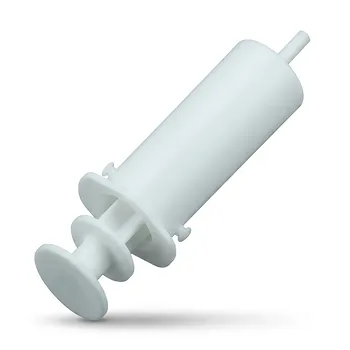
- High Temperature Chemical Resistant 50ml PTFE Syringe Customized Teflon Injector with Threaded Seal for Trace Analysis
People Also Ask
- What makes PTFE filtration systems advantageous for industrial and scientific use? Unmatched Chemical & Thermal Stability
- What sizes and pore options are available for PTFE filters? Choose the Right Filter for Your Application
- What steps are involved in selecting the proper PTFE filter? A 4-Step Guide to Optimal Filtration
- How does the hydrophobicity of PTFE filters benefit their use? Ensure Uninterrupted Gas Flow and Solvent Filtration
- What temperature resistance do PTFE filters offer? Unmatched Thermal Stability from -200°C to +260°C