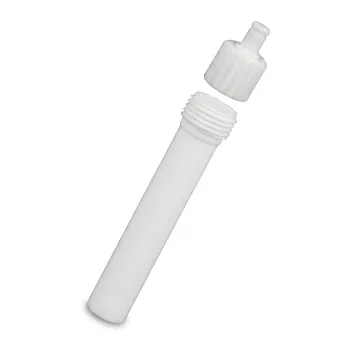
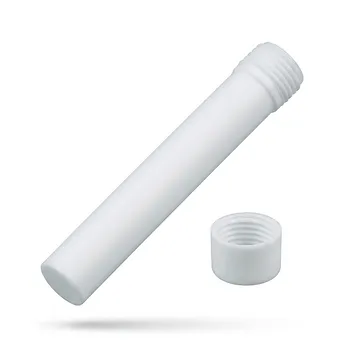
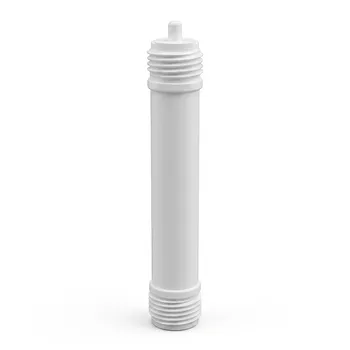
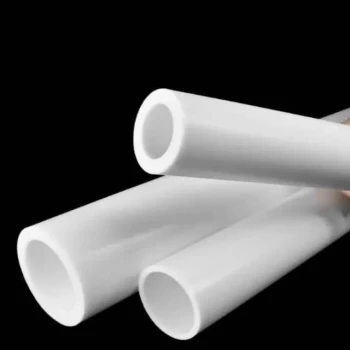
PTFE liners are the essential interface for microwave-assisted MOF synthesis. They provide a unique combination of microwave transparency and extreme chemical resistance. This allows electromagnetic energy to penetrate the reaction mixture directly, facilitating the rapid nucleation and crystal growth required for high-quality Metal-Organic Frameworks.
The core role of a PTFE liner is to provide a microwave-transparent, chemically inert, and pressure-resistant environment. It ensures that energy reaches the reactants efficiently while protecting the product from metallic contamination and the reactor from corrosive solvents.
Enabling Efficient Energy Transfer
Direct Microwave Penetration
Unlike metallic vessels that reflect electromagnetic waves, PTFE is microwave-transparent. This allows the energy to act directly on the polar solvents and precursors within the liner.
Rapid Kinetic Acceleration
Because the liner does not shield the reactants, the mixture heats volumetrically and almost instantaneously. This leads to fast nucleation rates, often reducing synthesis times from days to mere minutes compared to conventional heating.
Uniform Thermal Distribution
The transparency of the material helps eliminate thermal gradients. This results in a more homogenous reaction environment, which is critical for producing MOF crystals with uniform size and morphology.
Protecting Chemical Purity and Integrity
Prevention of Metal Ion Contamination
The liner acts as a physical barrier between the reaction and the autoclave's steel walls. This prevents the leaching of chromium, nickel, or iron into the mixture, ensuring the purity of the coordination process between metal ions and organic ligands.
Resistance to Aggressive Solvothermal Media
MOF synthesis often requires harsh polar organic solvents like DMF, ethanol, or strong alkaline solutions. PTFE's exceptional chemical inertness ensures the vessel does not degrade or participate in the reaction.
Non-Adhesive Surface Properties
PTFE has a very low surface energy, which prevents crystals from adhering to the container walls. This encourages nucleation on intended substrates and makes the recovery of the synthesized powder significantly more efficient.
Managing High-Pressure Environments
Withstanding Internal Vapor Pressure
As microwaves rapidly heat polar solvents above their boiling points, significant internal pressure is generated. High-performance PTFE liners are designed to deform slightly to seal the system, maintaining the high-pressure environment necessary for solvothermal growth.
Structural Stability at Temperature
While MOF synthesis often occurs at elevated temperatures, PTFE remains stable and maintains its mechanical integrity. This allows for a closed-system reaction where pressure and temperature can be precisely controlled to influence crystal porosity.
Understanding the Trade-offs
Temperature Limitations
While PTFE is highly resilient, it has a functional upper limit typically around 250°C to 260°C. Exceeding these temperatures can cause the liner to soften or "creep," potentially leading to seal failure or permanent deformation.
The "Memory Effect" of Porous Polymers
Despite its inertness, PTFE can sometimes absorb trace amounts of certain organic molecules or precursors. If not cleaned rigorously, this can lead to cross-contamination between different synthesis batches.
Pressure Sensitivity
Over repeated cycles of rapid heating and cooling, PTFE liners can experience mechanical fatigue. It is critical to inspect liners for thinning or discoloration, as a compromised liner can lead to the corrosion of the expensive outer microwave reactor shell.
Applying This to Your Synthesis Goals
How to Apply This to Your Project
To maximize the effectiveness of PTFE liners in your MOF synthesis, consider the following strategic approaches:
- If your primary focus is Maximum Purity: Always use a dedicated liner for specific MOF types (e.g., one for ZIFs, one for HKUST-1) to eliminate any risk of cross-contamination from absorbed precursors.
- If your primary focus is Rapid Scale-up: Prioritize thin-walled PTFE liners that maximize microwave penetration, but ensure they are housed in high-strength composite sleeves to handle the resulting pressure.
- If your primary focus is Reusability and Cost: Implement a rigorous cleaning protocol using a "blank" microwave run with the primary solvent to leach out any trapped impurities from the PTFE matrix.
By understanding the synergy between microwave transparency and chemical inertness, you can leverage PTFE liners to produce MOFs with superior crystallinity and structural definition.
Summary Table:
| Feature | Role in MOF Synthesis | Key Benefit |
|---|---|---|
| Microwave Transparency | Allows direct energy penetration | Rapid nucleation & faster reaction times |
| Chemical Inertness | Prevents metal ion leaching | Ensures high purity & solvent resistance |
| Non-Stick Surface | Prevents crystal wall adhesion | High powder recovery & easy cleaning |
| Pressure Resistance | Maintains solvothermal conditions | Controlled crystal growth and porosity |
| Thermal Stability | Operates up to 260°C | Reliable performance in high-heat environments |
Elevate Your Synthesis with KINTEK Fluoropolymer Excellence
Maximize the precision of your Metal-Organic Framework research with KINTEK’s high-performance PTFE and PFA laboratory solutions. Whether you are conducting microwave-assisted synthesis or complex trace analysis, we provide the specialized tools necessary for absolute purity and chemical resistance.
From essential microwave digestion vessels, high-purity beakers, and digestion tubes to custom-engineered CNC-machined parts and bespoke laboratory setups, KINTEK manufactures a comprehensive range of labware tailored to your specific needs. Our expertise extends from everyday consumables—like stirring bars and tubing—to advanced fluid transfer components and reaction apparatus.
Ready to optimize your lab’s efficiency and performance?
Contact KINTEK today to discuss your custom requirements or high-volume orders. Our focus on high-performance fluoropolymers ensures you receive the most durable and inert equipment for your most challenging applications.
References
- Uzba Dehloon, Ateeq-ur Rehman. Metal-organic-frameworks (MOFs) advanced synthetic strategies and applications, including light emitting diodes, solar cells and photodetectors. DOI: 10.1515/revic-2024-0105
This article is also based on technical information from Kintek Knowledge Base .
Related Products
- High Purity PTFE Microwave Digestion Vessel Replacement Liner for Acid Sample Preparation and Trace Analysis
- High Purity TFM Microwave Digestion Vessels PTFE Acid Evaporation Liners Domestic GT-400 Equivalent Laboratory Reaction Containers
- High Purity PTFE Microwave Digestion Vessel for Soil and Food Analysis Acid Resistant Fluoropolymer Sample Preparation Liners
- Custom TFM Reaction Vessel with Stainless Steel Jacket and PTFE Inner Cup for High Corrosion Resistance
- PTFE Lined High Pressure Digestion Vessel 50ml High Temperature Hydrothermal Synthesis Tank
People Also Ask
- How does the dielectric property of PTFE benefit microwave-assisted digestion? Unlock Rapid and Uniform Sample Heating
- Why is PTFE preferred for microwave-assisted Ln-MOF synthesis? Key Benefits for Purity & Speed
- What are the advantages of using microwave digestion vessels for environmental analysis? Boost speed and sample accuracy.
- What safety features are commonly integrated into microwave digestion vessels? Ensuring High-Pressure Laboratory Safety
- What are the advantages of using microwave digestion vessels? Optimize EG@MO synthesis with superior thermal control.