Knowledge Electrode What is the importance of an Ag/AgCl reference electrode in HER? Mastering Precise Overpotential Measurements
Author avatar

Tech Team · Kintek

Updated 3 months ago

What is the importance of an Ag/AgCl reference electrode in HER? Mastering Precise Overpotential Measurements


The silver/silver chloride (Ag/AgCl) reference electrode serves as the essential "scientific ruler" for electrochemical characterization. It provides a fixed, highly stable potential baseline that allows researchers to isolate and measure the exact electrical potential of the working electrode. Without this constant benchmark, it would be impossible to accurately calculate the overpotential—the primary metric for determining the efficiency and activity of a Hydrogen Evolution Reaction (HER) catalyst.

The Ag/AgCl reference electrode provides a known and reproducible potential baseline, enabling the precise measurement of working electrode shifts under current load. This stability is the foundation for calculating HER overpotential and comparing the intrinsic activity of different catalytic materials.

The Foundation of Precise HER Measurement

Establishing a Reliable Potential Baseline

In electrochemical testing, the Ag/AgCl reference electrode acts as a constant point of origin on a voltage scale. Because its internal chemical environment is controlled, its potential remains fixed even as the reaction conditions change.

This stability allows for the precise calculation of overpotential, which is the difference between the theoretical potential and the actual potential required to drive the HER. By providing a reliable "zero point," it ensures that the measured performance reflects the catalyst's properties rather than system fluctuations.

Isolating the Working Electrode

A standard electrochemical cell uses a three-electrode system to separate the functions of current delivery and potential measurement. The current flows between the working electrode and the counter electrode, which often causes the counter electrode to "polarize" or shift in potential.

By using an Ag/AgCl reference electrode, researchers can monitor the redox characteristics of the working electrode (such as NiO or ZnSe/rGO) without interference from the counter electrode. This isolation is critical for identifying the specific potential windows where hydrogen evolution begins.

Enhancing Data Accuracy Across Conditions

Monitoring Activity Under Current Density

Evaluating HER activity requires measuring how the potential of a catalyst changes as the current density increases. The Ag/AgCl electrode stays stable under these varying loads, allowing the user to track the working electrode's response with high fidelity.

This precision is essential for determining Tafel slopes and exchange current densities. These values provide deep insight into the reaction kinetics and the mechanism by which hydrogen is produced on the catalyst surface.

Stability in Diverse Electrolytes

The Ag/AgCl electrode is favored for its robustness in various environments, including alkaline electrolytes and simulated seawater. It maintains a constant potential baseline over long intervals, which is necessary for long-term stability testing.

In specialized applications, such as high-temperature deep-well simulations, a jacketed salt bridge can be used to protect the Ag/AgCl electrode from thermal drift. This ensures that even in extreme conditions, the potential measurements remain referenced to a reproducible standard.

Understanding the Trade-offs

Risk of Chloride Contamination

The primary limitation of the Ag/AgCl electrode is the potential for chloride ion leakage into the test electrolyte. In some sensitive HER systems, chloride ions can adsorb onto the catalyst surface and poison the active sites, leading to an underestimation of the material's true activity.

Thermal and Concentration Sensitivity

While generally stable, the potential of an Ag/AgCl electrode is sensitive to changes in temperature and the concentration of the internal filling solution (usually saturated KCl). Any evaporation or temperature fluctuation can cause a potential drift, which introduces errors into the overpotential calculation if not properly managed or compensated for.

Liquid Junction Potentials

When the reference electrode is placed in an electrolyte different from its internal solution, a liquid junction potential is created at the interface. This small, additional voltage must be accounted for or minimized using a salt bridge to ensure the most accurate translation of data to the Reversible Hydrogen Electrode (RHE) scale.

How to Apply This to Your Project

Making the Right Choice for Your Goal

To ensure the highest quality HER data, your use of the Ag/AgCl reference electrode should be tailored to your specific testing environment.

  • If your primary focus is long-term stability: Regularly check and replenish the internal filling solution to prevent potential drift caused by concentration changes.
  • If your primary focus is high-temperature testing: Utilize a jacketed salt bridge with a circulating cooling medium to keep the reference electrode at a stable room temperature.
  • If your primary focus is chloride-sensitive catalysts: Use a double-junction reference electrode or a salt bridge filled with a non-interfering electrolyte to prevent chloride contamination of your working solution.
  • If your primary focus is reporting standardized data: Always calibrate your Ag/AgCl electrode against a Master electrode and convert your results to the RHE scale to allow for universal comparison.

By maintaining a stable and well-calibrated reference potential, you ensure that your HER measurements are both scientifically valid and comparable across the global research community.

Summary Table:

Feature Importance in HER Evaluation Best Practices for Accuracy
Stable Baseline Enables precise calculation of overpotential and catalyst efficiency. Calibrate against a Master electrode & convert to RHE scale.
Electrode Isolation Measures working electrode characteristics without counter electrode interference. Use a standard three-electrode system for clear redox tracking.
Kinetic Insights Tracks potential changes under varying current densities (Tafel slopes). Ensure filling solution is replenished to prevent potential drift.
Environmental Robustness Maintains stability in alkaline electrolytes and simulated seawater. Use jacketed salt bridges for high-temperature applications.
Contamination Control Prevents chloride ions from poisoning sensitive HER catalysts. Implement double-junction electrodes or non-interfering bridges.

Elevate Your Electrochemical Research with KINTEK

Precise HER characterization demands uncompromising equipment quality. KINTEK specializes in high-performance fluoropolymer laboratory supplies designed to withstand the most rigorous electrochemical environments. From everyday essentials like PTFE and PFA beakers, reagent bottles, and digestion tubes to specialized sample prep tools, filtration kits, and fluid transfer components, we provide the purity your data depends on.

Our expertise extends to advanced research setups, including custom-machined electrochemical cells, battery testing fixtures, and hydrothermal synthesis liners. Backed by end-to-end custom CNC fabrication, KINTEK can deliver everything from complex, non-standard machined parts to high-volume orders—all crafted from premium fluoropolymers to eliminate contamination risks.

Ready to optimize your lab setup for superior HER results? Contact us today to discuss your project requirements!

References

  1. M. Manikandan, Subrata Karmakar. Engineering NiO/g-C₃N₄ and NiO/rGO composites for dual applications in electrochemical water splitting and energy storage. DOI: 10.1038/s41598-025-20713-3

This article is also based on technical information from Kintek Knowledge Base .

Related Products

People Also Ask

Related Products

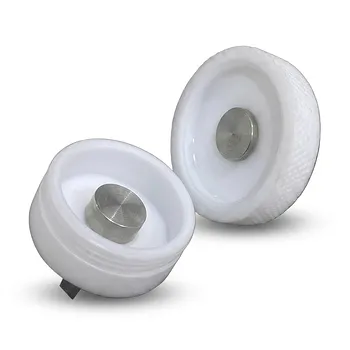
Corrosion Resistant PTFE Coin Cell Battery Testing Clamps and Acid Proof Custom Fluoropolymer Battery Fixtures

Corrosion Resistant PTFE Coin Cell Battery Testing Clamps and Acid Proof Custom Fluoropolymer Battery Fixtures

Engineering-grade PTFE coin cell battery testing clamps offer unparalleled acid resistance and electrical insulation for high-precision electrochemical research. These customizable fixtures prevent stray currents and electrolyte corrosion, ensuring reliable data acquisition in demanding laboratory environments across global industrial battery sectors.

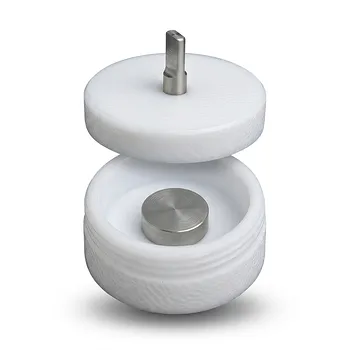
Acid Resistant PTFE Button Cell Battery Test Fixture Customizable Machining High Purity Electrochemical Testing Clamp

Acid Resistant PTFE Button Cell Battery Test Fixture Customizable Machining High Purity Electrochemical Testing Clamp

High-purity PTFE button cell testing fixtures provide exceptional acid resistance and electrical insulation for precise electrochemical analysis. These customizable clamps eliminate stray currents and prevent electrolyte corrosion during rigorous battery research and development processes in demanding labs.

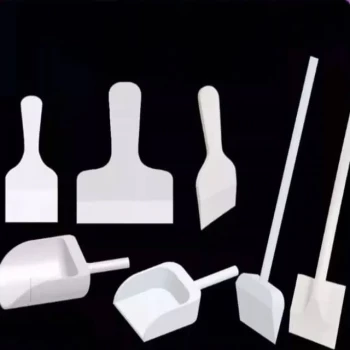
Customizable PTFE Scrapers and Shovels for Demanding Applications

Customizable PTFE Scrapers and Shovels for Demanding Applications

High-purity PTFE scrapers & shovels for labs, semiconductor & chemical industries. Chemical-resistant, non-stick, durable tools for precise material handling. Custom solutions available.

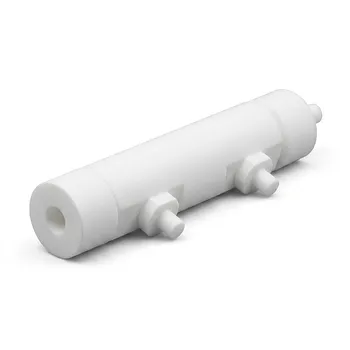
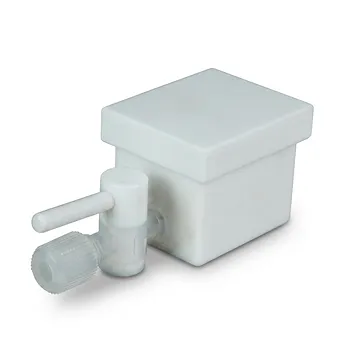
Custom PTFE Electrolytic Cell Corrosion Resistant Low Background Reaction Vessel with Inlet Outlet Ports

Custom PTFE Electrolytic Cell Corrosion Resistant Low Background Reaction Vessel with Inlet Outlet Ports

Discover professional high-purity custom PTFE electrolytic cells designed for precision electrochemical analysis. Featuring extreme corrosion resistance and low background interference, these reaction vessels offer customizable inlet/outlet ports for seamless integration into demanding industrial or laboratory fluid systems.

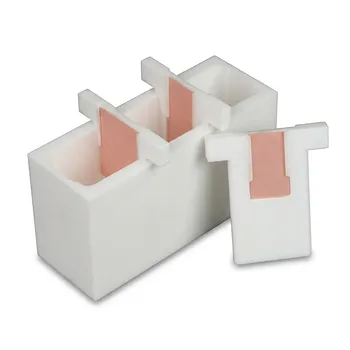
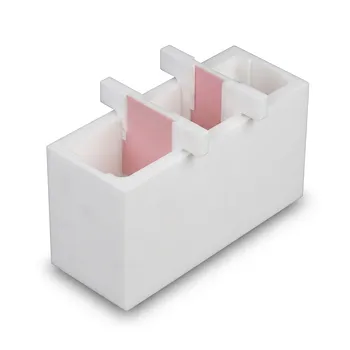
White PTFE Electrolytic Cell with Movable Slider and Insulated Lid for Fluorine Corrosion Resistance

White PTFE Electrolytic Cell with Movable Slider and Insulated Lid for Fluorine Corrosion Resistance

Engineered for extreme chemical resistance this customizable PTFE electrolytic cell features a movable slider and superior insulation ideal for fluorine rich environments ensuring high purity results in semiconductor and electrochemical research applications and advanced manufacturing.

Corrosion Resistant PTFE Electrochemical Cell for New Energy Research Inert Insulating Customizable Lab Reaction Vessel

Corrosion Resistant PTFE Electrochemical Cell for New Energy Research Inert Insulating Customizable Lab Reaction Vessel

Professional PTFE electrochemical cell designed for new energy research featuring exceptional chemical inertness and corrosion resistance. Available in 400ml and 1000ml capacities with full customization for advanced battery testing and high-purity trace analysis delivering reliable industrial performance and extreme durability.

Custom PTFE Corrosion Resistant Insulating Electrophoresis Reaction Cell with Septum and Valves for Low Background Trace Analysis

Custom PTFE Corrosion Resistant Insulating Electrophoresis Reaction Cell with Septum and Valves for Low Background Trace Analysis

Optimize trace analysis with our custom PTFE corrosion-resistant reaction cells. Featuring insulating electrophoresis designs with integrated septums and valves, these high-purity systems ensure low background and zero metal precipitation for demanding industrial laboratory and chemical research applications today.

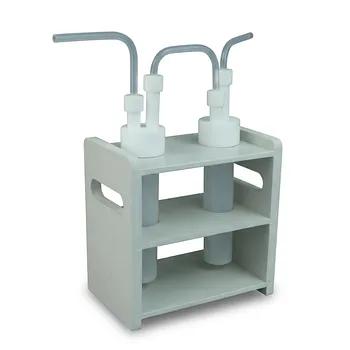
Custom PTFE Acid Resistant Support Rack Multi Hole PFA Hydrogen Absorption System Bracket

Custom PTFE Acid Resistant Support Rack Multi Hole PFA Hydrogen Absorption System Bracket

Professional custom PTFE and PFA support racks specifically engineered for high-purity hydrogen absorption systems. These acid-resistant multi-hole brackets ensure superior chemical stability, gas integrity, and long-term durability in demanding industrial electrolysis, laboratory research, and fuel cell testing environments.

High Purity Custom PTFE Reaction Cell Electrolytic Tank for Semiconductor and Polysilicon Industrial Applications

High Purity Custom PTFE Reaction Cell Electrolytic Tank for Semiconductor and Polysilicon Industrial Applications

Discover custom PTFE reaction cells and electrolytic tanks designed for semiconductor and polysilicon manufacturing. These corrosion-resistant units ensure high purity in trace analysis and chemical processing, offering unmatched durability and thermal stability for demanding laboratory and industrial applications.

High Purity PFA Laboratory Rectangular Tank Corrosion Resistant Acid Cleaning Bath for Silicon Wafer Processing and Trace Analysis

High Purity PFA Laboratory Rectangular Tank Corrosion Resistant Acid Cleaning Bath for Silicon Wafer Processing and Trace Analysis

This high-purity PFA laboratory rectangular tank offers exceptional chemical resistance and thermal stability for semiconductor wafer cleaning and ultra-trace analysis, featuring a seamless design to prevent contamination while ensuring long-term durability in demanding industrial and research environments. Reliable custom solutions.

Customizable Graphite Aluminum Alloy Electric Acid Evaporation System for Laboratory Digestion Pretreatment with Multi Hole Configurations

Customizable Graphite Aluminum Alloy Electric Acid Evaporation System for Laboratory Digestion Pretreatment with Multi Hole Configurations

Maximize laboratory efficiency with our customizable graphite and aluminum alloy electric acid evaporation system. Engineered for high-purity trace analysis, this unit offers multi-hole configurations with bespoke dimensions to meet your specific industrial digestion requirements and performance standards.

Square PTFE Electrochemical Cell for Silicon Wafer Processing and Hydrofluoric Acid Resistance in Semiconductor and New Energy Research

Square PTFE Electrochemical Cell for Silicon Wafer Processing and Hydrofluoric Acid Resistance in Semiconductor and New Energy Research

This high-purity PTFE square electrochemical cell offers exceptional hydrofluoric acid resistance for silicon wafer processing in semiconductor and new energy sectors, featuring fully customizable dimensions and rigorous bespoke engineering to meet specific demanding laboratory research and industrial production requirements.

Corrosion Resistant Heating Plate with Modified PTFE Coating 400x300mm Acid Resistant Laboratory Hot Plate Customizable Heating Solution

Corrosion Resistant Heating Plate with Modified PTFE Coating 400x300mm Acid Resistant Laboratory Hot Plate Customizable Heating Solution

Optimize your laboratory's thermal processing with our high-performance 400x300mm anti-corrosion heating plate featuring modified PTFE coating. Engineered for extreme chemical resistance and uniform temperature distribution, this customizable unit ensures reliable, long-term performance in harsh environments.

Corrosion Resistant Hot Plate with Modified PTFE Coating and Optional Heating Rack for Chemical Laboratory Custom Solutions

Corrosion Resistant Hot Plate with Modified PTFE Coating and Optional Heating Rack for Chemical Laboratory Custom Solutions

Engineered for extreme chemical environments, this high-performance corrosion resistant hot plate features a modified PTFE coating and custom dimensions. Perfect for acid digestion and trace analysis, offering optional heating racks and bespoke configurations to optimize laboratory workflows.

High Purity PFA Rectangular Laboratory Acid Cleaning Tank Corrosion Resistant Silicon Wafer Washing Bath

High Purity PFA Rectangular Laboratory Acid Cleaning Tank Corrosion Resistant Silicon Wafer Washing Bath

High-purity PFA rectangular laboratory tank designed for acid cleaning and silicon wafer processing. This corrosion-resistant fluoropolymer sink offers extreme chemical inertness and thermal stability, ensuring contaminant-free environments for ultra-trace analysis and semiconductor manufacturing applications.

High Purity PTFE Crucible with Lid Corrosion Resistant Trace Analysis Labware for Strong Acid and Base Applications

High Purity PTFE Crucible with Lid Corrosion Resistant Trace Analysis Labware for Strong Acid and Base Applications

Optimize your laboratory trace analysis with this high-purity PTFE crucible featuring zero heavy metal leaching and absolute resistance to strong acids and bases. Precision engineered for demanding industrial chemical processing and high-performance sample digestion in specialized research environments worldwide now.

Laboratory PFA Rectangular Acid Soaking Tank Silicon Wafer Cleaning Bath Corrosion Resistant High Purity Vessel

Laboratory PFA Rectangular Acid Soaking Tank Silicon Wafer Cleaning Bath Corrosion Resistant High Purity Vessel

High purity PFA rectangular tank engineered for semiconductor silicon wafer cleaning and corrosive acid soaking. This chemically inert laboratory vessel offers superior thermal stability and ultra low trace metal backgrounds for critical trace analysis and industrial cleaning processes.

High Purity PFA Reaction Tank for Proton Exchange Membrane Electrolysis and Water Oxygen Separation Custom Labware

High Purity PFA Reaction Tank for Proton Exchange Membrane Electrolysis and Water Oxygen Separation Custom Labware

Engineered for high-purity electrolysis, this 4L PFA reaction tank offers exceptional chemical resistance and thermal stability. Ideal for proton exchange membrane experiments, our customizable water-oxygen separation vessels ensure zero-contamination results for critical analytical and industrial electrochemical processes.

High Purity PTFE PFA Microwave Digestion Vessels Custom Acid Digestion Tanks for Laboratory Sample Preparation

High Purity PTFE PFA Microwave Digestion Vessels Custom Acid Digestion Tanks for Laboratory Sample Preparation

Discover high-purity PTFE and PFA microwave digestion vessels engineered for extreme chemical resistance and thermal stability. Our custom CNC-machined tanks ensure precise compatibility with all major microwave systems, delivering reliable results for critical trace element analysis and sample preparation.

Corrosion Resistant Graphite Acid Evaporator with Split Design and Customizable 29mm Aperture for Precision Sample Preparation

Corrosion Resistant Graphite Acid Evaporator with Split Design and Customizable 29mm Aperture for Precision Sample Preparation

Optimize your sample preparation with this high-performance corrosion-resistant graphite acid evaporator. Featuring a split design and customizable 29mm aperture, it ensures safe, efficient acid removal for trace analysis in demanding industrial and laboratory environments.


Leave Your Message