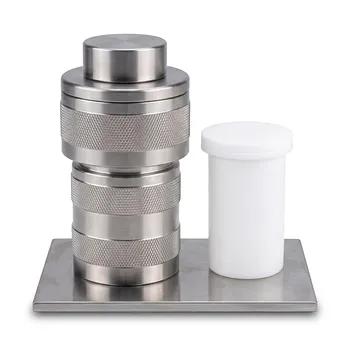
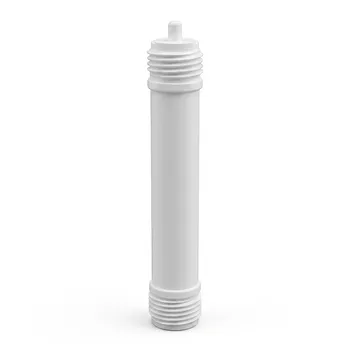
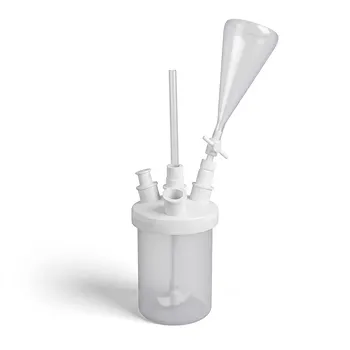
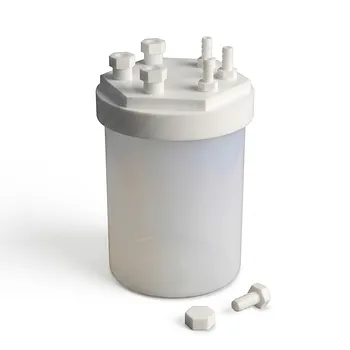
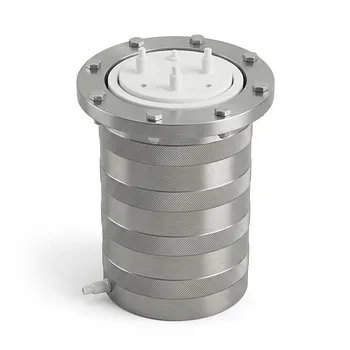
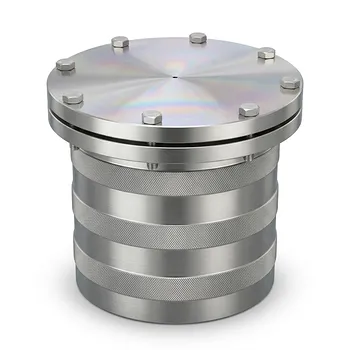
PTFE and PFA liners are the silent guardians of high-pressure chemical synthesis. These liners act as a critical chemical barrier, isolating aggressive reaction media like strong acids and bases from the metal autoclave shell. By maintaining this separation under extreme conditions, they ensure the chemical purity of the reaction system and significantly extend the operational lifespan of the hardware.
High-performance liners serve as a dual-purpose shield, protecting the reactor’s structural integrity from corrosive damage while preventing metal ion contamination from degrading the purity of the synthesized materials.
Chemical Isolation and Structural Protection
Resisting Aggressive Chemical Environments
The primary function of PTFE and PFA liners is to provide unrivaled corrosion resistance against strong acids, bases, and organic solvents. In the high-temperature and high-pressure environment of hydrothermal synthesis, these materials remain chemically inert, preventing the reaction media from attacking the vessel walls.
Protecting the Autoclave Shell
By acting as a physical barrier, these liners prevent direct contact between the reaction liquid and the stainless steel outer shell. This isolation is vital for maintaining the structural integrity of the autoclave, as it prevents the pitting and weakening caused by corrosive chemicals.
Ensuring High-Purity Synthesis
Eliminating Metal Ion Contamination
One of the most critical roles of the liner is to prevent metal ions from leaching from the autoclave body into the reaction mixture. This is essential for the growth of nanomaterials and single crystals, where even trace amounts of metal contamination can alter the crystal structure or optoelectronic properties.
Low Impurity Leaching Rates
High-performance polymers like PTFE and PFA are chosen for their extremely low leaching rates. This ensures that the synthesized materials remain pure, making these liners indispensable for preparing high-performance functional materials in laboratory and industrial settings.
Operational Efficiency and Material Recovery
Non-Stick Surface Advantages
The non-stick properties of PTFE and PFA facilitate the easy recovery of synthesized products after the reaction is complete. This characteristic not only ensures higher yields but also makes the cleaning process more efficient, reducing the risk of cross-contamination between experiments.
Thermal and Pressure Stability
These liners are engineered to withstand the extreme pressures required for hydrothermal reactions while maintaining thermal stability. This stability provides a clean, enclosed environment that allows for the uniform growth of nanomaterials with consistent morphology.
Understanding the Trade-offs and Limitations
Temperature Constraints
While highly resistant, PTFE and PFA have defined thermal limits, typically around 200°C to 250°C. Exceeding these temperatures can lead to material softening or deformation, which may compromise the seal and lead to vessel failure.
Physical Deformation and Creep
Under prolonged high-pressure conditions, polymer liners can experience "creep" or permanent deformation. Users must regularly inspect liners for thinning or shape changes to ensure the safety and repeatability of the synthesis process.
Maximizing Results in Your Synthesis Process
To achieve the best outcomes in your hydrothermal or solvothermal experiments, consider the following strategic approaches:
- If your primary focus is material purity: Utilize high-purity PFA liners to ensure the lowest possible leaching of trace elements into your crystal growth system.
- If your primary focus is equipment longevity: Always ensure the liner is properly seated and inspected for cracks to prevent corrosive media from reaching the stainless steel shell.
- If your primary focus is ease of recovery: Leverage the non-stick properties of PTFE for reactions involving "sticky" or gel-like precursors to ensure a high recovery rate of the final product.
By understanding the protective and purity-preserving roles of these liners, researchers can more effectively control the complex environment required for advanced material synthesis.
Summary Table:
| Key Feature | Function | Main Benefit |
|---|---|---|
| Chemical Barrier | Isolates aggressive acids/bases | Prevents corrosion of the metal autoclave shell |
| Contamination Control | Blocks metal ion leaching | Ensures high-purity nanomaterial & crystal growth |
| Non-Stick Surface | Facilitates product removal | High material recovery rate and efficient cleaning |
| Thermal Stability | Maintains integrity up to 250°C | Provides a stable, enclosed reaction environment |
Upgrade Your Synthesis with KINTEK’s High-Performance Fluoropolymers
Ensure the highest level of purity and equipment longevity with KINTEK. We specialize exclusively in high-performance fluoropolymer materials, offering everything from PTFE/PFA liners, hydrothermal synthesis vessels, and microwave digestion tubes to complex, custom CNC-fabricated laboratory setups.
From everyday labware (beakers, crucibles, and reagent bottles) to advanced components like electrochemical cells and microchannel reactors, KINTEK delivers end-to-end solutions tailored to your specific research needs. Backed by expert machining and a focus on trace-analysis grade materials, we are equipped to deliver both high-volume orders and bespoke non-standard parts.
Contact our experts today to discover how our high-performance fluoropolymer engineering can protect your experiments and enhance your laboratory’s efficiency!
References
- T. Divya, P.B. Sreeja. Catalytic Conversion of 2‐ Methyl Phenol to Salicylaldehyde Using Manganese‐Oxide Doped Cellulose‐Derived Carbon Spheres. DOI: 10.1002/slct.202403366
This article is also based on technical information from Kintek Knowledge Base .
Related Products
- PTFE Lined High Pressure Digestion Vessel 50ml High Temperature Hydrothermal Synthesis Tank
- High Purity PTFE Microwave Digestion Vessel for Soil and Food Analysis Acid Resistant Fluoropolymer Sample Preparation Liners
- Transparent Corrosion Resistant PFA Thermometer Sleeve and Customizable Hydrogen Fluoride Condensation Device
- PTFE PFA Vacuum Filtration System Corrosion Resistant Customizable Shatterproof Laboratory Device
- PFA Chemical Reaction Tank with Customizable Fittings for Corrosive Solvent Synthesis and High Purity Lab Applications
People Also Ask
- What are the benefits of using a PTFE-lined vessel for carbon-sulfur cathode treatment? Maximize Purity & Performance
- Why are PTFE-lined pressure digestion vessels required for the preparation of Ag/CeO2 catalysts? Purity & Performance
- What safety features are typically incorporated into high-pressure PTFE digestion vessel designs? Ensure Lab Safety
- What is the function of PTFE lined high-pressure vessels in g-C3N4 synthesis? Achieve High-Purity Material Growth
- Role of High-Pressure Digestion Tanks in Perovskite Synthesis: Achieve Superior Stability and Latent Heat