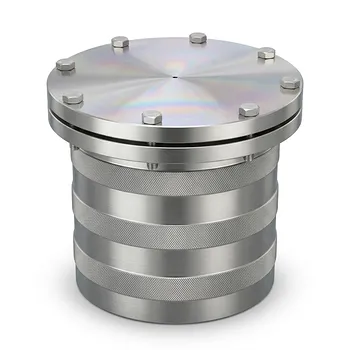
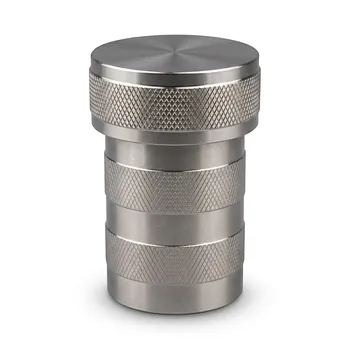
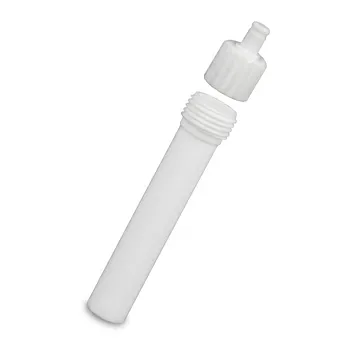
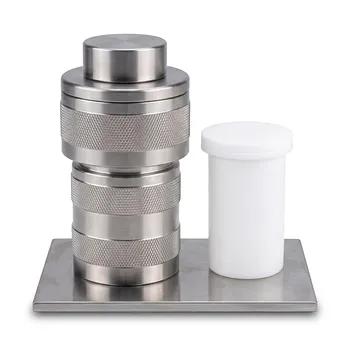
The Teflon-lined autoclave serves as a specialized high-pressure reactor designed to facilitate the crystallization of titanium precursors into nanostructures. It provides a sealed environment that generates the high temperatures and autogenous pressures necessary for the hydrothermal reaction to occur. By utilizing a chemically inert liner, the device protects the integrity of the synthesis process from the corrosive effects of strong alkaline solutions.
The primary function of a Teflon-lined autoclave is to provide a controlled, high-pressure environment that accelerates reaction kinetics while preventing chemical contamination. This setup ensures that hydrogen titanate nanotubes achieve high purity and consistent morphological regularity.
The Role of the Reaction Environment
Generating High Autogenous Pressure
In hydrothermal synthesis, the autoclave creates autogenous pressure as the internal liquid is heated beyond its boiling point. This pressure is essential for increasing the solubility of titanium dioxide precursors, allowing them to dissolve and re-crystallize into tubular structures.
Accelerating Chemical Reaction Kinetics
The sealed nature of the vessel allows temperatures to exceed 100°C while remaining in a liquid phase. These elevated temperatures significantly accelerate the chemical kinetics required to transform bulk precursors into sophisticated hydrogen titanate nanotubes.
Mechanical Support from the Outer Shell
While the liner handles the chemistry, the stainless steel outer casing provides the mechanical strength required to withstand high internal pressures. This combination of materials allows for safe operation during the long-duration heating cycles often required for nanotube growth.
The Necessity of the Teflon (PTFE) Liner
Resistance to Corrosive Alkaline Solutions
The synthesis of hydrogen titanate nanotubes typically requires concentrated sodium hydroxide (NaOH). Teflon (PTFE) is used because it is exceptionally resistant to these strong alkalies, which would otherwise dissolve or damage standard metal containers.
Preventing Metal Ion Impurity Contamination
If the reaction fluid were to contact the metal walls of the autoclave, it could leach iron, chromium, or nickel ions into the solution. The Teflon liner acts as a barrier, ensuring that these impurities do not integrate into the titanate crystal lattice and degrade its properties.
Ensuring Morphological Regularity
A stable, non-reactive environment is critical for morphological regularity. By preventing unwanted side reactions with the vessel walls, the Teflon liner ensures that the growth energy is focused entirely on the formation of uniform, needle-like or tube-like nanostructures.
Understanding the Trade-offs and Limitations
Temperature Thresholds
While Teflon is chemically robust, it has a thermal limit (typically around 240°C to 260°C). Exceeding these temperatures can lead to the deformation of the liner or the release of toxic vapors, potentially compromising the experiment and the equipment.
Pressure Limitations and Filling Ratios
The internal pressure is highly dependent on the filling ratio of the precursor solution. Overfilling the autoclave can lead to extreme pressure spikes that exceed the safety ratings of the stainless steel shell, posing a significant safety risk.
Cooling and Maintenance Requirements
Teflon liners can be prone to memory effects or warping if cooled too rapidly. To maintain a proper seal and ensure the longevity of the vessel, the autoclave must be allowed to cool slowly to room temperature before being opened.
How to Apply This to Your Project
Making the Right Choice for Your Goal
- If your primary focus is maximum purity: Ensure the Teflon liner is thoroughly cleaned with acid and deionized water between uses to remove any residual trace metals or precursors.
- If your primary focus is structural uniformity: Maintain a consistent temperature profile throughout the entire reaction duration to ensure steady crystal growth.
- If your primary focus is equipment longevity: Never exceed 80% of the liner's volume capacity to prevent over-pressurization and potential leakage into the stainless steel shell.
By balancing the chemical inertness of Teflon with the structural strength of a high-pressure autoclave, researchers can reliably synthesize high-quality hydrogen titanate nanotubes for advanced applications.
Summary Table:
| Feature/Component | Primary Function | Benefit to Nanotube Synthesis |
|---|---|---|
| PTFE (Teflon) Liner | Chemical resistance to NaOH | Prevents metal contamination and vessel corrosion |
| Stainless Steel Shell | Structural mechanical support | Withstands high autogenous pressures safely |
| Sealed Environment | High-pressure/temp generation | Accelerates kinetics to dissolve/re-crystallize precursors |
| Thermal Limits | Operates up to 240°C - 260°C | Ensures stable, consistent morphological regularity |
| Filling Ratio Control | Pressure management | Prevents over-pressurization and equipment failure |
Elevate Your Synthesis Precision with KINTEK
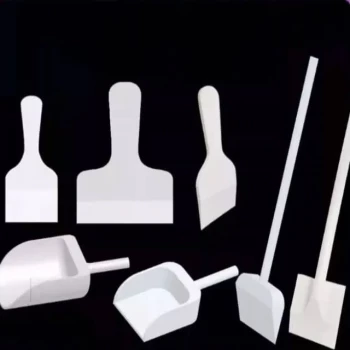
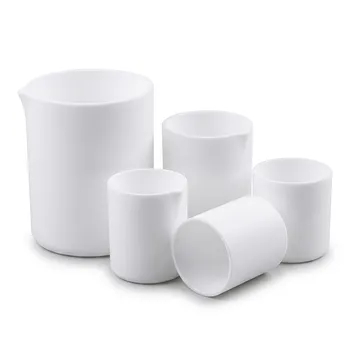
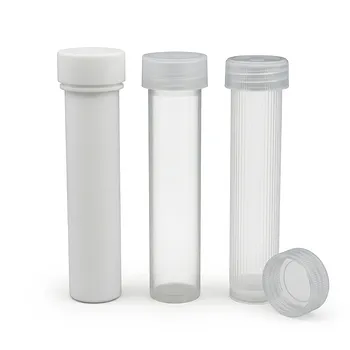
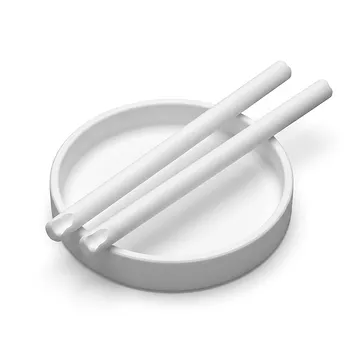
Achieving high-purity hydrogen titanate nanotubes requires high-performance fluoropolymers that can withstand aggressive chemical environments. KINTEK specializes in manufacturing a comprehensive range of laboratory supplies crafted exclusively from PTFE and PFA.
From everyday basic labware (beakers, measuring cylinders, and reagent bottles) and fluid transfer components (tubing, valves, and fittings) to advanced reaction apparatus like hydrothermal synthesis liners, microwave digestion vessels, and custom electrochemical cells, we provide the tools necessary for zero-contamination research.
Backed by end-to-end custom CNC fabrication, KINTEK is equipped to deliver everything from bespoke laboratory setups and complex non-standard machined parts to high-volume orders of consumables like stirring bars, O-rings, and filters.
Ready to optimize your lab's performance? Contact us today to discuss your specific material needs and discover the KINTEK advantage in high-performance laboratory solutions.
References
- Luis Ángel García-Pérez, T. Klimova. Hydrogen titanate nanotubes doped with graphene oxide for the photocatalytic degradation of methylene blue. DOI: 10.1007/s11144-025-02854-8
This article is also based on technical information from Kintek Knowledge Base .
Related Products
- Custom TFM Reaction Vessel with Stainless Steel Jacket and PTFE Inner Cup for High Corrosion Resistance
- High Temperature Corrosion Resistant Hydrothermal Synthesis Reactor with TFM Inner Liner and Straight Cylinder Design
- High Purity PTFE Microwave Digestion Vessel Replacement Liner for Acid Sample Preparation and Trace Analysis
- PTFE Lined High Pressure Digestion Vessel 50ml High Temperature Hydrothermal Synthesis Tank
- High Purity Corrosion Resistant Teflon Crucible Low Background Laboratory PTFE Vessel for Trace Analysis and Acid Digestion
People Also Ask
- Why are high-performance pressure-resistant reaction vessels required for oxygen-assisted hydrothermal conversion at 150 °C?
- How do magnetic stirring and reaction vessels impact MOF-derived carbon quality? Optimize Your Composite Performance
- Why are high-quality fluoropolymer-lined reaction vessels required for alk-Ti3C2Tx MXene? Ensure Purity & HF Resistance
- Why are PTFE-lined reaction vessels necessary for forced degradation studies? Ensure high-purity results and accuracy.
- Why is a high-purity PTFE lined reaction vessel required for the acidic etching of MXenes? Ensure Material Purity.