PTFE is ideal for demanding laboratory equipment and chemical fluid handling because it combines exceptional chemical inertness, thermal stability, and extremely low surface energy. It resists aggressive acids, bases, and organic solvents without readily reacting, degrading, or contaminating samples. Its non-stick, low-friction surface minimizes residue and adsorption, while its broad temperature capability supports high-temperature laboratory processes and reliable fluid transfer.
The central advantage of fluoropolymers is not one isolated property, but the combination of chemical resistance, thermal stability, and low-adhesion surfaces. Together, these characteristics protect both the equipment and the integrity of the chemical process.
Why Fluoropolymers Perform Under Severe Conditions
Chemical Inertness Protects Equipment and Samples
PTFE and related fluoropolymers resist chemical attack from many aggressive reagents, including strong acids, bases, and organic solvents. This limits corrosion, swelling, and material degradation during storage, reaction, digestion, and transfer.
The resistance is largely associated with the strength and stability of the carbon-fluorine molecular structure. As a result, fluoropolymer components are less likely to participate in unwanted reactions with the chemicals they contain.
Thermal Stability Supports High-Temperature Processes
Fluoropolymers maintain useful performance across a wide temperature range. This makes them suitable for applications such as chemical digestion, heated reactions, and the handling of hot corrosive fluids.
PTFE has a commonly cited continuous-use temperature around 260°C, although the appropriate limit depends on load, exposure time, design, and the specific fluoropolymer grade. Decomposition temperatures can be higher than normal operating limits, so they should not be treated as equivalent.
Low Surface Energy Reduces Adhesion
The extremely low surface energy of PTFE gives it strong non-stick behavior. Samples, reagents, and reaction residues are less likely to adhere to the surface than they would on many conventional materials.
This is particularly valuable in trace analysis, where even small amounts of carryover can affect results. Easier cleaning also helps reduce cross-contamination between procedures.
Hydrophobic and Lipophobic Behavior Limits Wetting
Fluoropolymer surfaces generally resist wetting by both water-based and many oil-based substances. This hydrophobic and lipophobic behavior helps reduce liquid retention and makes the internal surfaces of tubing, vessels, and fittings easier to rinse.
The benefit is application-dependent. Surface chemistry can also make fluoropolymers difficult to wet intentionally, which matters in membrane processes, coatings, and applications involving biological molecules.
Low Friction Simplifies Fluid Transfer
PTFE has very low friction and can provide self-lubricating behavior in suitable designs. This helps reduce flow resistance and mechanical wear in valves, seals, bearings, tubing, and other moving or sliding components.
In fluid-handling systems, low friction can also support smoother operation and reduce the need for added lubricants that might introduce contamination.
How These Properties Protect Laboratory Workflows
Trace Analysis Requires Low Background Contamination
Trace analysis depends on controlling contamination from vessels, tubing, fittings, and cleaning residues. Chemically inert, low-adhesion fluoropolymers help prevent the equipment from contributing unwanted substances to the sample.
This makes PTFE and PFA useful for high-purity vessels, digestion containers, sample-handling components, and reagent storage.
Chemical Digestion Demands Chemical and Thermal Resistance
Digestion procedures often combine aggressive reagents with elevated temperatures. A suitable vessel must resist the chemistry while retaining its shape and containment function.
Fluoropolymers provide a strong material option because they tolerate many corrosive environments and maintain stability under demanding thermal conditions. The exact polymer and design must still be selected for the specific reagent, pressure, temperature, and duration.
Fluid Handling Benefits From Durable, Cleanable Surfaces
Tubing, valves, pumps, fittings, and transfer lines can experience repeated chemical exposure and cleaning cycles. Fluoropolymer surfaces resist corrosion and minimize chemical hold-up, supporting reliable transfer between process steps.
Their low friction and low adhesion are especially useful where smooth flow, low carryover, and long service life are important.
Electrical Insulation Adds System-Level Value
Fluoropolymers also provide strong dielectric insulation. This can be useful in laboratory and process equipment where chemical resistance must be combined with electrical isolation or protection from electrical interference.
This property is secondary to chemical and thermal performance in many fluid-handling applications, but it expands the range of suitable designs.
Understanding the Trade-offs
Chemical Resistance Does Not Eliminate Mechanical Limits
PTFE is chemically robust but comparatively soft and susceptible to creep under sustained load. Seals, threaded parts, unsupported tubing, and pressure-containing components require careful mechanical design.
Reinforced or modified fluoropolymers may be preferable when dimensional stability, wear resistance, or load-bearing performance is critical.
Temperature Ratings Must Match the Complete Application
A material's decomposition temperature is not its recommended service temperature. Mechanical load, pressure, thermal cycling, exposure time, and the surrounding atmosphere can all reduce the practical operating limit.
Designers should use the manufacturer's application-specific temperature and pressure data rather than relying on a single generic temperature value.
Low Adhesion Can Make Bonding Difficult
The same low surface energy that prevents sample adhesion also makes PTFE difficult to bond, print, coat, or modify. Components may require mechanical retention, specialized surface treatment, or a different fluoropolymer when joining is central to the design.
Fluoropolymers Are Not Universally Inert
PTFE resists a very broad range of chemicals, but no material is suitable for every combination of reagent, temperature, pressure, and exposure time. Some molten or highly reactive substances can attack fluoropolymers, and permeation can matter even when visible corrosion does not occur.
Compatibility should therefore be checked against the actual chemical and operating conditions.
Surface Inertness Can Conflict With Biological Applications
Hydrophobic, low-adhesion surfaces can reduce protein or biomolecule attachment, but they may also make controlled biological interactions difficult. Membrane separations, microfiltration, and cell or protein handling may require targeted surface functionalization or a different material.
Selecting the Right Fluoropolymer
PTFE for Maximum Chemical Resistance
PTFE is commonly selected for vessels, tubing, gaskets, liners, and other components exposed to severe chemical environments. It is a strong choice when chemical inertness and low surface adhesion are the primary requirements.
Its relatively low stiffness and tendency to creep should be considered in pressure-bearing or dimensionally demanding designs.
PFA for Fabrication and Transparency
PFA offers fluoropolymer-level chemical resistance while generally providing better melt processability and useful transparency compared with PTFE. These characteristics can support molded components, transparent vessels, and complex fluid-handling assemblies.
The selection still depends on the required temperature, mechanical performance, purity, and chemical compatibility.
Match Purity to the Measurement
For high-purity work, the formulation, manufacturing process, cleaning method, and history of the component matter as much as the base polymer. A chemically resistant material can still be unsuitable if it contains extractable additives or has been improperly processed or cleaned.
Making the Right Choice for Your Goal
Fluoropolymers are most effective when their properties are matched to the full operating environment, not considered in isolation.
- If your primary focus is sample purity: Choose a high-purity PTFE or PFA component with low extractables, low surface adhesion, and a validated cleaning procedure.
- If your primary focus is aggressive chemical exposure: Verify compatibility with the exact acids, bases, solvents, concentration, temperature, and exposure duration.
- If your primary focus is high-temperature processing: Use the manufacturer's continuous-use limits and account for pressure, mechanical load, and thermal cycling.
- If your primary focus is fluid transfer: Use fluoropolymer tubing, valves, or fittings where low friction, low carryover, and corrosion resistance improve system reliability.
- If your primary focus is dimensional or mechanical stability: Evaluate creep, pressure, wear, and reinforcement requirements before choosing unmodified PTFE.
The right fluoropolymer turns chemical resistance, thermal stability, and low surface adhesion into more reliable equipment and more trustworthy laboratory results.
Summary Table:
| Property | Benefit in Lab Equipment |
|---|---|
| Chemical Inertness | Resists acids, bases, and solvents; prevents corrosion and contamination. |
| Thermal Stability | Withstands high temperatures (PTFE up to 260°C) for digestion and reactions. |
| Low Surface Energy | Non-stick surface; reduces sample adhesion and eases cleaning. |
| Hydrophobic/Lipophobic | Limits wetting; reduces liquid retention and cross-contamination. |
| Low Friction | Reduces flow resistance and wear in valves, tubing, and seals. |
Looking for high-performance fluoropolymer lab equipment? KINTEK specializes in PTFE and PFA products—from labware and digestion vessels to custom CNC-machined parts and complete fluid handling systems. With over 20 years of expertise, we provide certified materials, rigorous quality control, and reliable supply for demanding laboratories. Contact us today to discuss your requirements or request a quote—our team is ready to help you optimize your lab's performance. Contact us now!
Related Products
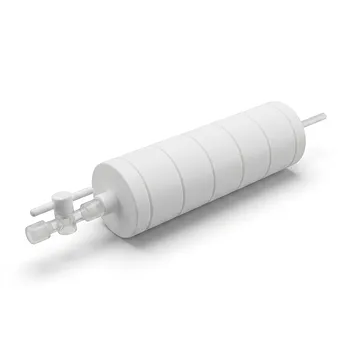
- Custom PTFE Filtration System Acid Resistant High Purity Semiconductor Grade Chemical Processing Filter
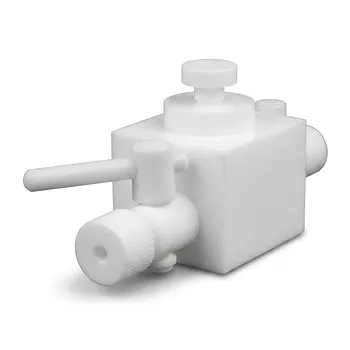
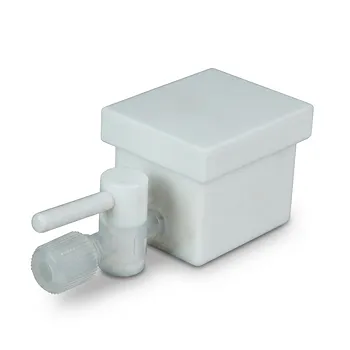
- High Corrosion Resistant PTFE Faucet Polytetrafluoroethylene Valve for Chemical Storage Drums and Fluid Transfer Systems Customizable Industrial Grade
- PTFE PFA Vacuum Filtration System Corrosion Resistant Customizable Shatterproof Laboratory Device
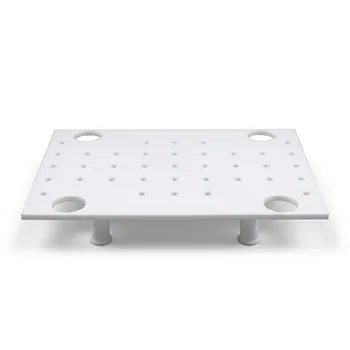
- PTFE Corrosion Resistant Filter with PFA Valve Connections and Integrated Sieve Plate
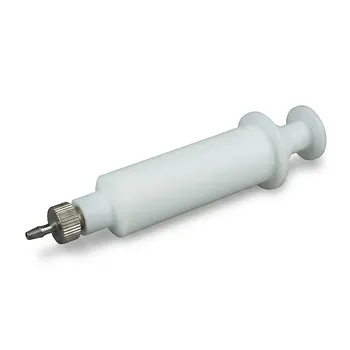
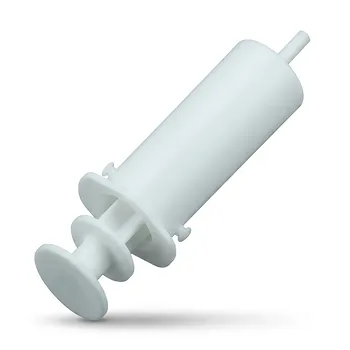
- High Temperature Chemical Resistant 50ml PTFE Syringe Customized Teflon Injector with Threaded Seal for Trace Analysis
People Also Ask
- What makes PTFE filtration systems advantageous for industrial and scientific use? Unmatched Chemical & Thermal Stability
- What sizes and pore options are available for PTFE filters? Choose the Right Filter for Your Application
- What steps are involved in selecting the proper PTFE filter? A 4-Step Guide to Optimal Filtration
- What temperature resistance do PTFE filters offer? Unmatched Thermal Stability from -200°C to +260°C
- How does the hydrophobicity of PTFE filters benefit their use? Ensure Uninterrupted Gas Flow and Solvent Filtration