PTFE is highly inert in ordinary laboratory service, but it is not universally nonreactive. When PTFE or another fluoropolymer contacts finely divided, strongly electropositive metal powders—especially magnesium, aluminum, and potentially silicon—at elevated temperature, the metal can reduce polymer-bound fluorine. This may initiate a strongly exothermic reaction that forms metal fluorides such as MgF₂ or AlF₃, along with carbon.
PTFE labware is generally an excellent choice for chemical containment, but metal-powder applications require a separate assessment of metal reactivity, particle size, temperature, friction, and heat removal. Do not treat PTFE’s normal chemical inertness as proof of compatibility with reactive powders under energetic conditions.
Why PTFE Can React with Reactive Metal Powders
The carbon–fluorine bond is stable but not invulnerable
PTFE’s exceptional chemical resistance comes largely from its stable carbon–fluorine backbone. Under normal laboratory exposure to acids, bases, organic solvents, and many aggressive reagents, the polymer typically remains chemically inert and does not contaminate the sample.
That resistance changes when PTFE is exposed to sufficiently electropositive metals under high-energy conditions. The metal can effectively remove fluorine from the polymer, disrupting C–F bonds and initiating fluorination of the metal.
The reaction can be strongly exothermic
The overall process may produce stable metal fluorides and elemental carbon. Formation of compounds such as magnesium fluoride and aluminum fluoride can release substantial heat.
A localized reaction can therefore become self-accelerating, particularly when the material is present as fine powder or when heat cannot dissipate rapidly.
Fine powders create greater hazard
Micro- and nano-scale metal powders have high surface area and can react more readily than bulk metal. Dispersed particles also provide more intimate contact with PTFE surfaces and may support rapid propagation once a reaction begins.
The same concern applies to finely divided PTFE, fluoropolymer coatings, wear debris, and packing materials in contact with metal fines.
Which Operating Conditions Require the Most Attention
Temperature must be treated as a reaction variable
For mixtures of fluoropolymer particles and fine aluminum or magnesium powders, the supplementary reference identifies approximately 420°C as a hazardous threshold above which the mixture may become highly combustible and capable of violent exothermic reaction or explosion.
This value should not be interpreted as a universal safe operating limit. Actual behavior depends on powder size, concentration, confinement, pressure, heating rate, contamination, friction, and the specific fluoropolymer formulation.
Friction and mechanical energy can matter
High-friction grinding, machining, mixing, or sliding contact can generate localized hot spots even when the measured bulk temperature appears acceptable. Fluoropolymer coatings, seals, bushings, or packing may therefore present a risk when used around abrasive aluminum or magnesium dispersions.
Mechanical processing should be assessed for both temperature rise and the generation of fluoropolymer wear particles.
Confinement can increase consequences
A reaction in an open, small-scale configuration is not equivalent to the same reaction inside a sealed digestion vessel, pump cavity, or enclosed process line. Confinement can increase pressure and make an energetic event more severe.
Custom components should be evaluated as complete assemblies, including dead volumes, seals, coatings, trapped powder, and pressure-relief provisions.
Other Chemical Reactivity Limits to Check
Molten alkali metals and fluorine
Molten alkali metals, including sodium and potassium, can attack PTFE under sufficiently severe conditions. Gaseous fluorine is also incompatible with PTFE at elevated temperature and pressure.
These exposures fall outside ordinary PTFE laboratory service and require material-specific compatibility review.
Highly reactive halogenated oxidizers
Compounds such as chlorine trifluoride (ClF₃) and oxygen difluoride (OF₂) can chemically interact with fluoropolymers. Their extreme oxidizing ability makes ordinary “PTFE is chemically inert” compatibility assumptions inappropriate.
Concentrated hydroxides and hot oxidizing acids
Concentrated sodium hydroxide or potassium hydroxide may attack PTFE near its upper service-temperature range, identified in the references as approximately 260°C. Slow oxidative attack is also possible with highly concentrated nitric acid at high temperature and pressure.
The relevant question is not only the reagent concentration but the combined concentration, temperature, pressure, exposure time, and mechanical condition of the component.
Strong Lewis bases and related reagents
Certain metal hydrides, aluminum chloride, ammonia, primary and secondary amines, and imines may interact with PTFE under specific conditions. Compatibility must therefore be confirmed for the actual reagent and operating envelope rather than inferred from PTFE’s general resistance to bases or solvents.
What This Means for Labware and Custom Components
Bulk PTFE and PTFE powder are not equivalent
A solid machined vessel and a fine PTFE powder may have very different reaction behavior. Powder increases surface area, while a machined component may still generate reactive debris through wear, cutting, scraping, or friction.
The assessment should cover the virgin material, additives, fillers, coatings, machining residues, and wear products.
High purity does not eliminate energetic compatibility risk
High-purity PTFE is valuable for trace analysis because it resists corrosion, dissolution, and leaching. However, purity does not prevent a strongly reducing metal powder from reacting with polymer-bound fluorine at elevated temperature.
Chemical cleanliness and chemical compatibility are separate requirements.
Material selection must include the whole contact system
A PTFE vessel may be compatible while a fluoropolymer seal, liner, coating, or pump packing creates the principal hazard. Review every wetted or powder-contacting component, including gaskets, bearings, tubing, valve seats, and debris traps.
Also verify whether the selected grade contains fillers or reinforcement that change thermal, mechanical, or chemical behavior.
Understanding the Trade-offs
Chemical inertness versus energetic reactivity
PTFE’s broad chemical resistance is a major advantage for corrosive liquids, high-purity samples, and aggressive organic or inorganic reagents. The trade-off is that its fluorine content can become chemically available to highly electropositive metals under sufficiently energetic conditions.
Thus, compatibility cannot be reduced to a simple list of acids, bases, and solvents.
Temperature margin versus process performance
Operating below the cited 420°C concern for fluoropolymer–metal-fine mixtures provides an important precaution, but temperature control alone is not a complete safety case. A process may still generate local heating through friction, compression, electrical faults, or reaction with another contaminant.
Use the manufacturer’s specified temperature limits and obtain application-specific review where reactive powders are involved.
Customization versus validation burden
CNC-machined fluoropolymer components can provide excellent chemical cleanliness and design flexibility. However, custom geometry can create narrow gaps, sharp transitions, trapped powder, or poorly cooled regions that are not represented by standard compatibility data.
Prototype testing should use representative powder loading, particle size, pressure, heating rate, and mechanical duty rather than relying only on coupon testing.
Common Pitfalls to Avoid
Assuming “chemically inert” means “safe with every powder”
PTFE is not universally inert to strongly electropositive metals under elevated-temperature conditions. Avoid approving a design solely because PTFE resists the liquid reagent surrounding the powder.
Using a nominal temperature as the only control
A displayed temperature may not capture hot spots at frictional interfaces or inside compacted powder beds. Monitor the locations where heat is actually generated and evaluate abnormal operating conditions.
Ignoring powder accumulation and wear debris
Small amounts of aluminum or magnesium powder can accumulate in seals, threads, pump cavities, or crevices. Fluoropolymer wear particles can likewise increase reactive contact area.
Design for cleaning, inspection, and prevention of trapped material.
Treating the 420°C value as a guaranteed boundary
The cited threshold is a practical warning point for fine fluoropolymer and metal-powder mixtures, not a universal certification limit. A safer design uses a substantial margin and relies on documented compatibility data, process controls, and hazard analysis.
How to Apply This to Your Project
The correct selection process should begin with the most energetic credible condition, not the normal operating condition.
- If your primary focus is chemical purity: Use PTFE or an appropriate fluoropolymer for ordinary aggressive chemical service, but confirm the complete material formulation and avoid unreviewed contact with reactive metal powders.
- If your primary focus is reactive metal-powder processing: Treat PTFE as potentially reactive with fine magnesium, aluminum, and similar metals at elevated temperature, control temperature and friction, and obtain application-specific compatibility approval.
- If your primary focus is custom component design: Review every wetted, coated, sealed, and wear-prone part for powder accumulation, local heating, and fluoropolymer debris generation.
- If your primary focus is process safety: Maintain a conservative temperature margin below the identified hazardous region, prevent confinement where feasible, and assess abnormal heating, contamination, and pressure scenarios.
PTFE remains an excellent high-purity material, but safe use with reactive metal powders depends on controlling the conditions that can convert fluoropolymer chemical resistance into energetic reactivity.
Summary Table:
| Factor | Consideration |
|---|---|
| Metal Reactivity | Highly electropositive metals (Mg, Al, Si) can reduce fluorine in PTFE at high temp, leading to exothermic reactions. |
| Particle Size | Fine powders (micro/nano) have high surface area, increasing reactivity and hazard. |
| Temperature | Threshold ~420°C for fluoropolymer-metal mixtures; maintain substantial margin and avoid localized hot spots. |
| Friction/Mechanical Energy | Grinding, machining, and sliding can generate heat and fluoropolymer debris; assess such operations. |
| Confinement | Enclosed systems can escalate pressure and severity; design with pressure relief and avoid dead zones. |
| Other Incompatibilities | Molten alkali metals, F2, ClF3, OF2, concentrated hydroxides near 260°C, and strong Lewis bases require review. |
| Material Form | Bulk PTFE vs. powder, wear debris, fillers, and coatings behave differently; evaluate all contact surfaces. |
| System-wide Assessment | Include seals, bearings, tubing, valves, and custom geometries; test under representative conditions. |
Need expert guidance on safe PTFE use with reactive powders? At KINTEK, we specialize in high-purity PTFE and PFA labware and custom components. Our team can help you assess compatibility, optimize designs, and ensure safety for your specific applications. Contact us today to discuss your requirements and benefit from our extensive experience and custom CNC machining capabilities.
Related Products
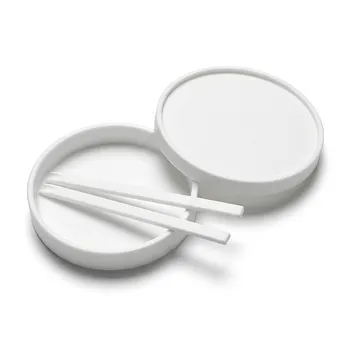
- Custom Polytetrafluoroethylene PTFE Petri Dishes 60mm Corrosion Resistant Low Background Labware
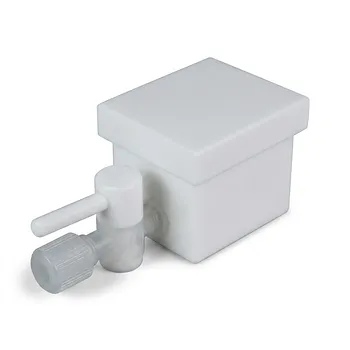
- Custom PTFE Laboratory Apparatus Corrosion Resistant Low Background Reaction Cells Precision CNC Fabrication
- Custom PTFE Petri Dishes Corrosion Resistant High Purity Low Background Labware
- Custom PTFE Petri Dish 120mm Diameter Corrosion Resistant Low Background High Purity Labware
- Custom PTFE Petri Dish 30mm Corrosion Resistant Low Background Non Leaching Laboratory Ware
People Also Ask
- Why are PTFE or PFA Petri dishes preferred for membrane casting? Ensure Damage-Free Recovery & Chemical Purity
- What types of labware or tools are commonly made from PTFE? Essential Chemically-Resistant Equipment for Your Lab
- What are the considerations for choosing PTFE or glass for Bi2O3/CeO2 synthesis? Ensure Purity and Precision.
- What are the key properties of PTFE that make it suitable for labware applications? Ensure Lab Integrity with Superior Material
- What types of PTFE labware are commonly available? Find the Right Tools for Your Lab