PTFE is chemically inert because its carbon backbone is completely fluorinated, and it resists heat because that structure is held together by strong, stable covalent bonds. In polytetrafluoroethylene, or PTFE, the repeating unit is –CF₂–CF₂–: fluorine atoms surround and shield the carbon chain, while the absence of reactive hydrogen or functional groups leaves few sites for chemical attack. Its high molecular weight, crystalline structure, and strong C–F bonds also allow it to remain stable in laboratory service up to approximately 260°C (500°F), although it decomposes at substantially higher temperatures.
Core takeaway: PTFE’s performance comes from the combination of a fully fluorinated, tightly shielded carbon backbone and a stable, crystalline polymer structure. These features make it highly resistant to chemical attack and thermally stable—but not immune to every reagent or unlimited heat.
Why PTFE Resists Chemical Attack
A fully fluorinated polymer backbone
PTFE consists almost entirely of carbon and fluorine in a repeating –CF₂–CF₂– chain. Unlike many polymers, it has no easily hydrolyzed ester, amide, or other polar functional groups that can serve as common reaction sites.
Fluorine replaces the hydrogen atoms found in hydrocarbon polymers. This substantially changes the polymer’s surface chemistry and makes the material far less susceptible to reactions with acids, bases, and many organic chemicals.
The fluorine sheath protects the carbon chain
Fluorine atoms closely surround the carbon backbone, forming what is often described as a protective fluorine sheath. This sterically and electronically limits access to the underlying carbon atoms and C–C bonds.
Fluorine is highly electronegative, and the C–F bond is strong and difficult to break. The result is a chemically stable outer surface that aggressive reagents generally cannot readily penetrate or react with.
Strong covalent bonding
The PTFE chain contains strong C–F bonds together with a stable carbon backbone. Reported bond energies vary with the measurement and chemical context, but C–F bonds are generally much stronger than the C–H bonds common in hydrocarbon polymers.
The important point is not a single bond-energy value. It is the combined effect of strong bonding, complete fluorination, and the absence of chemically vulnerable side groups.
Low surface energy and low wetting
PTFE has very low surface energy, so many liquids do not readily wet, spread across, or adhere to it. This property is related to its fluorinated, nonpolar surface.
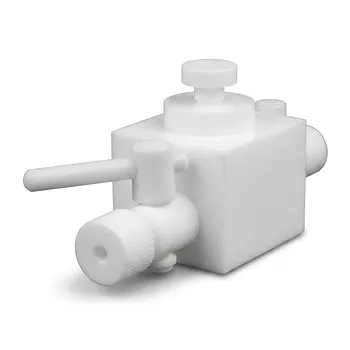
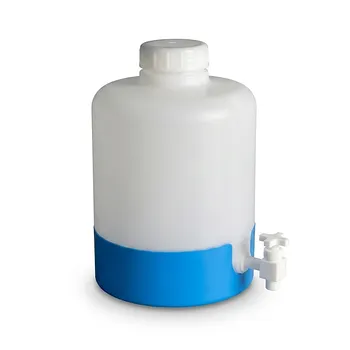
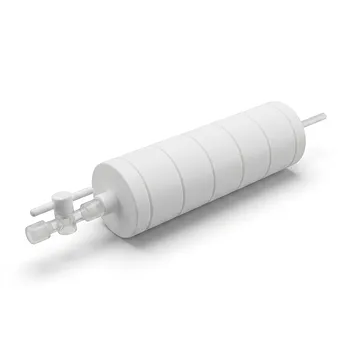
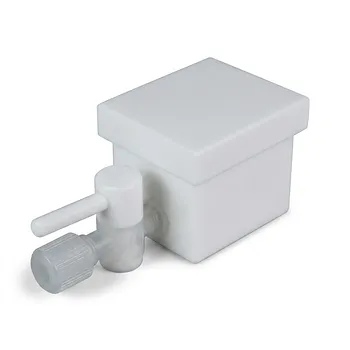
In laboratory equipment, low wetting helps reduce sample retention and makes PTFE useful for reagent bottles, tubing, valves, beakers, and digestion vessels where cleaning and low carryover are important.
Why PTFE Resists Heat
Strong bonds slow thermal degradation
Thermal degradation requires chemical bonds in the polymer to break or rearrange. The strong C–F bonds and chemically stable backbone make these processes energetically demanding compared with those in many ordinary hydrocarbon plastics.
PTFE therefore maintains its chemical integrity across a broad elevated-temperature range and is commonly used for laboratory applications involving heated reagents and digestion procedures.
Crystallinity and molecular structure add stability
PTFE is a high-molecular-weight polymer with significant crystallinity. Ordered crystalline regions restrict molecular motion and help the material retain its shape and mechanical integrity below its melting transition.
PTFE melts at approximately 327°C, while its practical continuous-use temperature is lower—commonly cited near 260°C. The distinction matters: melting resistance is not the same as long-term service resistance.
The polymer contains no readily oxidized hydrogen-rich backbone
Many organic polymers contain abundant C–H bonds and can undergo oxidation or combustion relatively readily when heated in air. PTFE’s fluorinated backbone is less prone to these pathways, giving it unusually low flammability and strong resistance to thermal oxidation under normal laboratory conditions.
That does not make PTFE completely nonflammable or thermally indestructible. At sufficiently high temperatures, it can decompose and release hazardous fluorinated products.
What These Properties Mean in the Laboratory
Protection against corrosive reagents
PTFE is resistant to a wide range of concentrated acids, bases, and organic solvents. This makes it valuable for acid digestion, trace-element analysis, reagent storage, and corrosive fluid handling.
Its resistance also reduces the risk that the container itself will react with the sample or contribute dissolved contaminants.
Low contamination and sample carryover
Because PTFE has low surface energy and low chemical reactivity, many samples and reagents do not strongly adhere to it. This is particularly useful when working at trace concentrations, where small amounts of leaching or carryover can compromise analytical results.
PTFE is therefore often selected when sample purity is more important than high mechanical strength or low cost.
Stability under severe digestion conditions
Microwave and hot-plate digestion systems frequently combine elevated temperature with concentrated acids. PTFE and related fluoropolymers are useful in these environments because they can withstand much of the chemical and thermal stress without rapid corrosion or dissolution.
The specific vessel design, pressure rating, temperature limit, and reagent combination still determine whether a particular PTFE component is appropriate.
Understanding the Trade-offs
PTFE is highly resistant, not universally inert
PTFE is not immune to every chemical condition. Certain highly reactive fluorinating agents, molten or highly reactive alkali metals, and some specialized high-temperature reagents can attack it.
Compatibility must therefore be checked against the actual chemical, concentration, temperature, pressure, and exposure time rather than inferred from the general label “chemical resistant.”
Thermal resistance has a defined limit
PTFE can be used continuously at temperatures around 260°C, but prolonged exposure near its upper limit can affect mechanical properties. Above its melting point, it no longer functions as a dimensionally stable solid, and at still higher temperatures it decomposes.
Laboratories must also account for local hot spots, heating-rate effects, pressure, and whether the material is under mechanical load.
Mechanical properties are not its primary strength
PTFE has excellent chemical resistance and very low friction, but it is relatively soft and can creep under sustained load. Thin walls, threaded parts, seals, and machined components may deform even when the polymer is chemically unaffected.
Where dimensional stability is critical, design may require reinforcement or a different fluoropolymer.
Low adhesion can complicate sealing and bonding
The same low surface energy that prevents sample adhesion also makes PTFE difficult to glue, coat, or bond. Mechanical seals, compression fittings, and specialized surface treatments are usually more practical than ordinary adhesives.
Choosing PTFE for a Laboratory Application
PTFE’s chemistry is especially valuable when the main risks are corrosion, leaching, contamination, or reagent adhesion. Selection should still be based on a verified compatibility and temperature chart for the specific application.
- If your primary focus is chemical resistance: Choose PTFE for contact with a broad range of aggressive acids, bases, solvents, and corrosive fluids, while checking exceptions for highly reactive fluorinating agents and molten alkali metals.
- If your primary focus is high-temperature digestion: Use PTFE within its rated operating range, typically up to about 260°C, and verify pressure, heating profile, and vessel-specific limits.
- If your primary focus is trace analysis and sample purity: Favor PTFE because its low reactivity, low surface energy, and low leaching potential can help preserve sample integrity.
- If your primary focus is mechanical strength or dimensional stability: Consider a reinforced fluoropolymer or another material, because PTFE can creep and deform under sustained load.
PTFE is most effective when its fluorinated chemistry, thermal limits, and mechanical trade-offs are considered together rather than treated as a claim of unlimited inertness.
Summary Table:
| Property | Key Characteristics | Laboratory Impact |
|---|---|---|
| Chemical Inertness | Fully fluorinated backbone, no reactive groups | Resists acids, bases, and solvents |
| Thermal Resistance | Strong C–F bonds, crystalline structure | Continuous use up to 260°C |
| Low Surface Energy | Non-stick, low wetting | Reduces sample carryover and contamination |
| Limitations | Susceptible to alkali metals, softness | Requires design care in demanding applications |
Ensure your lab achieves the highest purity and reliability with KINTEK's premium PTFE and PFA labware. From beakers and digestion vessels to custom CNC-machined components, our fluoropolymer products are engineered to withstand corrosive reagents and high temperatures, minimizing contamination. Contact us now to discover how our tailored solutions can enhance your trace analysis and high-temperature processes. Get in touch today!
Related Products
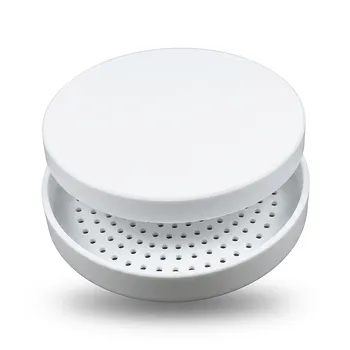
- Custom PTFE Filtration System Acid Resistant High Purity Semiconductor Grade Chemical Processing Filter
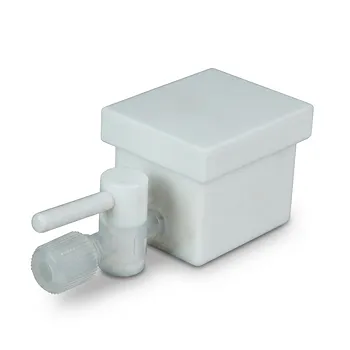
- High Corrosion Resistant PTFE Faucet Polytetrafluoroethylene Valve for Chemical Storage Drums and Fluid Transfer Systems Customizable Industrial Grade
- PTFE PFA Vacuum Filtration System Corrosion Resistant Customizable Shatterproof Laboratory Device
- PTFE Corrosion Resistant Filter with PFA Valve Connections and Integrated Sieve Plate
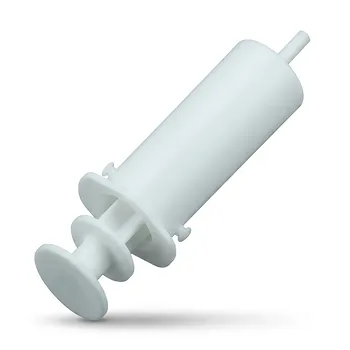
- High Temperature Chemical Resistant 50ml PTFE Syringe Customized Teflon Injector with Threaded Seal for Trace Analysis
People Also Ask
- What makes PTFE filtration systems advantageous for industrial and scientific use? Unmatched Chemical & Thermal Stability
- What steps are involved in selecting the proper PTFE filter? A 4-Step Guide to Optimal Filtration
- What sizes and pore options are available for PTFE filters? Choose the Right Filter for Your Application
- How does the hydrophobicity of PTFE filters benefit their use? Ensure Uninterrupted Gas Flow and Solvent Filtration
- What temperature resistance do PTFE filters offer? Unmatched Thermal Stability from -200°C to +260°C