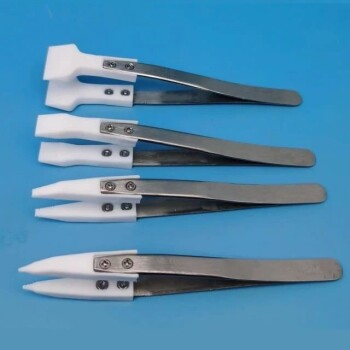
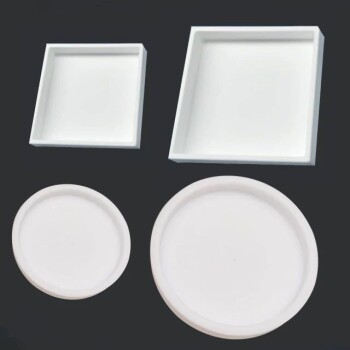
PTFE is chemically inert and heat-stable because its carbon backbone is enclosed by a tightly packed fluorine sheath made from highly stable covalent bonds. The fully fluorinated, linear polymer resists attack from most acids, bases, organic solvents, and digestion reagents, while its strong carbon-carbon and carbon-fluorine bonding supports continuous service temperatures around 260°C (500°F). In microwave digestion vessels and trace-analysis labware, this combination helps prevent vessel degradation, sample contamination, adsorption, and trace-element leaching.
PTFE’s performance comes from more than strong bonds alone: its saturated carbon backbone, complete fluorination, compact molecular structure, low surface energy, and chemical non-polarity collectively limit both chemical reaction and material interaction with samples.
Why PTFE Resists Chemical Attack
A Fully Fluorinated Carbon Backbone
PTFE consists of repeating tetrafluoroethylene units, giving it a linear carbon backbone in which the available bonding sites are occupied by fluorine atoms. Unlike many hydrocarbon polymers, it contains no reactive hydrogen-bearing groups or easily attacked side chains.
This makes the polymer chemically unreactive across a wide range of laboratory conditions. PTFE is practically insoluble in common solvents and resists concentrated acids, bases, and many aggressive reagents.
Strong Carbon-Carbon and Carbon-Fluorine Bonds
The polymer chain is held together by strong carbon-carbon bonds, while the surrounding fluorine atoms are attached through highly stable carbon-fluorine bonds. Exact bond-energy values vary with the measurement method and chemical environment, so individual tabulated figures should be treated as approximate rather than as a complete explanation of PTFE performance.
The important point is that breaking or rearranging this saturated, fluorinated structure requires substantial energy. Chemical stability therefore arises from the combined strength and arrangement of the bonds, not from one isolated bond-energy number.
Fluorine Creates a Protective Molecular Sheath
Fluorine atoms are larger than hydrogen atoms and closely surround the carbon chain in a regular helical arrangement. This creates a dense outer layer that makes it difficult for reactive species to reach the carbon backbone.
Fluorine’s high electronegativity also gives the carbon-fluorine bond strong electronic stability. The result is a polymer surface that presents few chemically accessible sites for acids, solvents, oxidants, or dissolved sample components to attack.
Why PTFE Remains Stable at High Temperature
High Energy Is Required for Molecular Breakdown
The same fluorinated architecture that limits chemical attack also delays thermal degradation. PTFE does not contain the weaker, more readily oxidized carbon-hydrogen structure found in many conventional hydrocarbon polymers.
This does not make PTFE immune to heat. Rather, it gives PTFE a broad useful temperature range in which its chemical inertness and physical integrity are retained.
Continuous Use and Melting Are Different Limits
A commonly cited continuous-use temperature for PTFE is approximately 260°C (500°F). Its melting transition occurs at a higher temperature, commonly around 327°C, but melting is not the same as safe continuous operation.
Long exposure near the upper limit can affect creep, dimensional stability, mechanical strength, and sealing performance even when the polymer has not chemically decomposed. Microwave vessels must therefore be selected according to the complete temperature-pressure cycle, not temperature alone.
A Linear, Saturated Structure Supports Stability
PTFE’s backbone is linear and saturated, with no unsaturated carbon-carbon bonds that would readily participate in addition or oxidation reactions. Its regular structure also supports substantial crystallinity, which can contribute to dimensional and chemical stability.
These features are especially valuable during closed-vessel digestion, where heat, pressure, concentrated reagents, and repeated thermal cycling occur together.
Why These Properties Matter in Trace Analysis
Low Surface Energy Reduces Sample Retention
PTFE has exceptionally low surface energy, often cited at approximately 18 dynes/cm. Liquids tend to wet and adhere less strongly to the surface than they do to many metals, glasses, and higher-energy plastics.
This helps reduce residual sample films and makes vessels easier to rinse. In trace work, that can improve recovery and reduce carryover between digestion and transfer steps.
Chemical Resistance Limits Contamination
A PTFE vessel is less likely to corrode, dissolve, or shed reaction products into a sample during severe acid digestion. This is critical when the analyte concentration is low enough that contamination from the vessel could become analytically significant.
The material’s resistance also reduces the risk that the vessel itself will consume reagents or alter the chemical composition of the digest.
Low Friction Supports Handling and Cleaning
PTFE’s low coefficient of friction helps samples and residues release from the surface. The exact friction value depends on formulation, surface finish, load, and test conditions, so broad ranges should not be treated as universal material constants.
In practical laboratory use, the relevant benefit is reduced adhesion and fluid retention, particularly in crucibles, beakers, reagent containers, tubing, and fluid-control components.
The Material Protects Sample Integrity
For microwave digestion and trace analysis, the central requirement is not simply that the vessel survive. It must also avoid introducing measurable contamination, absorbing analytes, or reacting with the digestion chemistry.
PTFE’s chemically shielded surface and low interaction with many laboratory fluids make it a strong choice for this role. PFA and other fluoropolymers may be preferred when transparency, flexibility, lower permeation, or specialized mechanical performance is more important.
Understanding the Trade-offs
PTFE Is Not Resistant to Every Condition
PTFE is highly resistant to most acids, bases, and solvents, but it is not universally inert. Molten or highly reactive alkali metals, elemental fluorine, and certain high-temperature fluorinating conditions can attack it.
Compatibility must therefore be checked against the specific reagent, concentration, temperature, exposure time, and pressure.
Mechanical Stability Declines Near the Upper Temperature Range
PTFE can deform under sustained load through creep, particularly at elevated temperature. Threads, seals, vessel walls, and clamping interfaces may lose dimensional accuracy before the polymer shows obvious chemical damage.
Microwave digestion systems often use a supporting sleeve, liner, relief mechanism, or composite vessel design because chemical resistance alone does not guarantee pressure-vessel safety.
Thermal Decomposition Must Be Avoided
PTFE should not be treated as a material that can be heated indefinitely. At sufficiently high temperatures, it decomposes and can produce hazardous fluorinated decomposition products.
Temperature controls, manufacturer limits, ventilation, and the vessel’s pressure rating remain essential even when the digestion chemistry is compatible.
Purity and Manufacturing Matter
Virgin, high-purity PTFE is generally the appropriate choice for trace analysis. Fillers, pigments, machining residues, cleaning agents, and poor handling can introduce contamination that is unrelated to the polymer’s intrinsic chemistry.
For critical work, the material grade, fabrication method, cleaning protocol, blank performance, and lot controls should be evaluated together.
How to Apply This to Your Project
PTFE is most useful when chemical purity and resistance to aggressive reagents matter more than mechanical rigidity or optical transparency.
- If your primary focus is microwave digestion: Select a vessel based on its validated temperature-pressure rating, chemical compatibility, creep resistance, and complete digestion cycle rather than its PTFE composition alone.
- If your primary focus is trace-element accuracy: Use high-purity virgin fluoropolymer labware, control blanks and cleaning procedures, and verify that additives or manufacturing residues cannot contribute measurable contamination.
- If your primary focus is solvent and acid compatibility: PTFE provides broad resistance because its fluorinated backbone presents few reactive sites, but confirm compatibility for unusual oxidizing, fluorinating, or molten-alkali conditions.
- If your primary focus is sample recovery: Use PTFE’s low surface energy and low adhesion to reduce residue and carryover, while validating recovery for the specific analytes and matrix.
- If your primary focus is long-term mechanical reliability: Account for creep, pressure, thermal cycling, sealing, and support hardware because chemical inertness does not eliminate mechanical limitations.
PTFE protects demanding analytical processes by combining a chemically shielded molecular structure with low surface interaction and strong resistance to thermal and chemical degradation.
Summary Table:
| Attribute | Role in PTFE's Performance |
|---|---|
| Fully fluorinated carbon backbone | Eliminates reactive sites, resisting attack by acids, bases, and solvents. |
| Strong C-C and C-F bonds | Provide stability, resisting chemical and thermal degradation. |
| Fluorine protective sheath | Shields carbon backbone from reactive species. |
| Low surface energy (~18 dynes/cm) | Reduces sample adhesion and carryover in trace analysis. |
| Saturated, linear structure | Prevents oxidation and addition reactions, contributing to thermal stability. |
| High crystallinity | Enhances dimensional and chemical stability. |
Ensure the highest purity and reliability in your lab with KINTEK's PTFE and PFA labware. From microwave digestion vessels to custom CNC-machined parts, our high-performance fluoropolymers are engineered to resist extreme conditions and eliminate contamination. Contact us today to discuss your specific requirements and boost your analytical accuracy—reach out now!
Related Products
- Custom PTFE Filtration System Acid Resistant High Purity Semiconductor Grade Chemical Processing Filter
- High Corrosion Resistant PTFE Faucet Polytetrafluoroethylene Valve for Chemical Storage Drums and Fluid Transfer Systems Customizable Industrial Grade
- PTFE PFA Vacuum Filtration System Corrosion Resistant Customizable Shatterproof Laboratory Device
- PTFE Corrosion Resistant Filter with PFA Valve Connections and Integrated Sieve Plate
- High Temperature Chemical Resistant 50ml PTFE Syringe Customized Teflon Injector with Threaded Seal for Trace Analysis
People Also Ask
- What makes PTFE filtration systems advantageous for industrial and scientific use? Unmatched Chemical & Thermal Stability
- What steps are involved in selecting the proper PTFE filter? A 4-Step Guide to Optimal Filtration
- What sizes and pore options are available for PTFE filters? Choose the Right Filter for Your Application
- What temperature resistance do PTFE filters offer? Unmatched Thermal Stability from -200°C to +260°C
- How does the hydrophobicity of PTFE filters benefit their use? Ensure Uninterrupted Gas Flow and Solvent Filtration