ETFE is the stronger, tougher choice, while PTFE is the more chemically inert and lower-friction choice. ETFE provides higher tensile strength, approximately 6,500 psi versus 5,000 psi for PTFE, and a higher flexural modulus, about 2.0 × 10⁵ psi versus 0.7–1.1 × 10⁵ psi. That gives ETFE better resistance to cut-through, impact, abrasion, deformation, and mechanical shock. PTFE remains preferable when the component must withstand extreme chemical exposure, elevated temperatures, or sliding contact with minimal friction.
Choose ETFE when mechanical durability and structural stiffness are the limiting factors; choose PTFE when chemical inertness, temperature capability, and low friction matter more than strength.
The Core Mechanical Difference
ETFE resists physical damage better
ETFE's higher tensile strength and flexural modulus make it less likely to tear, cut, or deform under physical stress. This is valuable for fittings, pump parts, tubing, supports, and sealing components exposed to pressure, impact, or repeated handling.
ETFE is also harder and generally more resistant to abrasion than PTFE. Its partially fluorinated structure sacrifices some chemical and thermal performance to provide greater mechanical toughness.
PTFE is softer and more compliant
PTFE has lower stiffness and strength, but its greater compliance can help it conform to imperfect mating surfaces. This is useful in gaskets, seals, and chemically aggressive fluid-contact components where surface conformity and chemical stability are important.
The same softness can become a limitation under sustained load. PTFE is more susceptible to deformation and creep, particularly when a seal or bearing is continuously compressed.
Strength-to-weight can favor ETFE
ETFE has lower density than PTFE, so it can produce lighter structural components while still offering higher mechanical strength. This matters in assemblies where component mass, handling, or support loads are significant.
For compact laboratory systems, the benefit is not simply lighter weight. ETFE can provide more structural margin without proportionally increasing component size.
How Friction and Wear Affect Component Selection
PTFE has the friction advantage
PTFE generally has a lower coefficient of friction than ETFE. It is therefore better suited to sliding interfaces, valve seats, dynamic seals, bearings, and other components where minimizing actuation force or stick-slip behavior is important.
Lower friction can also reduce heat generation and surface damage during repeated movement.
ETFE offers better bulk wear resistance
ETFE's higher hardness and toughness make it more resistant to mechanical abrasion, cut-through, and impact damage. It is often the better choice when wear results from physical contact, particle exposure, repeated assembly, or high-pressure loading rather than from sliding friction alone.
This distinction is important: PTFE may slide more easily, while ETFE may survive mechanical abuse better. The correct choice depends on whether the dominant failure mode is frictional drag or material damage.
Load and motion must be evaluated together
A PTFE component may perform well in a low-friction application but gradually deform under high compressive load. An ETFE component may maintain its shape better but require more force at a sliding interface because of its higher friction.
For dynamic seals and moving fluid components, evaluate contact pressure, sliding speed, cycle count, lubrication, temperature, and the presence of particles rather than relying on friction or tensile strength alone.
Temperature and Chemical Exposure Change the Decision
PTFE provides the larger operating-temperature margin
PTFE is typically suitable for continuous service at temperatures up to approximately 260°C / 500°F, depending on the grade and design conditions. ETFE's continuous-use limit is lower, commonly specified around 150°C / 300°F, with some grades and references reporting limits closer to 177–180°C.
The practical specification should use the limit for the exact ETFE grade, stress condition, and exposure environment. Mechanical strength also declines as temperature rises, so a component rated for a temperature in isolation may not be adequate under sustained load.
PTFE offers broader chemical inertness
PTFE remains the stronger option for strong acids, aggressive solvents, corrosive reagents, high-purity fluid transfer, and chemical digestion. Its fully fluorinated structure gives it exceptionally broad chemical resistance.
ETFE resists many common chemicals and solvents, but its partially fluorinated structure makes it more vulnerable to certain aggressive solvents and chemical environments. Compatibility must be checked against the actual chemical, concentration, temperature, exposure duration, and applied stress.
Purity and sterilization can favor PTFE
Repeated thermal or chemical sterilization places simultaneous demands on chemical stability, dimensional retention, and temperature resistance. PTFE is generally the safer default when sterilization cycles are severe or when extractables and contamination risk must be minimized.
ETFE can be appropriate when sterilization temperatures and chemical exposures remain within its validated limits. The polymer choice should be confirmed through component-specific validation rather than material-family labels alone.
Where Each Material Fits Best
ETFE suits mechanically demanding components
ETFE is a strong candidate for:
- High-pressure tubing and fittings
- Pump and valve components exposed to impact or abrasion
- Structural laboratory parts
- Components subject to repeated assembly and handling
- Lightweight parts requiring high stiffness
- Parts where cut-through and fatigue resistance are important
Its advantages are most valuable at moderate temperatures where its mechanical properties can be retained.
PTFE suits chemically severe and low-friction components
PTFE is typically preferred for:
- Corrosive chemical containment
- Ultra-pure laboratory fluid paths
- High-temperature chemical transfer
- Gaskets and seals requiring chemical compatibility
- Sliding components and low-friction interfaces
- Applications requiring broad sterilization tolerance
PTFE is especially compelling when failure could result from chemical attack rather than mechanical wear.
Porosity is a separate design decision
Solid ETFE and PTFE should not be confused with expanded PTFE, or ePTFE. Porosity, permeability, gas venting, and particle retention depend primarily on the material's microstructure and processing method, not only on whether the polymer is PTFE or ETFE.
For vent membranes or filtration components, specify pore size, porosity, permeability, retention, wetting behavior, and chemical compatibility independently from the polymer's bulk mechanical properties.
Understanding the Trade-offs
Higher strength does not make ETFE universally better
ETFE's superior strength and toughness do not compensate for a lower temperature limit or reduced chemical resistance. A mechanically robust ETFE part can still fail if the fluid or sterilization cycle attacks the polymer.
The material should be selected against the most consequential service condition, not the easiest property to measure.
Low friction does not eliminate PTFE creep
PTFE's low friction is a major advantage, but it comes with lower stiffness and greater susceptibility to creep and cold flow under load. Backup rings, filled grades, modified PTFE, or a different polymer may be needed when dimensional stability is critical.
Filler selection can substantially change friction, wear, strength, purity, and chemical compatibility. Published values for unfilled resin should not be treated as universal component performance.
Temperature ratings require mechanical context
A nominal continuous-use temperature is not a complete design limit. Pressure, stress concentration, wall thickness, cycle frequency, and exposure time can reduce the safe operating range for either polymer.
Designers should validate the actual component under combined temperature, pressure, chemical exposure, and mechanical cycling.
Chemical compatibility is not binary
“Fluoropolymer” does not mean that every grade is resistant to every chemical under every condition. ETFE and PTFE should be compared using compatibility data for the exact reagent and operating conditions, especially when solvents, radiation, elevated temperature, or sustained stress are involved.
Making the Right Choice for Your Goal
Start by identifying whether the component is more likely to fail through mechanical damage, friction, creep, thermal exposure, or chemical attack.
- If your primary focus is mechanical wear and impact resistance: Choose ETFE when the operating temperature and chemical environment fall within its validated limits, because its higher strength, stiffness, hardness, and cut-through resistance provide greater structural durability.
- If your primary focus is low friction and sliding performance: Choose PTFE because its lower coefficient of friction reduces actuation force, drag, and frictional heating.
- If your primary focus is chemical inertness and fluid purity: Choose PTFE for aggressive chemicals, ultra-pure fluid paths, and demanding sterilization conditions.
- If your primary focus is high-temperature service: Choose PTFE, provided its creep and load-bearing behavior are addressed in the component design.
- If your primary focus is a lightweight structural fitting or pressure-bearing part: Consider ETFE because it combines lower density with higher mechanical strength and stiffness.
The best choice is the material that matches the dominant failure mechanism across the full combination of load, motion, temperature, chemistry, and service life.
Summary Table:
| Property | ETFE | PTFE |
|---|---|---|
| Tensile Strength | ~6,500 psi | ~5,000 psi |
| Flexural Modulus | ~2.0 × 10⁵ psi | 0.7–1.1 × 10⁵ psi |
| Coefficient of Friction | Higher | Lower |
| Continuous Service Temperature | ~150°C (some grades up to 180°C) | ~260°C |
| Chemical Resistance | Good | Superior |
| Abrasion/Wear Resistance | Better | Poorer |
| Creep Resistance | Better | Poorer |
| Best For | Mechanically demanding parts, high-pressure fittings, lightweight structural components | Chemically aggressive environments, ultra-pure fluid paths, high-temperature service, low-friction sliding interfaces |
Need help selecting the right fluoropolymer for your lab components? At KINTEK, we specialize in high-performance PTFE and PFA products, from standard labware to custom machined parts. Our experts can guide you through material selection, ensuring optimal performance and durability. Contact us today to discuss your requirements and benefit from our end-to-end custom CNC machining capabilities for bespoke PTFE/PFA components tailored to your exact needs.
Related Products
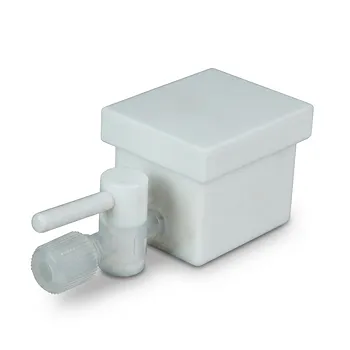
- Custom PTFE Corrosion Resistant Insulating Electrophoresis Reaction Cell with Septum and Valves for Low Background Trace Analysis
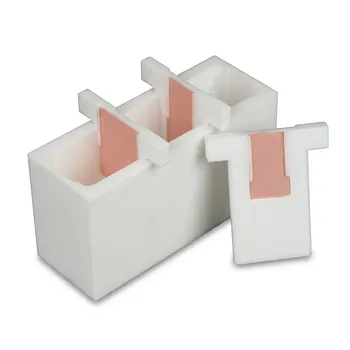
- White PTFE Electrolytic Cell with Movable Slider and Insulated Lid for Fluorine Corrosion Resistance
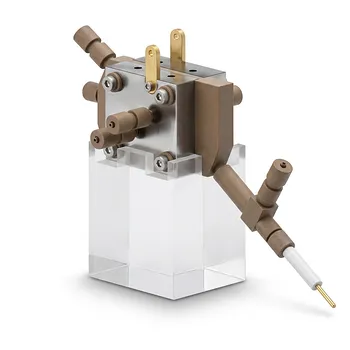
- Multi Functional Gas Diffusion Electrochemical Cell for CO2 Reduction and Solid State Membrane Electrode Assembly Electrolysis
- PTFE Anti Scald Heat Insulation Sleeve Hot Plate Support Feet Laboratory Benchtop Protection Customizable Thermal Barrier
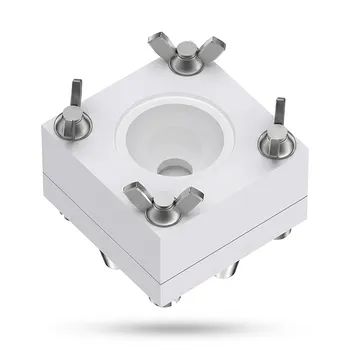
- PTFE Flat Plate Working Electrode Electrochemical Cell for Sheet Samples Corrosion Testing and SEM Sample Preparation
People Also Ask
- What industries use custom PTFE parts and for what purposes? Solve Critical Challenges with High-Performance Materials
- What industries benefit most from custom PTFE parts? Solve Extreme Environment Challenges
- What design considerations are important for custom PTFE parts? Design for Performance & Reliability
- What advantages do custom PTFE parts offer for industrial efficiency? Boost Uptime & Cut Costs
- What are the main advantages of using PTFE for custom parts? Solve Complex Engineering Challenges