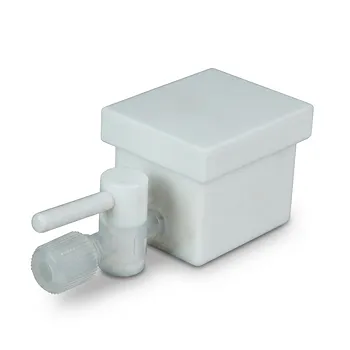
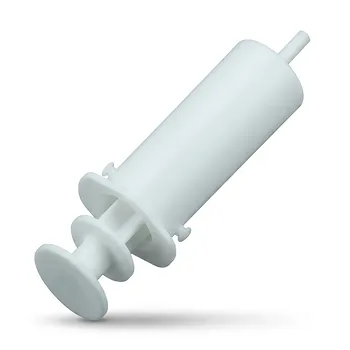
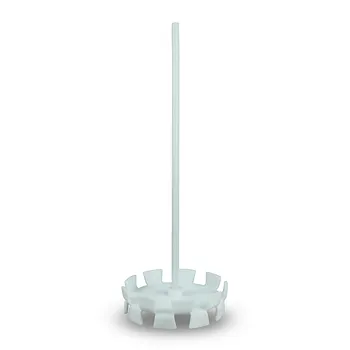
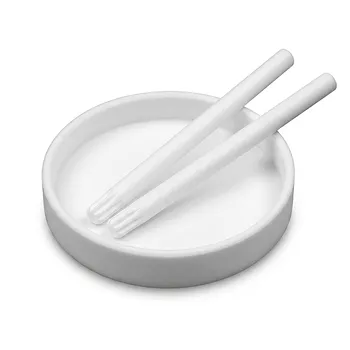
PTFE stands as a foundational material in laboratory science and fluid engineering. It possesses an exceptionally low coefficient of friction, typically measured between 0.05 and 0.10, which is comparable to the friction of ice sliding on ice. Combined with its ultra-low surface energy, these properties create a surface that is both inherently non-stick and self-lubricating, making it indispensable for precision fluid transfer and contamination-sensitive environments.
PTFE’s unique molecular structure results in the lowest friction of any solid material, ensuring that mechanical energy is used efficiently for sealing and that surfaces remain free of sticky or viscous residues.
The Mechanics of Low Friction in Fluid Systems
Efficient Torque Conversion for Sealing
In fluid transfer components like fittings and connectors, low friction is critical for mechanical efficiency. Because the material slides easily, the torque applied during installation is converted directly into compressive force rather than being lost to surface resistance. This ensures a more secure, leak-proof seal with less physical effort.
Self-Lubricating and Dry-Running Capabilities
PTFE exhibits a self-lubricating effect that remains constant across varying mechanical loads. In dynamic applications, such as stirrer shafts or moving seals, this allows for continuous dry running without the need for external lubricants that could contaminate sensitive laboratory samples.
Elimination of Stick-Slip Phenomena
The material possesses superb stick-slip capabilities, preventing the jerky motion often seen in mechanical systems when they transition from rest to movement. This leads to smoother operation in automated fluid handling systems and precision dosing equipment where consistent motion is required.
Surface Energy and Contamination Control
Resistance to Fouling and Residue
PTFE’s ultra-low surface energy creates a non-adhesive environment that prevents the buildup of viscous, sticky, or polymeric residues. This is particularly vital in laboratory glassware and tubing where sample carryover must be eliminated to ensure the integrity of subsequent experiments.
Clean Pouring and Reduced Waste
The non-stick nature of the material ensures that reagents and chemicals pour cleanly from beakers and bottles. By minimizing the amount of liquid that clings to the walls of a vessel, researchers can reduce reagent waste and improve the accuracy of volumetric transfers.
Simplified Maintenance and Cleaning
Because dyes, precipitates, and biological materials cannot easily bond to the surface, PTFE components are significantly easier to clean. This resistance to staining and fouling extends the lifespan of equipment like stirrer blades and prevents the cross-contamination that often occurs with stainless steel or glass.
Understanding the Trade-offs
Susceptibility to Creep and Cold Flow
While PTFE's friction is low, the material is relatively soft and prone to "cold flow" or creep under sustained pressure. Over time, a PTFE seal may deform, potentially requiring retightening or the use of reinforced grades to maintain long-term dimensional stability.
Vulnerability to Mechanical Wear
Because the surface is designed to be low-friction and non-stick, it is also susceptible to scratching by abrasive particles. In environments with heavy particulates, the soft surface of PTFE can be gouged, which may eventually compromise its non-stick properties and create sites for microbial or chemical entrapment.
How to Apply PTFE Properties to Your Project
Choosing the Right Material for Your Goal
- If your primary focus is leak prevention in high-pressure seals: Use PTFE to ensure that your installation torque is fully converted into a tight, compressive seal.
- If your primary focus is preventing sample contamination: Utilize PTFE-lined vessels and tubing to take advantage of the low surface energy that prevents residues from sticking to the walls.
- If your primary focus is low-maintenance mechanical motion: Implement PTFE bushings or stirrer shafts to benefit from self-lubrication and eliminate the need for oil-based lubricants.
By leveraging the ultra-low friction and surface energy of PTFE, you can achieve a level of fluid control and cleanliness that is unattainable with standard metallic or polymer components.
Summary Table:
| Property | Key Characteristic | Laboratory Application Benefit |
|---|---|---|
| Friction Coefficient | 0.05 – 0.10 (Like ice on ice) | Enables smooth mechanical motion and dry-running stirrer shafts. |
| Surface Energy | Ultra-low (Non-stick) | Prevents sample residue, carryover, and ensures clean pouring. |
| Sealing Efficiency | High torque conversion | Achieves leak-proof seals in fittings with minimal manual effort. |
| Maintenance | Chemical/Biological resistance | Simplifies cleaning and extends the lifespan of lab consumables. |
| Motion Control | No "stick-slip" phenomenon | Ensures consistent, jerky-free motion in automated dosing systems. |
Elevate Your Laboratory Precision with KINTEK Fluoropolymers
Maximize your research efficiency by leveraging the unmatched non-stick and low-friction properties of high-performance PTFE and PFA. From everyday basic labware like beakers, measuring cylinders, crucibles, and reagent bottles to precision fluid transfer components (tubing, fittings, valves) and sample prep tools (separatory funnels, filters, pipettes), KINTEK provides the high-purity solutions your experiments demand.
Our expertise extends to advanced and custom apparatus, including electrochemical cells, battery testing fixtures, and microwave digestion vessels. Backed by end-to-end custom CNC fabrication, we deliver everything from complex non-standard machined parts to high-volume orders of consumables like stirring bars, O-rings, and gaskets.
Ready to eliminate contamination and optimize your fluid systems? Contact our experts today to discover how our exclusive focus on high-performance fluoropolymers can transform your lab setup.
Related Products
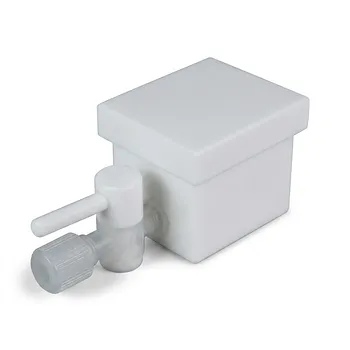
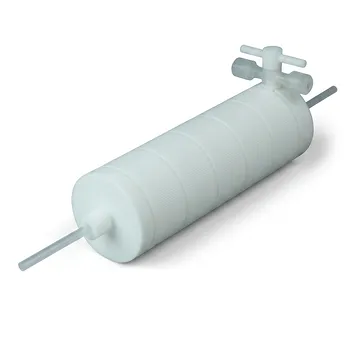
- Custom PTFE Filtration System Acid Resistant High Purity Semiconductor Grade Chemical Processing Filter
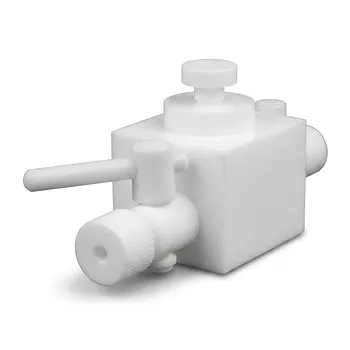
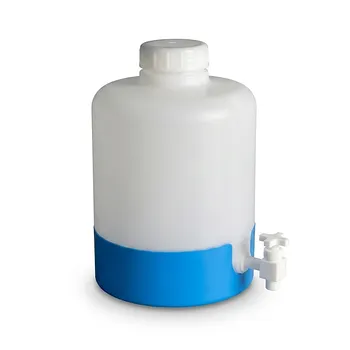
- High Corrosion Resistant PTFE Faucet Polytetrafluoroethylene Valve for Chemical Storage Drums and Fluid Transfer Systems Customizable Industrial Grade
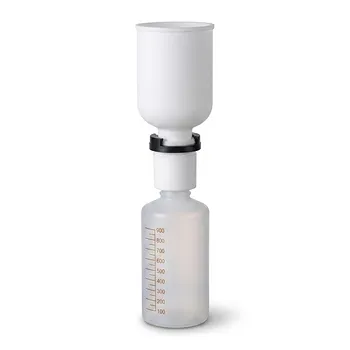
- PTFE PFA Vacuum Filtration System Corrosion Resistant Customizable Shatterproof Laboratory Device
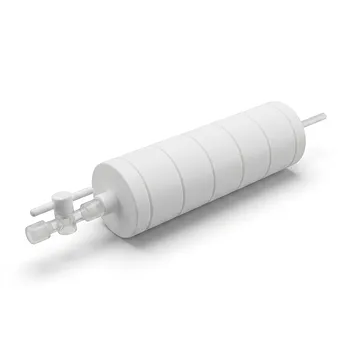
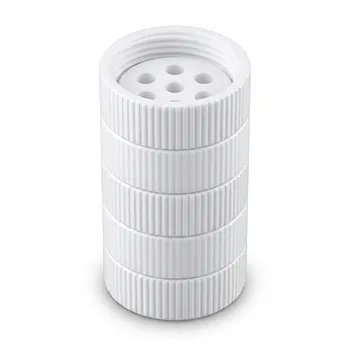
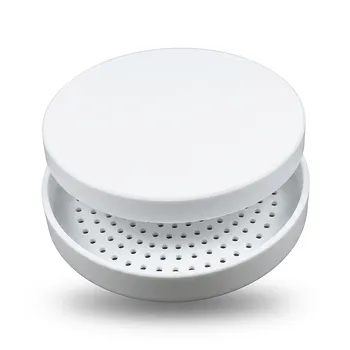
- PTFE Corrosion Resistant Filter with PFA Valve Connections and Integrated Sieve Plate
- High Temperature Chemical Resistant 50ml PTFE Syringe Customized Teflon Injector with Threaded Seal for Trace Analysis
People Also Ask
- What makes PTFE filtration systems advantageous for industrial and scientific use? Unmatched Chemical & Thermal Stability
- What sizes and pore options are available for PTFE filters? Choose the Right Filter for Your Application
- What steps are involved in selecting the proper PTFE filter? A 4-Step Guide to Optimal Filtration
- How does the hydrophobicity of PTFE filters benefit their use? Ensure Uninterrupted Gas Flow and Solvent Filtration
- What temperature resistance do PTFE filters offer? Unmatched Thermal Stability from -200°C to +260°C