Wet agglomeration is advantageous because it improves filler distribution and powder handling during filled PTFE compounding. By using water or a water-organic liquid mixture during agitation, manufacturers can control particle size distribution, powder flowability, and bulk density more effectively than with dry methods. The liquid medium also reduces segregation between PTFE and fillers such as glass fiber, carbon, bronze, graphite, or mica, producing more uniform agglomerates for demanding laboratory components.
Wet agglomeration helps ensure that each filled PTFE batch has consistent composition, density, and processing behavior. That uniformity allows engineers to tailor wear resistance, mechanical strength, dimensional stability, and thermal conductivity for specialized laboratory applications.
Why Filled PTFE Requires Careful Agglomeration
Fillers Correct PTFE’s Mechanical Limitations
Virgin PTFE offers excellent chemical resistance, low friction, non-stick behavior, dielectric performance, and high thermal stability. However, it can deform under sustained load and experience wear in demanding mechanical service.
Functional fillers improve these weaknesses. Glass fiber, carbon-based fillers, graphite, bronze, and mica can increase compressive strength, wear resistance, dimensional stability, and thermal performance while preserving much of PTFE’s chemical resistance.
Laboratory Components Operate Under Combined Stress
Specialized laboratory components may face corrosive chemicals, elevated temperatures, pressure, sliding contact, and repeated mechanical loading at the same time. Typical examples include high-pressure seals, mechanical stirrer bearings, pump impellers, bushings, and custom valve seats.
These applications require more than chemical compatibility. They also demand consistent material properties throughout the component, which makes filler distribution during compounding critical.
How Wet Agglomeration Improves the Compound
It Reduces Filler Segregation
Dry powders with different particle sizes, densities, and surface characteristics can separate during handling and mixing. Heavy bronze particles, lightweight fibers, and fine carbon or graphite powders may not remain uniformly distributed throughout the PTFE matrix.
During wet agglomeration, the liquid medium helps keep the PTFE and filler particles associated while they are being agitated. This reduces migration and produces agglomerates with a more consistent filler concentration.
It Improves Particle Size Control
Wet processing provides better control over the formation and growth of agglomerates. Manufacturers can produce a more suitable particle size distribution for subsequent handling, molding, or other forming operations.
A controlled distribution reduces the likelihood of excessive fines, oversized agglomerates, or inconsistent feed behavior. This supports more predictable processing of filled PTFE powders.
It Enhances Powder Flowability
Poorly flowing powder can bridge, rat-hole, or feed inconsistently through processing equipment. These problems become more likely when the formulation contains fine fillers or particles with significantly different physical properties.
Wet-agglomerated powder can have improved flow characteristics and more uniform bulk behavior. That makes weighing, transfer, feeding, and batch processing more consistent.
It Produces More Consistent Bulk Density
Bulk density affects how powder occupies a mold, container, or processing system. Significant variation can contribute to inconsistent fill levels, uneven compaction, and differences in the final part’s density.
By controlling agglomerate structure and particle distribution, wet methods help stabilize bulk density. This is particularly useful when producing laboratory parts that require reliable dimensional and mechanical performance.
How Uniformity Affects Laboratory Performance
Mechanical Strength Becomes More Predictable
A uniformly distributed filler reinforces the PTFE more consistently throughout the material. This helps reduce local weak regions that could deform or fail prematurely under pressure or mechanical loading.
The result is better control over properties needed in seals, bearings, bushings, and valve seats.
Wear Resistance Improves More Reliably
Fillers such as glass fiber, carbon, and graphite can improve resistance to wear and reduce the impact of continuous sliding or contact. However, the benefit depends on the filler being distributed consistently.
Agglomerates with uneven filler content can create localized wear behavior and inconsistent service life. Wet processing helps the finished compound deliver a more repeatable wear-resistance profile.
Dimensional Stability Is Better Controlled
Filled PTFE generally offers improved resistance to creep and lower thermal expansion than virgin PTFE. These properties are important where a seal, bearing, or valve seat must maintain its geometry under load and temperature changes.
Uniform compounding supports more consistent dimensional behavior across the finished component.
Thermal Conductivity Can Be Tailored
Carbon, graphite, and metallic fillers can modify the thermal conductivity of PTFE compounds. This allows designers to balance PTFE’s thermal stability with a greater ability to transfer heat in selected applications.
Wet agglomeration helps maintain a predictable filler concentration, making the resulting thermal behavior easier to control from batch to batch.
Protecting Hydrophilic Fillers During Wet Processing
Surface Treatments Can Limit Filler Migration
Some inorganic fillers interact readily with water and may migrate into the aqueous phase during processing. This can undermine the uniformity that wet agglomeration is intended to provide.
Surface treatments using organosilanes or silicone resins can reduce this tendency. They help maintain the association between hydrophilic fillers and the PTFE-containing powder during agitation.
Treatment Selection Matters
A surface treatment must be compatible with the filler, liquid medium, PTFE system, and intended end use. The treatment should support dispersion without introducing contamination that conflicts with laboratory requirements.
This consideration is especially important when components will contact aggressive chemicals, require high purity, or operate at elevated temperatures.
Understanding the Trade-offs
Moisture Must Be Removed Effectively
Wet agglomeration introduces a drying requirement that does not exist to the same extent in dry processing. Residual moisture can affect powder flow, storage stability, compaction, and final part quality.
Drying conditions therefore need to be controlled so that the agglomerates retain their desired structure without leaving unacceptable moisture behind.
The Liquid Medium Adds Process Complexity
Water or a water-organic mixture requires additional control of liquid composition, agitation, drying, and potentially solvent handling. Equipment and process validation may be more involved than for a simple dry blend.
The added complexity is justified when distribution uniformity and powder handling have a meaningful effect on component performance.
Surface Treatments Can Affect Purity
Organosilanes and silicone resins can help prevent filler migration, but they also introduce additional materials into the formulation. For specialized laboratory applications, their chemical compatibility, thermal behavior, and extractables must be evaluated.
The process should be designed around the application’s purity and contamination limits rather than treating surface treatment as universally appropriate.
Wet Processing Does Not Replace Formulation Control
Agglomeration cannot compensate for an unsuitable filler type, excessive filler loading, poor PTFE selection, or uncontrolled molding conditions. The final properties still depend on the complete material and manufacturing system.
Wet agglomeration is most valuable as part of a controlled compounding process with defined particle, density, moisture, and performance specifications.
Making the Right Choice for Your Goal
Wet agglomeration is most appropriate when the application depends on consistent filler distribution and predictable powder behavior.
- If your primary focus is uniform mechanical performance: Use wet agglomeration to reduce filler segregation and support consistent strength, creep resistance, and dimensional stability.
- If your primary focus is wear resistance: Select and distribute fillers such as glass fiber, carbon, or graphite uniformly so that sliding components receive consistent reinforcement.
- If your primary focus is thermal management: Use controlled filler loading and agglomeration to produce more predictable thermal conductivity.
- If your primary focus is processing reliability: Optimize wet agglomerate size, flowability, bulk density, and drying conditions for consistent feeding and compaction.
- If your primary focus is laboratory purity: Evaluate the liquid medium, surface treatments, residual moisture, and potential extractables before adopting the process.
For specialized laboratory components, wet agglomeration provides the process control needed to turn carefully selected fillers into consistently performing filled PTFE materials.
Summary Table:
| Advantage | Benefit |
|---|---|
| Reduced filler segregation | Consistent filler content in agglomerates, minimizing variability in mechanical and thermal properties. |
| Improved particle size control | Tailored distribution for better processing and compaction. |
| Enhanced powder flowability | Avoids bridging and ensures steady feeding during manufacturing. |
| Consistent bulk density | Uniform mold filling and part density for reliable dimensions. |
| Better mechanical strength | Predictable reinforcement, reducing weak spots in seals, bearings, etc. |
| Reliable wear resistance | Uniform distribution of wear-resistant fillers for consistent service life. |
| Controlled dimensional stability | Consistent creep and thermal expansion behavior under stress. |
| Tailored thermal conductivity | Predictable heat transfer for applications requiring thermal management. |
Optimize your filled PTFE components with uniform compounding. At KINTEK, we specialize in high-performance PTFE and PFA lab supplies—from custom seals and bearings to complete fluid handling systems. Our wet agglomeration expertise ensures consistent filler distribution for superior wear, strength, and purity. Contact us today to discuss your application and get a custom solution. Get in touch with our team.
Related Products
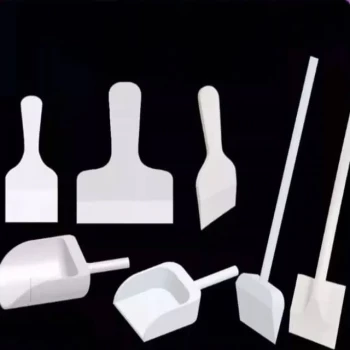
- Customizable PTFE Scrapers and Shovels for Demanding Applications
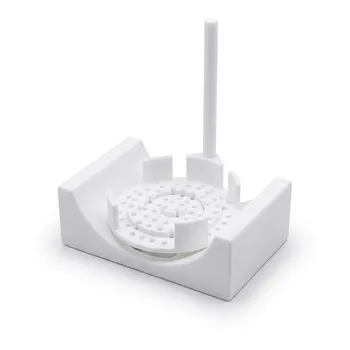
- 6 Inch PTFE Wafer Cleaning Rack for Wet Etching Acid and Alkali Resistant Fluoropolymer Wafer Carrier
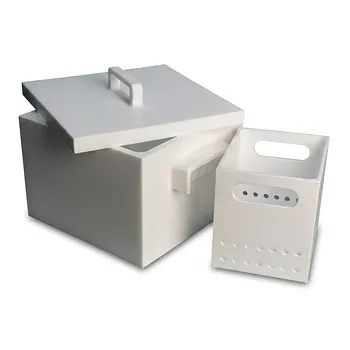
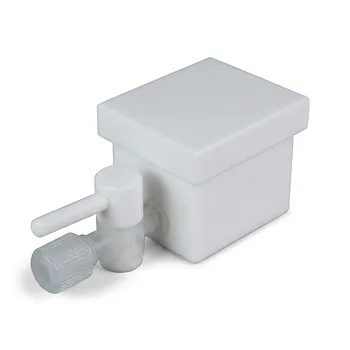
- High Purity Custom PTFE Square Tank Semiconductor Soaking Cleaning Acid Cylinder Corrosion Resistant Fluoropolymer Filtration Tank
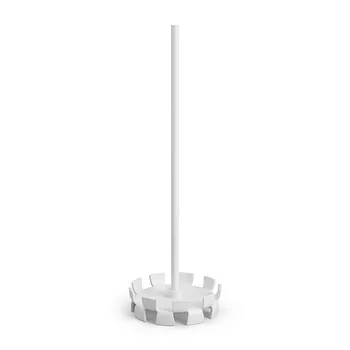
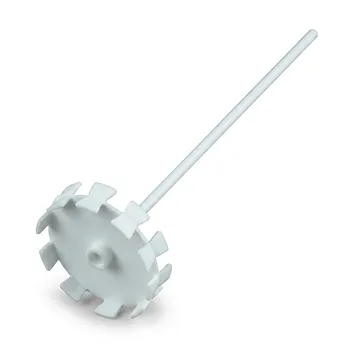
- Corrosion Resistant PTFE Dispersing Disc and High Temperature Propeller Stirring Paddle for Laboratory Chemical Mixing
- Custom PTFE Dispersing Disc and Stirring Rod for Chemical Processing and Laboratory Mixing
People Also Ask
- Why are PTFE shovels considered cost-effective? Maximize ROI with Superior Durability
- What are the advantages of PTFE shovels in terms of chemical resistance? Unmatched Inertness for Handling Corrosives
- How does the durability of PTFE shovels compare to plastic shovels? Discover the Superior Choice for Harsh Conditions
- What are the key properties that make PTFE shovels ideal for laboratory use? Ensure Sample Integrity with Chemically Inert Tools
- What are some specific applications of PTFE shovels in the laboratory? Ensure Sample Purity and Safety