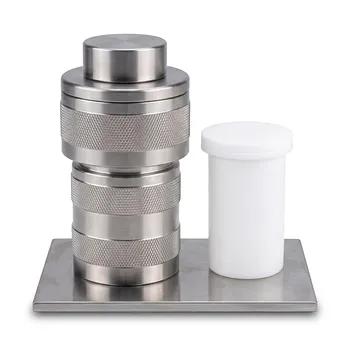
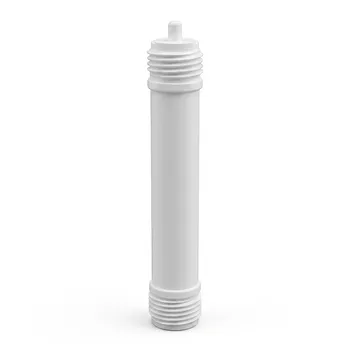
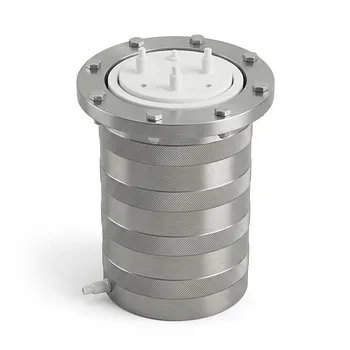
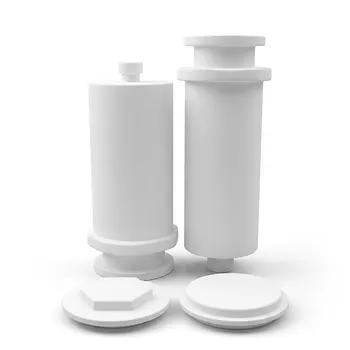
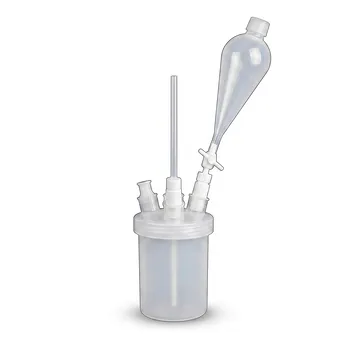
Fluoropolymer liners like PTFE and PFA are indispensable in hydrothermal synthesis. They provide a chemically inert and thermally stable reaction environment that protects the autoclave’s metal shell from aggressive reagents. By isolating the reaction, these liners prevent metal ion contamination, ensuring the high purity, crystalline integrity, and stable performance of the resulting nanocomposites.
PTFE and PFA liners act as a critical barrier that maintains reaction purity and equipment longevity. Their ability to withstand extreme chemical and thermal conditions makes them essential for synthesizing high-performance nanomaterials without metallic interference.
Protecting the Reaction Environment
Chemical Inertness and Corrosion Resistance
PTFE and PFA materials offer exceptional resistance to strong acids, bases, and organic solvents. In hydrothermal synthesis, these chemicals are often used as precursors or catalysts that would otherwise destroy metal reactor walls.
The liner acts as a direct contact layer, preventing reagents like sodium sulfide or thiourea from eroding the stainless steel outer shell. This isolation ensures that the reactor remains structurally sound over hundreds of cycles.
Thermal and Pressure Stability
These liners are designed to operate reliably at temperatures typically reaching up to 180°C. They maintain their physical stability while managing the autogenous pressure generated inside the vessel during heating.
By providing a sealed, constant-pressure environment, the liners facilitate molecular interaction. This is particularly important for achieving compatibility between different phases in complex polymer nanocomposites.
Ensuring Material Quality and Purity
Prevention of Metal Ion Contamination
The most significant advantage is the extremely low impurity leaching rate of fluoropolymers. Because the reaction is isolated from the metal jacket, there is no risk of iron, chromium, or nickel ions leaching into the product.
Maintaining this level of purity is vital for sensitive materials like quantum dots, nanocrystals, and nanoferrites. Even trace amounts of metal contamination can alter the electronic or magnetic properties of the final nanocomposite.
Promoting Structural Uniformity
A clean reaction environment directly influences the crystalline phase purity and microstructural uniformity of the materials. When synthesis occurs without external interference, the resulting nanoparticles achieve higher consistency.
For materials like Nanocellulose and Titanium Dioxide (NC/TiO2), this purity is the deciding factor in performance. It ensures that the photocatalytic activity remains stable and efficient for its intended application.
Enhancing Process Efficiency
Non-Stick Properties for Product Recovery
PTFE is well-known for its non-stick surface, which is highly beneficial when synthesizing high-viscosity polymers. This property ensures that the nanocomposites do not adhere to the walls, making the collection process easier and increasing the total yield.
Microwave Transparency
In microwave-assisted hydrothermal synthesis, PTFE and PFA are microwave-transparent. This allows the energy to pass directly through the liner and act upon the reaction solution.
This transparency leads to more efficient energy transfer and rapid heating. It results in faster reaction times and often produces nanomaterials with narrower size distributions.
Understanding the Limitations and Trade-offs
Temperature and Pressure Thresholds
While robust, PTFE and PFA have clear thermal limits, generally recommended for use below 220°C to 250°C depending on the specific grade. Exceeding these temperatures can cause the liner to soften or deform, leading to a potential seal failure.
Heat Transfer Dynamics
Fluoropolymers are thermal insulators compared to the metal shells they inhabit. This means there is a slight lag in heat transfer from the oven to the internal reaction media, which researchers must account for when timing their synthesis.
How to Apply This to Your Project
When selecting a liner for hydrothermal synthesis, your choice should align with the specific chemical and thermal requirements of your nanocomposite.
- If your primary focus is high-purity electronics or optics: Use high-purity PFA liners to ensure the lowest possible leaching of trace contaminants into your quantum dots or crystals.
- If your primary focus is aggressive chemical synthesis: Opt for PTFE liners when working with concentrated acids or bases at standard hydrothermal temperatures (up to 180°C).
- If your primary focus is maximizing yield of viscous polymers: Leverage the non-stick properties of PTFE to ensure easy recovery of the material without leaving residues in the vessel.
Choosing the right fluoropolymer liner is the most effective way to guarantee the chemical integrity and performance of your synthesized nanocomposites.
Summary Table:
| Feature | Advantage | Benefit |
|---|---|---|
| Chemical Inertness | Resists strong acids and bases | Protects reactor shell from corrosion |
| Low Leaching | Prevents metal ion contamination | Ensures high purity for quantum dots/crystals |
| Non-Stick Surface | Low friction and adhesion | Simplifies product recovery and increases yield |
| Thermal Stability | Operates up to 180°C-250°C | Maintains integrity during high-pressure synthesis |
| Microwave Transparency | Allows energy to pass through | Enables rapid, uniform heating in microwave reactors |
Elevate Your Synthesis with KINTEK’s Fluoropolymer Expertise
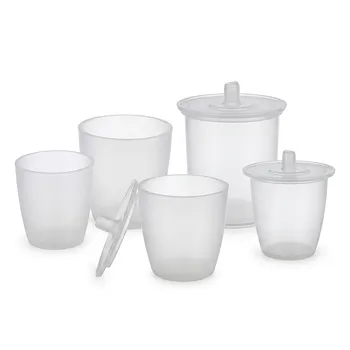
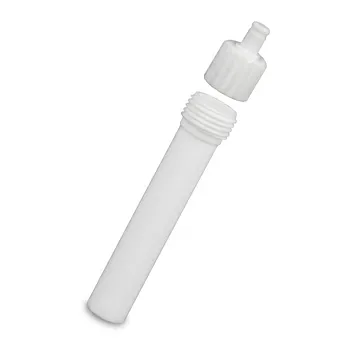
Ensure the absolute purity of your nanomaterials with high-performance laboratory solutions from KINTEK. We specialize in high-performance fluoropolymer materials, offering everything from everyday basic labware (beakers, crucibles, reagent bottles, and digestion tubes) to advanced reaction apparatus like hydrothermal synthesis liners, microwave digestion vessels, and custom electrochemical cells.
Whether you require comprehensive fluid transfer components (tubing, valves, fittings) or bespoke CNC-fabricated parts for unique laboratory setups, KINTEK provides the chemical inertness and thermal stability your research demands. Don't let metal contamination compromise your results—leverage our end-to-end manufacturing capabilities for both high-volume orders and complex non-standard parts.
Ready to optimize your lab’s performance? Contact us today to discuss your custom requirements!
References
- Shahid Ali Khan, Rukhsanda Aziz. Nanocellulose based titanium dioxide nanocomposites for the wastewater treatment of textile industry. DOI: 10.3389/fenvs.2025.1560070
This article is also based on technical information from Kintek Knowledge Base .
Related Products
- PTFE Lined High Pressure Digestion Vessel 50ml High Temperature Hydrothermal Synthesis Tank
- High Purity PTFE Microwave Digestion Vessel for Soil and Food Analysis Acid Resistant Fluoropolymer Sample Preparation Liners
- PTFE PFA Vacuum Filtration System Corrosion Resistant Customizable Shatterproof Laboratory Device
- High Purity PFA Crucible and Corrosion Resistant PTFE Beaker for Trace Analysis and Custom Laboratory Applications
- High Purity PTFE Microwave Digestion Vessel Replacement Liner for Acid Sample Preparation and Trace Analysis
People Also Ask
- What are the benefits of using a PTFE-lined vessel for carbon-sulfur cathode treatment? Maximize Purity & Performance
- Why are PTFE-lined pressure digestion vessels required for the preparation of Ag/CeO2 catalysts? Purity & Performance
- What safety features are typically incorporated into high-pressure PTFE digestion vessel designs? Ensure Lab Safety
- What is the function of PTFE lined high-pressure vessels in g-C3N4 synthesis? Achieve High-Purity Material Growth
- Role of High-Pressure Digestion Tanks in Perovskite Synthesis: Achieve Superior Stability and Latent Heat