DSC determines a fluoropolymer’s processing window by showing when the monomer melts, when polymerization begins, and how rapidly the cure proceeds. For fluorinated monomer systems such as TFVE and PFCB precursors, DSC records endothermic melting events and exothermic polymerization peaks while the sample is heated or held isothermally. The resulting onset temperature, peak temperature, reaction enthalpy, and residual heat release indicate suitable processing temperatures and the extent of monomer conversion.
DSC connects thermal behavior with processing decisions: the monomer must be sufficiently fluid for shaping, but the cure must occur predictably without premature gelation or thermal degradation.
How DSC Defines the Processing Window
Identifying the monomer melting range
The first relevant feature is the monomer melting endotherm. This event shows when the precursor absorbs heat and becomes sufficiently mobile for melt processing, mixing, filling, or molding.
A practical cure temperature must generally be high enough to produce a homogeneous melt. Processing below the effective melting range can cause poor flow, incomplete mixing, voids, or composition gradients.
Locating polymerization onset
As temperature increases, the DSC trace may show an exothermic polymerization peak. The onset of this exotherm marks the approximate temperature at which the curing reaction becomes significant.
For the referenced fluorinated monomer systems, polymerization behavior is evaluated across cure temperatures of approximately 130 °C to 210 °C. The onset and peak positions help establish how much temperature is available between melt formation and rapid reaction.
Assessing the width of the usable window
A broad exotherm, such as one beginning near 170 °C and reaching a maximum near 222 °C, indicates that polymerization occurs over an extended temperature interval rather than instantaneously.
This can provide a relatively broad melt-processing window. The precursor can be heated and shaped before the reaction accelerates enough to cause rapid viscosity growth or gelation.
The reported peak temperature can lie above the nominal cure range because the DSC peak reflects the temperature of maximum heat-release rate under the instrument’s specific heating conditions. It should not be interpreted as the only acceptable processing temperature.
How DSC Measures Cure Kinetics
Comparing cure temperatures
DSC can compare the reaction at different isothermal cure temperatures or under controlled heating rates. The heat-flow signal is integrated to obtain the polymerization enthalpy, which represents the heat released as reactive monomer groups are consumed.
Higher cure temperatures generally produce larger reaction rate constants. Consequently, the monomer’s apparent half-life decreases as the cure temperature increases.
Determining reaction rate
For isothermal DSC, the instrument measures heat flow as a function of time at a fixed cure temperature. Because heat release is related to reaction progress, the integrated signal can be used to estimate conversion:
[ \alpha(t) = \frac{\Delta H(t)}{\Delta H_{\text{total}}} ]
Here, (\alpha(t)) is the fractional conversion, (\Delta H(t)) is the heat released by time (t), and (\Delta H_{\text{total}}) is the total polymerization enthalpy measured for the reaction.
The resulting conversion-versus-time curves allow engineers to compare induction periods, reaction rates, time to a selected conversion, and approximate half-lives.
Evaluating temperature dependence
Rate constants measured at several temperatures can be analyzed with an Arrhenius relationship:
[ k = A e^{-E_a/(RT)} ]
This analysis estimates the apparent activation energy and helps predict how changing the cure temperature will affect processing time. It is particularly useful when selecting a cure schedule that balances production speed with dimensional control.
Confirming residual cure
A partially cured sample can be reheated in the DSC. Any remaining polymerization exotherm indicates that reactive material was not consumed during the original cure.
A strongly reduced or absent residual exotherm supports high conversion, but DSC alone does not guarantee complete conversion. Residual monomer analysis, spectroscopy, gel-content measurements, or other chemical and mechanical tests may be needed for confirmation.
Applying the Results to Component Synthesis
Selecting the shaping temperature
The selected processing temperature should create a stable, homogeneous melt while remaining below the region where polymerization becomes too rapid for the intended forming operation.
For bulk fabrication, a broad exotherm is advantageous because it gives more time for filling molds, coating surfaces, or forming fluid-transfer geometries before the material gels.
Designing the cure schedule
DSC data support a staged process:
- Heat the precursor above its melting range.
- Hold it long enough to achieve uniform flow and temperature.
- Apply a cure temperature that provides the required reaction rate.
- Continue the hold until the polymerization heat release is substantially complete.
- Recheck the cured material for residual exotherm when qualification requires it.
The exact schedule depends on component thickness, thermal conductivity, mold temperature, desired molecular structure, and allowable dimensional change.
Managing bulk polymerization
Bulk polymerization is sensitive to heat accumulation because the reaction is exothermic. A broad polymerization peak reduces the risk of an abrupt reaction, but the component’s size and heat-removal capability still matter.
DSC provides small-sample kinetics. Scale-up must account for the fact that a large part may not heat or dissipate reaction heat in the same way as the DSC specimen.
Connecting cure to final properties
Appropriate cure control helps produce an amorphous fluoropolymer structure with consistent physical properties. In high-purity fluid-transfer parts and specialized laboratory vessels, this consistency supports dimensional accuracy, chemical resistance, low extractables, and defect-free fabrication.
For semicrystalline materials such as PTFE or PFA, DSC also evaluates melting behavior, crystallinity, and thermal history. These measurements address sintering and recrystallization rather than the same melt-polymerization mechanism used for reactive TFVE or PFCB systems.
Using TGA Alongside DSC
Establishing the degradation limit
TGA measures mass loss during heating and identifies the onset of decomposition, moisture loss, and volatile release. This helps distinguish a practical cure temperature from a temperature that risks material degradation.
DSC shows where thermal events occur; TGA shows whether those events are accompanied by unacceptable mass loss.
Checking purity and volatile content
Unexpected mass loss in TGA can indicate residual solvent, moisture, unreacted volatile species, or processing contamination. These impurities can generate voids, bubbles, or extractables during fabrication.
For high-purity laboratory components, the combined DSC-TGA profile provides stronger evidence of material quality than either test alone.
Separating curing from decomposition
A DSC exotherm should be interpreted together with TGA data. A heat-release event without significant mass loss is more consistent with polymerization or another nonvolatile transition, while simultaneous mass loss raises concern about volatilization or degradation.
Understanding the Trade-offs
Higher temperature accelerates cure
Increasing the cure temperature raises the reaction rate constant and shortens the monomer half-life. This can improve throughput, but it also reduces the time available for filling, leveling, impregnation, or defect correction.
Faster cure can increase thermal gradients
A faster exotherm can produce localized heat buildup, especially in thick or poorly insulated components. Thermal gradients may cause uneven conversion, warping, internal stress, or void formation even when the DSC result looks acceptable at laboratory scale.
Broad processing windows are not unlimited
A broad exotherm improves process flexibility, but it does not remove the need to control residence time and temperature. Holding the material too long at elevated temperature can still cause unwanted post-cure, molecular changes, or degradation.
Heating-rate effects can mislead interpretation
Dynamic DSC peak temperatures depend on heating rate, sample mass, pan configuration, atmosphere, and thermal history. A peak measured during rapid scanning should not be treated as a direct production setpoint without validating the corresponding isothermal or programmed cure schedule.
Crystallinity requires separate interpretation
DSC melting peaks and crystallinity measurements are important for PTFE and other semicrystalline fluoropolymers, but they should not be confused with conversion of a reactive monomer. A melting transition describes phase behavior; a polymerization exotherm describes chemical reaction progress.
Making the Right Choice for Your Goal
DSC is most useful when its thermal measurements are converted into a validated process specification.
- If your primary focus is selecting a melt-processing window: Identify the monomer melting endotherm and polymerization onset, then choose a temperature that provides adequate flow before rapid cure begins.
- If your primary focus is maximizing production throughput: Use isothermal DSC to quantify rate constants and half-lives at candidate cure temperatures, then validate the schedule at component scale.
- If your primary focus is confirming conversion: Compare the original polymerization enthalpy with the residual exotherm from a reheated cured sample, supplementing DSC with an independent conversion test when required.
- If your primary focus is protecting material integrity: Pair DSC with TGA to establish the separation between curing, volatile release, and thermal decomposition.
- If your primary focus is controlling PTFE or PFA structure: Use DSC to evaluate melting history, crystallinity, and sintering behavior rather than applying reactive-monomer cure assumptions.
A well-designed DSC program turns thermal transitions and heat-release rates into processing temperatures, cure times, and quality-control criteria that can be validated for reliable fluoropolymer components.
Summary Table:
| Aspect | What DSC Measures | Implication for Processing |
|---|---|---|
| Monomer melting | Endothermic peak | Determines minimum temperature for melt flow |
| Polymerization onset | Exothermic peak onset | Marks start of cure reaction |
| Cure window | Peak shape and width | Indicates time/temperature flexibility |
| Cure kinetics | Isothermal heat flow | Provides conversion vs. time and half-life |
| Activation energy | Rate vs. temperature | Predicts cure time at different temperatures |
| Residual cure | Remaining exotherm on reheat | Confirms completion, but needs supplemental tests |
Optimize your fluoropolymer processing with precision DSC analysis. At KINTEK, our high-performance PTFE and PFA labware and custom machining support your cure and thermal testing needs. Contact us today to enhance your processing efficiency and product quality. Get in touch for expert support.
Related Products
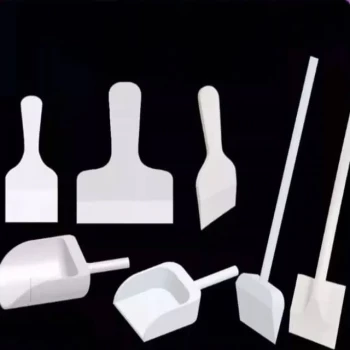
- Customizable PTFE Scrapers and Shovels for Demanding Applications
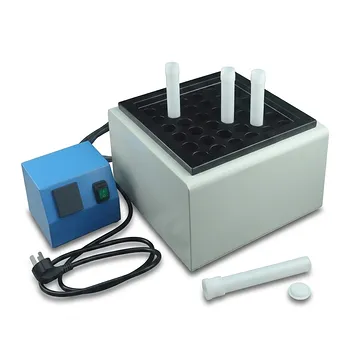
- Corrosion Resistant Graphite Digestion System with PID Digital Control for High Throughput Laboratory Sample Preparation
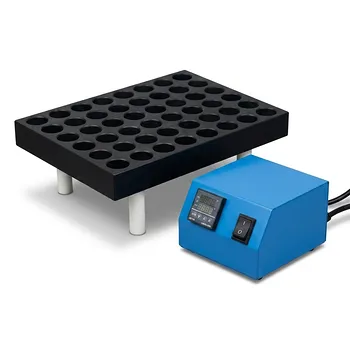
- High Purity Graphite Acid Digestion System Customizable Aluminum Alloy Heating Block for Trace Analysis Sample Preparation
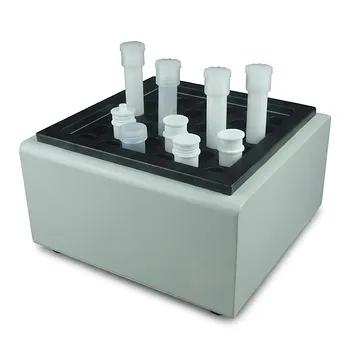
- Custom Graphite Digestion System and Acid Removal Unit with Anti Corrosion Coating for Microwave Digestion Vessels
- Multi Functional Gas Diffusion Electrochemical Cell for CO2 Reduction and Solid State Membrane Electrode Assembly Electrolysis
People Also Ask
- Why are PTFE shovels considered cost-effective? Maximize ROI with Superior Durability
- How does the durability of PTFE shovels compare to plastic shovels? Discover the Superior Choice for Harsh Conditions
- What are the advantages of PTFE shovels in terms of chemical resistance? Unmatched Inertness for Handling Corrosives
- What are the key properties that make PTFE shovels ideal for laboratory use? Ensure Sample Integrity with Chemically Inert Tools
- What are some specific applications of PTFE shovels in the laboratory? Ensure Sample Purity and Safety