PTFE’s exceptionally low surface energy makes laboratory plasticware highly non-wetting, which improves liquid release, sample recovery, and cleanability. With a critical surface energy of approximately 18.5 mN/m, untreated PTFE resists wetting by water and many common laboratory liquids, so droplets tend to remain beaded rather than spreading into a film. When PTFE must be bonded to another material, this same property becomes a problem: adhesives cannot readily wet or chemically interact with the fluoropolymer, so the surface must be modified before bonding.
PTFE is excellent for minimizing liquid retention, but difficult to bond in its untreated state. Its low surface energy supports clean, low-residue liquid handling; bonding usually requires chemical or physical treatment that increases surface energy and creates a more adhesive surface.
Why PTFE Resists Liquid Wetting
Low Surface Energy Limits Spreading
A liquid spreads across a solid when its surface interactions with that solid are favorable. PTFE has very weak surface interactions because its surface is densely covered by fluorine atoms, giving it a critical surface energy near 18 mN/m.
Liquids with higher surface tension therefore tend to form droplets with relatively high contact angles instead of forming a continuous film. Water, for example, typically shows strongly hydrophobic behavior on untreated PTFE.
The Effect Varies by Liquid
PTFE is highly water-repellent, but it is not equally non-wetting toward every laboratory reagent. Some low-surface-tension organic solvents can spread more readily across PTFE than water.
This distinction matters in experimental design: PTFE generally minimizes adhesion, but performance should be evaluated against the specific solvent, reagent concentration, temperature, and surface condition involved.
How Low Surface Energy Improves Laboratory Liquid Handling
Higher Sample Recovery
Liquid that does not spread across a vessel wall leaves less residual film behind. In beakers, dishes, digestion vessels, tubing, and transfer components, this can improve recovery of valuable or trace-level samples.
The benefit is especially important when the retained volume is significant relative to the total sample volume.
Lower Droplet Retention and Hold-Up Volume
PTFE’s non-wetting behavior reduces the tendency of droplets to remain attached to internal surfaces. In tubing, fittings, valves, and sample-transfer components, this can reduce residual hold-up volume and support more complete fluid transfer.
The result is more predictable recovery during repeated transfers or sequential processing steps.
Reduced Cross-Contamination
Less liquid residue means less material remains available to contaminate a subsequent sample or reagent. PTFE can therefore help reduce carryover between analytical cycles, provided the component is properly cleaned and the liquid is compatible with the PTFE surface.
Low adhesion does not replace validated cleaning procedures. It reduces retention; it does not guarantee that every contaminant will be removed.
Easier Cleaning
Because many liquids and residues do not strongly adhere to PTFE, rinsing and wiping are often more effective than with higher-energy plastics. The chemically inert fluoropolymer surface also tolerates many aggressive reagents used in laboratory processing.
Cleaning performance still depends on the residue itself, including whether it is particulate, viscous, biologically active, or chemically deposited.
Why Untreated PTFE Is Difficult to Bond
Adhesives Do Not Wet the Surface Easily
Adhesive bonding requires the adhesive to spread over the substrate and make intimate contact with it. Untreated PTFE has such low surface energy that many standard liquid adhesives contract into droplets instead of forming a continuous layer.
Poor wetting creates weak or incomplete contact even when the adhesive appears to be present.
PTFE Offers Few Sites for Strong Adhesion
The fluorinated surface is chemically inert and does not readily provide the polar interactions or hydrogen-bonding sites that help many adhesives attach to other materials. This limits the effectiveness of ordinary adhesive systems and primers.
Mechanical attachment may work for some designs, but it does not provide the same continuous interface as a properly prepared bonded joint.
Methods Used When PTFE Bonding Is Required
Alkali Metal Chemical Etching
A widely used approach is alkali metal etching, often based on sodium-containing chemical systems. The treatment modifies or removes part of the fluorinated surface layer, exposing a more chemically active, higher-energy surface.
The treated area becomes more wettable, allowing an adhesive to spread and form a stronger bond. Because the treatment changes the surface rather than the bulk PTFE, it is normally applied only to the intended bonding region.
Specialized Fluoropolymer Surface Treatments
Commercial chemical treatments are available specifically for PTFE and related fluoropolymers. These systems are selected to increase surface energy and improve adhesive wetting while fitting the required process, safety, and environmental controls.
Treatment effectiveness depends on preparation quality, storage time after treatment, adhesive selection, and the service conditions of the finished assembly.
Plasma, Corona, or Other Energetic Treatments
Physical surface activation methods such as plasma or corona treatment can increase surface energy by modifying the outermost polymer layer. These methods may be useful where chemical etchants are undesirable or where controlled, localized activation is required.
Their effectiveness on PTFE depends strongly on process parameters and treatment uniformity. The activated surface may also lose performance over time, so bonding is generally performed promptly after treatment.
Mechanical Preparation and Primers
Light abrasion can increase the effective surface area and provide some mechanical keying, but abrasion alone is usually insufficient for dependable PTFE adhesive bonding because it does not fully overcome the polymer’s low surface energy and chemical inertness.
Specialized primers may be used with an appropriate adhesive system. They should be validated for chemical compatibility, cleanliness requirements, temperature exposure, and the intended laboratory application.
Understanding the Trade-offs
The Best Liquid-Handling Surface Is Not the Best Bonding Surface
PTFE’s non-stick behavior and its bonding difficulty have the same underlying cause: extremely low surface energy and chemical inertness. Improving adhesion requires deliberately changing the surface properties that make PTFE valuable for liquid release.
Bonding treatment should therefore be confined to areas where attachment is necessary, preserving untreated PTFE where non-wetting behavior is important.
Surface Treatment Can Affect Chemical Performance
Etching or energetic treatment changes the outer surface layer. The modified area may no longer have exactly the same repellency, cleanliness, or chemical resistance as untreated PTFE.
For trace analysis, pharmaceutical work, and biological applications, the treatment chemistry and any residual contaminants must be assessed as part of the qualification process.
Bond Strength Depends on More Than Surface Energy
Increasing surface energy improves adhesive wetting, but it does not by itself guarantee a durable joint. Adhesive chemistry, joint geometry, cure conditions, thermal expansion, chemical exposure, and mechanical loading all influence final bond performance.
A treated PTFE surface should therefore be tested with the actual adhesive, mating substrate, and operating environment.
Aging and Handling Matter
Activated PTFE surfaces can be sensitive to contamination and may lose some of their improved bonding characteristics during storage. Oils, dust, moisture, and handling can reduce the effectiveness of the preparation.
Cleaning, treatment, adhesive application, and assembly should be controlled as one process rather than treated as independent steps.
Making the Right Choice for Your Goal
The appropriate approach depends on whether the priority is liquid release, structural attachment, or both.
- If your primary focus is maximum sample recovery: Use untreated PTFE in wetted regions to minimize droplet adhesion, residual film, and hold-up volume.
- If your primary focus is reliable adhesive bonding: Chemically or physically activate the bonding area, then use an adhesive system validated for treated PTFE and the intended service conditions.
- If your primary focus is both non-wetting and structural integration: Keep the liquid-contact surface untreated and localize etching, plasma treatment, or primer application to the non-wetted joint region.
- If your primary focus is trace-level cleanliness: Qualify the surface-treatment chemistry, cleaning process, and extractables profile before placing the bonded component into analytical service.
PTFE delivers its strongest liquid-handling advantages when its low-energy surface remains intact, while dependable bonding requires carefully controlled activation of only the areas that must adhere.
Summary Table:
| Aspect | Impact of Low Surface Energy | Bonding Requirement |
|---|---|---|
| Liquid wetting | Non-wetting, droplets bead up, less film | Not required; beneficial for recovery |
| Sample recovery | Higher recovery, less retention | Not applicable |
| Hold-up volume | Reduced in tubing/fittings | Not applicable |
| Cross-contamination | Lower carryover potential | Not applicable |
| Cleaning | Easier rinsing/cleaning | Not applicable |
| Adhesive bonding | Poor wetting, weak adhesion | Requires surface activation |
| Etching | Increases surface energy for bonding | Necessary for strong bonds |
| Plasma/Corona | Increases surface energy | Useful for localized activation |
| Mechanical prep | Insufficient alone | Must combine with chemical or energetic treatment |
Enhance Your Laboratory's Efficiency with KINTEK's PTFE Solutions
At KINTEK, we specialize in high-performance fluoropolymers, offering a complete range of PTFE and PFA labware designed to maximize sample recovery and minimize contamination. Whether you need standard beakers, high-purity analysis tools, or custom machined components, our expertise ensures optimal performance for your liquid handling applications. Need bonding? We provide precise surface treatment services to achieve reliable adhesion without compromising your critical wetted surfaces.
Contact us today to discuss your requirements and discover how KINTEK's products can improve your lab's productivity and accuracy. Get in touch with our team for a personalized consultation!
Related Products
- Custom PTFE Filtration System Acid Resistant High Purity Semiconductor Grade Chemical Processing Filter
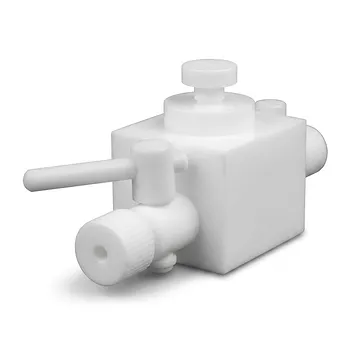
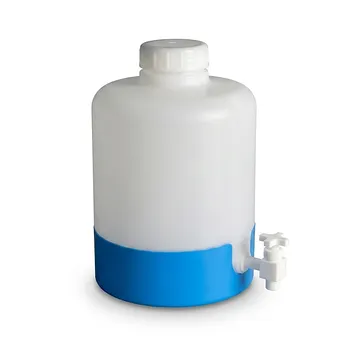
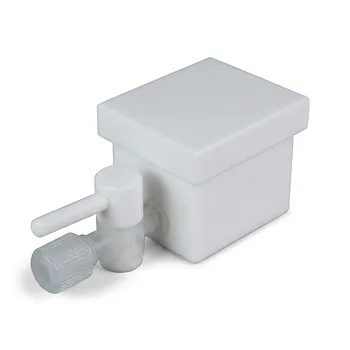
- High Corrosion Resistant PTFE Faucet Polytetrafluoroethylene Valve for Chemical Storage Drums and Fluid Transfer Systems Customizable Industrial Grade
- PTFE PFA Vacuum Filtration System Corrosion Resistant Customizable Shatterproof Laboratory Device
- PTFE Corrosion Resistant Filter with PFA Valve Connections and Integrated Sieve Plate
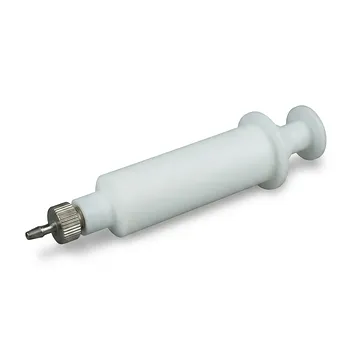
- High Temperature Chemical Resistant 50ml PTFE Syringe Customized Teflon Injector with Threaded Seal for Trace Analysis
People Also Ask
- What makes PTFE filtration systems advantageous for industrial and scientific use? Unmatched Chemical & Thermal Stability
- What sizes and pore options are available for PTFE filters? Choose the Right Filter for Your Application
- What steps are involved in selecting the proper PTFE filter? A 4-Step Guide to Optimal Filtration
- What temperature resistance do PTFE filters offer? Unmatched Thermal Stability from -200°C to +260°C
- How does the hydrophobicity of PTFE filters benefit their use? Ensure Uninterrupted Gas Flow and Solvent Filtration