The chemical inertness of Polytetrafluoroethylene (PTFE) is primarily driven by the exceptional strength of the Carbon-Fluorine (C-F) bond and the physical shielding provided by its helical structure. This molecular arrangement creates a dense, electron-rich sheath of fluorine atoms that surrounds and protects the carbon backbone. Because the C-F bond is one of the strongest in organic chemistry (approximately 485 kJ/mol), it requires immense energy to break, rendering the polymer virtually non-reactive to most acids, bases, and solvents used in laboratory settings.
Core Takeaway: PTFE's legendary resistance to chemical attack is not the result of a single factor, but a synergy between extreme bond strength and a physical "armor" of fluorine atoms that prevents reactive species from ever reaching the carbon chain.
The Foundation of Resistance: The C-F Bond
Unrivaled Bond Energy
The carbon-fluorine bond is the cornerstone of PTFE’s stability. At roughly 485 kJ/mol, these bonds are incredibly difficult to rupture through thermal or chemical means.
In a laboratory environment, most reagents lack the necessary energy to overcome this threshold. This ensures the material remains structurally intact even when exposed to concentrated acids and aggressive oxidizers.
High Electronegativity and Electronic Stability
Fluorine is the most electronegative element, meaning it holds its electrons with extreme tenacity. This creates a non-polar, electron-dense surface across the polymer chain.
Because the electrons are so tightly bound, the molecule exhibits minimal polarizability. This makes it nearly impossible for other chemicals to induce a dipole and initiate a reaction.
Physical Protection: The Helical Sheath
The Steric Hindrance Effect
The fluorine atoms in PTFE are large enough to form a continuous, uniform sheath around the carbon-carbon backbone. This physical crowding is known as steric hindrance.
This sheath acts as a literal barrier, preventing external molecules from physically reaching the carbon core. Even if a reagent were theoretically capable of reacting with carbon, it simply cannot gain access to the bond site.
The Helical Conformation
To accommodate the size of the fluorine atoms, the PTFE chain twists into a three-dimensional helical structure. This spiral shape ensures that the carbon backbone is completely "buried" within the fluorine envelope.
This specific geometry is what makes PTFE intractable in almost all solvents. The structure is so well-protected that solvents cannot intercalate between the chains to dissolve the material.
Understanding the Trade-offs and Vulnerabilities
Limitations with Alkali Metals
While PTFE is "practically inert," it is not invincible. It can be aggressively attacked by molten alkali metals (such as sodium) and certain highly reactive fluorinating agents like chlorotrifluoride.
These substances are powerful enough to strip fluorine atoms away from the carbon chain. This process, often called "etching," is sometimes used intentionally to make PTFE surfaces bondable, but it destroys the material's inertness.
Thermal and Pressure Constraints
At extreme temperatures and pressures, the mechanical integrity of PTFE can begin to fail before its chemical bonds do. While the bonds are strong, the polymer can undergo cold flow or deformation under heavy loads.
Additionally, while PTFE is thermally stable up to approximately 260°C, exceeding these temperatures can cause the release of toxic fluorinated vapors. This limits its use in ultra-high-temperature chemical synthesis.
How to Apply This to Your Laboratory Work
Selecting the Right Material for Your Goal
- If your primary focus is handling concentrated mineral acids: PTFE is the definitive choice for liners, tubing, and stir bars due to its total resistance to protonation and oxidation.
- If your primary focus is working with molten sodium or potassium: Avoid PTFE entirely, as these alkali metals will strip the fluorine sheath and cause the polymer to char and fail.
- If your primary focus is preventing sample contamination: Use PTFE-lined containers to ensure that no plasticizers or unreacted monomers leach into your organic solvents, thanks to its intractable molecular structure.
- If your primary focus is high-pressure sealing: Be mindful of "creep" or cold flow; consider glass-filled or chemically modified PTFE grades that offer better dimensional stability under load.
By understanding the dual protection of bond strength and helical shielding, researchers can confidently utilize PTFE as the ultimate barrier against chemical interference in the lab.
Summary Table:
| Key Feature | Molecular Mechanism | Laboratory Benefit |
|---|---|---|
| C-F Bond Energy | ~485 kJ/mol | Resists degradation from aggressive acids and oxidizers |
| Helical Sheath | Steric hindrance | Physically shields the carbon backbone from reagents |
| Electronegativity | High electronic stability | Prevents chemical reactions by minimizing polarizability |
| Insoluble Structure | Intractable chains | Eliminates leaching and protects sample integrity |
Elevate Your Lab Performance with KINTEK’s High-Performance PTFE Solutions
Precision in the lab starts with materials that won’t compromise your results. KINTEK specializes in manufacturing a comprehensive range of laboratory supplies crafted with an exclusive focus on high-performance fluoropolymer materials.
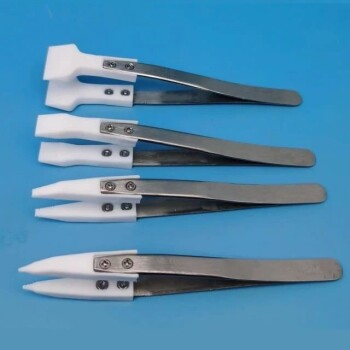
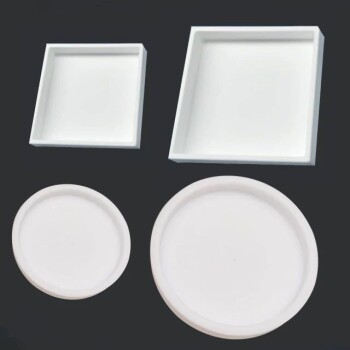
Our extensive catalog ranges from everyday basic labware like beakers, crucibles, and centrifuge tubes to specialized fluid transfer components (tubing, fittings, valves) and sample prep tools (filters, pipettes, tweezers). For advanced research, we provide electrochemical cells, hydrothermal synthesis liners, and microwave digestion vessels, all backed by our end-to-end custom CNC fabrication for bespoke non-standard parts.
Ready to eliminate chemical interference and secure your research?
Contact KINTEK today to discuss your standard or custom requirements.
Related Products
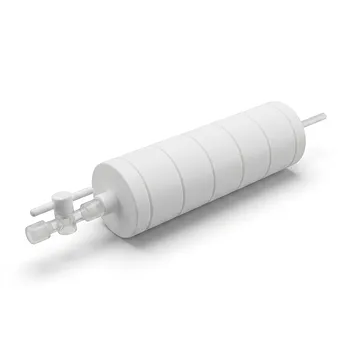
- Custom PTFE Filtration System Acid Resistant High Purity Semiconductor Grade Chemical Processing Filter
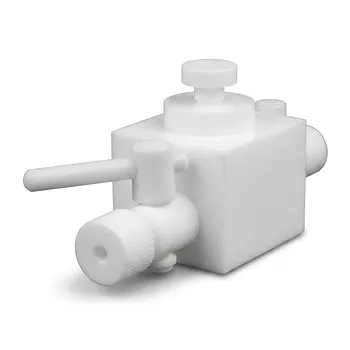
- High Corrosion Resistant PTFE Faucet Polytetrafluoroethylene Valve for Chemical Storage Drums and Fluid Transfer Systems Customizable Industrial Grade
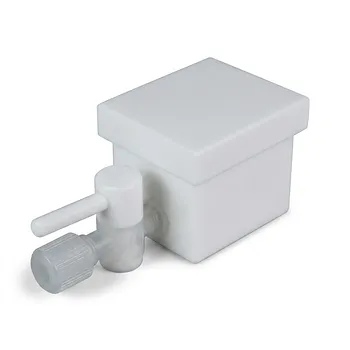
- PTFE PFA Vacuum Filtration System Corrosion Resistant Customizable Shatterproof Laboratory Device
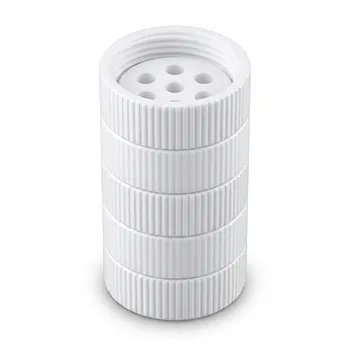
- PTFE Corrosion Resistant Filter with PFA Valve Connections and Integrated Sieve Plate
- High Temperature Chemical Resistant 50ml PTFE Syringe Customized Teflon Injector with Threaded Seal for Trace Analysis
People Also Ask
- What makes PTFE filtration systems advantageous for industrial and scientific use? Unmatched Chemical & Thermal Stability
- What sizes and pore options are available for PTFE filters? Choose the Right Filter for Your Application
- What steps are involved in selecting the proper PTFE filter? A 4-Step Guide to Optimal Filtration
- How does the hydrophobicity of PTFE filters benefit their use? Ensure Uninterrupted Gas Flow and Solvent Filtration
- What temperature resistance do PTFE filters offer? Unmatched Thermal Stability from -200°C to +260°C