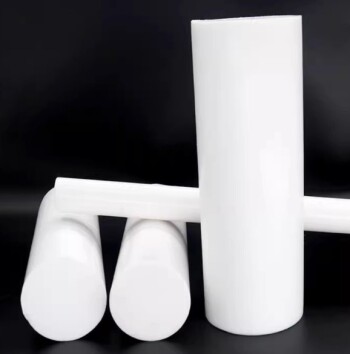
PTFE’s chemical inertness and thermal performance come from a fully fluorinated molecular architecture. Its carbon backbone is surrounded by fluorine atoms, and the strong, stable C–F bonds shield the chain from chemical attack. This combination makes PTFE highly resistant to acids, bases, solvents, and elevated temperatures, which is why it is used for laboratory beakers, digestion vessels, tubing, valves, and high-purity containers.
The key principle is molecular shielding: tightly bound fluorine protects the carbon backbone, while strong C–F and C–C bonds resist chemical breakdown and thermal disruption. However, PTFE is highly resistant—not absolutely impervious—and its mechanical performance declines before its chemical resistance does.
How the Molecular Structure Creates Chemical Inertness
Fluorine forms a protective sheath
In PTFE, the repeating unit is –CF₂–CF₂–. Fluorine atoms surround the carbon backbone in a dense helical arrangement, limiting direct access to the underlying carbon atoms and C–C bonds.
This “fluorine sheath” makes it difficult for reagents to reach or react with the polymer chain. The molecular structure therefore protects the material from many aggressive laboratory chemicals.
Strong C–F bonds resist chemical attack
The carbon–fluorine bond is exceptionally strong and highly polarized because fluorine is extremely electronegative. Breaking or replacing these bonds requires substantial energy, so common acids, bases, and organic solvents generally do not attack PTFE under normal laboratory conditions.
The polymer backbone also contains strong carbon–carbon bonds, further contributing to its resistance to chain scission and chemical degradation.
The surface has very low chemical reactivity
Fluorine-rich surfaces have low surface energy and are both hydrophobic and oleophobic. Liquids tend to spread less readily, and many substances adhere weakly to PTFE.
For laboratory equipment, this reduces the likelihood of sample retention, cross-contamination, and difficult cleaning. It is particularly valuable in trace analysis, chemical digestion, and high-purity fluid handling.
How the Structure Supports Thermal Performance
Strong bonds require high energy to disrupt
The same bond strength that provides chemical resistance also improves thermal stability. Heat must supply substantial energy before the polymer chains undergo significant chemical breakdown.
As a result, PTFE can handle temperatures far beyond those tolerated by many conventional hydrocarbon plastics. Its melting point is approximately 327°C, although its practical operating temperature is lower.
Fluorine packing increases chain protection
The tightly packed fluorine atoms and helical chain conformation help maintain the integrity of the polymer under heating. This structure limits access to the backbone and reduces the likelihood of thermally driven molecular rearrangement at moderate operating temperatures.
For equipment such as digestion vessels and tubing, this allows chemical exposure and elevated temperature to occur simultaneously without rapid material degradation.
Thermal resistance is not the same as unlimited temperature capability
PTFE typically supports continuous use at temperatures around 260°C, depending on the design, load, duration, and manufacturer’s specification. Above its melting range, it loses its solid form, and at substantially higher temperatures it can decompose and release hazardous products.
The correct conclusion is therefore high thermal stability within a defined operating range, not complete immunity to heat.
Why These Properties Matter in Laboratory Equipment
Digestion vessels and reaction components
PTFE vessels can contain strong acids and other aggressive reagents during sample preparation because the polymer is unlikely to contribute ions, dissolve, or react under typical digestion conditions.
This helps preserve sample composition and reduces contamination from the container itself.
Tubing, valves, and fittings
The chemically shielded surface is useful for transferring corrosive or high-purity fluids. PTFE tubing and fittings resist many reagents while also offering low friction, which supports fluid movement and reduces material buildup.
For demanding systems, PFA may be selected when greater transparency, flexibility, or melt-processability is required, while retaining much of the chemical resistance associated with perfluorinated polymers.
High-purity containers
PTFE’s low reactivity and low surface adhesion make it suitable for containers used in trace-element analysis and sensitive chemical measurements. The material is less likely than many conventional plastics to leach reactive additives or retain residues.
Actual purity still depends on manufacturing, cleaning, fillers, seals, and the complete equipment design—not only on the PTFE resin.
Understanding the Trade-offs
Chemical resistance does not eliminate every compatibility concern
PTFE resists most common laboratory chemicals, but certain conditions can cause damage. Highly reactive fluorinating agents, molten alkali metals, and some specialized reagents can attack fluoropolymers.
Compatibility must therefore be checked against the specific chemical, concentration, temperature, exposure time, and pressure.
Mechanical strength decreases at elevated temperature
PTFE remains chemically stable at temperatures where it may begin to soften, creep, or deform under load. Its relatively low stiffness and tendency toward cold flow can affect threaded connections, seals, dimensional tolerances, and unsupported vessels.
Designs operating under pressure or sustained mechanical stress may require reinforcement, a different fluoropolymer, or a supporting structure.
Processing and contamination require attention
PTFE is difficult to melt-process compared with many thermoplastics, so components are commonly manufactured through specialized methods. Poor processing, fillers, machining debris, or inadequate cleaning can compromise performance even when the base polymer is chemically inert.
Low surface energy also means that bonding, coating, and sealing PTFE can be challenging.
How to Apply This to Your Project
The molecular structure explains PTFE’s capabilities, but equipment selection should also consider temperature, pressure, mechanical loading, chemical exposure, and contamination requirements.
- If your primary focus is chemical resistance: Choose PTFE when the application involves strong acids, bases, solvents, or corrosive digestion media, after verifying compatibility with any unusually reactive reagents.
- If your primary focus is high-temperature operation: Use PTFE within the manufacturer’s continuous-use and pressure limits, recognizing that mechanical deformation can occur before chemical degradation.
- If your primary focus is sample purity: Prefer high-purity, properly cleaned PTFE components and evaluate the entire assembly, including seals, fittings, additives, and manufacturing residues.
- If your primary focus is dimensional stability or flexibility: Compare PTFE with alternatives such as PFA or reinforced fluoropolymer designs, because chemical resistance alone does not determine the best mechanical solution.
PTFE performs so well in harsh laboratory environments because its fluorine-shielded carbon backbone separates chemical resistance from many of the reaction pathways that damage ordinary polymers.
Summary Table:
| Property | Contribution from Molecular Structure | Practical Impact on Lab Equipment |
|---|---|---|
| Chemical inertness | Dense fluorine atoms shield the carbon backbone; strong C-F bonds resist attack | Resists acids, bases, solvents; low reactivity reduces contamination |
| Thermal performance | Strong C-F and C-C bonds require high energy to disrupt; tightly packed fluorine chains | Continuous use up to 260°C; melting point ~327°C |
| Surface properties | Low surface energy from fluorine | Hydrophobic/oleophobic; reduces sample retention and eases cleaning |
| Mechanical stability | Not directly from structure, but affected by C-F bond strength | Softening and creep at high temperatures; design must consider load |
| Processing limitations | Melt processing difficult due to high viscosity | Requires specialized manufacturing; may affect part integrity if poorly processed |
Maximize your lab's performance with KINTEK's high-purity PTFE and PFA labware. Whether you need digestion vessels, tubing, or custom-machined components, our fluoropolymer products deliver superior chemical resistance and thermal stability. Contact our experts today to find the perfect solution for your application and ensure reliable results every time. Get in touch with us.
Related Products
- Custom PTFE Filtration System Acid Resistant High Purity Semiconductor Grade Chemical Processing Filter
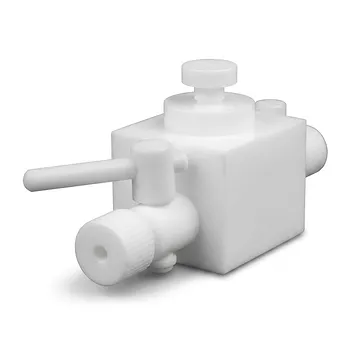
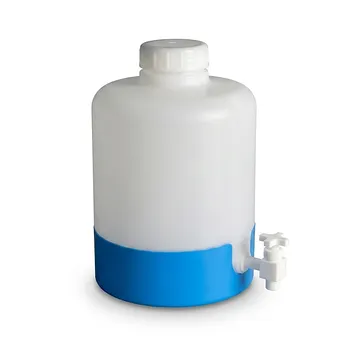
- High Corrosion Resistant PTFE Faucet Polytetrafluoroethylene Valve for Chemical Storage Drums and Fluid Transfer Systems Customizable Industrial Grade
- PTFE PFA Vacuum Filtration System Corrosion Resistant Customizable Shatterproof Laboratory Device
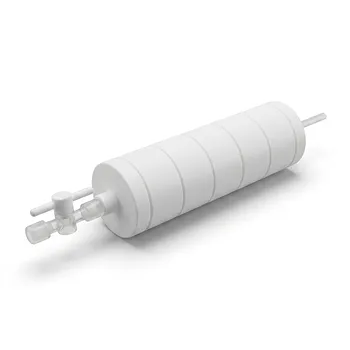
- PTFE Corrosion Resistant Filter with PFA Valve Connections and Integrated Sieve Plate
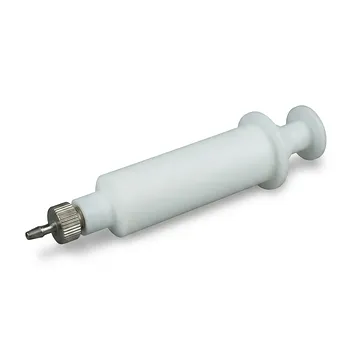
- High Temperature Chemical Resistant 50ml PTFE Syringe Customized Teflon Injector with Threaded Seal for Trace Analysis
People Also Ask
- What makes PTFE filtration systems advantageous for industrial and scientific use? Unmatched Chemical & Thermal Stability
- What steps are involved in selecting the proper PTFE filter? A 4-Step Guide to Optimal Filtration
- What sizes and pore options are available for PTFE filters? Choose the Right Filter for Your Application
- What temperature resistance do PTFE filters offer? Unmatched Thermal Stability from -200°C to +260°C
- How does the hydrophobicity of PTFE filters benefit their use? Ensure Uninterrupted Gas Flow and Solvent Filtration