Autoignition temperature creates a direct ignition risk when solvent-based fluoropolymer processing is performed at high temperatures. During baking, solvent vapors can accumulate in an overloaded or poorly ventilated oven until their concentration falls between the lower explosive limit (LEL) and upper explosive limit (UEL). If a heating element or oven surface reaches the solvent’s autoignition temperature, the vapor-air mixture can ignite without a spark or open flame, potentially causing an explosion.
The central hazard is the combination of flammable vapor, oxygen, and sufficient heat. Solid PTFE and PFA laboratory components remove the solvent carrier from the process, which greatly reduces vapor-ignition risk, but they still require strict temperature control because fluoropolymers can degrade and release hazardous fumes when overheated.
Why Solvent-Based Processing Becomes Hazardous
High bake temperatures can overlap solvent ignition thresholds
Fluoropolymer coating systems are commonly cured at approximately 300°C to 550°C. These temperatures can overlap or exceed the autoignition temperatures of organic solvents such as ketones, hydrocarbons, and glycol ethers.
Autoignition is the temperature at which a vapor-air mixture ignites spontaneously in the presence of oxygen. No external spark, flame, or visible ignition source is required.
Vapor concentration determines whether ignition is possible
A solvent vapor is not explosive at every concentration. It must accumulate within a specific flammable range bounded by its LEL and UEL.
An overloaded oven can release solvent faster than its ventilation system removes it. Once the vapor concentration enters this range, the oven atmosphere can become capable of rapid combustion.
Hotspots can ignite vapor without an obvious ignition source
Heating elements, interior walls, and localized surface hotspots may be substantially hotter than the oven’s displayed setpoint. If one of these surfaces exceeds the solvent’s autoignition temperature, it can ignite the surrounding vapor-air mixture.
This is why a clean-looking oven can still present an explosion hazard. The critical factors are vapor concentration, oxygen availability, and actual surface temperature.
How Solid PTFE and PFA Reduce Flammability Risk
They remove the solvent-vapor pathway
A solid PTFE or PFA vessel, tube, fitting, or reaction component does not rely on a flammable solvent carrier to form or maintain the component. Using these materials therefore avoids the primary mechanism that creates an explosive oven atmosphere: evaporation and accumulation of organic solvent vapor.
This is particularly valuable for laboratory digestion, heated fluid handling, and chemical processing where a solvent-based coating or container would introduce unnecessary volatile material.
They resist sustained combustion under normal atmospheric conditions
PTFE has strong flame-resistance characteristics. Reported data include a UL 94 V-0 rating, a limiting oxygen index near 95%, and a low net heat of combustion compared with many conventional organic plastics.
Because normal air contains approximately 21% oxygen, PTFE generally does not readily sustain combustion once an external flame is removed. PFA is also widely used for chemically demanding applications requiring high thermal and flame resistance.
They retain useful performance at laboratory operating temperatures
Both PTFE and PFA are commonly assigned a maximum continuous-use temperature of approximately 260°C, although the precise limit depends on load, pressure, geometry, exposure time, and manufacturer guidance.
Their melting points are higher than this continuous-use limit, but melting point is not a safe operating temperature. Mechanical strength and dimensional stability can decline well before melting occurs.
The Safety Boundary: Flame Resistance Is Not Unlimited
Solid fluoropolymers do not make high-temperature processing risk-free
Replacing a solvent system with solid PTFE or PFA substantially reduces flammable-vapor hazards, but it does not make operation at 300°C to 550°C automatically acceptable. Those temperatures exceed the normal continuous-use range of many PTFE and PFA components.
At excessive temperatures, the materials can thermally decompose rather than burn like ordinary plastics. The resulting fumes may include carbonyl fluoride, hydrogen fluoride, and, under more extreme conditions, highly hazardous fluorinated compounds.
Overheating can cause polymer fume fever
Heating PTFE to around 420°C can generate ultrafine particulate fumes associated with polymer fume fever, a temporary flu-like illness involving symptoms such as fever, chills, coughing, and respiratory irritation.
This hazard is different from a solvent explosion, but it remains a serious occupational exposure concern.
Temperature must be controlled at the component surface
A controller set to a nominal temperature does not guarantee that every part of a vessel or fitting remains at that temperature. Direct contact with heaters, poor heat transfer, localized hot spots, vacuum conditions, and exothermic reactions can create higher local temperatures.
Laboratory designs should therefore account for actual component temperature, pressure, chemical compatibility, heating rate, and exposure duration.
Controls That Still Matter
Ventilate solvent processes at the source
When solvent-based formulations must be used, local exhaust ventilation should remove vapors before they accumulate. Oven loading, exhaust capacity, solvent evaporation rate, and airflow should be evaluated together.
The objective is to keep vapor concentrations well below the LEL, not merely to rely on the oven’s nominal ventilation setting.
Verify flammability properties with reliable data
The LEL, UEL, and autoignition temperature should be determined for the actual solvent or formulation. Standardized testing, such as ASTM E659-14 for autoignition temperature, can support engineering decisions.
Mixtures require particular care because their behavior may not be predicted accurately from the properties of a single ingredient.
Use temperature interlocks and monitoring
High-temperature equipment should have independent over-temperature protection, appropriate alarms, and controls that prevent heating when exhaust or airflow is inadequate. Components should not be placed where they can contact an uncontrolled heating element.
These controls address both solvent ignition and fluoropolymer decomposition.
Understanding the Trade-offs
Solid components reduce one hazard but preserve others
PTFE and PFA laboratory components eliminate solvent evaporation from the component itself, which is a major reduction in flammability risk. They do not eliminate flammable materials elsewhere in the process, such as cleaning solvents, formulation residues, seals, or nearby chemical containers.
The correct conclusion is hazard reduction, not hazard elimination.
A high self-ignition temperature is not a recommended operating limit
PTFE is reported to have a self-ignition temperature in the approximate range of 500°C to 560°C under specified test conditions. That value describes ignition behavior in a particular test; it does not authorize continuous operation at those temperatures.
The much lower continuous-use limit exists because mechanical performance, chemical stability, and fume generation become limiting factors before spontaneous ignition is reached.
High-temperature decomposition requires exhaust protection
If PTFE or PFA is exposed to temperatures above its intended range, local exhaust ventilation is required to prevent contaminated air from reaching personnel. Work areas should also use temperature monitoring, appropriate cleaning procedures, and controls that prevent fluoropolymer residues from being exposed to smoking materials or uncontrolled flames.
Material selection and ventilation must be treated as complementary controls.
Making the Right Choice for Your Goal
Select the process design according to the dominant hazard and the actual operating conditions.
- If your primary focus is minimizing explosion risk: Use solid PTFE or PFA vessels and fluid-handling components to avoid introducing volatile solvent carriers into high-temperature ovens, while separately controlling any solvents present elsewhere in the process.
- If your primary focus is high-temperature processing: Confirm that the selected PTFE or PFA component remains below its manufacturer-specified continuous-use temperature and use independent temperature monitoring and over-temperature protection.
- If your primary focus is solvent-based coating or curing: Determine the formulation’s LEL, UEL, and autoignition temperature, maintain vapor concentrations well below the LEL through engineered exhaust, and prevent exposed surfaces from exceeding safe temperatures.
- If your primary focus is worker protection: Provide effective local exhaust ventilation and treat any overheating of fluoropolymer components as a potential toxic-fume event, not merely a fire-resistance test.
The safest design separates solvent vapor from high-temperature ignition sources while keeping every fluoropolymer component within its verified thermal operating limits.
Summary Table:
| Risk Factor | Solvent-Based Systems | Solid PTFE/PFA Components |
|---|---|---|
| Flammable Vapor | High - solvent evaporates and accumulates | None - no solvent carrier |
| Ignition Source | Hot surfaces above autoignition temp | Not applicable |
| Explosion Potential | High within LEL/UEL range | Negligible |
| Thermal Stability | Limited by solvent degradation | Up to 260°C continuous, higher melting point |
| Fire Resistance | Depends on solvent | UL 94 V-0, LOI ~95% |
| Decomposition Fumes | Solvent fumes toxic | Hazardous fumes if overheated above 260°C |
Ensure safety in your high-temperature fluoropolymer processes with KINTEK's solid PTFE/PFA labware and custom components. Our products eliminate solvent vapor risks and withstand demanding conditions. Contact us today to discuss your requirements and benefit from our expert guidance and high-quality solutions. Contact KINTEK now.
Related Products
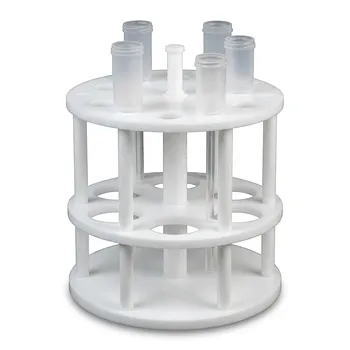
- Custom PFA Microcolumn Racks and PTFE Machined Low Background Corrosion Resistant Laboratory Fixtures
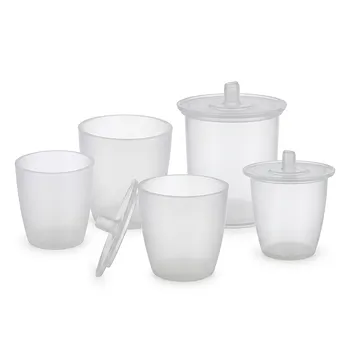
- High Purity PFA Crucible and Corrosion Resistant PTFE Beaker for Trace Analysis and Custom Laboratory Applications
- PTFE PFA Vacuum Filtration System Corrosion Resistant Customizable Shatterproof Laboratory Device
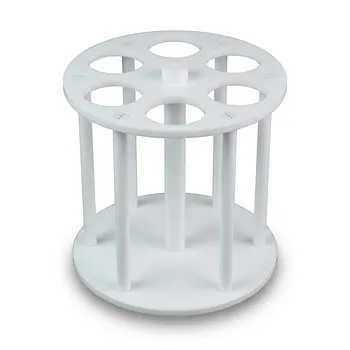
- Custom PFA Separatory Funnel Rack PTFE Machined Laboratory Support Stand Corrosion Resistant Low Background Fluoropolymer Fixture
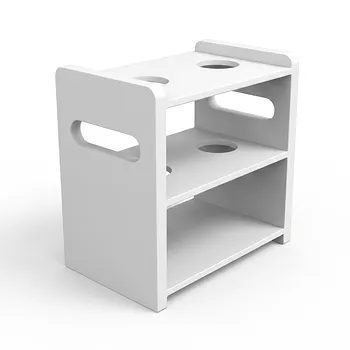
- Custom PTFE Acid Resistant Support Rack for PFA Hydrogen Absorption Systems Multi Hole Configurations
People Also Ask
- What other PTFE lab accessories are commonly used? Essential Tools for Chemical Resistance & Purity
- How does high fluorination in perfluorinated polymers improve chemical resistance and thermal stability of lab apparatus? Discover the science behind PTFE and PFA's superior performance.
- How does using chemical-resistant PTFE and PFA laboratory apparatus benefit the purification and isolation of synthesized fluoropolymers? Boost yield and purity with non-stick, low-leach labware.
- What inherent material characteristics of non-melt-processable PTFE make it suitable for manufacturing high-purity laboratory containers and custom-machined apparatus?
- How do extreme temperatures and harsh chemical environments affect PTFE and PFA lab apparatus? Achieve Reliable Performance in Demanding Conditions