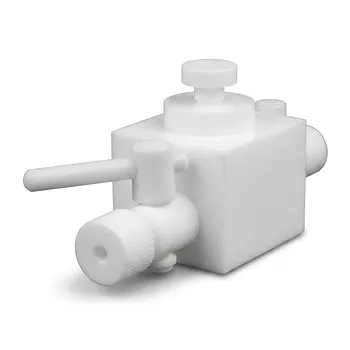
Surface treatment makes PTFE bondable by changing only its outermost surface. Untreated PTFE has extremely low surface energy, high hydrophobicity, and exceptional chemical inertness, so conventional adhesives tend to de-wet and form weak physical contact. Sodium etching chemically removes fluorine from the surface, while plasma treatment introduces polar chemical groups and micro-roughness; both changes improve wetting, chemical interaction, and mechanical interlocking with the adhesive without sacrificing the bulk PTFE’s chemical resistance.
The key is not to make the entire PTFE part adhesive-friendly, but to convert its outer surface into a high-energy, reactive bonding layer while preserving the properties of the underlying material.
Why Untreated PTFE Resists Adhesive Bonding
Extremely low surface energy prevents wetting
Adhesives must spread across a substrate before they can form a reliable bond. PTFE’s low surface energy causes many adhesives to bead up or retract instead of forming intimate contact.
Poor wetting leaves gaps and limits the real contact area between PTFE and the adhesive. Even a chemically strong adhesive cannot compensate for inadequate surface contact.
Chemical inertness limits molecular bonding
PTFE’s carbon–fluorine backbone is highly stable and chemically unreactive. As a result, the surface provides few reactive sites for adhesives to form hydrogen bonds, polar interactions, or other adhesive-level chemical connections.
This is why simply cleaning PTFE is usually insufficient. Cleaning removes contaminants, but it does not fundamentally change the low-energy fluorinated surface.
How Sodium Etching Creates a Bondable Surface
Defluorination changes the surface chemistry
Chemical sodium etching uses a highly reactive sodium-based system to remove fluorine atoms from the outer molecular layers of PTFE. This reduces the fluorine-rich character of the surface and leaves a chemically modified carbon structure with reactive sites.
The treatment is intentionally limited to the surface layer. The PTFE underneath retains its characteristic chemical resistance, low friction, and temperature performance.
Polar groups improve adhesive wetting
After defluorination, the modified surface reacts with oxygen and moisture, forming polar functional groups such as hydroxyl- and carbonyl-type groups. These groups increase surface energy and make the surface more receptive to many structural adhesives.
The practical result is a lower contact angle and improved adhesive spreading. Instead of sitting on top of PTFE, the adhesive can contact and interact with the treated layer.
Microscopic texture enables mechanical interlocking
Sodium treatment can also produce a porous or microscopically altered surface layer. The adhesive penetrates these small surface features and hardens around them.
This creates mechanical interlocking in addition to chemical and polar interactions. The combined effect can increase adhesive strength dramatically compared with untreated PTFE, although actual performance depends on the adhesive, geometry, surface preparation, and process control.
How Plasma Modification Improves Adhesion
Plasma increases surface polarity
Atmospheric and vacuum plasma expose PTFE to energetic ions and reactive species. These interactions break or modify bonds at the surface and introduce oxygen-containing or other polar functional groups.
The treated surface becomes more compatible with adhesives because its surface energy and wettability increase. Plasma therefore addresses the primary reason adhesives fail on untreated PTFE: insufficient spreading and weak surface interaction.
Plasma creates controlled micro-roughness
Plasma can also erode or restructure microscopic surface features. The resulting micro-roughness increases the effective bonding area and gives the adhesive additional opportunities for mechanical keying.
This mechanism is different from simply sanding the part. Plasma can modify surface chemistry and morphology together, including in areas where conventional abrasion is difficult to control.
Process parameters determine the result
Plasma performance depends on factors such as treatment time, power, source distance, bias voltage, and whether the process is atmospheric or performed under vacuum. A short, controlled treatment may improve adhesion, while excessive exposure can over-etch or damage the surface without producing additional benefit.
For production parts, the treatment recipe must therefore be validated for the specific PTFE grade, component geometry, and adhesive system.
Why These Treatments Work Together
They solve the wetting problem
Both sodium etching and plasma treatment raise the effective surface energy of PTFE. This allows the adhesive to spread over the part rather than retreat into droplets or leave unbonded regions.
Good wetting is the first requirement for a durable bond because it enables intimate contact across the intended joint area.
They create sites for stronger interfacial interaction
The treated surface contains more polar and chemically active sites than untreated PTFE. These sites can interact with compatible adhesive chemistries through polar forces, hydrogen bonding, and, depending on the system, stronger chemical coupling.
The adhesive is no longer bonding to an almost inert fluorinated surface. It is bonding to a deliberately engineered interfacial layer.
They add mechanical keying
Surface modification can increase microscopic roughness or porosity. Once cured, the adhesive occupies these features and resists separation through mechanical interlocking.
The strongest practical bonds generally result from the combination of improved wetting, increased surface reactivity, and controlled surface texture.
Relevance to High-Performance Laboratory Components
Multi-material assemblies become practical
Treated PTFE can be bonded to materials such as metals, glass, rubber, and other structural polymers. This is useful when a laboratory assembly must combine PTFE’s chemical resistance with the stiffness, strength, or joining characteristics of another material.
Examples include custom fluid fittings, PTFE-lined apparatus, tubing assemblies, seals, liners, and CNC-machined components.
Fluid handling systems benefit from bonded interfaces
Reliable bonding can reduce dependence on mechanical clamps, complex compression fittings, or bulky retainers. This may simplify compact fluidic assemblies and help integrate chemically resistant PTFE components into more complex equipment.
The adhesive itself must still be selected for the process fluid, temperature, pressure, and sterilization or cleaning conditions. Surface treatment improves the PTFE interface; it does not make an unsuitable adhesive chemically resistant.
The bulk PTFE properties remain available
Because treatment is concentrated at the surface, the component can retain PTFE’s underlying resistance to aggressive chemicals, low friction, non-stick behavior, and dimensional function.
This is the central engineering advantage: the surface becomes bondable while the interior remains PTFE.
Understanding the Trade-offs
Sodium etching is highly effective but process-sensitive
Sodium-based treatments are chemically aggressive and require controlled handling, exposure time, rinsing, and process safety. Overexposure can damage or excessively alter the polymer surface.
The treated surface may also have a limited practical processing window before contamination or surface changes reduce bonding performance. Bonding should therefore follow treatment according to a validated manufacturing procedure.
Plasma is cleaner but not automatically superior
Plasma avoids many of the hazardous wet-chemical handling issues associated with sodium etching. However, it requires equipment and careful control of power, distance, time, and part orientation.
Complex three-dimensional components may receive nonuniform treatment if the plasma does not reach all intended bonding areas consistently. Validation must include the actual component geometry, not only flat test coupons.
Roughening alone is usually inadequate
Mechanical abrasion can increase surface area, but it does not reliably overcome PTFE’s low surface energy or create the same level of chemical activation. It may also introduce debris, dimensional variation, or localized defects.
Mechanical preparation can be useful as part of a broader process, but it should not be treated as an equivalent substitute for chemical or plasma activation.
Bond strength depends on the complete joint design
Surface treatment cannot correct an undersized bond area, excessive peel loading, poor adhesive cure, contamination, or incompatible thermal expansion. PTFE and the mating material may also expand differently during temperature cycling.
The treatment is therefore one element of a complete bonding system that includes joint geometry, adhesive selection, cure conditions, and environmental qualification.
How to Apply This to Your Project
The right method depends on whether the priority is maximum bond performance, production cleanliness, equipment availability, or process control.
- If your primary focus is maximum adhesive strength: Use a validated sodium-etching process when its chemical handling and controlled exposure requirements are acceptable.
- If your primary focus is a dry and cleaner production process: Evaluate atmospheric or vacuum plasma treatment, with particular attention to coverage and treatment uniformity.
- If your primary focus is chemical and thermal reliability: Qualify the complete PTFE–adhesive–mating-material system under the real fluids, temperatures, pressures, and cleaning conditions.
- If your primary focus is repeatable manufacturing: Control surface preparation, treatment parameters, contamination, adhesive application, and time between treatment and bonding as a single documented process.
- If your primary focus is complex custom components: Verify treatment access across the entire bonding region, because recessed or shielded surfaces may not receive uniform activation.
With the correct surface treatment and joint design, PTFE can provide its usual high-performance material properties while also functioning as a reliable bonded component in advanced laboratory assemblies.
Summary Table:
| Method | Mechanism | Advantages | Considerations |
|---|---|---|---|
| Sodium Etching | Removes fluorine atoms, introduces polar groups and micro-roughness | High bond strength; effective for many adhesives | Hazardous chemicals; process-sensitive; limited shelf life |
| Plasma Modification | Introduces polar groups and controlled micro-roughness | Clean, dry process; good uniformity; environmentally friendly | Requires specialized equipment; may have lower bond strength than etching; parameters must be optimized |
| Untreated PTFE | None | N/A | Poor wetting; low surface energy; weak bond |
Looking to integrate high-performance PTFE components into your lab equipment? At KINTEK, we specialize in manufacturing PTFE and PFA labware and custom components. Our surface treatment services (sodium etching and plasma modification) ensure reliable adhesive bonding while preserving the exceptional chemical resistance of PTFE. From custom machined parts to standard labware, our CNC capabilities and material expertise support your unique applications. Contact us today to discuss your requirements and achieve durable, high-performance assemblies. Get in touch with our team.
Related Products
- Customizable PTFE Scrapers and Shovels for Demanding Applications
- Customizable PTFE Rods for Advanced Industrial Applications
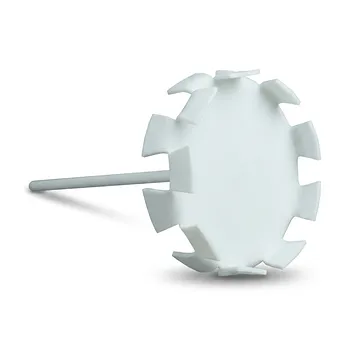
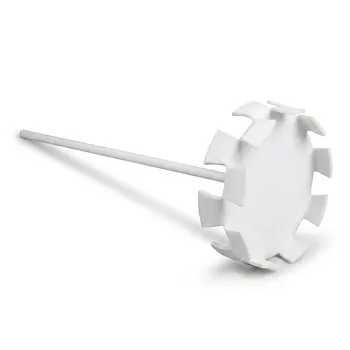
- High Purity PTFE Dispersion Disk for Food and Cosmetic Processing Non Stick Corrosion Resistant Large Stirring Paddle Customizable Fluoropolymer Impeller
- PTFE Dispersion Disk Food Cosmetic Grade Non Stick Corrosion Resistant Large Stirring Paddle Customizable Impeller
- Custom PTFE Insulating Gaskets and Corrosion Resistant Fluoropolymer Seals for Industrial Electrical Applications
People Also Ask
- Why are PTFE shovels considered cost-effective? Maximize ROI with Superior Durability
- What are the key properties that make PTFE shovels ideal for laboratory use? Ensure Sample Integrity with Chemically Inert Tools
- How does the durability of PTFE shovels compare to plastic shovels? Discover the Superior Choice for Harsh Conditions
- What are the advantages of PTFE shovels in terms of chemical resistance? Unmatched Inertness for Handling Corrosives
- What are some specific applications of PTFE shovels in the laboratory? Ensure Sample Purity and Safety