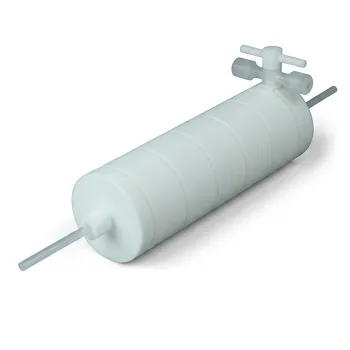
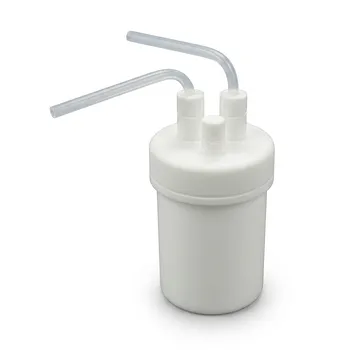
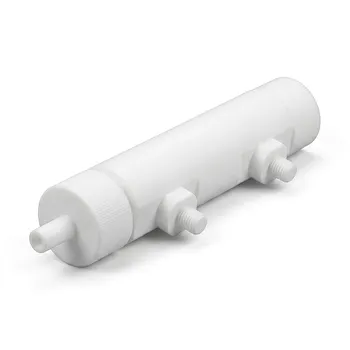
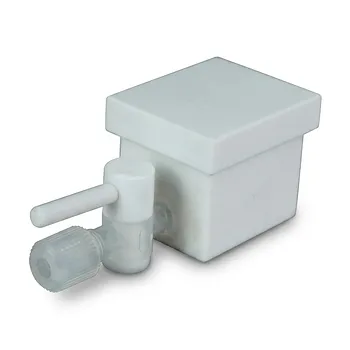
Adding a small amount of PPVE improves modified PTFE by changing how its molecular chains pack and behave during processing. The long PPVE side group disrupts excessive recrystallization, reducing cold flow, microvoid formation, and permeability while improving weldability and dimensional stability. For custom-machined laboratory components and fluid apparatus, this produces parts that retain PTFE’s chemical inertness and approximately 260°C continuous-use temperature while resisting deformation and leakage more effectively than conventional PTFE.
The central benefit is structural reliability: PPVE-modified PTFE reduces the tendency of sintered PTFE to recrystallize, creep, and retain microscopic voids, giving machined parts better dimensional stability, lower permeability, and improved integrity under load.
Why PPVE Changes PTFE Performance
The Comonomer Disrupts Rigid Chain Packing
Pure PTFE has a highly crystalline molecular structure. During sintering, its chains can recrystallize extensively, contributing to residual void volume and increasing the material’s tendency to deform gradually under sustained stress.
PPVE introduces a long perfluoroalkyl ether side group into the TFE polymer structure. This side group interrupts the regular packing of PTFE chains and suppresses excessive recrystallization.
The Modification Preserves Fluoropolymer Resistance
The PPVE concentration is small, typically below 0.5% by weight in the modified PTFE described by the primary reference. Because the modification changes chain packing rather than replacing PTFE’s fluorinated backbone, the material retains its strong chemical resistance and thermal stability.
The ether-link structure remains stable at operating temperatures, so this modification does not reduce the stated 260°C continuous-use temperature of the material.
How the Changes Benefit Machined Components
Improved Creep Resistance Reduces Cold Flow
PTFE can deform under continuous compressive or tensile loading even when the applied stress is well below its short-term strength. This time-dependent deformation is commonly called creep or cold flow.
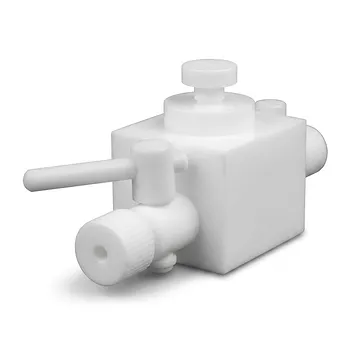
PPVE-modified PTFE resists this movement more effectively. That matters for machined valve seats, gaskets, bushings, support rings, and threaded or clamped components whose dimensions must remain stable after installation.
Lower Microvoid Content Improves Integrity
Pure PTFE’s extremely high melt viscosity can leave a small amount of residual void volume after sintering. Those microscopic voids can contribute to permeability, contaminant absorption, reduced flex life, and leakage pathways.
By disrupting crystalline packing and supporting more complete void closure during sintering, PPVE modification can produce a denser, less porous structure. The result is better suited to fluid apparatus that must maintain pressure separation or prevent trace materials from entering or leaving the component.
Better Dimensional Stability Supports Precision Machining
CNC machining creates accurate geometry only if the stock material remains dimensionally stable during service. A component that creeps after machining can lose its sealing compression, alter a valve clearance, or shift the alignment of a fluid path.
Modified PTFE’s lower deformation under load helps preserve the dimensions established during machining. This is particularly valuable for custom parts with thin walls, narrow sealing lands, deep bores, or closely controlled mating surfaces.
Why This Matters in Laboratory and Fluid Applications
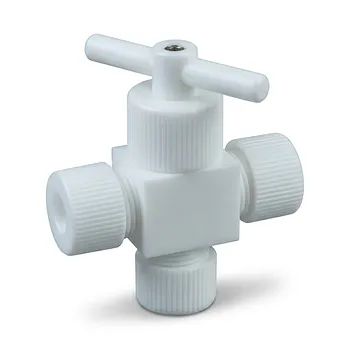
Leak-Tight Valves and Fittings
Fluid-handling valves and fittings depend on stable sealing surfaces. Creep can reduce contact pressure over time, while voids and permeability can undermine containment even when the part appears visually sound.
PPVE-modified PTFE helps maintain sealing geometry and reduces the likelihood that microscopic porosity will become a transport path for aggressive chemicals, gases, or contaminants.
Reaction Vessels and Digestion Components
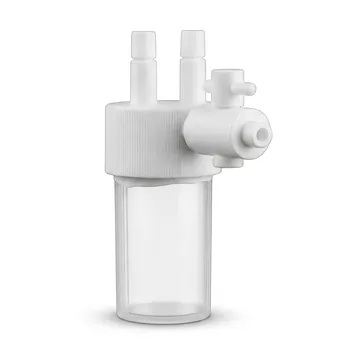
Custom reaction vessels, digestion tubes, and high-purity laboratory containers may face elevated temperature, chemical exposure, and mechanical loading simultaneously. Their performance depends on more than chemical compatibility alone.
The combination of chemical inertness, reduced permeability, improved creep resistance, and retained thermal stability makes modified PTFE a strong option when the component must remain reliable throughout repeated laboratory cycles.
High-Purity Trace Analysis
Trace analysis equipment must minimize contamination and analyte loss. Absorbed residues, permeation through microscopic defects, or material deformation at a seal can compromise results even if the fluoropolymer itself is chemically resistant.
A denser modified PTFE structure with a smoother machined surface can reduce contaminant retention and chemical permeation. These benefits support high-integrity sample vessels, fluid transfer components, and seals used around sensitive measurements.
Welded or Fabricated Assemblies
Modified PTFE also offers improved weldability compared with conventional PTFE. That can be useful when a custom apparatus combines machined sections with welded or fabricated features.
Improved weldability does not eliminate the need for controlled joining procedures. It does, however, make it easier to produce mechanically sound assemblies with consistent chemical resistance.
Processing and Material Selection
Modified PTFE Is Not Automatically PFA
A critical distinction is necessary: PPVE-modified PTFE and PFA are related but not interchangeable material categories.
Small-comonomer modified PTFE can retain the characteristic processing behavior of PTFE while improving its sintered structure and mechanical performance. PFA generally uses a different comonomer level and formulation that reduces crystallinity enough to make the resin melt-processable.
CNC Machining Does Not Require Melt Processability
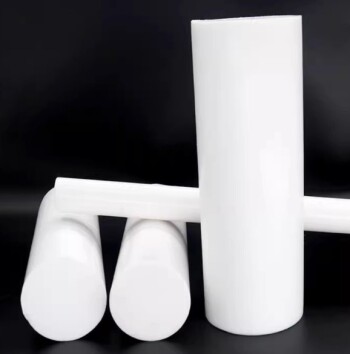
Custom CNC machining is performed on consolidated stock, such as rod, sheet, tube, or molded blank. The machinist is cutting an already formed material, so the resin does not need to flow through a conventional melt-processing operation during machining.
For complex components, PFA’s melt processability can enable precision molding or other forming methods before secondary machining. Modified PTFE, however, can be preferable when the priority is the mechanical and permeability improvement of a sintered PTFE part.
Processing Quality Still Controls Performance
Comonomer modification improves the material’s behavior, but it cannot compensate for poor consolidation, unsuitable machining, or inadequate design. Stock quality, sintering conditions, tolerances, surface finish, and installation loads remain important.
The correct specification should therefore identify the actual grade and manufacturing process rather than relying on the general label “modified PTFE.”
Understanding the Trade-offs
Creep Is Reduced, Not Eliminated
Modified PTFE remains a fluoropolymer with viscoelastic behavior. It can still deform under sustained load, especially at elevated temperature or in heavily compressed seals.
Designers should use appropriate backup structures, compression limits, tolerances, and load paths when long-term dimensional stability is critical.
Comonomer Content Affects the Balance of Properties
Increasing comonomer content can improve processability and reduce crystallinity, but different formulations may change stiffness, strength, thermal behavior, and service limits. The properties of a specific modified PTFE grade should not be inferred solely from the presence of PPVE.
Machining Cannot Correct Material Porosity
A smooth machined surface does not necessarily indicate a completely dense internal structure. If permeability, contamination, or pressure retention is critical, the material specification and manufacturing history should be reviewed alongside the final part dimensions.
Do Not Generalize Claims About HFP
PPVE and other perfluoroalkyl vinyl ethers are not equivalent to every possible comonomer. The supplied references specifically distinguish PAVE modification from HFP modification, noting that HFP can reduce thermal stability when copolymerized with TFE.
Material selection should therefore be based on the exact resin chemistry and manufacturer data, particularly for high-temperature laboratory service.
Making the Right Choice for Your Goal
The best material decision starts with the failure mode the component must avoid.
- If your primary focus is dimensional stability under load: Choose a qualified PPVE-modified PTFE grade and design seals, supports, and mating parts around its reduced but still nonzero creep behavior.
- If your primary focus is low permeability and high purity: Specify dense, well-consolidated modified PTFE and verify porosity, surface finish, and chemical cleanliness requirements with the fabricator.
- If your primary focus is complex formed geometry: Evaluate PFA when melt processability and precision molding are more important than retaining the processing profile of sintered PTFE.
- If your primary focus is high-temperature chemical service: Confirm the exact grade’s continuous-use temperature and chemical compatibility rather than assuming all comonomer-modified fluoropolymers have identical limits.
For custom laboratory and fluid apparatus, PPVE-modified PTFE provides a practical way to retain PTFE’s extreme chemical resistance while improving the structural reliability that precision components require.
Summary Table:
| Property | Conventional PTFE | PPVE-Modified PTFE |
|---|---|---|
| Creep Resistance | Lower | Higher |
| Microvoid Content | Higher | Lower |
| Permeability | Higher | Lower |
| Dimensional Stability | Lower | Higher |
| Weldability | Lower | Higher |
| Chemical Resistance | Excellent | Excellent |
| Continuous Use Temp | ~260°C | ~260°C |
Need custom-machined PTFE parts that withstand creep and leakage? Our PPVE-modified PTFE components offer superior dimensional stability and purity for lab and fluid systems. With end-to-end CNC machining of PTFE and PFA, we deliver bespoke valves, vessels, and fittings that maintain integrity under pressure. Contact us today to discuss your requirements and get a quote.
Related Products
- PTFE PFA Vacuum Filtration System Corrosion Resistant Customizable Shatterproof Laboratory Device
- Custom PTFE Filtration System Acid Resistant High Purity Semiconductor Grade Chemical Processing Filter
- Custom PTFE Reaction Lid with Integrated Valve and Fitting Corrosion Resistant No Leaching PFA FEP Bottle Cap System
- PTFE Corrosion Resistant Filter with PFA Valve Connections and Integrated Sieve Plate
- Custom PTFE Wide Mouth Reagent Reaction Bottle Corrosion Resistant High Temperature Large Capacity Straight Body Laboratory Vessel
People Also Ask
- What makes PTFE filtration systems advantageous for industrial and scientific use? Unmatched Chemical & Thermal Stability
- What temperature resistance do PTFE filters offer? Unmatched Thermal Stability from -200°C to +260°C
- How does the hydrophobicity of PTFE filters benefit their use? Ensure Uninterrupted Gas Flow and Solvent Filtration
- Which chemicals are fully compatible with PTFE filters? Discover Unmatched Chemical Resistance
- What steps are involved in selecting the proper PTFE filter? A 4-Step Guide to Optimal Filtration