Core-shell polymerization enhances modified PTFE components by placing different polymer characteristics where they are most useful. A high-molecular-weight PTFE core preserves chemical resistance and structural stability, while a modified, lower-molecular-weight shell improves processing, particle fusion, and resistance to deformation. The result is better creep resistance, smoother surfaces, fewer defects, and more reliable performance in fluid handling and laboratory parts.
Core-shell architecture separates the functions of the PTFE particle: the core provides chemical and thermal durability, while the shell improves processing and mechanical integrity. This helps modified PTFE components resist cold flow, maintain sealing force, and achieve smoother, stronger finished surfaces.
Why Conventional PTFE Can Require Modification
The Problem of Creep
PTFE has excellent chemical resistance and temperature stability, but it can deform gradually under sustained mechanical stress. This time-dependent deformation, often called creep or cold flow, can reduce sealing force and alter the dimensions of fittings, valves, gaskets, and machined components.
For laboratory and fluid handling systems, even small dimensional changes can contribute to leakage, joint loosening, or unreliable valve operation.
The Processing Challenge
Fine-powder PTFE is processed through techniques such as paste extrusion and sintering rather than conventional melt processing. Its high molecular weight and strong fibrillation behavior provide useful strength, but they can also increase extrusion pressure and make it more difficult to produce thin-walled or highly detailed parts.
The polymer must therefore balance mechanical stability during service with controlled behavior during manufacturing.
How the Core-Shell Structure Works
Building a High-Performance Core
In core-shell polymerization, manufacturers first polymerize TFE to form the particle’s PTFE core. This core can retain the high molecular weight and chemical resistance associated with conventional PTFE.
That interior provides the foundation for performance in aggressive chemical environments, including applications involving corrosive reagents and high-purity fluids.
Adding a Functional Shell
Comonomers or modifiers are introduced later in the reaction, creating an outer shell with a different composition from the core. The shell may contain a higher concentration of a modifier, such as a perfluoroalkyl vinyl ether, or may be designed with a lower molecular weight.
Because the modifier is concentrated in a specific region of the particle, manufacturers can change processing and surface behavior without sacrificing the core’s chemical durability.
Controlling the Distribution of Properties
The key advantage is targeted modification. Instead of distributing the modifier uniformly throughout the polymer, core-shell technology places it where it can most effectively influence particle fusion, fibrillation, surface formation, and melt behavior.
This gives manufacturers greater control over the balance between strength, creep resistance, processability, and surface quality.
How Mechanical Performance Improves
Lower Creep Under Load
Core-shell modified PTFE can provide lower melt creep viscosity and improved resistance to deformation under sustained stress. The shell modifies the polymer’s deformation behavior while the high-molecular-weight core continues to support structural stability.
For valve seats, sealing parts, and custom-machined fittings, this can help the component maintain its geometry and sealing pressure for longer periods.
More Reliable Sealing
Reduced cold flow helps gaskets and seals remain compressed more consistently. That limits the gradual loss of contact pressure that can cause micro-leakage of aggressive chemicals.
The benefit is particularly important in laboratory systems where a small leak can contaminate a process, expose personnel, or compromise analytical results.
Controlled Fibrillation
Conventional fine-powder PTFE can form highly fibrillated structures during processing. Excessive fibrillation may increase extrusion pressure and contribute to defects or inconsistent dimensions.
The modified shell helps control this behavior, supporting more predictable consolidation and reducing the risk of processing-related flaws.
Improved Particle Fusion
During sintering, the shell can promote more effective fusion between neighboring PTFE particles. Better fusion produces a more continuous material structure with reduced porosity and fewer weak points.
For fluid handling components, this can improve dimensional stability and reduce pathways for chemical permeation.
Stronger Thin-Walled Products
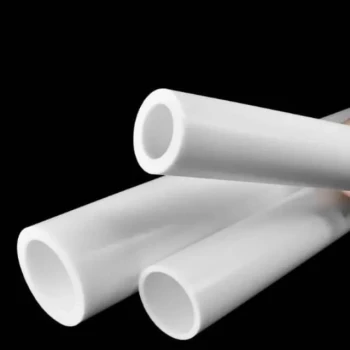
The improved paste extrudability of core-shell fine powders allows manufacturers to produce thin-walled tubing and other high-reduction-ratio products with fewer structural defects. The reference material identifies extrusion reduction ratios exceeding 10,000:1 as achievable for suitable formulations.
When processing is well controlled, the finished tubing can combine high mechanical strength with smooth internal and external surfaces, which is valuable for demanding fluid transfer applications.
Why Surface Quality Matters
Smoother Fluid-Contacting Surfaces
Improved particle fusion and controlled processing can produce a smoother component surface. In tubing, vessels, and fittings, smoother surfaces reduce irregularities that may trap residues or complicate cleaning.
This supports the requirements of high-purity laboratory and chemical processing systems.
Better Wetting Behavior
Core-shell modification can also influence surface wetting behavior. Controlled surface properties may improve how fluids contact the component, although the exact result depends on the modifier, formulation, processing conditions, and final geometry.
This property must be evaluated against the specific fluid and cleaning protocol rather than assumed from the core-shell structure alone.
Fewer Defects and Leakage Paths
Reduced porosity and improved fusion help limit defects that can become permeation routes or initiation points for mechanical failure. This is important when components handle aggressive reagents under pressure or temperature cycling.
Surface smoothness does not replace correct design, but it strengthens the overall reliability of the manufactured part.
Where the Technology Delivers the Most Value
Fluid Handling Components
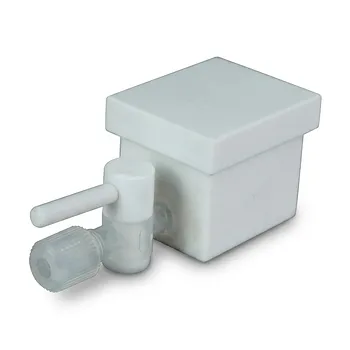
Modified PTFE is well suited to valve fittings, tubing, gaskets, and seals that must resist aggressive chemicals while retaining dimensional stability. Core-shell morphology helps these components combine PTFE’s chemical resistance with more controlled mechanical and processing behavior.
The result can be more consistent sealing, fewer deformation-related failures, and better long-term reliability.
Custom Laboratory Components
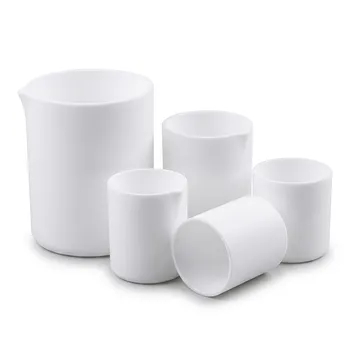
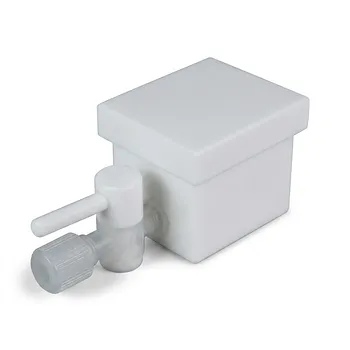
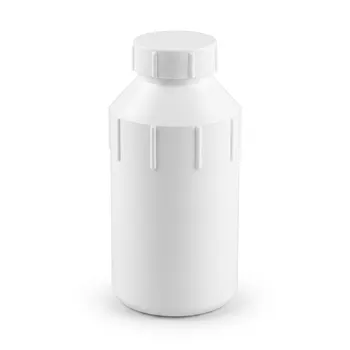
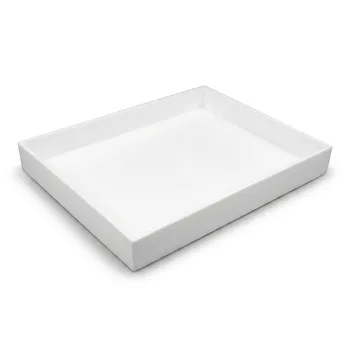
CNC-machined PTFE vessels, fittings, manifolds, and specialized labware benefit from materials that resist chemical attack without excessive deformation. A core-shell grade can also support better surface finish and more reliable sintered stock, depending on how the material is manufactured.
This is useful when the part has thin sections, tight tolerances, or complex fluid-contacting geometries.
High-Purity Applications
For electrochemical cells, reaction vessels, and analytical fluid paths, the material must preserve purity while limiting permeation and mechanical degradation. The high-resistance PTFE core provides the chemical foundation, while the shell improves the physical performance needed for manufacture and service.
Material selection must still account for extractables, processing cleanliness, temperature, pressure, and the specific chemical environment.
Understanding the Trade-offs
Core-Shell Modification Is Not a Universal Strength Solution
Core-shell polymerization improves particular weaknesses, especially creep, processing behavior, fusion, and surface quality. It does not automatically make PTFE as strong or stiff as engineering plastics or metals.
If the application requires substantially higher load-bearing capacity or wear resistance, a filled PTFE formulation may be more appropriate.
Fillers Change the Performance Profile
Glass fiber, carbon, bronze, and polyimide fillers can increase mechanical strength, dimensional stability, or wear resistance. However, fillers may also affect chemical compatibility, purity, electrical insulation, surface finish, and the suitability of a component for high-purity service.
A filled grade should therefore be selected only after considering the fluid, temperature, load, wear mechanism, and contamination limits.
Processing Still Determines Final Results
Core-shell morphology improves the processing window, but it does not eliminate the need for correct extrusion, molding, sintering, and machining controls. Poor consolidation or unsuitable thermal treatment can still produce porosity, distortion, weak areas, or dimensional variation.
The polymer grade and the manufacturing process must be evaluated together.
Do Not Confuse PTFE Modification With PFA Blending
PFA and PTFE can be combined or selected for complementary properties, including melt processability, film formation, toughness, and chemical resistance. However, PFA blending is a separate material strategy from creating a core-shell modified PTFE particle.
The correct choice depends on whether the priority is paste-processable PTFE performance, melt processability, surface toughness, or another application-specific requirement.
Making the Right Choice for Your Goal
The most appropriate material depends on the failure mode the component must avoid.
- If your primary focus is creep resistance: Choose a suitable core-shell modified PTFE grade and verify long-term deformation, sealing retention, and dimensional stability under the actual load and temperature.
- If your primary focus is thin-wall tubing: Evaluate core-shell fine powder for paste extrudability, controlled fibrillation, surface smoothness, and defect-free extrusion at the required reduction ratio.
- If your primary focus is chemical containment: Prioritize a formulation that preserves the PTFE core’s chemical resistance while checking permeation, porosity, and compatibility with the specific fluid.
- If your primary focus is wear or load-bearing strength: Compare core-shell modified PTFE with an appropriately filled PTFE grade, recognizing that fillers may affect purity, insulation, and chemical performance.
- If your primary focus is custom-machined laboratory parts: Specify the material together with the required machining tolerance, surface finish, thermal history, and service conditions.
Core-shell polymerization improves modified PTFE by placing processability and surface functionality in the shell while preserving the core properties that make PTFE reliable in demanding chemical service.
Summary Table:
| Performance Aspect | Conventional PTFE | Core-Shell Modified PTFE |
|---|---|---|
| Creep Resistance | Prone to cold flow | Lower creep, better dimensional stability |
| Sealing Force | May relax over time | More consistent contact pressure |
| Fibrillation Control | Excessive fibrillation | Controlled, fewer processing defects |
| Particle Fusion | Incomplete fusion | Improved fusion, reduced porosity |
| Thin-Wall Extrusion | Difficult, high pressure | Achieves high reduction ratios (>10,000:1) |
| Surface Quality | Rougher, more defects | Smoother, fewer leakage paths |
Elevate your fluid handling and lab components with custom PTFE solutions. At KINTEK, we specialize in high-performance fluoropolymers, offering everything from standard labware to complex machined parts. Our core-shell modified PTFE materials provide superior creep resistance, sealing reliability, and surface quality, ensuring your applications perform at their best. Whether you need custom electrochemical cells, high-purity tubing, or large-volume orders, our end-to-end CNC machining capabilities deliver precision and consistency. Contact us today to discuss your specific requirements and discover how our PTFE/PFA products can enhance your operations.
Related Products
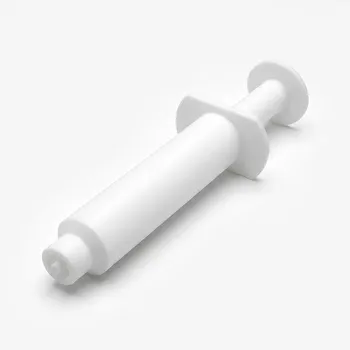
- High Purity Virgin PTFE Syringe 20ml Chemical Resistant Liquid Handling for Syringe Pumps and PFA Tubing Integration
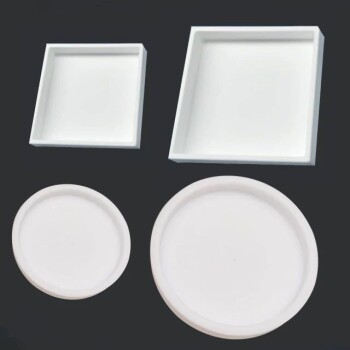
- Custom PTFE Parts Manufacturer for Teflon Containers and Components
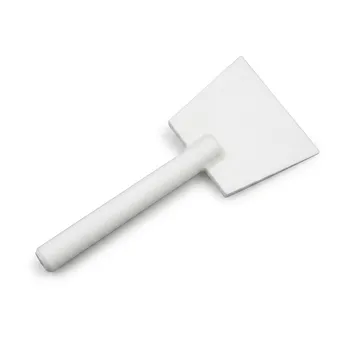
- Corrosion Resistant PTFE Laboratory Material Scoop for Biopharmaceutical Use Non Stick Easy Clean Fluoropolymer Shovel
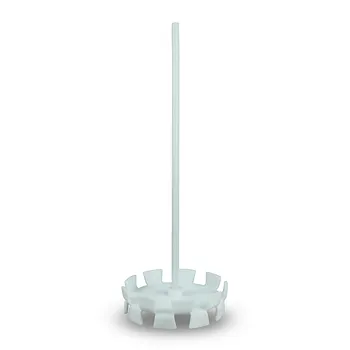
- Corrosion Resistant PTFE Dispersing Disc and High Temperature Propeller Stirring Paddle for Laboratory Chemical Mixing
- Large Scale PTFE Beakers and Flasks for High Temperature Corrosion Resistant Laboratory Applications with Custom CNC Fabrication
People Also Ask
- In what medical devices is PTFE commonly used? Essential Components for Safety and Reliability
- What are the differences between virgin PTFE and mechanical PTFE? Select the Right Grade for Your Application
- What are the key properties of virgin PTFE? Unlock Extreme Chemical & Thermal Resistance
- What approvals does virgin PTFE have for use in food and pharmaceutical industries? FDA-Approved for Ultimate Purity & Safety
- What is the difference between virgin PTFE, reprocessed PTFE, and PTFE micropowders? Learn why virgin PTFE is critical for trace analysis laboratory supplies.