Controlling pyrolysis conditions directly improves the quality of PTFE and PFA labware by producing cleaner, more consistent tetrafluoroethylene (TFE) monomer. During commercial synthesis, chlorodifluoromethane is thermally pyrolyzed at high temperature, typically around 850–900°C, with substantial steam dilution. Precise control of temperature, steam-to-reactant ratio, pressure, and contact time increases TFE yield while suppressing by-products that can reduce polymer molecular weight, create defects, or contaminate finished components.
The quality of fluoropolymer labware begins with monomer purity. Stable pyrolysis and rigorous purification produce TFE suitable for high-molecular-weight PTFE and PFA, supporting consistent chemical resistance, thermal performance, mechanical integrity, and low contamination risk.
Why Pyrolysis Control Matters
It Maximizes TFE Yield
The thermal decomposition of chlorodifluoromethane produces difluorocarbene intermediates that combine to form TFE. Operating within a controlled high-temperature window promotes this desired pathway and can achieve TFE yields of up to approximately 95%.
A suitable steam-to-reactant ratio, typically around 7:1 to 10:1, helps moderate the reaction environment and reduce secondary reactions. The result is a more predictable monomer stream for downstream polymerization.
It Suppresses Unwanted By-Products
Poorly controlled pyrolysis can generate hexafluoropropylene, perfluorocyclobutane, perfluoroisobutylene, chlorofluorocarbons, and other high-boiling impurities. Some of these compounds are also hazardous, making effective process control important for both product quality and plant safety.
Short contact times, generally below two seconds, and controlled pressure in the approximate range of 0.5 to 1.2 atmospheres help limit secondary reactions. The exact operating window must be validated for the specific reactor and feed system because excessive severity can increase both impurity formation and carbon deposition.
It Limits Carbon Fouling
Very high conversion is not automatically beneficial. Driving conversion too far, particularly beyond roughly 94%, can promote carbon fouling inside pyrolysis tubes.
Fouling changes heat transfer and reactor residence time, which can make the process progressively less stable. Maintaining a controlled conversion level can therefore protect equipment performance and preserve consistent monomer quality.
How Purified TFE Improves Fluoropolymer Resin
It Supports High Molecular Weight
High-performance PTFE requires exceptionally pure TFE, with the supplementary reference identifying a target purity near 99.99995%. Telogenic chain-transfer impurities, including trifluoroethylene, must be reduced to very low concentrations, reported at below approximately 0.2–0.3 parts per million.
Residual chlorine- or hydrogen-bearing compounds can interfere with high-degree polymerization. Cleaner TFE allows the polymer chains to reach the molecular weight needed for strength, dimensional stability, and resistance to demanding chemical environments.
It Reduces Structural Variability
Impurities in the monomer feed can alter polymerization behavior and contribute to unwanted branching or other structural irregularities. These variations may affect melt behavior, crystallinity, porosity, and the consistency of machined or molded parts.
Controlled monomer synthesis gives resin manufacturers a more uniform starting material. That consistency is important when PTFE or PFA is used for custom CNC-machined components, valves, reaction vessels, beakers, or storage tanks.
It Preserves Chemical Resistance
PTFE and PFA are selected for resistance to aggressive acids, solvents, oxidizers, and high-temperature chemical processes. That performance depends partly on producing a polymer with low levels of residual chemical impurities and a stable molecular structure.
Better-controlled pyrolysis and purification reduce the likelihood that contaminants in the monomer will become embedded in the resin. Finished equipment is then less likely to contribute extractables or react with the process chemicals it is intended to contain.
How Resin Quality Affects Laboratory Components
It Reduces Sample Contamination
Trace-analysis vessels, microwave digestion systems, and chemical storage components must not introduce significant background contamination into samples. High-purity fluoropolymer resin supports low leachable profiles and low background trace-metal levels.
This does not mean that contamination risk becomes literally zero. Clean manufacturing, proper machining, cleaning, handling, and validation remain necessary, but a clean monomer feed removes a major source of avoidable variability.
It Improves Thermal Stability
High-molecular-weight, structurally consistent PTFE is better suited to repeated exposure to elevated temperatures. This matters for digestion vessels, reaction equipment, and components that cycle between heating, chemical exposure, and cleaning.
Stable resin quality also helps maintain predictable dimensions and mechanical behavior across the component's service range.
It Supports Reliable Machining and Fabrication
Custom fluoropolymer parts are often manufactured to tight functional requirements, even when the material itself is difficult to machine or process. Resin variability can affect machining response, surface quality, dimensional control, and the presence of microscopic defects.
Consistent polymer structure gives fabricators a more predictable material. That improves the reliability of seals, valves, fittings, reaction vessels, and other components that depend on accurate geometry.
Understanding the Trade-offs
Higher Severity Can Increase Fouling
Higher temperature and conversion can improve throughput, but excessive reaction severity may accelerate carbon formation and side reactions. A process optimized only for maximum instantaneous conversion can become less stable over time.
Manufacturers must balance yield against fouling rate, impurity generation, maintenance requirements, and purification burden.
Wider Temperature Ranges Are Not Interchangeable
The references describe both a commercial operating range of approximately 850–900°C and a broader process window of 700–900°C. These figures should not be treated as contradictory set points: the effective temperature depends on reactor design, residence time, dilution, pressure, and the desired balance between conversion and selectivity.
Each production system needs its own validated operating window rather than relying on temperature alone.
Purification Cannot Correct Every Process Problem
Scrubbing and purification are essential for removing hazardous and high-boiling by-products. However, downstream purification is not a substitute for selective pyrolysis.
If the reactor produces excessive impurities or fouling products, purification becomes more demanding and may still fail to remove every compound that can influence polymerization. Source control is therefore more reliable than attempting to correct a highly contaminated monomer stream later.
Product Quality Requires More Than Monomer Purity
Pure TFE is necessary but not sufficient for high-quality PTFE or PFA labware. Polymerization conditions, resin handling, fabrication methods, cleaning procedures, and quality-control testing also affect the final component.
End-users should evaluate extractables, dimensional stability, surface condition, and chemical compatibility for the actual application rather than assuming that all fluoropolymer products perform identically.
Making the Right Choice for Your Goal
The practical benefit of controlled pyrolysis depends on how the finished fluoropolymer will be used.
- If your primary focus is trace analysis: Specify fluoropolymer products made from highly purified monomer and verify low extractables, low background metals, and suitable cleaning controls.
- If your primary focus is chemical resistance: Select PTFE or PFA manufactured with consistent high-molecular-weight resin and validate performance against the specific acids, solvents, temperatures, and exposure times involved.
- If your primary focus is dimensional reliability: Use suppliers that control monomer purity and resin consistency, then confirm machining tolerances, porosity, surface finish, and thermal cycling performance.
- If your primary focus is process safety: Favor manufacturers with documented control of pyrolysis by-products, reactor fouling, and purification because these controls protect both product quality and hazardous-material handling.
Controlling pyrolysis conditions is the first quality-control step that turns clean TFE into dependable fluoropolymer labware and components.
Summary Table:
| Aspect | Impact of Controlled Pyrolysis |
|---|---|
| TFE Yield | Up to ~95% via optimized 850–900°C & steam dilution |
| By-product Suppression | Minimizes HFP, PFCB, PFIB, etc. via short contact time |
| Carbon Fouling | Limited by controlling conversion (<94%) |
| Resin Molecular Weight | High MW supported by ultrapure TFE (99.99995%) |
| Chemical Resistance | Enhanced by lower impurities & stable structure |
| Sample Contamination | Reduced extractables & trace metals in labware |
| Thermal Stability | Improved with consistent high-MW resin |
| Machining Reliability | Consistent resin ensures precise fabrication |
Ready to elevate your lab's performance with high-purity PTFE and PFA products? At KINTEK, we specialize in manufacturing labware and components from rigorously purified fluoropolymers, backed by our end-to-end CNC machining capabilities. Whether you need standard beakers, high-purity trace analysis instruments, or custom electrochemical cells, our controlled monomer synthesis ensures superior quality for your most demanding applications. Contact us today to discuss your requirements and experience the KINTEK difference—get in touch!
Related Products
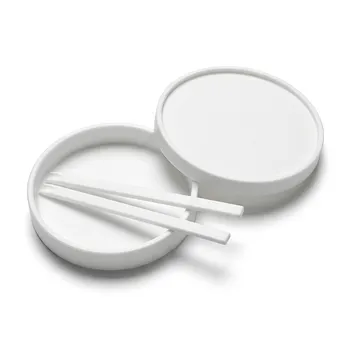
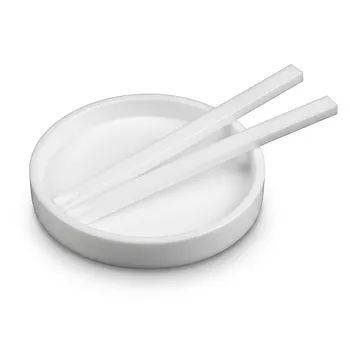
- Custom Polytetrafluoroethylene PTFE Petri Dishes 60mm Corrosion Resistant Low Background Labware
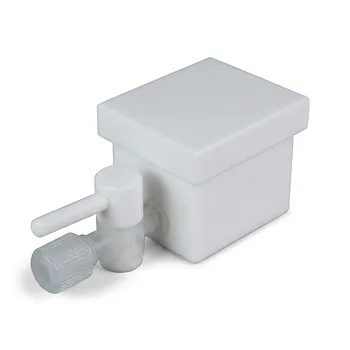
- Custom PTFE Laboratory Apparatus Corrosion Resistant Low Background Reaction Cells Precision CNC Fabrication
- Custom PTFE Petri Dishes Corrosion Resistant High Purity Low Background Labware
- Custom PTFE Petri Dish 120mm Diameter Corrosion Resistant Low Background High Purity Labware
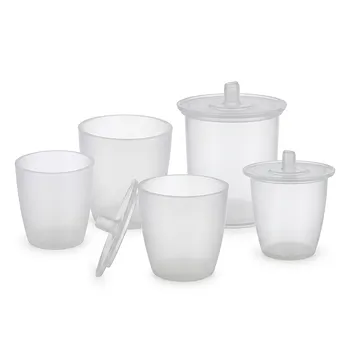
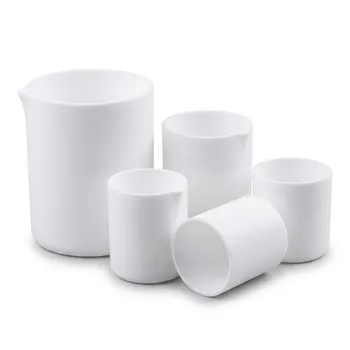
- High Purity PFA Crucible and Corrosion Resistant PTFE Beaker for Trace Analysis and Custom Laboratory Applications
People Also Ask
- Why are PTFE or PFA Petri dishes preferred for membrane casting? Ensure Damage-Free Recovery & Chemical Purity
- What role does wet reactor bead comminution play in maintaining high purity and color consistency in PTFE labware? Learn how it enhances quality.
- What types of labware or tools are commonly made from PTFE? Essential Chemically-Resistant Equipment for Your Lab
- What are the considerations for choosing PTFE or glass for Bi2O3/CeO2 synthesis? Ensure Purity and Precision.
- What are the key properties of PTFE that make it suitable for labware applications? Ensure Lab Integrity with Superior Material