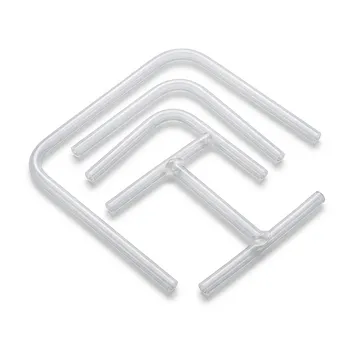
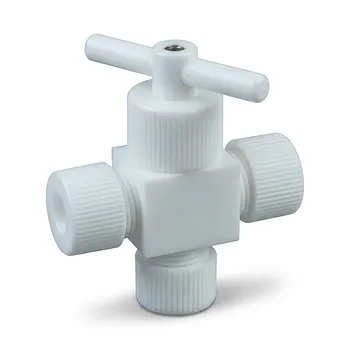
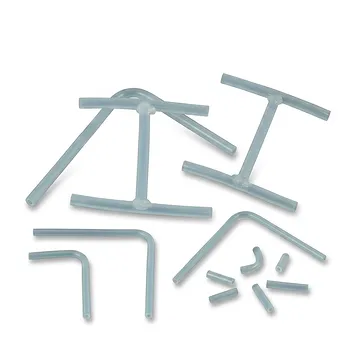
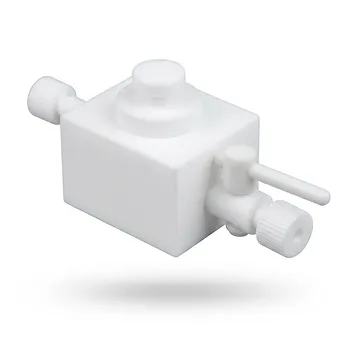
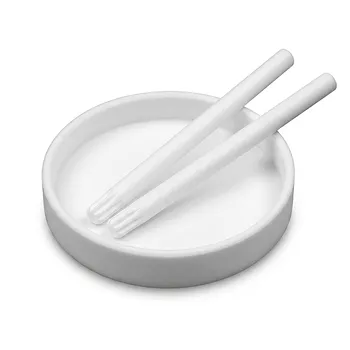
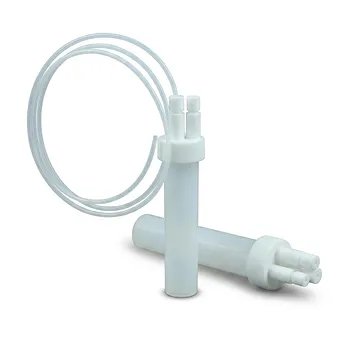
PTFE fluoropolymers benefit custom-machined laboratory components and fluid transfer systems by combining exceptional chemical inertness, broad thermal resistance, dimensional stability, and very low friction. These properties allow PTFE parts such as electrochemical cells, digestion vessels, valves, fittings, tubing, and seals to handle aggressive acids, solvents, fluorinated compounds, and temperature extremes with minimal degradation or contamination risk. In precision-machined designs, that stability supports reliable sealing, consistent clearances, and long service life under demanding operating conditions.
PTFE is valuable where ordinary engineering plastics would swell, crack, leach, or lose their dimensions. Its chemical resistance protects samples and equipment, while its thermal stability and low-friction surface improve reliability in fluid handling and laboratory mechanisms.
Why PTFE Withstands Aggressive Chemistry
The Fluorinated Molecular Structure
PTFE’s performance originates in its fully fluorinated carbon backbone. Fluorine atoms form a dense protective sheath around the carbon chain, shielding it from chemical attack.
The strong carbon-fluorine bond and the size and electronegativity of fluorine make PTFE highly resistant to acids, solvents, hydrocarbons, and many reactive compounds. This molecular structure also lowers the material’s surface energy, producing a non-stick and hydrophobic surface.
Resistance to Corrosion and Solvent Attack
PTFE does not readily react with or absorb many aggressive laboratory chemicals. As a result, custom-machined PTFE components are less likely to swell, embrittle, or lose structural integrity during exposure.
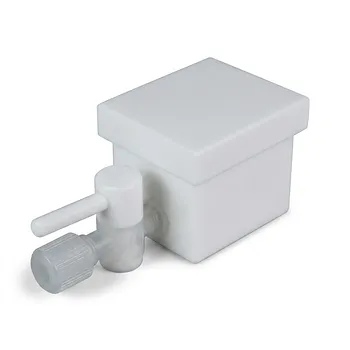
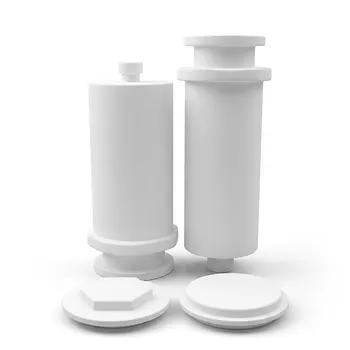
This makes PTFE suitable for chemical digestion vessels, reaction apparatus, electrochemical cells, valves, fittings, gaskets, and transfer tubing used with corrosive media.
Reduced Contamination Risk
PTFE’s chemical inertness helps prevent the material from degrading into the process stream or leaching unwanted constituents into a sample. Its low-adhesion surface also reduces the retention of residues between transfers or cleaning cycles.
For trace analysis and high-purity work, this can help preserve sample integrity. However, contamination control still depends on the complete system, including machining residues, fillers, cleaning procedures, seals, and upstream components.
How Thermal Stability Improves Component Reliability
Performance Across Wide Temperature Ranges
PTFE remains useful across an unusually broad temperature range, including cryogenic conditions and elevated operating temperatures. Reference data commonly places its practical continuous-use range near 260°C, with specialized grades and conditions requiring separate evaluation.
This thermal endurance allows the same material family to support cold fluid handling, heated chemical processes, digestion systems, and laboratory equipment exposed to rapid temperature changes.
Dimensional Stability Under Heat
Custom-machined components depend on predictable dimensions. When exposed to heat, excessive expansion, softening, or chemical degradation can affect valve operation, sealing pressure, flow paths, and alignment.
PTFE’s thermal and chemical stability helps preserve those functional characteristics. Designers must still account for PTFE’s relatively high thermal expansion and creep, particularly in precision assemblies and heavily loaded parts.
Compatibility With Thermal Cycling
Laboratory processes may alternate between heating, cooling, evacuation, and chemical exposure. A material that survives only one part of this cycle can create premature leaks or dimensional changes.
PTFE is well suited to many such environments because it combines cryogenic flexibility with high-temperature resistance. Machined geometry, wall thickness, support structures, and mating materials remain important to long-term performance.
Benefits for Custom-Machined Laboratory Components
Precise, Application-Specific Geometry
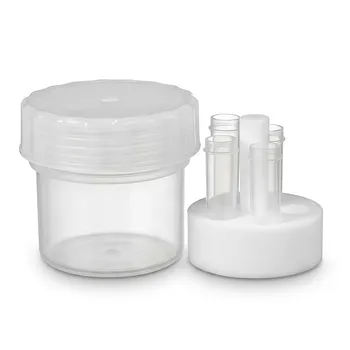
CNC machining allows PTFE to be produced as specialized parts that are difficult to make from standard labware. Examples include custom reaction vessels, electrode holders, manifolds, valve bodies, sample chambers, and chemically isolated fixtures.
The material’s resistance to aggressive reagents lets engineers place these components directly in demanding process environments without adding a metal or conventional-plastic barrier that could corrode or contaminate the system.
Reliable Sealing and Isolation
PTFE is widely used for gaskets, valve seats, diaphragms, liners, and sealing elements because it resists many chemicals and has a low-friction surface. These characteristics reduce sticking and support smooth movement in valves and sliding interfaces.
PTFE seals can also provide effective isolation between incompatible fluids and structural components. The design must account for compression, temperature, pressure, creep, and surface finish because chemical resistance alone does not determine sealing performance.
Cleaner Laboratory Workflows
The non-stick surface reduces the tendency of samples, reagents, and reaction products to adhere to component walls. This can simplify cleaning and reduce carryover in repeated-use equipment.
For high-purity applications, the benefit is both operational and analytical: fewer retained residues can improve repeatability, while chemical inertness reduces the likelihood that the component itself will alter the sample.
Benefits for Fluid Transfer Systems
Stable Tubing, Fittings, and Valve Components
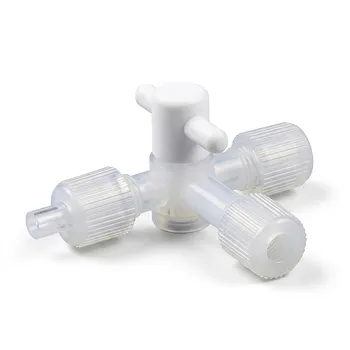
PTFE tubing and fittings can transport aggressive fluids without the rapid corrosion associated with many metals or the solvent attack associated with ordinary thermoplastics. PTFE is especially useful in manifolds, laboratory dosing lines, chemical transfer assemblies, and high-purity fluid paths.
Its low surface energy also limits fluid adhesion, which helps maintain a cleaner flow path and can reduce residue accumulation.
Lower Friction in Moving Parts
PTFE has an inherently slippery surface and a very low coefficient of friction. In valve stems, sliding seals, plungers, and actuated components, this can reduce operating force and minimize sticking.
Lower friction also helps support repeatable actuation and smoother cycling. It does not eliminate wear, particularly when PTFE is exposed to abrasive particles, high contact pressures, or repeated motion.
Resistance to Combined Chemical and Thermal Stress
Fluid systems often experience several stresses at once: corrosive media, elevated temperature, pressure changes, and frequent cycling. PTFE’s value comes from its ability to maintain chemical resistance while tolerating a broad thermal range.
This combination is more important than any single property. A material may tolerate high temperature but react with the fluid, or resist chemicals but deform during heating; PTFE addresses both requirements in many applications.
Understanding the Trade-offs
“Chemically Inert” Does Not Mean Universally Compatible
PTFE resists virtually all common laboratory acids, solvents, and hydrocarbon-based chemicals, but no material should be treated as universally compatible. Certain conditions, including some molten or highly reactive elemental substances and extreme radiation environments, can attack or damage fluoropolymers.
Compatibility should be checked against the exact chemical concentration, temperature, pressure, exposure time, and operating sequence.
Creep and Mechanical Loading
PTFE is softer and more prone to creep than many metals and engineering plastics. Under sustained compression or load, it can slowly deform, reducing preload or changing a critical dimension.
Filled PTFE grades, backup supports, spring-energized seals, controlled compression, and appropriate joint design can address these limitations. The correct solution depends on whether the priority is purity, wear resistance, stiffness, sealing, or dimensional control.
Thermal Expansion and Machining Considerations
PTFE expands more with temperature than many structural materials. A machined component that fits precisely at room temperature may require clearance or compensation when exposed to heat or cryogenic conditions.
Machining also requires attention to material movement, tolerances, surface finish, and post-machining cleaning. A chemically resistant part can still fail if its geometry does not accommodate thermal expansion or if manufacturing residues compromise a high-purity process.
PTFE Versus PFA and Other Fluoropolymers
PTFE and PFA provide among the highest levels of chemical resistance in the fluoropolymer family. PFA may be preferable when melt processing, transparency, or certain formed geometries are important, while PTFE is often selected for machined parts and low-friction applications.
FEP, ETFE, and ECTFE can be appropriate for other requirements, but they may offer different limits for temperature, chemical exposure, mechanical strength, or fabrication. Material selection should follow the process requirements rather than the fluoropolymer label alone.
How to Apply This to Your Project
The strongest design decisions match PTFE’s properties to the actual process conditions:
- If your primary focus is chemical resistance: Use PTFE for wetted components exposed to aggressive acids, solvents, fluorinated compounds, or corrosive reagents, after verifying compatibility with the precise operating conditions.
- If your primary focus is sample purity: Select clean, unfilled PTFE where appropriate and control machining, cleaning, packaging, and every other material that contacts the sample.
- If your primary focus is fluid transfer reliability: Use PTFE tubing, fittings, valve seats, or seals to combine chemical resistance with low friction and reduced sticking.
- If your primary focus is high-temperature processing: Confirm the continuous-use temperature, pressure, thermal cycling, and mechanical-load limits rather than relying only on PTFE’s broad temperature range.
- If your primary focus is dimensional precision: Design for thermal expansion and creep, and consider supports, filled grades, or alternative fluoropolymers where sustained loads are significant.
PTFE fluoropolymers are most effective when their chemical inertness, thermal stability, low friction, and purity advantages are integrated into the complete component and system design.
Summary Table:
| Property | Benefit for Lab Components | Benefit for Fluid Transfer |
|---|---|---|
| Chemical Inertness | Resists corrosion, prevents contamination | Handles aggressive fluids without degradation |
| Thermal Stability | Maintains dimensions under heat, survives cycling | Works across wide temperature range |
| Low Friction | Smooth moving parts, reduces sticking | Reduces operating force in valves/seals |
| Non-Stick Surface | Easier cleaning, less carryover | Cleaner flow paths, less residue |
Ready to upgrade your lab components with PTFE's superior resistance? At KINTEK, we specialize in custom PTFE/PFA machined parts for demanding applications—from electrochemical cells to transfer systems. Our end-to-end CNC capabilities ensure precision, purity, and reliability. Contact us today to discuss your requirements and experience the KINTEK advantage. Get in touch now!
Related Products
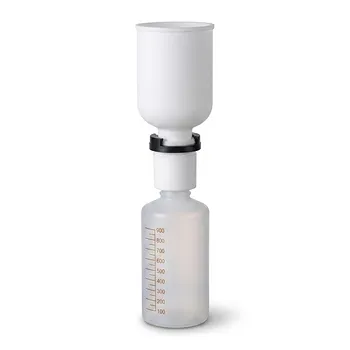
- PTFE PFA Vacuum Filtration System Corrosion Resistant Customizable Shatterproof Laboratory Device
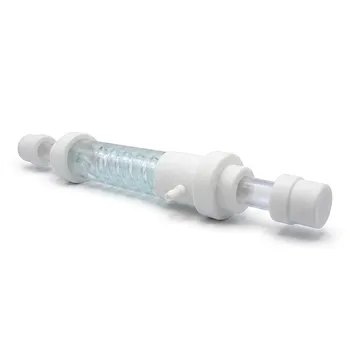
- Custom PTFE Condenser Tube 100ml Serpentine and Straight Fluoropolymer Laboratory Heat Exchanger with Flask Adapters
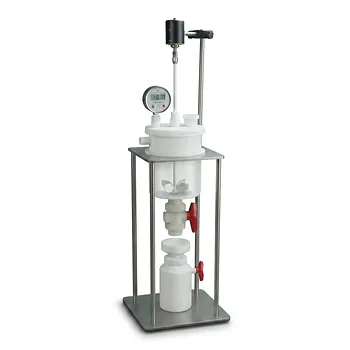
- Customizable PTFE Reaction Vessel with Electric Stirring Paddle and Buchner Funnel Vacuum Filtration System
- High Corrosion Resistant PTFE Faucet Polytetrafluoroethylene Valve for Chemical Storage Drums and Fluid Transfer Systems Customizable Industrial Grade
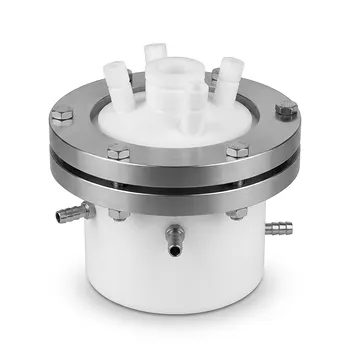
- Custom PTFE Reaction System with Hose Barb Fittings Corrosion Resistant High Sealing 2L 4L Lab Reactor with Separatory Funnel
People Also Ask
- What makes PTFE filtration systems advantageous for industrial and scientific use? Unmatched Chemical & Thermal Stability
- How does the hydrophobicity of PTFE filters benefit their use? Ensure Uninterrupted Gas Flow and Solvent Filtration
- What temperature resistance do PTFE filters offer? Unmatched Thermal Stability from -200°C to +260°C
- Which chemicals are fully compatible with PTFE filters? Discover Unmatched Chemical Resistance
- What steps are involved in selecting the proper PTFE filter? A 4-Step Guide to Optimal Filtration