PTFE is the strongest choice when both high temperature and chemical resistance are required. Its continuous upper use temperature is approximately 260°C, substantially higher than FEP at about 200°C and far above standard polyethylene, which melts between roughly 105°C and 140°C. PTFE also has a melting point near 327°C and shows very little thermogravimetric weight loss below approximately 465–500°C, although its recommended continuous operating limit remains much lower than its decomposition onset.
For high-temperature reaction apparatus and digestion vessels, select materials by continuous-use temperature and long-term mechanical stability, not melting point alone. PTFE and PFA provide the greatest practical thermal headroom, while FEP and polyethylene are better suited to lower-temperature laboratory service.
How PTFE Compares With Other Polymers
PTFE Versus Polyethylene
Polyethylene is unsuitable for severe thermal exposure because common grades melt at approximately 105–140°C. Its practical temperature capability is therefore far below PTFE's 260°C continuous-use rating.
For digestion vessels, polyethylene may be appropriate for room-temperature or moderately heated chemical storage, but it does not provide the dimensional stability required for high-temperature digestion or reaction work.
PTFE Versus FEP
FEP is another fluoropolymer with strong chemical resistance, but its upper continuous use temperature is generally limited to approximately 200°C. Its melting range is also lower, around 257–263°C, leaving less thermal margin than PTFE.
FEP remains useful for lower-temperature tubing, containers, and fluid-transfer components. PTFE is the more appropriate choice when the apparatus will experience prolonged heating near or above 200°C.
PTFE Versus PFA
PFA is the closest comparison to PTFE for demanding laboratory applications. Both materials have an approximately 260°C maximum continuous-use temperature, and both offer excellent resistance to aggressive chemicals and high-purity process conditions.
PTFE melts at approximately 320–340°C, while PFA melts at approximately 302–310°C. PFA's principal advantage is melt-processability, which allows manufacturers to produce intricate molded shapes that are difficult or impossible to make from conventional PTFE.
Why the Use Limit Is Lower Than the Degradation Limit
Melting Point Is Not a Service Temperature
A polymer can remain chemically present above its recommended service temperature while losing the mechanical properties needed for safe operation. Near and above its melting point, PTFE can soften, deform, or lose dimensional accuracy even before rapid chemical decomposition occurs.
This distinction is important for digestion vessels. A vessel must retain its shape, sealing performance, pressure resistance, and chemical purity throughout the entire heating cycle, not merely avoid immediate decomposition.
PTFE Has a Large Thermal Stability Margin
PTFE's reported melting point is approximately 327°C, while its continuous-use limit is approximately 260°C. Thermogravimetric data indicates minimal weight loss below roughly 465–500°C, with rapid decomposition occurring at substantially higher temperatures.
This wide gap explains why PTFE tolerates short-term temperature excursions better than many polymers. It does not mean that PTFE should be operated continuously near its decomposition onset or used as though its thermogravimetric threshold were a design rating.
Long-Term Exposure Controls the Decision
PTFE retains useful mechanical strength and elongation after extended exposure near 250°C, supporting its approximately 260°C continuous-use rating. Long-duration performance, thermal cycling, vessel geometry, load, pressure, and chemical environment all influence the actual safe operating temperature.
The continuous-use rating should therefore be treated as the primary selection criterion for routine laboratory operation. Decomposition data is most useful for understanding accident margins, processing limits, and potential failure consequences.
Selecting Materials for Digestion Vessels
Microwave Digestion
PTFE is well suited to microwave digestion vessels operated within the recommended continuous temperature range. It combines high thermal stability with resistance to strong acids and other aggressive digestion chemistries.
The vessel design must still account for internal pressure, thermal gradients, seals, and the specific digestion program. The polymer rating alone does not establish the safe pressure-temperature envelope of the complete vessel assembly.
High-Temperature Reaction Apparatus
For reaction containers exposed continuously to temperatures approaching 260°C, PTFE and PFA are the leading polymer options among the materials described. PTFE offers greater ultimate thermal resistance, while PFA can offer manufacturing and inspection advantages when a complex molded geometry is required.
If the apparatus must remain rigid above the fluoropolymer service range, a non-polymeric material may be necessary. PTFE's thermal stability does not eliminate the possibility of softening, creep, or dimensional change under sustained heat and mechanical load.
Chemical Purity and Contamination Control
PTFE's low thermal weight loss and chemical inertness make it valuable in analytical chemistry and high-purity laboratory work. Maintaining operation within the recommended temperature range also reduces the risk of dimensional warping and contamination from thermal breakdown products.
At excessive temperatures, fluoropolymers can generate hazardous gaseous decomposition products. Any process that could exceed the material limits requires strict temperature control, suitable ventilation, and a documented safety assessment.
Understanding the Trade-offs
PTFE Offers Thermal Performance, Not Unlimited Heat Resistance
PTFE's approximately 260°C continuous-use limit is not the same as an unrestricted temperature rating. Operating above this limit can cause creep, softening, loss of mechanical strength, or deformation even when visible decomposition is absent.
Brief tolerance near the melting point should not be converted into a routine operating specification. Repeated excursions can also accelerate aging and reduce service life.
PFA Trades Some Ultimate Resistance for Processability
PFA provides comparable continuous service temperature and excellent thermal stability, but PTFE generally offers greater ultimate resistance at temperatures above 400°C. PFA's ability to be melt-processed may nevertheless make it the better practical choice for complex, seamless, or highly inspectable components.
Material selection should weigh geometry, fabrication method, sealing requirements, and chemical purity alongside temperature.
FEP and Polyethylene Have Narrower Thermal Windows
FEP's approximately 200°C continuous-use limit makes it a reasonable choice for moderate-temperature chemical handling but a weaker choice for severe digestion conditions. Polyethylene's much lower melting range makes it unsuitable for high-temperature vessels.
Choosing either material solely because it has adequate chemical resistance can produce a thermal failure. Chemical compatibility and temperature capability must be evaluated together.
Making the Right Choice for Your Goal
Select the material based on the highest sustained temperature, the duration of exposure, pressure, geometry, and chemical environment.
- If your primary focus is maximum continuous temperature and chemical resistance: Choose PTFE for service up to approximately 260°C, provided the vessel design also supports the required pressure and mechanical loads.
- If your primary focus is complex molded geometry or melt-processable fluoropolymer construction: Consider PFA, which offers a comparable approximately 260°C continuous-use rating with greater manufacturing flexibility.
- If your primary focus is moderate-temperature fluid transfer or general labware: FEP may be sufficient when the operating temperature remains below approximately 200°C.
- If your primary focus is low-cost, lower-temperature chemical handling: Polyethylene can be appropriate when temperatures remain well below its approximately 105–140°C melting range.
The reliable choice is the material whose continuous-use rating comfortably exceeds the real operating conditions, rather than the material with the highest isolated melting or decomposition temperature.
Summary Table:
| Polymer | Melting Point (°C) | Continuous Upper Use Temp (°C) | Thermal Stability Notes |
|---|---|---|---|
| PTFE | 327 | 260 | Minimal weight loss below 465-500°C; best thermal headroom |
| PFA | 302-310 | 260 | Comparable temp rating, melt-processable for complex shapes |
| FEP | 257-263 | 200 | Lower thermal margin, good for moderate temp applications |
| Polyethylene | 105-140 | < 105 (melting) | Unsuitable for high-temp use |
Ensure your high-temp reactions run safely and reliably with KINTEK's precision PTFE and PFA labware. Our products, from digestion vessels to custom reaction apparatus, are designed to withstand rigorous thermal and chemical demands. Contact our experts today to find the perfect solution for your lab's needs.
Related Products
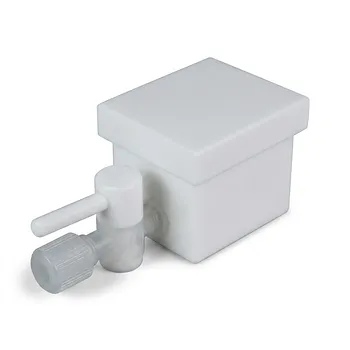
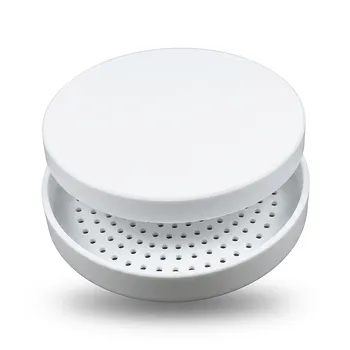
- Custom PTFE Filtration System Acid Resistant High Purity Semiconductor Grade Chemical Processing Filter
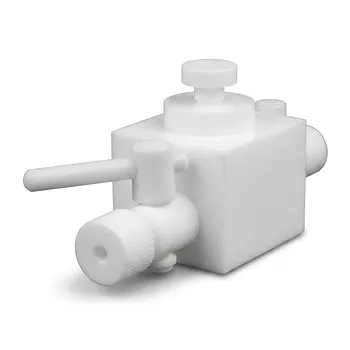
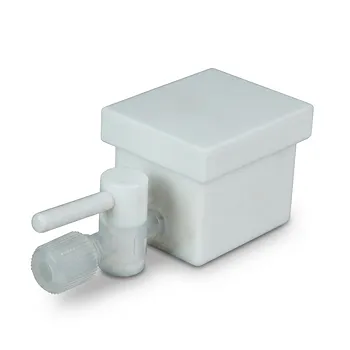
- High Corrosion Resistant PTFE Faucet Polytetrafluoroethylene Valve for Chemical Storage Drums and Fluid Transfer Systems Customizable Industrial Grade
- PTFE PFA Vacuum Filtration System Corrosion Resistant Customizable Shatterproof Laboratory Device
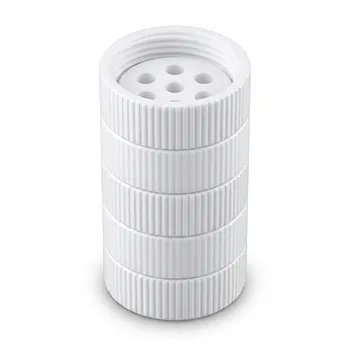
- PTFE Corrosion Resistant Filter with PFA Valve Connections and Integrated Sieve Plate
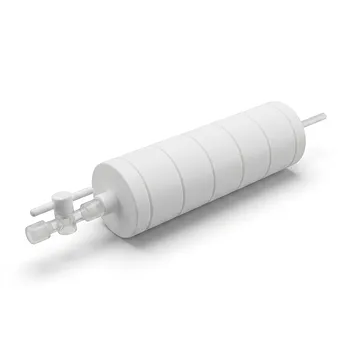
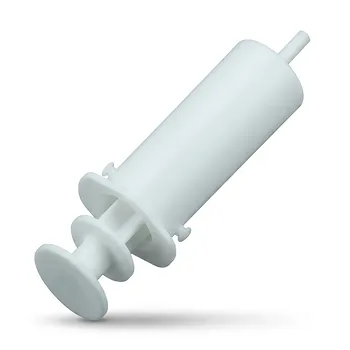
- High Temperature Chemical Resistant 50ml PTFE Syringe Customized Teflon Injector with Threaded Seal for Trace Analysis
People Also Ask
- What makes PTFE filtration systems advantageous for industrial and scientific use? Unmatched Chemical & Thermal Stability
- What sizes and pore options are available for PTFE filters? Choose the Right Filter for Your Application
- What steps are involved in selecting the proper PTFE filter? A 4-Step Guide to Optimal Filtration
- What temperature resistance do PTFE filters offer? Unmatched Thermal Stability from -200°C to +260°C
- How does the hydrophobicity of PTFE filters benefit their use? Ensure Uninterrupted Gas Flow and Solvent Filtration