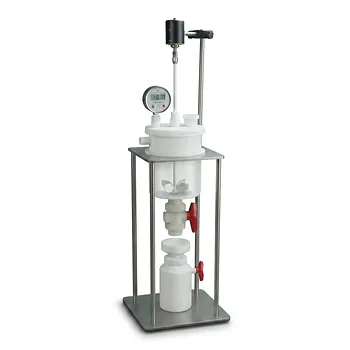
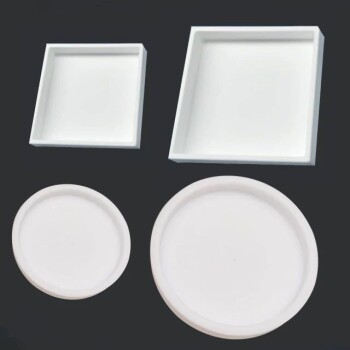
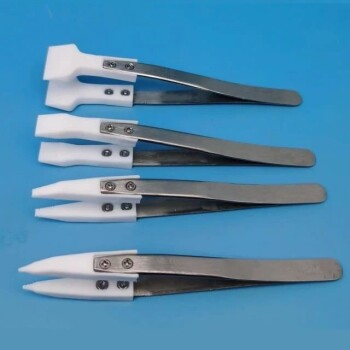
PTFE and PFA deliver broadly comparable chemical and high-temperature performance, but they differ sharply in manufacturability and fluid-system design. Both provide exceptional chemical inertness, high purity, and continuous service temperatures around 260°C, making them suitable for aggressive laboratory fluids. PTFE is typically stronger for custom-machined, heavy-duty components and low-friction applications, while PFA is generally better for transparent, seamless, welded, and intricately molded fluid-handling assemblies.
The central distinction is not basic chemical resistance—it is processing flexibility. PTFE excels when a component can be machined or formed from stock shapes; PFA excels when the design requires molding, extrusion, welding, optical inspection, smooth internal surfaces, or complex fluidic geometry.
Where PTFE and PFA Perform Similarly
Chemical resistance
PTFE and PFA are among the most chemically resistant commercial fluoropolymers. They withstand aggressive acids, solvents, and other demanding laboratory chemicals, which is why both are used in high-purity tubing, fittings, vessels, storage containers, and digestion equipment.
Neither material should be treated as universally inert under every combination of temperature, pressure, concentration, and exposure time. Final selection should still be checked against the specific chemical environment and operating conditions.
High-temperature capability
Both materials support continuous service temperatures of approximately 260°C, although allowable temperature depends on grade, component design, mechanical loading, and exposure conditions.
This makes PTFE and PFA suitable for demanding laboratory processes involving elevated-temperature digestion, heated chemical transfer, and high-temperature fluid contact.
Purity and contamination control
Both materials can provide the low-contamination performance required in high-purity fluid handling. Their fluorinated structures offer strong resistance to chemical attack and help prevent the material itself from becoming a source of contamination.
For ultra-trace work, however, purity depends on more than the polymer family. Resin grade, manufacturing controls, surface condition, cleaning, storage, and the presence of joints or dead volumes all affect system performance.
Electrical and low-friction properties
PTFE is especially well known for its very low coefficient of friction and excellent dielectric properties. These characteristics can benefit sliding seals, valve components, insulators, and specialized laboratory apparatus.
PFA also provides strong electrical insulation and chemical resistance, but PTFE is often preferred when exceptionally low friction or a machined, wear-resistant sliding component is central to the design.
Where PFA Has the Practical Advantage
Complex molded geometries
PFA is melt-processible, so it can be injection molded, extruded, thermoformed, and welded using conventional thermoplastic techniques.
This enables complex fittings, valves, smooth-bore tubing, reagent bottles, trace-analysis vessels, and specialized fluidic components to be manufactured more directly than with PTFE.
Seamless and welded fluid paths
PFA can be heat-welded and thermoformed into assemblies with complex inlets, outlets, vessel heads, and custom nozzles. This can reduce the number of mechanical joints, which helps limit leak paths, dead volume, and contamination points.
Melt processing also supports relatively thick, continuous, and void-free linings or molded sections for non-standard geometries.
Optical clarity and visual inspection
PFA generally provides better translucency and optical clarity than PTFE. In fluid handling and labware, this allows operators to observe fluid level, bubbles, particulates, color changes, and cleaning effectiveness.
That visibility is valuable in trace analysis and process troubleshooting, where an opaque component can conceal contamination or flow problems.
Smooth internal surfaces
Melt-extruded or molded PFA tubing and components can provide exceptionally smooth, consistent internal surfaces. This is useful where minimizing particle retention, fluid hold-up, and cleaning difficulty is important.
Smooth surfaces also support low-dead-volume designs and more predictable fluid transfer in analytical systems.
Where PTFE Remains the Better Choice
Custom-machined apparatus
PTFE is commonly supplied as stock shapes and then converted through compression molding, sintering, paste extrusion, or precision CNC machining. This makes it highly adaptable for one-off or low-volume laboratory components.
Custom reaction vessels, electrochemical cell bodies, crucibles, microwave digestion components, and heavy-duty apparatus can often be produced efficiently from machined PTFE stock.
Low-friction components
PTFE’s exceptionally low friction makes it attractive for seals, sliding elements, valve parts, and components that must move without excessive force or lubrication.
This advantage is distinct from PFA’s primary benefit, which is the ability to form complex parts through melt processing.
Heavy-duty and nontransparent labware
When optical visibility is unnecessary and the design favors thick walls, custom dimensions, or robust machined construction, PTFE can be the more practical material.
Its non-melt-processibility is less restrictive when the part is simple, custom-sized, or produced in small quantities.
How Processing Changes Application Performance
PTFE requires specialized fabrication
PTFE has extremely high melt viscosity and does not flow like a conventional thermoplastic above its melting point. It forms a stiff, non-flowing gel, so standard injection molding and melt extrusion are not suitable for ordinary PTFE.
Manufacturing therefore relies on methods such as compression molding, sintering, paste extrusion, and CNC machining.
PFA enables design integration
PFA can be melt-extruded and injection molded into integrated assemblies rather than assembled from multiple machined pieces. It can also be welded or thermoformed after molding.
This capability matters because the manufacturing process directly affects the final fluid path: fewer joints, smoother transitions, complex internal routing, and more consistent dimensions may be possible with PFA.
Processing affects purity and cleanability
A smooth, seamless PFA component may reduce locations where particles, residues, or fluids can collect. This can be particularly important in ultra-trace chemical analysis and high-purity transfer systems.
However, PFA is not automatically cleaner than PTFE in every application. A properly manufactured and cleaned PTFE component can perform extremely well, while poor fabrication or handling can compromise either material.
Understanding the Trade-offs
PFA is not a universal replacement for PTFE
PFA’s molding and welding advantages do not eliminate PTFE’s value. PTFE may remain preferable for very low-friction parts, custom-machined apparatus, thick-section components, or applications where optical clarity and welded construction are irrelevant.
The correct comparison is therefore application-specific, not simply “which polymer is better.”
Fabrication flexibility can increase design complexity
PFA supports sophisticated molded and welded assemblies, but those designs may require specialized tooling, controlled welding procedures, and tighter process qualification.
For a simple custom part, machining PTFE may be faster and more economical than developing a molded PFA component.
Temperature ratings require engineering review
The commonly cited approximately 260°C continuous-use capability should not be treated as a blanket operating limit. Pressure, wall thickness, chemical exposure, thermal cycling, mechanical stress, and the geometry of fittings or seals can reduce the practical service temperature.
Component-level ratings are more meaningful than resin-level headline values.
Mechanical and dimensional behavior still matters
Chemical resistance alone does not determine suitability. Sealing loads, creep, pressure, thermal expansion, rigidity, and dimensional stability can influence whether PTFE or PFA performs reliably in a valve, fitting, vessel, or tubing system.
The material should be evaluated as part of the complete component design.
Making the Right Choice for Your Goal
The decision should begin with the required fluid path, fabrication method, temperature, pressure, purity level, and inspection needs.
- If your primary focus is complex fluidic assemblies: Choose PFA when injection molding, extrusion, thermoforming, or heat-welding can create integrated, leak-tight, low-dead-volume components.
- If your primary focus is optical inspection: Choose PFA when translucency is valuable for observing fluids, bubbles, particulates, or residue.
- If your primary focus is custom or low-volume laboratory apparatus: Choose PTFE when precision CNC machining from stock shapes offers the simplest route to the required geometry.
- If your primary focus is low friction: Favor PTFE for sliding seals, valve elements, and other components where friction reduction is a dominant requirement.
- If your primary focus is aggressive chemical and high-temperature service: Either material may be appropriate, with the final choice determined by component design, processing method, and operating conditions.
- If your primary focus is ultra-trace purity: Favor the material and manufacturing route that provide the smoothest, most seamless, best-controlled fluid path, then verify the specific resin and fabrication process.
PTFE is the machining and low-friction specialist, while PFA is the molding, welding, and high-purity fluid-path specialist.
Summary Table:
| Property | PTFE | PFA |
|---|---|---|
| Chemical resistance | Excellent | Excellent |
| Continuous service temp | ~260°C | ~260°C |
| Processability | Not melt-processible; machined from stock | Melt-processible; molded, extruded, welded |
| Optical clarity | Opaque | Translucent |
| Surface smoothness | Good | Excellent (when melt-processed) |
| Typical applications | Custom machined parts, low-friction seals | Complex fluid systems, seamless assemblies, optical inspection |
Unlock the full potential of your high-purity fluid handling systems with KINTEK's precision PTFE and PFA components. Whether you need custom-machined PTFE apparatus or complex, welded PFA assemblies, our advanced CNC machining and melt-processing capabilities ensure optimal performance, purity, and reliability. Contact our experts today to discuss your requirements and discover how we can elevate your lab's efficiency and accuracy. Get in touch now!
Related Products
- Custom PTFE Filtration System Acid Resistant High Purity Semiconductor Grade Chemical Processing Filter
- High Corrosion Resistant PTFE Faucet Polytetrafluoroethylene Valve for Chemical Storage Drums and Fluid Transfer Systems Customizable Industrial Grade
- PTFE PFA Vacuum Filtration System Corrosion Resistant Customizable Shatterproof Laboratory Device
- PTFE Corrosion Resistant Filter with PFA Valve Connections and Integrated Sieve Plate
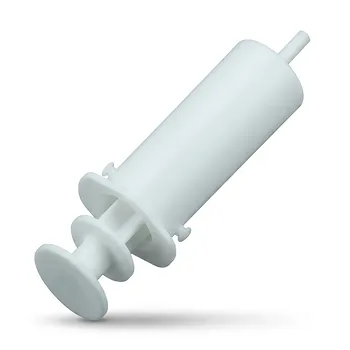
- High Temperature Chemical Resistant 50ml PTFE Syringe Customized Teflon Injector with Threaded Seal for Trace Analysis
People Also Ask
- What makes PTFE filtration systems advantageous for industrial and scientific use? Unmatched Chemical & Thermal Stability
- What sizes and pore options are available for PTFE filters? Choose the Right Filter for Your Application
- What steps are involved in selecting the proper PTFE filter? A 4-Step Guide to Optimal Filtration
- What temperature resistance do PTFE filters offer? Unmatched Thermal Stability from -200°C to +260°C
- How does the hydrophobicity of PTFE filters benefit their use? Ensure Uninterrupted Gas Flow and Solvent Filtration