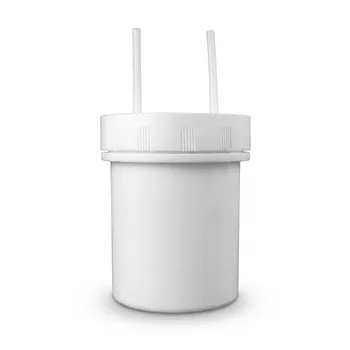
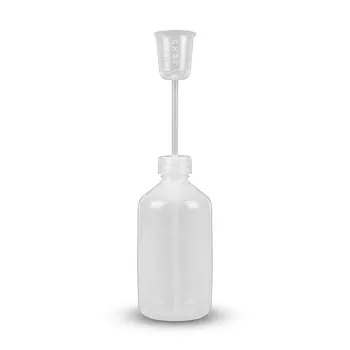
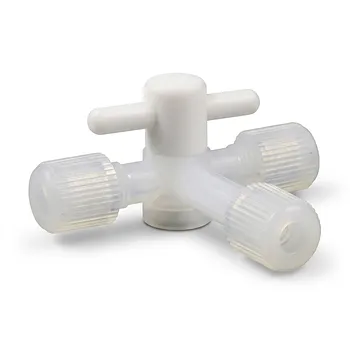
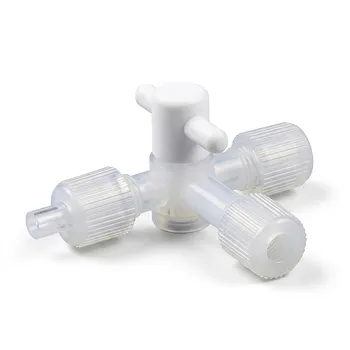
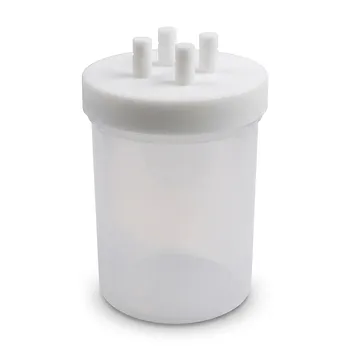
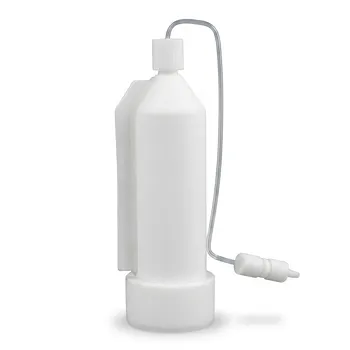
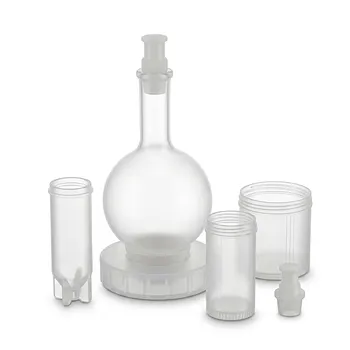
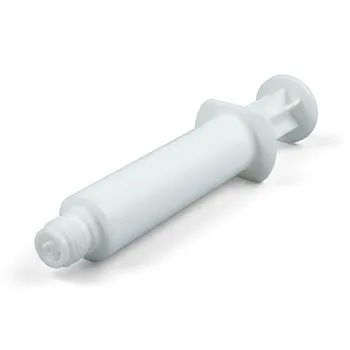
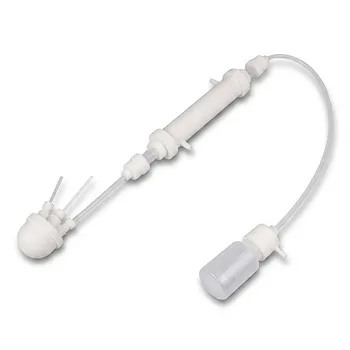
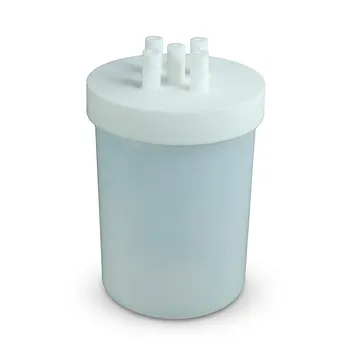
PTFE and PFA provide reliable performance in cryogenic chemical systems because they remain chemically inert, mechanically tough, and structurally stable at extremely low temperatures. Unlike many conventional polymers that become brittle, crack, or lose sealing effectiveness in severe cold, these fluoropolymers resist thermal shock and retain useful flexibility. As a result, they are well suited to cryogenic containers, transfer tubing, valve seats, gaskets, and custom-machined sealing components.
The central benefit is reliability across temperature extremes: PTFE and PFA maintain chemical resistance and useful mechanical performance during cryogenic exposure, helping prevent leaks, contamination, cracking, and premature component failure.
Why Low-Temperature Performance Matters
Preventing Embrittlement and Cracking
Many standard plastics lose toughness as temperatures fall. They may become rigid and brittle, making them vulnerable to cracking during handling, vibration, impact, or rapid temperature changes.
PTFE maintains high strength, toughness, and self-lubrication down to approximately 5 K (-268°C). It can also retain measurable elongation at temperatures near -196°C, demonstrating useful resistance to brittle failure in cryogenic environments.
PFA also provides exceptional low-temperature impact resistance, including toughness reported down to approximately -196°C. This makes it suitable for cryogenic sample containers, fluid lines, and analytical equipment exposed to severe cold.
Surviving Thermal Shock
Cryogenic systems often experience rapid transitions between ambient temperature and extremely cold fluids. These changes create expansion and contraction stresses that can damage materials with poor thermal-shock resistance.
PTFE and PFA retain structural flexibility across a broad operating range, from cryogenic temperatures to approximately 260°C. Their ability to tolerate these temperature extremes reduces the likelihood of cracking or permanent damage during filling, emptying, cleaning, and cycling.
Maintaining Seal Integrity
A cryogenic container or transfer system is only as reliable as its seals. If a gasket or valve seat becomes brittle, shrinks excessively, or loses conformity, hazardous chemicals and cold fluids can escape.
PTFE's mechanical toughness and slight compressive deformation allow it to conform to microscopic irregularities in mating surfaces. This helps gaskets and seals maintain a leak-tight barrier against aggressive chemicals, even when the surrounding system is exposed to low temperatures.
How PTFE and PFA Benefit Cryogenic Containers
Protecting Chemical Purity
PTFE and PFA have extremely low surface energy and dense, non-porous structures. These characteristics create a nonstick and highly impermeable barrier between the chemical contents and the container wall.
The materials resist adsorption and absorption of active ingredients, trace analytes, and organic compounds. This reduces sample loss, carryover contamination, residue accumulation, and difficulties during cleaning.
Supporting High-Purity Storage
PFA is melt-processable and can be molded into translucent or transparent laboratory components. This is valuable for cryogenic containers and bottles where operators need to inspect the contents while also minimizing trace-metal absorption and contamination.
Its chemical inertness across extreme pH ranges further supports storage of corrosive reagents and sensitive samples. The combination of purity, visibility, and low-temperature toughness is particularly useful in research and trace-analysis environments.
Enabling Durable Structural Components
PTFE is commonly produced through compression molding, sintering, or precision machining rather than conventional melt processing. This makes it well suited to heavy-walled components, custom crucibles, electrochemical cell bodies, and structural parts requiring dimensional stability.
For cryogenic systems, custom-machined PTFE can be used to produce specialized seals, valve seats, fittings, and apparatus that are difficult to create from standard molded parts.
How PTFE and PFA Benefit Fluid Transfer Systems
Improving Tubing Reliability
Cryogenic transfer tubing must resist cracking while remaining chemically compatible with the transported fluid. PTFE and PFA provide the needed combination of low-temperature toughness and broad chemical inertness.
Their resistance to aggressive reagents allows the same fluid path to handle demanding chemical compositions without rapid degradation. Their low surface energy also reduces residue accumulation inside the tubing.
Supporting Valves and Fittings
Valve seats and fittings experience repeated mechanical contact, pressure changes, and temperature cycling. PTFE's low friction and self-lubricating behavior help reduce wear and operating resistance.
PFA's melt processability enables the manufacture of complex fluidic components, including molded fittings, valve bodies, and heat-welded assemblies. Its translucency can also support visual monitoring of flow or contamination.
Reducing Leakage Risk
Cryogenic fluids can exploit small imperfections in joints and seals. A material that maintains toughness and conforms effectively under compression provides a more dependable barrier.
PTFE and PFA's resistance to thermal shock and their continued chemical inertness help preserve fluid-system integrity during repeated low-temperature operation. For long-term compression service, PTFE seals may require reinforced or filled formulations to limit gradual deformation.
Choosing Between PTFE and PFA
When PTFE Is the Better Fit
PTFE is often preferred for custom-machined parts, heavy-duty components, and applications requiring very low friction. It is especially useful where high dimensional stability, thermal resistance, or specialized geometry matters more than optical clarity.
Its low-temperature mechanical performance makes it suitable for valve seats, gaskets, crucibles, electrochemical cell bodies, and custom seal components.
When PFA Is the Better Fit
PFA is advantageous when the component must be molded, heat-welded, translucent, or transparent. These processing characteristics simplify complex fluidic assemblies and enable visual inspection of samples or flow paths.
PFA is therefore well suited to high-purity containers, transparent valve bodies, fittings, tubing, and cryogenic sample-storage equipment.
Understanding the Trade-offs
Managing PTFE Cold Flow
PTFE can undergo cold flow, also called creep, when held under continuous compressive load. Over time, excessive deformation may reduce clamping force and compromise joint performance.
Engineers may address this through suitable gasket geometry, controlled compression, structural reinforcement, or filled PTFE compositions. Material selection must account for pressure, temperature cycling, bolt load, and service duration.
Accounting for Processing Differences
PTFE's non-melt-processible nature provides flexibility for machining custom components but can make complex parts more labor-intensive to manufacture. PFA is easier to mold and weld into intricate fluidic assemblies, but the design must still account for dimensional behavior, joining methods, and operating stresses.
The choice should therefore consider the complete system, not low-temperature performance alone.
Verifying the Actual Service Conditions
Reported material performance at a particular temperature does not automatically guarantee suitability for every cryogenic application. Pressure, thermal cycling, mechanical loading, chemical exposure, wall thickness, and seal design all influence service life.
Critical systems should validate the finished component under representative conditions, including the intended cryogenic fluid and temperature-transition profile.
Applying This to Cryogenic Systems
Material selection should follow the component's mechanical, chemical, manufacturing, and inspection requirements.
- If your primary focus is leak prevention: Use PTFE or PFA components designed for cryogenic thermal cycling, with special attention to gasket compression, joint design, and PTFE cold-flow control.
- If your primary focus is high-purity sample storage: Favor PFA where translucency, low trace-metal absorption, and molded container designs support contamination control.
- If your primary focus is custom structural hardware: Favor PTFE for machined valve seats, seals, crucibles, and heavy-walled apparatus requiring low friction and dimensional stability.
- If your primary focus is complex fluidic assemblies: Favor PFA where melt processing, heat welding, and visual monitoring simplify the transfer-system design.
By matching PTFE or PFA's low-temperature strengths to the component's actual demands, cryogenic chemical systems can achieve greater reliability, purity, and resistance to thermal cycling.
Summary Table:
| Material | Low-Temperature Performance | Key Benefits | Typical Applications |
|---|---|---|---|
| PTFE | Maintains strength and toughness down to ~5 K (-268°C); retains elongation near -196°C | Prevents embrittlement and cracking; excellent chemical inertness; low friction | Custom machined seals, valve seats, gaskets, crucibles, heavy-walled components |
| PFA | Exceptional impact resistance down to ~-196°C; melt-processable for molding | Provides translucency for visual inspection; high purity; chemical resistance | High-purity containers, transparent tubing, fittings, molded valve bodies |
| Both | Withstand thermal shock from cryogenic to 260°C; maintain seal integrity | Prevent leaks and contamination; reduce sample loss; durable in extreme conditions | Cryogenic containers, fluid transfer systems, sample storage equipment |
Ensure reliable cryogenic performance with our high-quality PTFE and PFA components. From custom-machined seals to high-purity containers, our fluoropolymer products are engineered to withstand extreme temperatures and chemical exposure. Contact us today to discuss your specific requirements and discover how we can enhance your cryogenic systems. Get in touch with us for expert guidance and tailored solutions.
Related Products
- Custom PFA Reaction Bottles High Purity PTFE Reaction Vessels Corrosion Resistant Petrochemical Containers
- PFA Reaction Jar Corrosion Resistant Wide Mouth PTFE Lab Bottle High Purity Chemical Vessel
- High Purity PFA Crucible and Corrosion Resistant PTFE Beaker for Trace Analysis and Custom Laboratory Applications
- PTFE PFA Vacuum Filtration System Corrosion Resistant Customizable Shatterproof Laboratory Device
- Corrosion Resistant PTFE Support with PFA Transparent Reaction Tank and High Purity PFA Sampling Tube for Trace Analysis
People Also Ask
- Why are well-sealed reaction vessels necessary for superacid-promoted Friedel-Crafts polycondensation? Optimize Synthesis
- Role of reaction vessels in alkali treatment for oil palm waste: Achieve High-Purity Cellulose with PTFE Vessels
- How do the material choice and sealing integrity of the reaction vessel affect the growth of NiFe-LDH? Optimize Synthesis
- Why are corrosion-resistant vessels needed for alkaline cellulose extraction? Ensure Purity and Process Safety
- How do specialized reaction vessels facilitate floating transfer for graphene? Achieve Uniform 4-SBD Functionalization