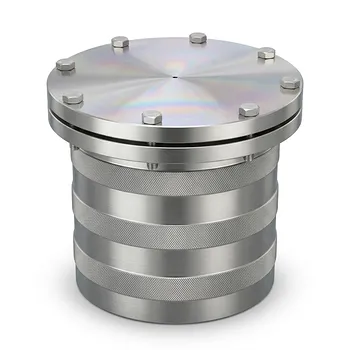
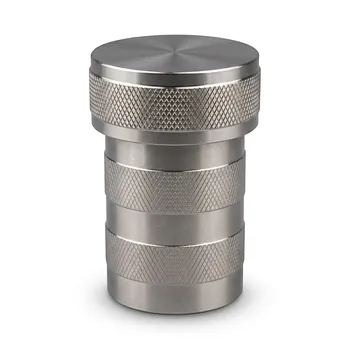
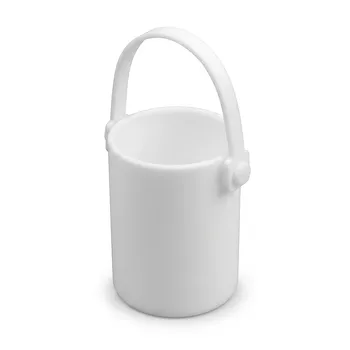
The synthesis of ZSM-5 zeolite requires a precise balance of chemical aggression and physical containment. Teflon-lined autoclaves achieve this by providing a sealed hydrothermal environment where high-pressure saturated steam facilitates the crystallization of aluminosilicate gels. The internal PTFE lining ensures the mixture remains uncontaminated by the vessel's metal walls while enduring the extreme alkaline conditions (up to pH 13) necessary for framework formation.
Core Takeaway: A Teflon-lined autoclave acts as a chemically inert pressure vessel that enables precise, segmented temperature control. This environment is essential for guiding the orderly development of the MFI framework and mesoporous structures while protecting the product from metallic impurities.
Creating the Ideal Hydrothermal Environment
High-Pressure Saturated Steam
The autoclave is designed to be a sealed system that generates internal pressure as the temperature rises. This saturated steam pressure is critical because it forces the liquid phase into the solid aluminosilicate gel, facilitating the rearrangement of atoms into a crystalline structure.
Thermal Stability and Containment
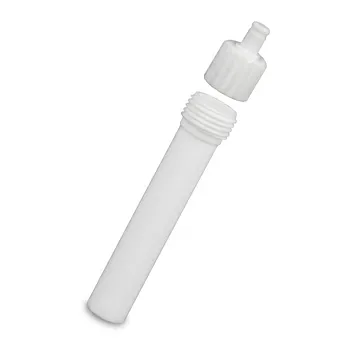
The device utilizes a dual-layer design: an outer stainless steel shell and an inner Polytetrafluoroethylene (PTFE) liner. While the steel provides the mechanical strength to withstand high internal pressures, the Teflon liner allows the reaction to reach temperatures up to 240°C without compromising the vessel's integrity.
Chemical Resistance and Purity
Withstanding Extreme Alkalinity
ZSM-5 synthesis often involves highly corrosive environments, including 3 M NaOH solutions and pH levels reaching 13. Teflon is uniquely resistant to strong alkali corrosion, ensuring that the vessel does not degrade during the long crystallization periods required for zeolite growth.
Preventing Metal Contamination
Without a liner, the alkaline reaction liquid would erode the metal walls of the autoclave. The PTFE lining serves as an inert barrier, ensuring that no iron, chromium, or other metallic impurities are leached into the ZSM-5 sample, which is vital for maintaining the zeolite's catalytic properties.
Precision Control for Structural Development
Facilitating Segmented Temperature Stages
The autoclave allows researchers to implement segmented temperature control, such as holding the mixture at 80°C before elevating it to 150°C. These stages are necessary to separate the nucleation phase from the crystal growth phase, ensuring a high degree of crystallinity.
Guided MFI Framework Crystallization
By maintaining a constant temperature and pressure, the autoclave provides the stability needed for the MFI framework to form correctly. This controlled environment ensures that the mesoporous structure develops in an orderly fashion, resulting in a consistent and high-quality final product.
Understanding the Trade-offs
Temperature and Pressure Limits
While Teflon is highly versatile, it has a functional ceiling near 250°C, above which the material begins to soften and lose its shape. Users must carefully monitor the fill level of the autoclave; overfilling can lead to excessive pressure that exceeds the safety limits of both the liner and the stainless steel shell.
Heat Transfer Inefficiency
Teflon is an insulator, meaning it does not conduct heat as well as metal. This creates a slight lag between the temperature of the oven and the temperature of the internal reaction liquid, which must be accounted for during short-duration synthesis cycles to ensure the gel reaches the target temperature.
How to Apply This to Your Project
Recommendations for Synthesis Success
- If your primary focus is Maximum Purity: Always inspect the PTFE liner for scratches or discoloration before use, as surface defects can trap contaminants from previous reactions.
- If your primary focus is High-Crystallinity ZSM-5: Utilize the autoclave’s ability to handle segmented heating (e.g., an initial 80°C aging step) to promote uniform nucleation before the final high-temperature growth phase.
- If your primary focus is Vessel Longevity: Ensure the autoclave is cooled slowly to room temperature; rapid quenching can cause the Teflon liner to deform or "creep" away from the steel walls.
By leveraging the chemical inertness and pressure-bearing capabilities of Teflon-lined autoclaves, researchers can reliably produce high-performance ZSM-5 zeolites with tailored porous structures.
Summary Table:
| Feature | Function in ZSM-5 Synthesis | Key Benefit |
|---|---|---|
| PTFE Liner | Resists pH 13 alkaline solutions | Prevents metal leaching & ensures purity |
| Steel Shell | Withstands high internal pressure | Maintains safe hydrothermal environment |
| Saturated Steam | Forces liquid phase into solid gel | Facilitates MFI framework crystallization |
| Temp Control | Supports segmented heating stages | Separates nucleation from crystal growth |
Maximize Your Synthesis Precision with KINTEK
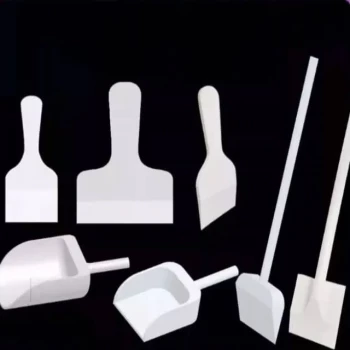
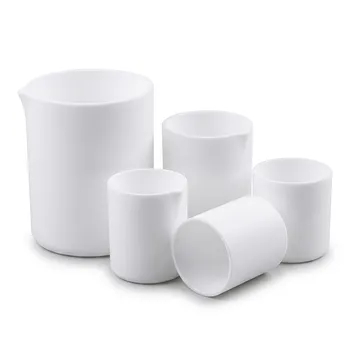
Ensure the highest purity for your ZSM-5 zeolite research with KINTEK’s high-performance fluoropolymer solutions. We specialize in everything from everyday PFA labware (beakers, tubes, and bottles) and sample prep tools to advanced custom-machined hydrothermal synthesis liners and reaction apparatus.
Whether you require high-volume consumables like PTFE stirring bars and O-rings or complex, non-standard machined parts tailored to your specific MFI framework projects, our end-to-end custom CNC fabrication delivers unmatched quality. Backed by an absolute focus on high-performance PTFE and PFA materials, KINTEK is your partner for reliable, contamination-free laboratory setups.
Ready to upgrade your hydrothermal setup? Contact us today to discuss your custom project!
References
- Hellna Tehubijuluw, Hasliza Bahruji. Sustainable Red Mud Conversion to ZSM-5. DOI: 10.48048/tis.2025.9834
This article is also based on technical information from Kintek Knowledge Base .
Related Products
- Custom TFM Reaction Vessel with Stainless Steel Jacket and PTFE Inner Cup for High Corrosion Resistance
- High Temperature Corrosion Resistant Hydrothermal Synthesis Reactor with TFM Inner Liner and Straight Cylinder Design
- High Purity PTFE Microwave Digestion Vessel Replacement Liner for Acid Sample Preparation and Trace Analysis
- PTFE Lined High Pressure Digestion Vessel 50ml High Temperature Hydrothermal Synthesis Tank
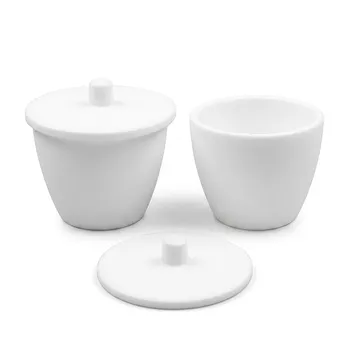
- High Purity Corrosion Resistant Teflon Crucible Low Background Laboratory PTFE Vessel for Trace Analysis and Acid Digestion
People Also Ask
- Why are high-performance pressure-resistant reaction vessels required for oxygen-assisted hydrothermal conversion at 150 °C?
- Why are high-quality fluoropolymer-lined reaction vessels required for alk-Ti3C2Tx MXene? Ensure Purity & HF Resistance
- How do magnetic stirring and reaction vessels impact MOF-derived carbon quality? Optimize Your Composite Performance
- Why are PTFE-lined reaction vessels necessary for forced degradation studies? Ensure high-purity results and accuracy.
- Why is a high-purity PTFE lined reaction vessel required for the acidic etching of MXenes? Ensure Material Purity.