Sol-gel ceramic-like coatings generally provide higher maximum temperature capability and greater surface hardness than fluoropolymer coatings. A properly formulated sol-gel coating can withstand temperatures up to approximately 450°C, while standard PTFE and PFA fluoropolymer materials are typically rated for continuous operation around 260°C. Fluoropolymers remain superior when the application depends on non-stick behavior, low friction, non-wetting, or broad chemical resistance.
The choice is primarily a trade-off between mechanical and thermal performance versus release and chemical performance: sol-gel coatings favor hardness and extreme heat resistance, while fluoropolymers favor low surface energy, low friction, and chemical inertness.
How Maximum Temperature Capability Differs
Sol-Gel Coatings Support Higher Operating Temperatures
Sol-gel coatings made from silicon alkoxide monomers form dense, hybrid organic-inorganic matrices with a ceramic-like structure. When formulated without fluoropolymers, they can operate at temperatures of up to approximately 450°C.
This makes them suitable for high-temperature fluid processing, heated equipment, and surface protection applications where conventional polymeric coatings may soften, deform, or lose mechanical integrity.
Fluoropolymers Have Lower Continuous-Use Limits
PTFE and PFA provide continuous operating temperatures of roughly 260°C, while FEP is generally limited to approximately 204°C. These ratings describe service capability and should not be confused with short-term exposure or coating bake temperatures.
PFA can support relatively thick films, making it useful for heavy-duty chemical and high-temperature service within its operating range. However, its maximum continuous-use temperature remains below that of a purely ceramic-like sol-gel system.
How Surface Hardness Differs
Sol-Gel Systems Provide the Harder Surface
The inorganic content of a sol-gel matrix gives it substantially greater surface hardness than conventional fluoropolymer films. This improves resistance to scratching, abrasion, and mechanical wear in fluid processing environments.
That hardness is particularly valuable where equipment surfaces contact particles, tools, seals, or flowing media capable of damaging softer coatings.
Fluoropolymer Films Prioritize Release Performance
PTFE, PFA, and related fluoropolymers are comparatively soft, but their low surface energy produces excellent non-stick, non-wetting, and low-friction behavior. Those properties can reduce material buildup and make cleaning easier.
Their lower hardness means they may be more vulnerable to scratching or mechanical damage, especially when exposed to abrasive solids or sharp contact points.
Why the Application Environment Matters
Choose Sol-Gel for Heat and Mechanical Wear
Sol-gel coatings are the stronger candidate when the surface must tolerate temperatures approaching 450°C while maintaining a hard, durable finish. This is often the governing requirement in high-heat structural or processing applications.
Their performance is most valuable when abrasion resistance and dimensional stability matter more than maximum release performance.
Choose Fluoropolymer for Release and Chemical Resistance
Fluoropolymers are usually preferable when the key requirement is preventing adhesion, reducing friction, or resisting aggressive chemicals across a broad operating range. They offer near-universal chemical inertness compared with the more application-dependent chemical performance of sol-gel formulations.
They are especially useful for surfaces where product buildup, wetting, or difficult cleaning creates the primary operational problem.
Understanding the Trade-offs
Higher Temperature Does Not Mean Better Overall Performance
A sol-gel coating may tolerate substantially more heat, but it does not automatically provide the same non-stick or low-friction behavior as PTFE or PFA. A harder surface can still be the wrong choice if fluid release and fouling control dominate the application.
The correct comparison must consider temperature, wear, chemical exposure, friction, wetting, and cleaning requirements together.
Fluoropolymer Temperature Ratings Must Be Interpreted Carefully
Fluoropolymers can withstand high temperatures relative to many organic materials, but their continuous-use limits are lower than those of ceramic-like sol-gel coatings. Short-term exposure, processing bake temperature, and continuous operating temperature are different specifications.
For design purposes, use the supplier's continuous service rating for the actual chemical, mechanical, and thermal environment.
Hybrid Formulations Offer a Compromise
Micro- or nano-sized PTFE particles can be incorporated into a sol-gel matrix. This approach combines some of the ceramic-like system's hardness and heat capability with improved surface lubricity and lower surface energy.
The result is a compromise rather than a complete replacement for either material: it may improve release compared with a pure sol-gel coating while retaining better high-temperature structural performance than a pure fluoropolymer film.
Making the Right Choice for Your Goal
The material should be selected according to the failure mode the coating must prevent.
- If your primary focus is maximum temperature capability: Favor a fluoropolymer-free sol-gel coating when service temperatures may approach 450°C.
- If your primary focus is surface hardness and abrasion resistance: Favor a sol-gel coating because its ceramic-like matrix provides a harder, more scratch-resistant surface.
- If your primary focus is non-stick and low-friction performance: Favor PTFE or PFA, which provide lower surface energy and better release behavior.
- If your primary focus is chemical inertness: Favor a high-performance fluoropolymer, particularly where broad resistance to aggressive chemicals is more important than extreme temperature capability.
- If your primary focus is balancing heat resistance with release properties: Evaluate a sol-gel formulation containing PTFE particles, while confirming its actual temperature, wear, and chemical ratings.
In practical terms, sol-gel coatings are the stronger choice for extreme heat and hardness, while fluoropolymers are the stronger choice for non-stick performance, low friction, and chemical inertness.
Summary Table:
| Property | Sol-Gel Ceramic-like Coatings | Fluoropolymers (PTFE/PFA) |
|---|---|---|
| Maximum Continuous Operating Temperature | Up to 450°C | ~260°C (PTFE/PFA), ~204°C (FEP) |
| Surface Hardness | High (ceramic-like, scratch-resistant) | Low (soft, prone to scratching) |
| Non-stick / Release Performance | Moderate (can be enhanced with PTFE fillers) | Excellent (low surface energy) |
| Chemical Resistance | Good, but application-dependent | Excellent (broad inertness) |
| Typical Applications | High-heat, abrasive environments | Release, low-friction, chemical-proof surfaces |
Need a coating solution that balances heat, hardness, and release? At KINTEK, our high-performance fluoropolymer products and custom PTFE/PFA machining services deliver superior durability and chemical resistance. Whether you need non-stick surfaces for demanding processes or bespoke components, our experts are ready to help. Contact us today to discuss your requirements and get a tailored solution!
Related Products
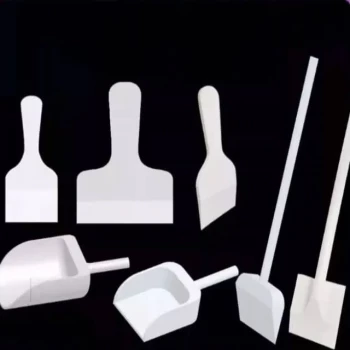
- Customizable PTFE Scrapers and Shovels for Demanding Applications
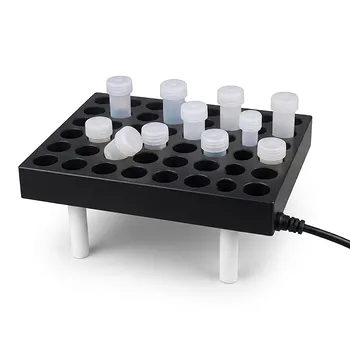
- Corrosion Resistant Heating Plate with Modified PTFE Coating 400x300mm Acid Resistant Laboratory Hot Plate Customizable Heating Solution
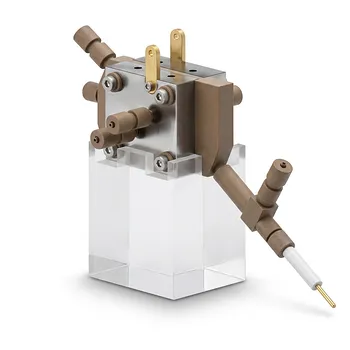
- Multi Functional Gas Diffusion Electrochemical Cell for CO2 Reduction and Solid State Membrane Electrode Assembly Electrolysis
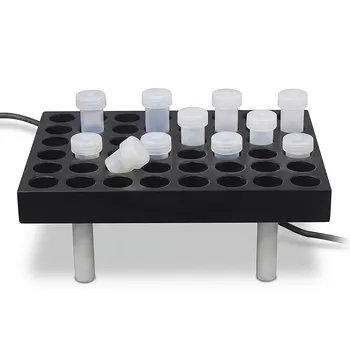
- Corrosion Resistant Hot Plate with Modified PTFE Coating and Optional Heating Rack for Chemical Laboratory Custom Solutions
- Hydrophilic Carbon Paper Gas Diffusion Layer for Fuel Cells and Electrochemical Systems
People Also Ask
- Why are PTFE shovels considered cost-effective? Maximize ROI with Superior Durability
- How does the durability of PTFE shovels compare to plastic shovels? Discover the Superior Choice for Harsh Conditions
- What are some specific applications of PTFE shovels in the laboratory? Ensure Sample Purity and Safety
- What are the advantages of PTFE shovels in terms of chemical resistance? Unmatched Inertness for Handling Corrosives
- What are the key properties that make PTFE shovels ideal for laboratory use? Ensure Sample Integrity with Chemically Inert Tools