APFO-free polymerization aids generally preserve PTFE density while maintaining fine, processable particle morphology. Ether-functionalized fluorinated carboxylate salts, such as APFDO, produce latex particles typically around 110–130 nm—or 113–129 nm in the reported results—and PTFE fine powders with SSG values of approximately 2.159–2.175. These values closely match APFO-derived resin, indicating that replacing APFO does not inherently reduce PTFE packing density or the associated performance of the resin.
The main effect of a suitable APFO-free aid is continuity, not radical change: SSG remains essentially comparable to APFO-based PTFE, while particle size, solids content, aggregation behavior, and morphology remain controllable through surfactant chemistry and process conditions.
How APFO-Free Aids Affect Standard Specific Gravity
SSG remains within the normal PTFE range
Reported PTFE made with alternative fluorinated polymerization aids has SSG values of approximately 2.15–2.17, with a more specific reported range of 2.159–2.175.
Because SSG reflects the density of the crystallized PTFE resin, this close agreement indicates that the replacement aid does not materially disrupt the polymer’s basic molecular packing or crystalline structure.
Comparable SSG supports comparable resin performance
Maintaining SSG is important because PTFE density is associated with crystallinity, impermeability, dimensional integrity, and resistance to chemical penetration.
However, SSG should not be treated as a complete performance specification. Molecular weight, fibrillation behavior, particle morphology, processing history, and residual impurities also affect the final properties of molded, extruded, or machined PTFE.
The replacement aid is not the only factor controlling SSG
The polymerization aid influences nucleation, particle growth, dispersion stability, and reaction kinetics. Nevertheless, the final SSG also depends on polymerization temperature, pressure, monomer conversion, molecular weight, comonomer content, coagulation, drying, and subsequent processing.
The practical conclusion is that a properly selected APFO-free aid can preserve SSG, but equivalent results require control of the full polymerization and powder-processing window.
How Particle Size and Morphology Are Affected
Latex particles remain in the fine-particle range
Alternative ether-containing fluorinated carboxylates generally produce latex particles around 110–130 nm, with the primary reported results at 113–129 nm.
This is consistent with the fine, spherical or near-spherical colloidal particles desired in emulsion-polymerized PTFE. Such particles can be coagulated into fine powders or used directly in aqueous dispersion applications.
Dispersion kinetics remain comparable
The primary reference indicates that APFO-free aids can maintain comparable dispersion kinetics and resin properties to traditional APFO emulsifiers.
This means the replacement does not necessarily require a fundamentally different polymerization mechanism. Instead, the aid must provide adequate interfacial activity, stabilize growing particles, and regulate monomer transport without causing excessive aggregation.
Particle shape depends on surface chemistry and concentration
Particle morphology is strongly influenced by surface tension and surfactant concentration. Adequate fluorinated surfactant concentration, typically above the critical micelle concentration, helps prevent aggregation and supports consistent particle formation.
The reported process understanding associates higher surface tension—above approximately 25 dyn/cm—with more spherical particles, while very low surface tension—below approximately 18 dyn/cm—can favor rod-like structures. The exact values should be treated as process-specific guidance rather than universal limits.
Spherical particles improve processing consistency
Round or spherical PTFE particles generally provide more uniform packing and smoother extrusion behavior than irregular or strongly rod-like particles.
For high-purity laboratory components, consistent particle morphology can also help produce smoother finished surfaces. Smoother surfaces reduce opportunities for sample retention, contamination, or difficult cleaning in trace-analysis vessels and fluid-handling components.
What Happens to Solids Content and Dispersion Stability
Solids content can remain commercially useful
Reported solids content varies with formulation and process conditions. The primary reference reports values up to approximately 31 wt%, while supplementary results describe roughly 10–26 wt% or around 10 wt% under other conditions.
This variation does not necessarily indicate a contradiction in polymer quality. Solids content depends on surfactant concentration, reaction design, conversion, dispersion stability, and whether the material is intended for direct dispersion use or coagulation into powder.
Stable dispersions reduce particle agglomeration
An effective APFO-free aid keeps the latex particles separated during polymerization and storage.
That stability is important because uncontrolled coagulation can increase effective particle size, broaden the particle-size distribution, reduce dispersion quality, and create inconsistencies during coagulation, drying, or paste extrusion.
Why These Characteristics Matter in PTFE Processing
Fine particles support smooth finished surfaces
Smaller and consistently distributed particles can contribute to smoother surfaces after processing, especially in fine-powder applications.
This is valuable for laboratory beakers, digestion vessels, trace-analysis containers, and machined fluid-handling parts, where surface cleanliness and low sample retention are important.
Particle characteristics affect powder handling
Fine particle size can improve surface finish, but larger or more engineered particles may provide better powder flowability.
Therefore, the smallest possible particle is not always optimal. The required balance depends on whether the resin will be used for aqueous coating, paste extrusion, compression molding, or machining stock.
Resin architecture can be modified independently
APFO-free polymerization aids preserve the baseline particle characteristics, while other process changes can tailor the resin’s internal structure.
For example, late-stage comonomer modification can produce a core/shell particle with a high-molecular-weight PTFE core and a lower-molecular-weight modified shell. This can reduce melt creep viscosity and limit excessive fibrillation without sacrificing the chemical resistance expected from PTFE.
Understanding the Trade-offs
Equivalent SSG does not mean identical processing behavior
Two resins can have nearly identical SSG values but behave differently during coagulation, drying, paste extrusion, or sintering.
The alternative aid may change molecular-weight distribution, particle-surface chemistry, fibrillation tendency, or residual extractables even when the final density appears equivalent.
Particle size alone is not enough
A nominal particle-size range of 110–130 nm does not fully describe the resin.
Particle-size distribution, shape, surface condition, agglomeration state, and dispersion stability must also be evaluated. A narrow distribution of spherical particles will generally behave differently from a broad distribution containing rods or agglomerates.
Formulation changes may affect solids content
Replacing APFO with an alternative aid may require optimization of concentration, initiator level, agitation, pressure, temperature, or monomer feed.
If the replacement is used without re-optimizing these variables, the result may be lower solids, altered particle morphology, slower kinetics, or unstable dispersion—even though the chemistry is fundamentally suitable.
Purity benefits require verification
APFO-free processing is intended to reduce concerns associated with persistent and bioaccumulative PFOA-related surfactants.
For high-purity laboratory products, the finished resin should still be tested for ionic contaminants, residual processing aids, extractables, and lot-to-lot consistency. “APFO-free” by itself does not prove that a finished component is suitable for ultra-trace analysis.
How to Apply This to Resin Selection
A practical evaluation should compare the alternative resin with an APFO-derived benchmark using both density and particle-performance measurements.
- If your primary focus is SSG and density: Select an APFO-free aid that produces an SSG near 2.159–2.175 and verify crystallinity, shrinkage, and dimensional stability under the intended processing conditions.
- If your primary focus is latex quality: Confirm particle sizes near 110–130 nm, spherical morphology, acceptable particle-size distribution, and stable dispersion behavior.
- If your primary focus is paste extrusion: Evaluate fibrillation, extrusion pressure, melt creep behavior, and mechanical properties rather than relying on SSG alone.
- If your primary focus is high-purity laboratory use: Require analytical verification of residual surfactants, ionic contaminants, and extractables in addition to confirming density and particle characteristics.
A well-designed APFO-free system can preserve PTFE’s density and fine-particle structure while reducing reliance on traditional PFOA-related polymerization aids.
Summary Table:
| Property | APFO-Free PTFE | APFO-Based PTFE |
|---|---|---|
| SSG (Standard Specific Gravity) | ~2.159–2.175 | Similar (within same range) |
| Latex Particle Size | ~110–130 nm (reported 113–129 nm) | Comparable |
| Solids Content | Up to ~31 wt% (reported 10–26 wt% depending on conditions) | Similar |
| Particle Morphology | Fine, spherical or near-spherical | Comparable |
| Dispersion Stability | Stable with adequate surfactant concentration | Stable |
Optimize your PTFE resin selection with high-purity APFO-free options. Our PTFE and PFA labware, from beakers to custom machined parts, ensure performance and purity. Contact us today to discuss your requirements and benefit from our expertise in fluoropolymer processing. Contact us now!
Related Products
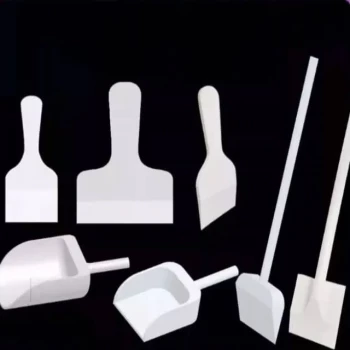
- Customizable PTFE Scrapers and Shovels for Demanding Applications
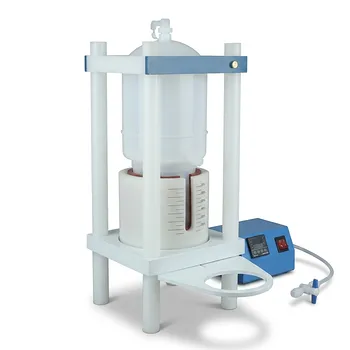
- High Purity PFA Acid Purifier Maintenance and Refurbishment System with Silicone Heating Jacket and Digital Temperature Control Box
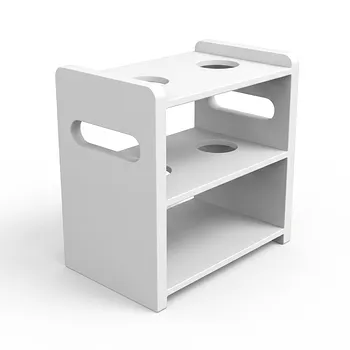
- Custom PTFE Acid Resistant Support Rack for PFA Hydrogen Absorption Systems Multi Hole Configurations
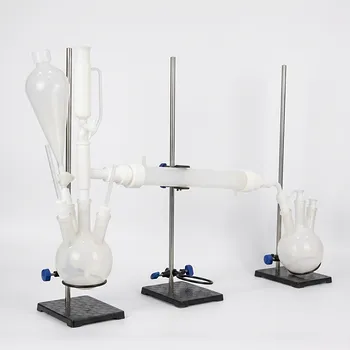
- High Purity PFA Constant Pressure Condensation Reaction System Acid Resistant High Temperature Customizable Teflon Labware
- High Purity PFA Coiled Tubing Custom PTFE Machining PFA Welding and Precision Bending Solutions
People Also Ask
- Why are PTFE shovels considered cost-effective? Maximize ROI with Superior Durability
- What are the key properties that make PTFE shovels ideal for laboratory use? Ensure Sample Integrity with Chemically Inert Tools
- What are some specific applications of PTFE shovels in the laboratory? Ensure Sample Purity and Safety
- What are the advantages of PTFE shovels in terms of chemical resistance? Unmatched Inertness for Handling Corrosives
- How does the durability of PTFE shovels compare to plastic shovels? Discover the Superior Choice for Harsh Conditions