Fluorinated silane oligomers can thermally stabilize anatase TiO₂ by building an inorganic-rich protective shell around each nanoparticle. Fluoroalkyl end-capped vinyltrimethoxysilane oligomers undergo hydrolysis and sol–gel condensation, forming a cross-linked Si–O–Si matrix that encapsulates anatase TiO₂ and restricts the particle rearrangement associated with anatase-to-rutile conversion. In the reported approach, this protection preserves anatase and its UV photocatalytic activity after calcination temperatures approaching 1000°C, although the result depends strongly on formulation, atmosphere, heating schedule, and coating thickness.
The key is not that the fluorinated organic groups remain unchanged at 1000°C. The durable component is the condensed silica-like network, which physically confines TiO₂ and helps preserve anatase crystallinity while the organic fluorinated fraction may decompose or evolve during severe heating.
Why Anatase Needs Thermal Protection
Anatase-to-rutile conversion limits reuse
Anatase generally offers high photocatalytic activity, but it is thermodynamically less stable than rutile at elevated temperature. Conventional anatase nanoparticles can undergo an effectively irreversible transformation to rutile in roughly the 600–750°C range.
Rutile is not photocatalytically inactive, but the phase change commonly reduces the activity and surface characteristics required for efficient UV-driven degradation.
Nanoparticles are especially vulnerable
Small particles have high surface energy and can grow, sinter, and reorganize during heating. These processes reduce accessible surface area and can accelerate crystal-phase transformation.
For labware exposed to repeated thermal treatment, preserving both anatase phase and nanoparticle dispersion is therefore more important than simply preventing bulk melting or deformation.
How the Fluorinated Silane Matrix Provides Protection
Sol–gel condensation creates the protective framework
The trimethoxysilane groups first hydrolyze in the presence of water and then condense to form siloxane linkages:
- Hydrolysis converts methoxy groups into silanol groups.
- Condensation produces a cross-linked Si–O–Si network.
- The growing network forms around and between TiO₂ nanoparticles.
The result is a hybrid organic–inorganic nanocomposite rather than an unprotected TiO₂ powder.
Encapsulation restricts particle rearrangement
The condensed silane-derived phase acts as a physical constraint around the anatase particles. It can limit:
- Particle migration and coalescence
- Local crystal rearrangement
- Sintering-driven grain growth
- Direct contact between neighboring TiO₂ particles
By reducing these pathways, the matrix can suppress or delay anatase-to-rutile conversion during calcination.
Fluoroalkyl groups modify the hybrid interface
The fluoroalkyl end groups contribute low surface energy and alter the chemical environment around the inorganic network. They can also improve compatibility with fluorinated materials used in specialized vessels, coatings, and reaction components.
Their principal value at extreme temperature should not be overstated, however. The long-term thermal barrier is primarily associated with the silica-like condensed network and nanoparticle confinement, not with indefinite survival of the organic fluoroalkyl segments.
Why Photocatalytic Activity Can Be Preserved
Anatase retention maintains the active phase
If the encapsulated particles remain predominantly anatase after heating, the material retains the phase associated with the original high UV photocatalytic performance.
This is particularly useful for photochemical labware that must undergo high-temperature conditioning, regeneration, or thermal processing before being returned to service.
The shell must remain sufficiently accessible
Encapsulation protects TiO₂, but an excessively dense or thick shell can also hinder photocatalysis. UV light, oxygen, water, and target molecules must still reach or interact with the TiO₂ surface.
The formulation therefore requires a balance between:
- Protection against phase transformation
- Accessible photocatalytic surface
- Adequate mechanical adhesion
- Controlled transport through the hybrid layer
A completely sealed particle may be thermally protected but photochemically underutilized.
Surface chemistry can affect reaction performance
Fluorinated surfaces can change wetting, adsorption, and transport of polar or nonpolar reactants. That may be advantageous for some fluorinated or organic reaction systems but unfavorable for others.
Photocatalytic testing should therefore measure actual degradation performance after thermal cycling rather than infer performance solely from anatase retention.
Designing the Material for High-Temperature Labware
Use the silane oligomer as a hybrid-forming precursor
The fluoroalkyl end-capped vinyltrimethoxysilane oligomer should be processed under controlled sol–gel conditions so that hydrolysis and condensation produce a continuous matrix around the TiO₂ nanoparticles.
Important process variables include:
- Water-to-silane ratio
- Catalyst and pH conditions
- Oligomer concentration
- TiO₂ loading
- Dispersion quality
- Drying rate
- Final calcination atmosphere and heating rate
Poor dispersion can leave unprotected TiO₂ agglomerates that transform or sinter even when the surrounding material appears stable.
Control the shell thickness
A thin, uniform shell generally provides a better compromise than a thick, highly insulating layer. The objective is to confine the nanoparticles without creating a diffusion barrier that prevents photocatalytic reactants from reaching active sites.
For coated labware, coating uniformity is as important as bulk composition because pinholes, cracks, and locally thick regions can produce inconsistent thermal and photocatalytic performance.
Match the system to the labware substrate
The hybrid layer must adhere to the underlying vessel or component through repeated heating and cooling. Thermal-expansion mismatch can generate stresses even when the TiO₂ itself remains phase-stable.
For fluoropolymer-based apparatus, compatibility with the substrate and the service environment should be verified separately from TiO₂ stabilization. A thermally stable nanocomposite does not automatically make the entire PTFE or fluoropolymer assembly suitable for 1000°C operation.
Verifying That Stabilization Actually Occurred
Confirm the crystal phase
Use X-ray diffraction before and after calcination to quantify whether anatase remains and whether rutile has formed. Phase retention is the direct test of the claimed stabilization mechanism.
Peak broadening can also provide information about crystallite growth, although it should be interpreted alongside microscopy.
Examine encapsulation and sintering
Electron microscopy can determine whether the silane-derived matrix surrounds the particles and whether heating has caused agglomeration or grain growth.
Thermogravimetric analysis and spectroscopic methods can help distinguish the organic fluorinated fraction from the remaining inorganic silica-rich framework after heating.
Measure photocatalytic performance after thermal cycling
The decisive application test is UV degradation efficiency after the intended thermal exposure. Testing should include:
- Initial photocatalytic activity
- Activity after one or more calcination cycles
- Activity after thermal cycling
- Leaching or particle-release assessment
- Changes in wettability and reactant adsorption
A material can retain anatase while still losing activity through pore blockage, sintering, contamination, or loss of accessible surface area.
Understanding the Trade-offs
Organic fluorinated groups may not survive extreme calcination
Fluoroalkyl and other organic components can degrade, oxidize, volatilize, or carbonize depending on atmosphere and heating conditions. Consequently, the post-calcination material may no longer have the same fluorinated surface chemistry as the original composite.
The silica-derived network should be treated as the high-temperature structural phase, while fluorinated organic functionality should be considered condition-dependent.
Phase stabilization is not the same as full thermal stability
Preventing anatase-to-rutile conversion does not guarantee that the coating will retain its original strength, flexibility, porosity, adhesion, or chemical resistance.
High-temperature evaluation must cover the entire hybrid system and the supporting labware, not just the TiO₂ diffraction pattern.
PTFE temperature limits remain a separate constraint
Conventional PTFE can undergo severe decomposition at temperatures around the high hundreds of degrees Celsius, with complete decomposition reported near 700°C under relevant conditions. Embedding TiO₂ in a fluorinated silica nanocomposite does not eliminate the thermal limits of a PTFE substrate or replace appropriate high-temperature materials selection.
The formulation may remain as a stable inorganic residue or hybrid structure at temperatures where the polymer component does not.
Fluorine-containing decomposition products require controls
High-temperature processing of fluorinated materials should be assessed for off-gassing, corrosion, and worker exposure. Calcination atmosphere, exhaust treatment, and post-treatment cleaning are part of the engineering design rather than optional laboratory details.
Applying the Approach to Photocatalytic Labware
A practical development sequence is to formulate the sol–gel hybrid, coat or embed the anatase TiO₂, dry it under controlled conditions, and then calcine representative samples using the intended thermal profile.
Characterize phase composition, morphology, mass loss, adhesion, and photocatalytic performance before selecting the material for a vessel or fluid-handling component.
Making the Right Choice for Your Goal
-
If your primary focus is anatase phase retention: Use a well-dispersed fluoroalkyl-silane sol–gel matrix that forms a continuous silica-rich confinement network, then verify anatase content by X-ray diffraction after thermal exposure.
-
If your primary focus is maximum photocatalytic activity: Minimize shell thickness and avoid excessive matrix densification so that UV light, oxygen, and reactants can access TiO₂ active sites.
-
If your primary focus is repeated high-temperature processing: Test thermal cycling, adhesion, sintering, and photocatalytic activity together; a single calcination result is not sufficient evidence of service durability.
-
If your primary focus is fluoropolymer labware reliability: Treat the hybrid TiO₂–silane layer and the fluoropolymer substrate as separate thermal constraints, and do not infer a 1000°C operating limit for the complete assembly.
With controlled sol–gel encapsulation and application-specific validation, fluorinated silane oligomers can convert anatase TiO₂ into a more thermally robust photocatalytic hybrid without sacrificing the activity required for high-temperature photochemical labware.
Summary Table:
| Key Aspect | Benefit | Consideration |
|---|---|---|
| Phase Stability | Retains anatase phase up to ~1000°C, preserving photocatalytic activity | Balance is needed to avoid over-encapsulation, which can block UV/reactant access |
| Structural Integrity | Silica-like network restricts particle growth and sintering | Coating uniformity and thickness must be controlled to prevent defects |
| Application Fit | Enables high-temp conditioning of photochemical labware | Thermal limits of substrate (e.g., PTFE) must be respected separately |
Maximize your photocatalytic labware's longevity with KINTEK's precision-engineered PTFE/PFA solutions. From high-purity components to custom CNC-machined parts, we deliver durable, high-performance products for extreme conditions. Contact our experts today to design your ideal setup and elevate your lab's efficiency — Get in touch!
Related Products
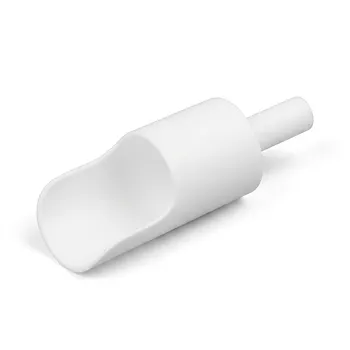
- High Purity PTFE Material Shovel Non Stick Chemically Inert Pharmaceutical Scoop for Trace Analysis
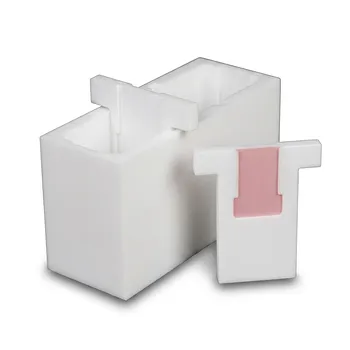
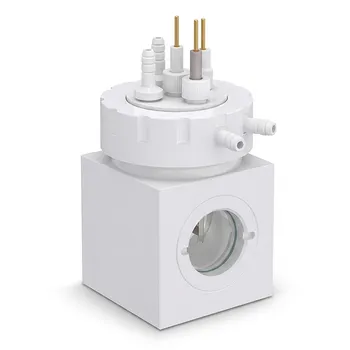
- High Purity Custom PTFE Laboratory Reaction Tank with Baffles for Low Background Trace Analysis
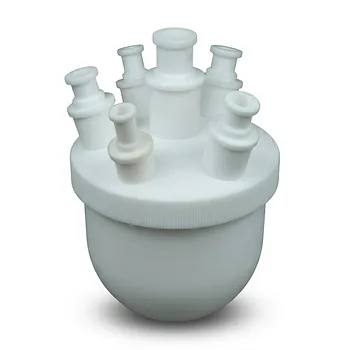
- Custom Multi Neck PTFE Flask 18L Laboratory Chemical Reactor Vessel for High Purity Synthesis and Stirring Applications
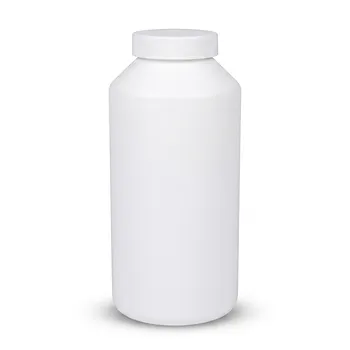
- 2L High Purity PTFE Reagent Bottle for Trace Analysis and Chemical Extraction with Customizable Specifications
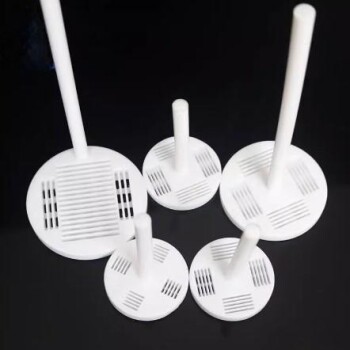
- Custom Machined Molded PTFE Teflon Parts Manufacturer for Laboratory ITO FTO Conductive Glass Cleaning Flower Basket
People Also Ask
- What are the advantages of PTFE shovels over metal shovels? Precision Handling for Sensitive Materials
- What are some specific applications of PTFE shovels in the laboratory? Ensure Sample Purity and Safety
- What are the key properties that make PTFE shovels ideal for laboratory use? Ensure Sample Integrity with Chemically Inert Tools
- What are the advantages of PTFE shovels in terms of chemical resistance? Unmatched Inertness for Handling Corrosives
- How does the durability of PTFE shovels compare to plastic shovels? Discover the Superior Choice for Harsh Conditions