Knowledge Electrode Why is the drop-casting method preferred for coating catalysts? Achieve Precise Loading and Reliable Testing Data
Author avatar

Tech Team · Kintek

Updated 3 months ago

Why is the drop-casting method preferred for coating catalysts? Achieve Precise Loading and Reliable Testing Data


The drop-casting method is preferred primarily due to its ability to provide precise control over catalyst loading while ensuring robust electrical contact with the electrode surface. By applying a measured microliter volume of catalyst ink and allowing it to dry naturally, researchers create a stable thin film necessary for accurate electrochemical measurements. This technique is essential for validating performance metrics such as mass activity and charge transfer resistance across diverse material sets.

Core Takeaway: Drop-casting offers a balance of micro-level precision and experimental simplicity, enabling the creation of uniform films that are essential for reproducible data and the scientific comparison of catalytic performance.

Achieving Reproducibility through Precise Loading

Microliter-Scale Volume Control

High-precision pipettes allow researchers to apply specific, micro-level volumes—often as low as 5.0 microliters—onto the electrode surface. This strict control over the modification solution is vital because the performance of an electrochemical sensor is highly sensitive to the thickness and density of the catalyst layer.

Ensuring Scientific Validity

Consistent loading is a non-negotiable prerequisite for comparing the catalytic activities of different material compositions. By maintaining a uniform mass across samples, researchers can ensure that core performance indicators, such as mass activity, are scientifically valid and comparable.

Reducing Sensor Response Errors

Precise micro-level control minimizes the variation between different sensor units. This consistency reduces response errors and ensures that the data gathered reflects the intrinsic properties of the catalyst rather than fluctuations in the electrode preparation process.

Optimizing Interfacial Charge Transfer

Establishing Robust Ohmic Contact

The drying process in drop-casting facilitates a strong ohmic contact between the catalyst particles and the conductive electrode surface, such as gold or glassy carbon. This connection is critical for minimizing resistance at the interface where the electrochemical reactions occur.

Facilitating Accurate Measurement

A well-formed thin film allows for the accurate measurement of transient photocurrent responses. This is particularly important when evaluating how materials behave under light excitation or during rapid potential shifts.

Enhancing Charge Transfer Efficiency

By forming a uniform layer, drop-casting ensures that the interfacial charge transfer resistance can be measured with high fidelity. This allows researchers to understand how efficiently electrons move between the catalyst and the electrode surface.

Understanding the Trade-offs and Pitfalls

The Risk of Non-Uniform Drying

While drop-casting aims for uniformity, "natural drying" can sometimes lead to the coffee-ring effect, where particles aggregate at the edges of the electrode. This can result in an uneven film thickness that may distort local current densities during testing.

Sensitivity to Ink Formulation

The quality of the final film is heavily dependent on the suspension stability and the solvent used. If the catalyst ink is not perfectly homogenized, the drop-casted layer may suffer from poor adhesion or internal resistance.

Limitations in Large-Scale Application

Drop-casting is a manual, lab-scale technique that is difficult to scale for industrial production. It is optimized for small-area glassy carbon electrodes (GCE) and may not translate directly to the manufacturing of large-scale fuel cell or electrolyzer components.

How to Apply This to Your Research

To get the most out of the drop-casting method, you should align your preparation technique with your specific experimental objectives.

  • If your primary focus is comparing different catalysts: Use a high-precision pipette to ensure the exact same mass loading across all samples to calculate accurate mass activity.
  • If your primary focus is studying reaction kinetics: Ensure the catalyst ink is highly dispersed to promote a uniform thin film that minimizes interfacial charge transfer resistance.
  • If your primary focus is sensor reproducibility: Standardize the drying environment (temperature and humidity) to prevent variations in film morphology between different electrode units.

By mastering the precision of drop-casting, you ensure that your electrochemical data is a true reflection of material performance rather than an artifact of preparation.

Summary Table:

Key Advantage Technical Benefit Impact on Research
Precise Volume Control Microliter-scale loading accuracy Validates mass activity and comparability
Ohmic Contact Strong catalyst-to-electrode bond Lowers interfacial charge transfer resistance
Method Simplicity Easy-to-replicate lab-scale process Enhances sensor reproducibility and data integrity
Thin Film Formation Consistent material density Facilitates accurate transient photocurrent measurement

Elevate Your Electrochemical Precision with KINTEK

Precision in the lab starts with high-performance materials. At KINTEK, we specialize in providing the foundation for accurate electrochemical testing. From everyday basic labware like PTFE beakers and PFA reagent bottles to specialized electrode accessories and custom electrochemical cells, our products are designed to withstand the most demanding chemical environments.

Whether you need standard consumables—such as stirring bars and high-purity tubing—or bespoke laboratory setups and battery testing fixtures, KINTEK offers end-to-end custom CNC fabrication to meet your exact specifications. We maintain an absolute focus on high-performance fluoropolymers to ensure your catalyst research is never compromised by contamination or material failure.

Ready to upgrade your research infrastructure? Contact KINTEK today for custom solutions and high-volume orders!

References

  1. Wan Ishak, Ying Pei Lim. Electrochemical characterization of Z-scheme charge transfer in biomass-derived ZnO/carbon dots for efficient tetracycline degradation. DOI: 10.1039/d5ra02606g

This article is also based on technical information from Kintek Knowledge Base .

Related Products

People Also Ask

Related Products

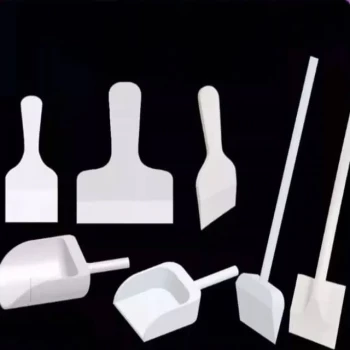
Customizable PTFE Scrapers and Shovels for Demanding Applications

Customizable PTFE Scrapers and Shovels for Demanding Applications

High-purity PTFE scrapers & shovels for labs, semiconductor & chemical industries. Chemical-resistant, non-stick, durable tools for precise material handling. Custom solutions available.

Acid Resistant PTFE Button Cell Battery Test Fixture Customizable Machining High Purity Electrochemical Testing Clamp

Acid Resistant PTFE Button Cell Battery Test Fixture Customizable Machining High Purity Electrochemical Testing Clamp

High-purity PTFE button cell testing fixtures provide exceptional acid resistance and electrical insulation for precise electrochemical analysis. These customizable clamps eliminate stray currents and prevent electrolyte corrosion during rigorous battery research and development processes in demanding labs.

Corrosion Resistant PTFE Coin Cell Battery Testing Clamps and Acid Proof Custom Fluoropolymer Battery Fixtures

Corrosion Resistant PTFE Coin Cell Battery Testing Clamps and Acid Proof Custom Fluoropolymer Battery Fixtures

Engineering-grade PTFE coin cell battery testing clamps offer unparalleled acid resistance and electrical insulation for high-precision electrochemical research. These customizable fixtures prevent stray currents and electrolyte corrosion, ensuring reliable data acquisition in demanding laboratory environments across global industrial battery sectors.

Custom PTFE Electrolytic Cell Corrosion Resistant Low Background Reaction Vessel with Inlet Outlet Ports

Custom PTFE Electrolytic Cell Corrosion Resistant Low Background Reaction Vessel with Inlet Outlet Ports

Discover professional high-purity custom PTFE electrolytic cells designed for precision electrochemical analysis. Featuring extreme corrosion resistance and low background interference, these reaction vessels offer customizable inlet/outlet ports for seamless integration into demanding industrial or laboratory fluid systems.

Custom PTFE Corrosion Resistant Insulating Electrophoresis Reaction Cell with Septum and Valves for Low Background Trace Analysis

Custom PTFE Corrosion Resistant Insulating Electrophoresis Reaction Cell with Septum and Valves for Low Background Trace Analysis

Optimize trace analysis with our custom PTFE corrosion-resistant reaction cells. Featuring insulating electrophoresis designs with integrated septums and valves, these high-purity systems ensure low background and zero metal precipitation for demanding industrial laboratory and chemical research applications today.

High Purity PFA Laboratory Rectangular Tank Corrosion Resistant Acid Cleaning Bath for Silicon Wafer Processing and Trace Analysis

High Purity PFA Laboratory Rectangular Tank Corrosion Resistant Acid Cleaning Bath for Silicon Wafer Processing and Trace Analysis

This high-purity PFA laboratory rectangular tank offers exceptional chemical resistance and thermal stability for semiconductor wafer cleaning and ultra-trace analysis, featuring a seamless design to prevent contamination while ensuring long-term durability in demanding industrial and research environments. Reliable custom solutions.

White PTFE Electrolytic Cell with Movable Slider and Insulated Lid for Fluorine Corrosion Resistance

White PTFE Electrolytic Cell with Movable Slider and Insulated Lid for Fluorine Corrosion Resistance

Engineered for extreme chemical resistance this customizable PTFE electrolytic cell features a movable slider and superior insulation ideal for fluorine rich environments ensuring high purity results in semiconductor and electrochemical research applications and advanced manufacturing.

Customizable Graphite Aluminum Alloy Electric Acid Evaporation System for Laboratory Digestion Pretreatment with Multi Hole Configurations

Customizable Graphite Aluminum Alloy Electric Acid Evaporation System for Laboratory Digestion Pretreatment with Multi Hole Configurations

Maximize laboratory efficiency with our customizable graphite and aluminum alloy electric acid evaporation system. Engineered for high-purity trace analysis, this unit offers multi-hole configurations with bespoke dimensions to meet your specific industrial digestion requirements and performance standards.

Custom PTFE Acid Resistant Support Rack Multi Hole PFA Hydrogen Absorption System Bracket

Custom PTFE Acid Resistant Support Rack Multi Hole PFA Hydrogen Absorption System Bracket

Professional custom PTFE and PFA support racks specifically engineered for high-purity hydrogen absorption systems. These acid-resistant multi-hole brackets ensure superior chemical stability, gas integrity, and long-term durability in demanding industrial electrolysis, laboratory research, and fuel cell testing environments.

Custom PTFE Double Headed Lab Spatula Chemical Resistant Non Stick Pharmaceutical Grade Fluoropolymer Sampling Tool

Custom PTFE Double Headed Lab Spatula Chemical Resistant Non Stick Pharmaceutical Grade Fluoropolymer Sampling Tool

Premium custom PTFE double-headed lab spatulas offer exceptional chemical resistance and non-stick performance for pharmaceutical and food-grade applications. These high-purity fluoropolymer sampling tools ensure contamination-free handling and are fully customizable to meet your specific industrial laboratory requirements.

Corrosion Resistant PTFE Electrochemical Cell for New Energy Research Inert Insulating Customizable Lab Reaction Vessel

Corrosion Resistant PTFE Electrochemical Cell for New Energy Research Inert Insulating Customizable Lab Reaction Vessel

Professional PTFE electrochemical cell designed for new energy research featuring exceptional chemical inertness and corrosion resistance. Available in 400ml and 1000ml capacities with full customization for advanced battery testing and high-purity trace analysis delivering reliable industrial performance and extreme durability.

High Purity PTFE PFA Microwave Digestion Vessels Custom Acid Digestion Tanks for Laboratory Sample Preparation

High Purity PTFE PFA Microwave Digestion Vessels Custom Acid Digestion Tanks for Laboratory Sample Preparation

Discover high-purity PTFE and PFA microwave digestion vessels engineered for extreme chemical resistance and thermal stability. Our custom CNC-machined tanks ensure precise compatibility with all major microwave systems, delivering reliable results for critical trace element analysis and sample preparation.

Square PTFE Electrochemical Cell for Silicon Wafer Processing and Hydrofluoric Acid Resistance in Semiconductor and New Energy Research

Square PTFE Electrochemical Cell for Silicon Wafer Processing and Hydrofluoric Acid Resistance in Semiconductor and New Energy Research

This high-purity PTFE square electrochemical cell offers exceptional hydrofluoric acid resistance for silicon wafer processing in semiconductor and new energy sectors, featuring fully customizable dimensions and rigorous bespoke engineering to meet specific demanding laboratory research and industrial production requirements.

Custom PTFE Double Head Lab Spatula Scraper Non Stick Corrosion Resistant Chemical Handling Tool

Custom PTFE Double Head Lab Spatula Scraper Non Stick Corrosion Resistant Chemical Handling Tool

Premium custom PTFE double-headed laboratory spatulas engineered for rigorous pharmaceutical and food testing. These chemically inert, non-stick instruments provide superior heat resistance and simplified cleaning for high-purity sample manipulation across demanding industrial processes and advanced scientific research environments.

High Purity PTFE PM2.5 Filter Sample Splitter for Environmental Monitoring Customizable Square Filter Divider for CDC Analysis

High Purity PTFE PM2.5 Filter Sample Splitter for Environmental Monitoring Customizable Square Filter Divider for CDC Analysis

Ensure sample integrity with our customizable PTFE PM2.5 filter splitters. Designed specifically for environmental monitoring and CDC laboratories, these high-purity dividers provide precise, contamination-free 2, 4, or 8-way partitioning for critical trace analysis and heavy metal detection processes.

Custom Graphite Digestion System and Acid Removal Unit with Anti Corrosion Coating for Microwave Digestion Vessels

Custom Graphite Digestion System and Acid Removal Unit with Anti Corrosion Coating for Microwave Digestion Vessels

Enhance laboratory efficiency with our custom graphite digestion and acid removal system featuring premium anti-corrosion coatings. Designed for seamless integration with microwave digestion vessels, this unit ensures precise thermal uniformity for demanding trace analysis and industrial sample preparation protocols.

Corrosion Resistant Heating Plate with Modified PTFE Coating 400x300mm Acid Resistant Laboratory Hot Plate Customizable Heating Solution

Corrosion Resistant Heating Plate with Modified PTFE Coating 400x300mm Acid Resistant Laboratory Hot Plate Customizable Heating Solution

Optimize your laboratory's thermal processing with our high-performance 400x300mm anti-corrosion heating plate featuring modified PTFE coating. Engineered for extreme chemical resistance and uniform temperature distribution, this customizable unit ensures reliable, long-term performance in harsh environments.

High Purity PFA Reaction Vessel 4L Water Oxygen Separation Tank for Proton Exchange Membrane Electrolysis Experiments Customizable Laboratory Fluid Component

High Purity PFA Reaction Vessel 4L Water Oxygen Separation Tank for Proton Exchange Membrane Electrolysis Experiments Customizable Laboratory Fluid Component

Optimize PEM electrolysis research with our 4L high-purity PFA water-oxygen separation tank. Engineered for total chemical inertness, this customizable vessel prevents catalyst poisoning and membrane degradation, ensuring high-accuracy experimental results in demanding electrochemical and industrial green hydrogen laboratory applications.

High Precision ESD Safe PEEK Wafer Vacuum Suction Pen for 8 Inch Semiconductor and Photovoltaic Substrate Handling

High Precision ESD Safe PEEK Wafer Vacuum Suction Pen for 8 Inch Semiconductor and Photovoltaic Substrate Handling

High-performance ESD-safe PEEK wafer vacuum suction pen designed for precision semiconductor and photovoltaic 8-inch wafer handling. This customizable solution offers superior chemical resistance and mechanical durability for critical cleanroom environments and delicate substrate transfer processes.

Custom PTFE Teflon Parts Manufacturer PTFE Magnetic Stirring Bar

Custom PTFE Teflon Parts Manufacturer PTFE Magnetic Stirring Bar

KINTEK PTFE magnetic stirring bars offer chemical resistance, high-temperature stability, and smooth mixing for labs. Ideal for diverse applications.


Leave Your Message