The Ag/AgCl reference electrode is indispensable because it provides a constant, well-defined potential baseline that allows for the precise measurement of electrochemical reactions. In the study of nitrogen-doped reduced graphene oxide (NRGO), this stability ensures that the potentiostat can accurately control the voltage applied to the working electrode, which is critical for identifying specific redox peaks and kinetic properties.
Core Takeaway: The Ag/AgCl reference electrode acts as a stable "ruler" for electrical potential, enabling researchers to accurately measure the specific capacitance and catalytic activity of NRGO without interference from fluctuations in the testing environment.
The Role of Potential Stability in NRGO Analysis
Establishing a Constant Baseline
In a three-electrode system, the Ag/AgCl reference electrode maintains a highly stable and known potential benchmark. This stability allows the potentiostat to distinguish between the potential of the working electrode and the background noise of the electrolyte.
Precision in Kinetic Evaluation
Accurate measurement of the onset potential and peak potential is vital when analyzing the oxidation of fuels like ethanol on NRGO catalysts. Without the precise control provided by the Ag/AgCl electrode, researchers cannot reliably evaluate the kinetic performance or efficiency of the material.
Completing the Electrochemical Circuit
While the reference electrode monitors potential, it works in tandem with a platinum wire counter electrode. This setup ensures that current flows through the circuit without affecting the stable potential maintained by the Ag/AgCl reference.
Impact on Material Performance Metrics
Determining Specific Capacitance
For NRGO used in supercapacitors, the Ag/AgCl electrode allows for the accurate monitoring of the redox potential window during Galvanostatic Charge-Discharge (GCD) testing. This precision is mandatory for the correct calculation of specific capacitance and energy density.
Mapping the Redox Potential Window
Testing often occurs within a specific voltage range, such as -0.2 to 0.3 V, to capture the material's unique behavior. A stable reference ensures that these windows remain consistent across multiple cycles, allowing for a deep analysis of pseudocapacitive energy storage mechanisms.
Analyzing Surface Interactions
NRGO's properties are heavily influenced by the nitrogen dopants that alter its electronic structure. The Ag/AgCl electrode provides the resolution needed to detect subtle redox currents occurring at these nitrogen sites during cyclic voltammetry.
Understanding the Trade-offs
Sensitivity to Chloride Concentration
The potential of an Ag/AgCl electrode is dependent on the chloride ion concentration within its internal filling solution. If the internal solution leaks or changes concentration, the reference potential will drift, leading to inaccurate data.
Potential Contamination Risks
In some specialized electrolytes, the migration of chloride ions from the reference electrode can contaminate the working environment. This is a critical consideration when testing catalysts that are sensitive to halide poisoning.
Temperature and Pressure Limitations
While highly stable under standard conditions, Ag/AgCl electrodes can exhibit potential shifts at high temperatures. Researchers must calibrate their reference or use specialized thermal jackets to maintain accuracy in non-ambient conditions.
How to Apply This to Your Project
When conducting electrochemical characterization of NRGO, your choice of reference electrode management will dictate the reliability of your data.
- If your primary focus is catalyst kinetics: Ensure your Ag/AgCl electrode is properly calibrated to accurately capture the onset potential of reactions like ethanol oxidation.
- If your primary focus is supercapacitor storage: Use the stable baseline of the Ag/AgCl electrode to define the exact voltage window for GCD tests to ensure specific capacitance calculations are repeatable.
- If your primary focus is long-term stability testing: Regularly check the chloride level of the Ag/AgCl filling solution to prevent potential drift over hundreds of cycles.
By maintaining a stable potential benchmark, you ensure that every measured millivolt reflects the true performance of your NRGO material.
Summary Table:
| Key Role | Benefit for NRGO Testing |
|---|---|
| Constant Baseline | Provides a stable "ruler" for measuring specific redox peaks and kinetics. |
| Kinetic Precision | Accurately identifies onset and peak potentials for catalytic evaluation. |
| Metric Accuracy | Essential for calculating specific capacitance and energy density in GCD tests. |
| Surface Resolution | Enables detection of subtle redox currents at nitrogen-doped active sites. |
Optimize Your Electrochemical Precision with KINTEK
Elevate your NRGO research with KINTEK’s high-performance laboratory supplies. From standard setups to advanced custom electrochemical cells, battery testing fixtures, and electrode accessories, we provide the stable environments necessary for precise potential control.
Whether you need everyday basic labware (beakers, tubes, and reagent bottles) or high-purity trace analysis instruments, our products are crafted from premium PTFE and PFA for maximum chemical resistance. We specialize in everything from fluid transfer components (tubing, valves) and sample prep tools (filters, pipettes) to complex hydrothermal synthesis liners and microwave digestion vessels.
Why choose KINTEK?
- End-to-End Customization: Bespoke CNC fabrication for non-standard machined parts and unique laboratory setups.
- Unmatched Material Focus: Absolute expertise in high-performance fluoropolymers to prevent chloride contamination and ensure data integrity.
- Scalable Solutions: Equipped for both high-volume orders and specialized research projects.
Contact our experts today to build your custom lab solution!
References
- Sonia Saini, Madhav Sharma. Green synthesis and characterization of nitrogen doped reduced graphene oxide nanosheets as electrode material for direct ethanol fuel cell. DOI: 10.15251/jor.2025.212.249
This article is also based on technical information from Kintek Knowledge Base .
Related Products
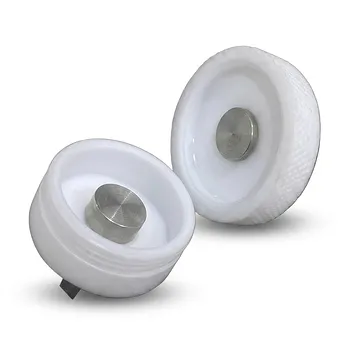
- Corrosion Resistant PTFE Coin Cell Battery Testing Clamps and Acid Proof Custom Fluoropolymer Battery Fixtures
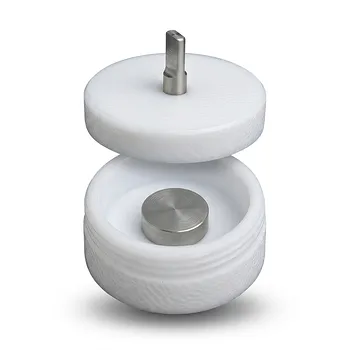
- Acid Resistant PTFE Button Cell Battery Test Fixture Customizable Machining High Purity Electrochemical Testing Clamp
- Customizable PTFE Scrapers and Shovels for Demanding Applications
- Custom PTFE Electrolytic Cell Corrosion Resistant Low Background Reaction Vessel with Inlet Outlet Ports
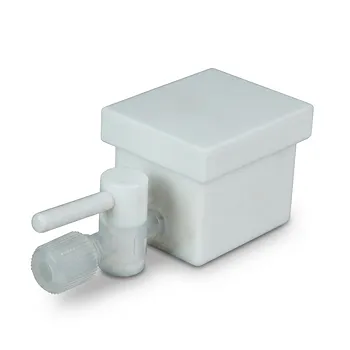
- White PTFE Electrolytic Cell with Movable Slider and Insulated Lid for Fluorine Corrosion Resistance
People Also Ask
- What is the thermal operating range for PTFE battery clamps in electrochemical research? Stability from -200°C to +260°C
- What are the primary functions and material compositions of PTFE battery clamps? Ensure Precision & Chemical Resistance
- How do coin cell testing fixtures evaluate ZIF-derived LCO cycling stability? Ensure Battery Research Precision
- What are the electrical insulation and signal integrity advantages of using PTFE battery clamps? Ensure Data Accuracy
- How does the chemical inertness of PTFE benefit laboratory-scale battery testing? Ensure high-purity research results.