The silver/silver chloride (Ag/AgCl) electrode is selected as the reference standard because it provides a highly stable, constant, and well-defined potential benchmark. This stability allows researchers to isolate and accurately monitor the electrochemical behavior of the working electrode without interference from current fluctuations or counter-electrode polarization. By maintaining a fixed potential baseline, it ensures that measurements such as specific capacitance and redox peak positions are both precise and repeatable across different experimental conditions.
The primary value of the Ag/AgCl electrode lies in its ability to decouple the potential measurement from the current flow in the electrochemical cell. This ensures that the recorded data reflects the intrinsic properties of the material under study rather than artifacts of the testing environment.
The Role of Potential Stability in Precision Measurement
Maintaining a Constant Potential Benchmark
An Ag/AgCl electrode functions as a reliable "anchor" for the electrical potential within a three-electrode system. During tests like Cyclic Voltammetry (CV), the reference electrode does not participate in the redox reaction itself, allowing it to maintain a steady voltage. This constant baseline is what enables a potentiostat to precisely control the energy level applied to the working electrode.
Precision in Specific Capacitance Calculations
For researchers developing energy storage materials, such as supercapacitors, calculating specific capacitance requires an exact understanding of the voltage window. Because the Ag/AgCl electrode provides a known potential benchmark, researchers can accurately determine the boundaries of charge and discharge. Any drift in this reference would lead to significant errors in calculating the material's energy density.
Isolating the Working Electrode Performance
Eliminating Interference from Current Flow
In a three-electrode configuration, the current flows between the working electrode and the counter electrode (often platinum). The reference electrode is part of a high-impedance circuit, meaning almost no current passes through it. This setup eliminates the "iR drop" (potential drop due to resistance) that would otherwise skew the measurement of the working electrode's potential.
Defining the Redox Potential Window
Accurately identifying where redox peaks occur is critical for understanding the kinetic performance of catalysts or the pseudocapacitive behavior of composites. The Ag/AgCl electrode allows researchers to monitor the redox potential window occurring specifically at the surface of the working electrode. This precision is vital for determining the onset potential of reactions, such as ethanol oxidation or oxygen evolution.
Practical Advantages in Diverse Environments
Stability in Harsh Electrolytes
The Ag/AgCl electrode is known for its reproducibility, even when used in strong alkaline or acidic electrolyte environments. This makes it a versatile tool for testing a wide range of materials, from molybdenum disulfide to nitrogen-doped graphene oxide. Its ability to remain stable in these conditions ensures that data collected in different labs can be accurately compared.
Facilitating Kinetic Analysis
By providing a stable reference, the Ag/AgCl electrode enables the analysis of charge storage mechanisms. Researchers can distinguish between Faradaic processes (battery-type behavior) and non-Faradaic processes (EDLC behavior). This distinction is only possible when the potential of the working electrode is measured against a stable and precise baseline.
Understanding the Trade-offs
Temperature Sensitivity
The potential of an Ag/AgCl electrode is sensitive to temperature fluctuations. If the testing environment is not thermally controlled, the reference potential may shift, leading to inconsistent results. It is standard practice to record the temperature or use a temperature-compensated reference value for high-precision kinetic studies.
Risk of Chloride Ion Contamination
Since the Ag/AgCl electrode contains a concentrated chloride solution (usually KCl), there is a risk of chloride ions leaking into the main electrolyte through the porous frit. In certain systems, such as those involving silver-sensitive catalysts or specific non-aqueous electrolytes, this leakage can poison the working electrode. In such cases, a double-junction electrode or an alternative reference may be required.
How to Apply This to Your Research
To ensure the highest data integrity in your electrochemical testing, consider your specific experimental goals:
- If your primary focus is precise specific capacitance: Always use a saturated Ag/AgCl electrode to ensure the potential window is accurately defined and repeatable across multiple cycles.
- If your primary focus is analyzing redox peak positions: Ensure your reference electrode is properly maintained and calibrated, as any drift will lead to an incorrect interpretation of reaction kinetics.
- If your primary focus is testing in non-aqueous or chloride-sensitive electrolytes: Consider using a double-junction Ag/AgCl electrode to prevent ion leakage from contaminating your working electrode.
The Ag/AgCl electrode remains the gold standard for three-electrode systems because it transforms an unknown electrochemical environment into a controlled, measurable, and scientifically rigorous landscape.
Summary Table:
| Feature | Benefit | Impact on Research |
|---|---|---|
| Stable Potential | Acts as a constant electrical "anchor" | Ensures repeatable energy level control in CV tests |
| High Impedance | Prevents current from passing through the reference | Eliminates iR drop and voltage measurement errors |
| Chemical Durability | Resists corrosion in acidic/alkaline electrolytes | Allows versatile testing of diverse materials like MoS2 |
| Redox Isolation | Decouples measurement from the counter electrode | Enables precise mapping of the redox potential window |
| Reliable Reference | Known potential benchmark | Critical for accurate specific capacitance calculations |
Elevate Your Electrochemical Research with KINTEK Precision
Maximize the accuracy of your research with high-performance laboratory supplies from KINTEK. We specialize in high-performance fluoropolymer materials designed to withstand the demanding conditions of electrochemical testing.
From everyday basic labware like PTFE beakers, PFA reagent bottles, and digestion tubes to specialized electrochemical cells, battery testing fixtures, and electrode accessories, KINTEK provides the high-purity tools your lab requires. Whether you need standard fluid transfer components (tubing, fittings, valves) or bespoke laboratory setups via our end-to-end custom CNC fabrication, we deliver the durability and chemical resistance essential for precise data collection.
Ready to optimize your lab’s efficiency? Contact us today to explore our full range of PTFE and PFA solutions, from high-volume orders to complex non-standard machined parts tailored to your unique experimental needs.
References
- B. B. Sahoo, Manoj K. Nayak. Microsphere-shaped-flower/rod- like NiCo-LDHs/rGO/Bi2S3 nanocomposite electrode for supercapacitor applications. DOI: 10.1007/s42452-025-08093-9
This article is also based on technical information from Kintek Knowledge Base .
Related Products
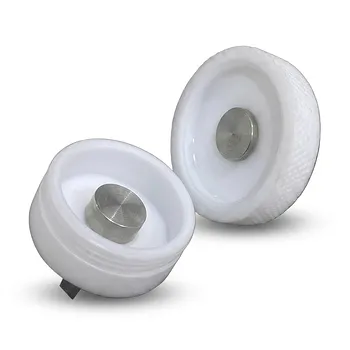
- Corrosion Resistant PTFE Coin Cell Battery Testing Clamps and Acid Proof Custom Fluoropolymer Battery Fixtures
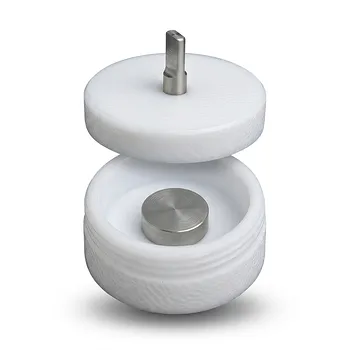
- Acid Resistant PTFE Button Cell Battery Test Fixture Customizable Machining High Purity Electrochemical Testing Clamp
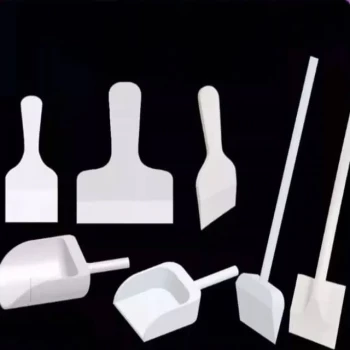
- Customizable PTFE Scrapers and Shovels for Demanding Applications
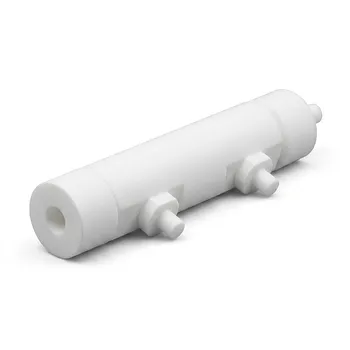
- Custom PTFE Electrolytic Cell Corrosion Resistant Low Background Reaction Vessel with Inlet Outlet Ports
- White PTFE Electrolytic Cell with Movable Slider and Insulated Lid for Fluorine Corrosion Resistance
People Also Ask
- What is the thermal operating range for PTFE battery clamps in electrochemical research? Stability from -200°C to +260°C
- What are the primary functions and material compositions of PTFE battery clamps? Ensure Precision & Chemical Resistance
- How do coin cell testing fixtures evaluate ZIF-derived LCO cycling stability? Ensure Battery Research Precision
- What are the electrical insulation and signal integrity advantages of using PTFE battery clamps? Ensure Data Accuracy
- How does the chemical inertness of PTFE benefit laboratory-scale battery testing? Ensure high-purity research results.