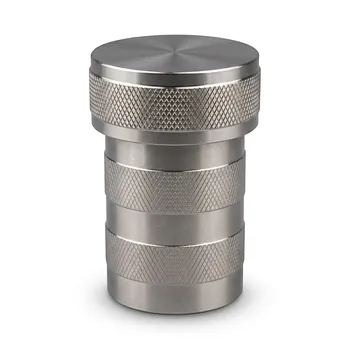
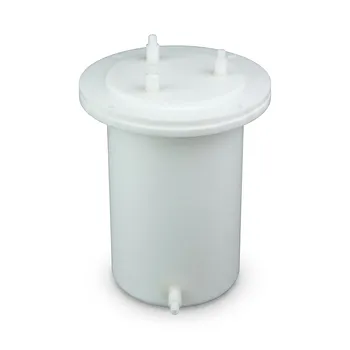
A Teflon-lined hydrothermal autoclave is the industry standard for carbon dot synthesis because it provides a chemically inert, high-pressure environment essential for transforming precursors into nanostructures. Specifically, the Polytetrafluoroethylene (PTFE) liner protects the metallic outer shell from corrosive reagents like potassium hydroxide (KOH) and thiourea, while the sealed vessel enables temperatures and pressures that facilitate the dehydration, polymerization, and carbonization of organic precursors.
The Teflon-lined autoclave acts as a specialized pressure cooker that allows water to reach a subcritical state, enabling complex chemical reactions like heteroatom doping while preventing metal contamination and vessel corrosion.
The Necessity of Chemical Inertness
Resistance to Corrosive Reagents
The modified synthesis of carbon dots often involves aggressive chemical agents such as thiourea and potassium hydroxide (KOH). Teflon (PTFE) is chosen for its exceptional chemical inertness, meaning it does not react with these strong acids or bases even at elevated temperatures. Without this liner, these chemicals would rapidly corrode the stainless steel outer vessel, compromising the structural integrity of the autoclave.
Prevention of Metal Ion Contamination
Maintaining a pure reaction environment is critical for the optical properties of carbon dots. The Teflon liner ensures that the reaction liquid never touches the metal walls, preventing the introduction of metal impurities. This purity is essential because stray metal ions can quench fluorescence or alter the electrochemical behavior of the final product.
Non-Stick and Anti-Adhesion Properties
Hydrothermal synthesis often results in the formation of carbonaceous residues or nanoparticles that can adhere to surfaces. PTFE provides a smooth, non-stick surface that prevents precursors and products from sticking to the walls. This facilitates higher yields and makes the equipment significantly easier to clean between synthesis batches.
Facilitating the Hydrothermal Reaction Environment
Achieving the Subcritical State
Inside the sealed autoclave, water is heated beyond its boiling point, creating a high-pressure, subcritical environment. In this state, the dielectric constant of water decreases and its ionic product increases. These physical changes accelerate the dissociation of precursors and facilitate the molecular rearrangement required for carbon dot formation.
Enabling Precursor Transformation
The high-pressure environment is necessary for the dehydration, polymerization, and carbonization of cellulose or other organic precursors. Under these conditions, organic molecules collide more frequently and with higher energy. This ensures the effective doping of nitrogen and sulfur heteroatoms into the carbon structure, which is vital for tuning the dots' luminescence.
Kinetic Acceleration
The combination of high temperature and pressure significantly accelerates chemical reaction kinetics. Reactions that would take days or be impossible at ambient pressure can be completed in a few hours. The autoclave essentially forces the precursors through the hydrolysis and crystallization phases efficiently.
Understanding the Trade-offs and Limitations
Thermal Constraints of PTFE
While Teflon is highly stable, it has a distinct thermal ceiling, typically around 220°C to 240°C. Exceeding these temperatures can cause the liner to soften, deform, or release toxic fluorinated gases. Users must strictly monitor the temperature to ensure it stays within the safe operating range of the specific PTFE grade used.
Pressure Management Risks
The very pressure that enables the synthesis also poses a safety risk if the autoclave is overfilled. Most protocols recommend filling the liner to only 60-80% of its capacity to allow for thermal expansion of the liquid. Failure to leave sufficient "headspace" can lead to pressure spikes that exceed the burst disk or sealing limits of the stainless steel shell.
Cooling and Sealing Issues
Rapid cooling of the autoclave can lead to improper sealing or even vacuum-locking the liner inside the steel shell. The different thermal expansion rates of PTFE and stainless steel mean that the vessel must be cooled slowly and naturally. Opening the vessel before it has reached room temperature can result in the loss of volatile precursors or physical injury from residual pressure.
How to Apply This to Your Synthesis
When selecting or operating a hydrothermal autoclave for carbon dot production, consider your specific chemical and structural requirements.
- If your primary focus is High Purity: Ensure your PTFE liner is medical-grade or high-purity to prevent any leaching of trace contaminants into the carbon dot matrix.
- If your primary focus is Heteroatom Doping (N, S, P): Use a high-pressure rated vessel (above 3MPa) to ensure the precursors are forced into the carbon lattice during the carbonization phase.
- If your primary focus is Scalability: Opt for a larger volume autoclave but maintain the 70% fill-ratio rule to ensure consistent pressure and safety across batches.
The Teflon-lined autoclave remains an indispensable tool by bridging the gap between volatile chemical reactions and the controlled physics of nanomaterial growth.
Summary Table:
| Feature | Benefit in Synthesis | Impact on Carbon Dots |
|---|---|---|
| Chemical Inertness | Resists KOH and aggressive precursors | Prevents vessel corrosion and byproduct formation |
| Non-Stick Surface | Prevents residue adhesion | Increases yield and ensures easier equipment cleaning |
| Pressure Sealing | Enables subcritical water states | Facilitates necessary dehydration and carbonization |
| Metal-Free Lining | Eliminates ion leaching | Preserves high fluorescence and optical purity |
| Thermal Stability | Operates safely up to 240°C | Provides consistent kinetics for heteroatom doping |
Elevate Your Synthesis with KINTEK Fluoropolymer Expertise
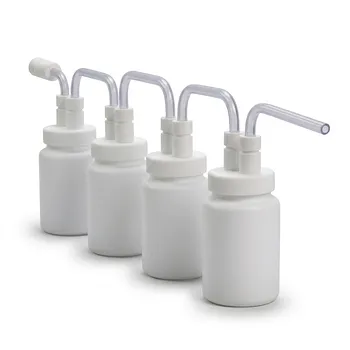
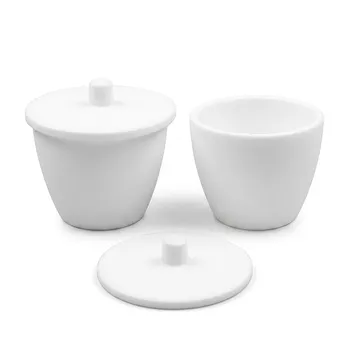
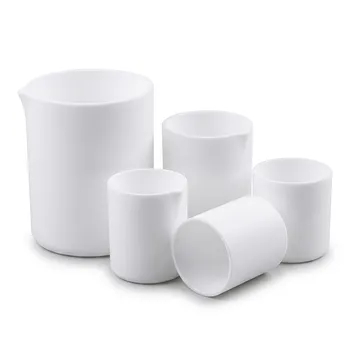
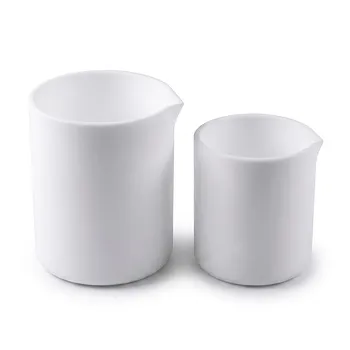
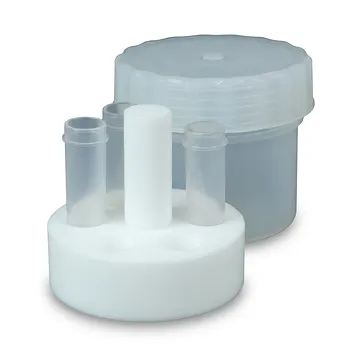
Precision in carbon dot synthesis starts with the right materials. KINTEK manufactures virtually all imaginable laboratory supplies crafted from high-performance PTFE and PFA. From everyday basic labware (beakers, crucibles, reagent bottles) and fluid transfer components (tubing, fittings, valves) to advanced reaction apparatus like hydrothermal synthesis liners, microwave digestion vessels, and custom electrochemical cells, we ensure your environment remains pure and inert.
Whether you need sample prep tools (filters, pipettes, spatulas), general consumables (O-rings, seal tapes), or complex non-standard machined parts, our end-to-end custom CNC fabrication is equipped to deliver high-volume orders and bespoke setups tailored to your research.
Maximize your lab's efficiency and purity—contact us today to discuss your custom fluoropolymer requirements!
References
- Aimi Solihah Zaul Kapri. Development of carbon dots from lignocellulose oil palm wastes: A potential CO2 adsorbent. DOI: 10.21741/9781644903575-25
This article is also based on technical information from Kintek Knowledge Base .
Related Products
- High Temperature Corrosion Resistant Hydrothermal Synthesis Reactor with TFM Inner Liner and Straight Cylinder Design
- Custom TFM Reaction Vessel with Stainless Steel Jacket and PTFE Inner Cup for High Corrosion Resistance
- PTFE Lined High Pressure Digestion Vessel 50ml High Temperature Hydrothermal Synthesis Tank
- High Temperature Teflon Continuous Reaction System and HF Resistant Three Neck Flask for Petrochemical Processing
- High Purity Corrosion Resistant Teflon Crucible Low Background Laboratory PTFE Vessel for Trace Analysis and Acid Digestion
People Also Ask
- What is the role of a corrosion-resistant reactor in the synthesis of lignin-based carbon dots? Ensure Maximum Purity
- What are the technical advantages of using hydrothermal synthesis reactors for advanced electronic & optical nanomaterials?
- How does a hydrothermal synthesis reactor facilitate the production of crystalline materials with tailored morphologies? Precision Crystal Growth
- Why is the sealing reliability of a hydrothermal synthesis reactor critical for 24-hour cycles? Ensure Nano-Precision
- What role do hydrothermal synthesis reactors play in CQD preparation? Achieve High-Purity Nanomaterial Synthesis