The Saturated Calomel Electrode (SCE) is the indispensable anchor of electrochemical precision. In the context of Mg-doped $\text{Ga}_2\text{O}_3$ detectors, the SCE provides a highly stable reference potential that allows researchers to isolate and measure potential variations at the electrode-electrolyte interface. This stability is critical for accurately quantifying how magnesium doping reduces charge transfer resistance and enhances the efficiency of carrier transport within the detector.
Core Takeaway: The SCE serves as a constant potential benchmark that decouples the performance of the Mg-$\text{Ga}_2\text{O}_3$ material from experimental variables. This isolation is the only way to verify that improvements in detector sensitivity are a direct result of material doping rather than external measurement noise.
The Role of Potential Stability in EIS
Establishing a Constant Baseline
Electrochemical Impedance Spectroscopy (EIS) relies on measuring how a system responds to small AC signals across a range of frequencies. The SCE provides a known, fixed potential against which the working electrode's response is measured. Without this fixed point, it would be impossible to determine if a change in signal is due to the $\text{Ga}_2\text{O}_3$ material or a shift in the reference environment.
Decoupling Surface Reactions
In complex electrochemical systems, multiple reactions can occur simultaneously at the interface. The SCE allows researchers to define a precise electrochemical window. This ensures that the recorded data relates exclusively to the Faradaic reactions and charge movements occurring on the surface of the Mg-doped alpha-$\text{Ga}_2\text{O}_3$ working electrode.
Quantifying the Impact of Mg Doping
Isolating Charge Transfer Resistance ($R_{ct}$)
A primary goal of doping $\text{Ga}_2\text{O}3$ with Magnesium is to lower the resistance encountered by charge carriers crossing the interface. The SCE enables the quantitative isolation of this charge transfer resistance ($R{ct}$) from other circuit elements. By providing a stable reference, it confirms whether the doping has successfully improved the electronic kinetics of the detector.
Analyzing Warburg Diffusion Impedance
Beyond surface resistance, ions must diffuse through the electrolyte to the detector surface, a process characterized by Warburg impedance. The precision of the SCE allows researchers to distinguish between these slow diffusion processes and the faster ohmic resistances. This distinction is vital for understanding the carrier transport efficiency that governs the detector's response time.
Precision and Error Mitigation
Minimizing IR Drop via Proximity
In many EIS setups, a Luggin capillary is used to position the SCE sensing point as close to the working electrode as possible. This proximity reduces IR drop errors, which are voltage losses caused by the inherent resistance of the electrolyte. Minimizing these errors is essential for obtaining an accurate measurement of the material's true potential during high-sensitivity testing.
Maintaining Integrity in Corrosive Environments
Detectors are often tested in harsh electrolytes, such as 1M Potassium Hydroxide (KOH), to evaluate their durability. The SCE is valued for its chemical inertness and stability in these alkaline environments. It acts as a reliable benchmark that does not degrade, ensuring that performance data remains consistent over long testing cycles.
Understanding the Trade-offs
Temperature Sensitivity and Drift
While highly stable, the SCE's potential is sensitive to temperature fluctuations. If the testing environment varies in temperature, the reference potential can shift, leading to inaccuracies in the EIS Nyquist plots. Researchers must often use a controlled thermal environment to maintain the electrode's precision.
Environmental and Contamination Risks
The SCE contains mercury and mercurous chloride, posing environmental disposal challenges and potential toxicity risks if the casing is compromised. Furthermore, if the internal potassium chloride (KCl) solution leaks into the electrolyte, it can contaminate the $\text{Ga}_2\text{O}_3$ surface. This risk requires meticulous maintenance of the salt bridge and porous junctions.
How to Apply This to Your Project
Recommendations for Experimental Design
- If your primary focus is material characterization: Use the SCE to produce high-resolution Nyquist plots that clearly separate $R_{ct}$ from bulk resistance to validate your doping strategy.
- If your primary focus is detector response time: Prioritize the use of a Luggin capillary with your SCE to eliminate IR drop, ensuring your Warburg impedance measurements accurately reflect ionic diffusion limits.
- If your primary focus is long-term stability testing: Regularly calibrate your SCE against a secondary standard to ensure no potential drift has occurred during extended exposure to alkaline electrolytes.
The SCE provides the foundational certainty required to transform raw electrochemical data into actionable insights for semiconductor development.
Summary Table:
| Key Feature of SCE | Role in EIS Testing | Impact on Mg-Ga2O3 Analysis |
|---|---|---|
| Potential Stability | Constant Benchmark | Decouples material performance from measurement noise |
| Rct Isolation | Quantifies Resistance | Confirms if Mg doping improves electronic kinetics |
| Warburg Analysis | Distinguishes Diffusion | Explains carrier transport efficiency and response time |
| Chemical Inertness | Withstands Alkaline KOH | Maintains data integrity in corrosive environments |
Elevate Your Electrochemical Research with KINTEK Precision
Precise material characterization for Mg-Ga2O3 detectors requires equipment that never compromises on stability or purity. KINTEK specializes in high-performance laboratory supplies crafted from PTFE and PFA, ensuring your electrochemical cells and testing fixtures remain inert and contamination-free.
Whether you need standard or custom electrochemical cells, electrode accessories, and Luggin capillaries, or comprehensive fluid transfer components (tubing, fittings, valves), our end-to-end custom CNC fabrication is ready to deliver. From everyday basic labware like beakers and crucibles to advanced reaction apparatus and microwave digestion vessels, we provide everything required for high-sensitivity semiconductor testing.
Ready to optimize your lab setup? Contact us today to discuss your custom project or high-volume needs and see how our absolute focus on high-performance fluoropolymers can bring foundational certainty to your research.
References
- Xin Zhou, Heping Zeng. Mg‐doped α‐Ga<sub>2</sub>O<sub>3</sub> Nanorods for the Construction of Photoelectrochemical‐Type Self‐Powered Solar Blind UV Photodetectors and Underwater Imaging Application. DOI: 10.1002/advs.202413074
This article is also based on technical information from Kintek Knowledge Base .
Related Products
- Customizable PTFE Scrapers and Shovels for Demanding Applications
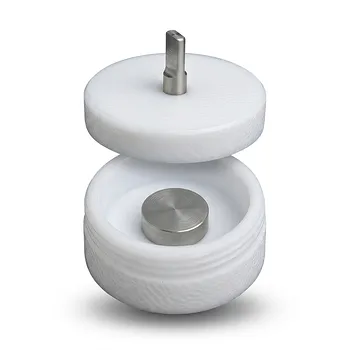
- Acid Resistant PTFE Button Cell Battery Test Fixture Customizable Machining High Purity Electrochemical Testing Clamp
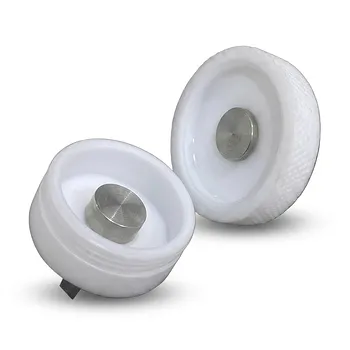
- Corrosion Resistant PTFE Coin Cell Battery Testing Clamps and Acid Proof Custom Fluoropolymer Battery Fixtures
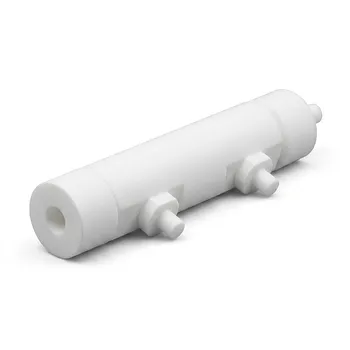
- Custom PTFE Electrolytic Cell Corrosion Resistant Low Background Reaction Vessel with Inlet Outlet Ports
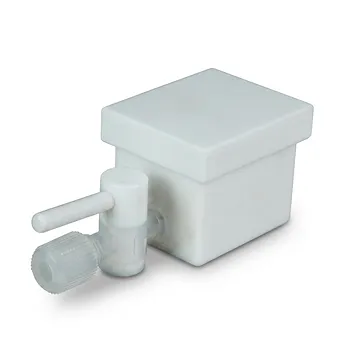
- Custom PTFE Corrosion Resistant Insulating Electrophoresis Reaction Cell with Septum and Valves for Low Background Trace Analysis
People Also Ask
- Why are PTFE shovels considered cost-effective? Maximize ROI with Superior Durability
- What are the advantages of PTFE shovels in terms of chemical resistance? Unmatched Inertness for Handling Corrosives
- How does the durability of PTFE shovels compare to plastic shovels? Discover the Superior Choice for Harsh Conditions
- What are some specific applications of PTFE shovels in the laboratory? Ensure Sample Purity and Safety
- What are the key properties that make PTFE shovels ideal for laboratory use? Ensure Sample Integrity with Chemically Inert Tools