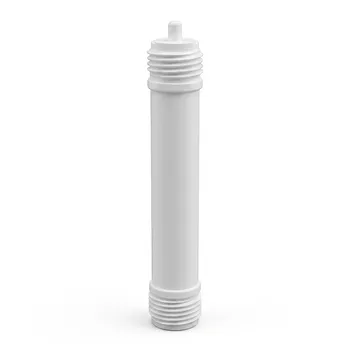
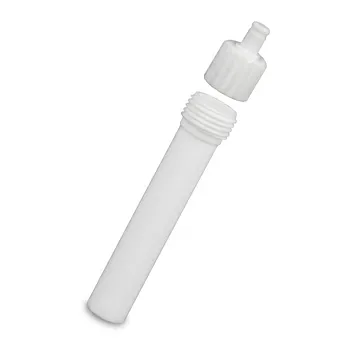
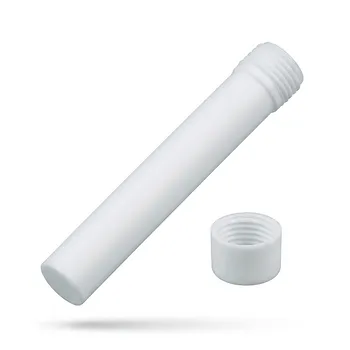
A Polytetrafluoroethylene (PTFE) lined autoclave is the industry standard for hydrothermal synthesis because it provides a chemically inert, high-pressure environment. This setup ensures that the reaction occurs without interference from the vessel walls, preventing metallic contamination and resisting corrosion from aggressive reagents.
Core Takeaway: The PTFE liner acts as a critical barrier that isolates the synthesis process from the stainless steel autoclave body. This isolation is essential for maintaining the high purity and specific coordination required to form single-atom catalyst precursors without introducing unwanted metallic impurities.
Ensuring High Purity in Single-Atom Synthesis
Preventing Metallic Ion Contamination
The primary function of the PTFE liner is to prevent the reaction solution from contacting the stainless steel shell. Stainless steel can leach metal ions like iron, chromium, or nickel into the solution, which would compromise the "single-atom" nature of the Ni-N4 catalyst.
Chemical Inertness Against Aggressive Reagents
Hydrothermal synthesis often involves acids, bases, or sulfur-containing precursors that would otherwise corrode metal surfaces. PTFE is exceptionally resistant to chemical attack, ensuring that the reagents only react with each other and not with their container.
Maintaining Structural Integrity of Precursors
The inert environment allows for the uniform nucleation and oriented growth of catalyst precursors, such as LDH or polymer structures. By providing a stable chemical background, the liner ensures the resulting nanostructures maintain their intended sacrificial template morphologies.
Facilitating the Hydrothermal Reaction Environment
Managing High-Pressure Autogenous Conditions
A sealed PTFE-lined autoclave generates autogenous pressure as it is heated, which is vital for forcing reactants into specific phases. This pressure facilitates the self-assembly of nickel species onto substrates like nickel foam or carbon supports.
Thermal Stability at Synthesis Temperatures
PTFE can safely withstand the typical hydrothermal range of 120°C to 200°C required for catalyst synthesis. This thermal stability allows for long-duration reactions at constant temperatures, which is necessary for the consistent formation of Ni-N4 coordination sites.
Sealing and Leak Prevention
The design of the PTFE liner, often including a matching lid, ensures a tight seal within the steel vessel. This containment is necessary to reach the supercritical or subcritical water states required to dissolve and recrystallize precursors effectively.
Understanding the Trade-offs
Temperature Limitations
While PTFE is stable, it has a hard thermal limit—usually around 250°C—beyond which it begins to soften and emit toxic fumes. For reactions requiring higher temperatures, researchers must switch to more expensive materials like PFA or high-strength metallic alloys.
Thermal Expansion and Contraction
PTFE has a higher coefficient of thermal expansion than the stainless steel surrounding it. If cooled too rapidly, the liner can deform or crack, potentially leading to "leakage" where the reaction solution reaches the outer steel shell.
Limited Reusability with Certain Precursors
In some cases, precursors can become embedded in the PTFE surface over time, leading to cross-contamination between different batches. This requires rigorous cleaning protocols or the dedicated use of liners for specific catalyst types.
How to Apply This to Your Project
When utilizing a PTFE-lined autoclave for the synthesis of Ni-N4 or similar single-atom catalysts, consider the following strategic guidelines:
- If your primary focus is Maximum Purity: Always use a dedicated PTFE liner that has never been exposed to different metal salts to avoid cross-contamination at the atomic level.
- If your primary focus is Structural Consistency: Ensure your filling degree (the volume of liquid) is typically between 60% and 80% to maintain optimal autogenous pressure without over-stressing the seal.
- If your primary focus is Equipment Longevity: Implement a slow cooling ramp (natural cooling to room temperature) to prevent the PTFE liner from warping due to differential thermal contraction.
The PTFE liner is not merely a container, but a functional component that enables the precise chemical control necessary for advanced catalyst engineering.
Summary Table:
| Feature | Benefit in Ni-N4 Synthesis | Technical Consideration |
|---|---|---|
| Chemical Inertness | Prevents metallic ion leaching from the steel shell | Maintains "single-atom" catalyst purity |
| Pressure Stability | Manages autogenous pressure for phase formation | Essential for uniform nucleation on substrates |
| Thermal Resistance | Withstands synthesis temperatures (120°C - 200°C) | Softens above 250°C; requires monitoring |
| Tight Sealing | Maintains supercritical/subcritical water states | Requires slow cooling to prevent liner warping |
Elevate Your Research Precision with KINTEK High-Performance Fluoropolymers
Don't let metallic contamination compromise your catalyst engineering. KINTEK specializes in the absolute focus on high-performance fluoropolymer materials, manufacturing virtually all imaginable laboratory supplies crafted from PTFE and PFA.
From everyday basic labware (beakers, measuring cylinders, crucibles, and reagent bottles) and high-purity trace analysis instruments to hydrothermal synthesis liners, microwave digestion vessels, and advanced electrochemical cells, we provide the inert environment your chemistry demands.
Backed by end-to-end custom CNC fabrication, KINTEK is equipped to deliver everything from high-volume consumables like O-rings and stirring bars to complex, bespoke laboratory setups.
Ready to upgrade your hydrothermal setup? Contact us today to discuss your specific requirements and ensure your next synthesis achieves peak purity and performance.
References
- Meng Wang, Yanwei Lum. Acidic media enables oxygen-tolerant electrosynthesis of multicarbon products from simulated flue gas. DOI: 10.1038/s41467-024-45527-1
This article is also based on technical information from Kintek Knowledge Base .
Related Products
- PTFE Lined High Pressure Digestion Vessel 50ml High Temperature Hydrothermal Synthesis Tank
- Custom TFM Reaction Vessel with Stainless Steel Jacket and PTFE Inner Cup for High Corrosion Resistance
- High Purity PTFE Microwave Digestion Vessel for Soil and Food Analysis Acid Resistant Fluoropolymer Sample Preparation Liners
- High Purity PTFE Microwave Digestion Vessel Replacement Liner for Acid Sample Preparation and Trace Analysis
- High Purity TFM Microwave Digestion Vessels PTFE Acid Evaporation Liners Domestic GT-400 Equivalent Laboratory Reaction Containers
People Also Ask
- What are the benefits of using a PTFE-lined vessel for carbon-sulfur cathode treatment? Maximize Purity & Performance
- Why are PTFE-lined pressure digestion vessels required for the preparation of Ag/CeO2 catalysts? Purity & Performance
- What safety features are typically incorporated into high-pressure PTFE digestion vessel designs? Ensure Lab Safety
- What is the function of PTFE lined high-pressure vessels in g-C3N4 synthesis? Achieve High-Purity Material Growth
- Role of High-Pressure Digestion Tanks in Perovskite Synthesis: Achieve Superior Stability and Latent Heat