High-performance PTFE cannot be produced by conventional melt injection molding because it does not become a freely flowing liquid when heated. Its extremely high molecular weight creates a melt creep viscosity of roughly 10¹⁰ Pa·s, or 10¹¹ poise, at about 380°C. Even above its melting point, PTFE behaves more like a stiff gel than a moldable thermoplastic, so injection pressure cannot move it through conventional molding channels.
PTFE is shaped through a solid-state powder-processing route: granular resin is compressed into a preform, sintered at high temperature, and often precision-machined into the finished laboratory component.
Why Conventional Melt Processing Fails
Extremely High Molecular Weight Prevents Melt Flow
High-performance PTFE has molecular chains with molecular weights reaching into the millions or tens of millions. These exceptionally long chains become highly entangled, producing a melt viscosity far beyond that of ordinary injection-molding plastics.
Heating PTFE above its crystalline melting point does not reduce this viscosity enough for practical injection or extrusion. The material softens, but it does not flow like a conventional thermoplastic melt.
PTFE Has a Narrow Processing Window
PTFE melts at approximately 327°C to 340°C, depending on its structure and grade. However, processing temperatures cannot simply be raised indefinitely to improve flow because PTFE begins to undergo rapid thermal degradation at temperatures above roughly 410°C.
This leaves no practical temperature range in which PTFE becomes sufficiently fluid for standard injection molding while remaining thermally stable.
Shear Does Not Solve the Problem
Injection molding and melt extrusion depend on forcing a polymer through narrow passages under high shear. PTFE's behavior under these conditions is unsuitable: it remains extremely resistant to flow and can fracture when subjected to severe shear in the narrow interval between melting and degradation.
As a result, conventional injection screws, extrusion dies, and mold gates cannot process unmodified high-molecular-weight PTFE effectively.
How PTFE Components Are Fabricated Instead
Granular Resin Is Compressed Into a Preform
Manufacturing begins with granular PTFE resin, commonly produced through suspension polymerization. The resin is placed into a mold and compressed at room temperature or near room temperature under high pressure.
This compression produces a dense preform, billet, rod, tube, or approximate component shape. The process resembles powder metallurgy because the particles are shaped mechanically before being fused thermally.
The Preform Is Sintered
The compressed PTFE preform is heated to a temperature above its melting point. The individual particles coalesce during this controlled heating cycle, creating a dense, continuous solid structure.
Sintering is not conventional melt molding. The material is not injected as a flowing liquid into a detailed mold; instead, a previously compacted shape is thermally consolidated.
Finished Stock Is Precision-Machined
After sintering, PTFE billets, blocks, rods, or tubes can be machined using lathes, mills, and CNC equipment. Machining produces the final dimensions, threads, channels, sealing surfaces, and other detailed features required for laboratory use.
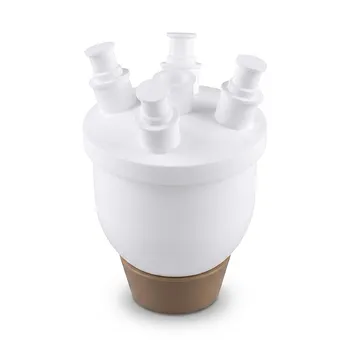
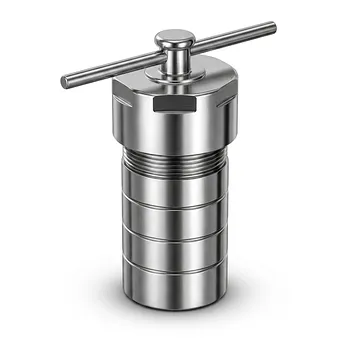
This route is particularly important for custom reaction vessels, digestion vessel liners, electrochemical cells, valves, fluid-transfer fittings, and non-standard laboratory fixtures.
Why Machining Is Important for Laboratory Equipment
It Enables Custom Geometry
Laboratory equipment frequently involves one-off designs, unusual interfaces, internal passages, or application-specific dimensions. Producing these geometries from sintered stock gives manufacturers more flexibility than attempting to create a dedicated injection mold.
CNC machining can also achieve the close dimensional control needed for fittings, valve components, and sealing interfaces.
It Preserves PTFE's Functional Properties
The compression-and-sintering process creates a dense PTFE structure while retaining the properties that make the material valuable in laboratories. These include broad chemical resistance, thermal endurance, low friction, and high material purity when an appropriate resin grade is used.
Machining then shapes that consolidated material without requiring it to undergo a conventional melt-flow process.
It Supports Small and Specialized Production Runs
Custom laboratory components are often produced in relatively low quantities. Creating tooling for injection molding would add substantial cost and may be impractical for a single apparatus or a small batch.
Sintered billets and CNC machining provide a more suitable manufacturing route for specialized products.
Understanding the Trade-offs
Material Waste Can Be Significant
Machining a complex component from a solid billet removes material that cannot always be reused in the same high-performance application. The larger the difference between the billet and final geometry, the greater the potential waste.
This can make machined PTFE parts more expensive than molded components made from flowable plastics.
Production Is Slower Than Injection Molding
Compression, sintering, cooling, and machining take considerably longer than a high-volume injection-molding cycle. The process is therefore less suited to inexpensive, mass-produced parts where conventional thermoplastics can meet the performance requirements.
Complex Shapes May Require Multiple Operations
Internal cavities, thin sections, precision bores, and intricate channels can require specialized tooling or several CNC operations. Design decisions must account for PTFE's machinability, part support, tolerances, and the dimensions of available sintered stock.
PTFE Is Not Always the Only Material Option
PTFE is appropriate when chemical resistance, purity, temperature capability, or low friction justifies its cost and manufacturing complexity. For less demanding applications, a melt-processable fluoropolymer or another engineering thermoplastic may provide a more economical solution.
How to Apply This to Your Project
The correct fabrication method depends on the required geometry, production volume, tolerances, and chemical and thermal conditions.
- If your primary focus is chemical resistance and purity: Specify an appropriate high-performance PTFE grade and use compression molding, sintering, and controlled machining to preserve those properties.
- If your primary focus is custom geometry: Produce the component from a sintered billet or preform and use precision CNC machining for channels, threads, bores, and sealing surfaces.
- If your primary focus is high-volume production: Compare PTFE with a melt-processable material or assess whether a compression-molded near-net shape can reduce machining and material waste.
- If your primary focus is dimensional precision: Treat the sintered PTFE stock and machining operation as a combined process, accounting for consolidation, cooling, and final machining tolerances.
PTFE's inability to flow is precisely why it requires a powder-based, sintered, and often machined manufacturing process rather than conventional melt injection molding.
Summary Table:
| Aspect | Conventional Melt Injection Molding | PTFE Fabrication (Compression & Sintering) |
|---|---|---|
| Material State | Free-flowing melt | Powder compacted, then sintered |
| Viscosity | Low enough to flow | Extremely high (10^10 Pa·s) |
| Processing Temperature | Narrow window above melt | Below degradation (<410°C) |
| Shape Creation | Mold cavity fill | Compression preform + machining |
| Suitability | High-volume, simple shapes | Custom, low-volume, complex geometries |
| Waste | Low | Higher due to machining |
| Rate | Fast cycle | Longer process |
| Key Properties | Limited by melt flow | Preserves chemical resistance & purity |
Looking for custom PTFE labware or precision-machined components? KINTEK specializes in high-performance PTFE and PFA products, from standard labware to custom electrochemical cells and microwave digestion vessels. Our end-to-end CNC machining capabilities ensure complex geometries and high-volume orders are delivered with precision. Ensure your lab operates with reliable, chemical-resistant equipment. Contact us today for a tailored solution — Get In Touch!
Related Products
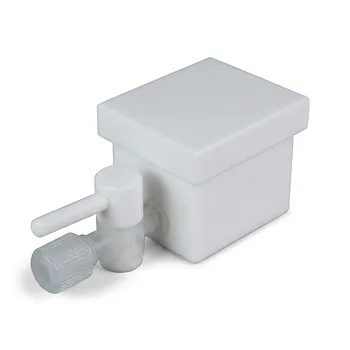
- Custom PTFE Laboratory Apparatus Corrosion Resistant Low Background Reaction Cells Precision CNC Fabrication
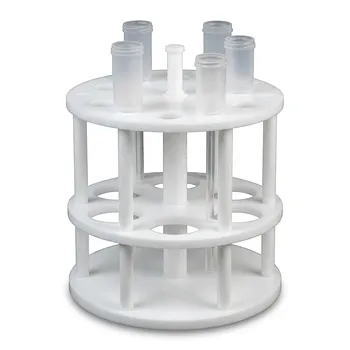
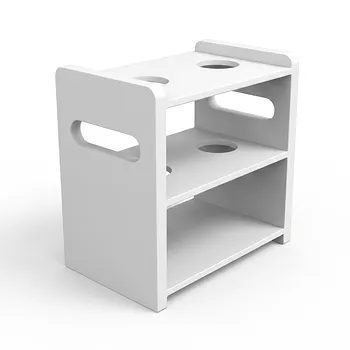
- Custom PFA Microcolumn Racks and PTFE Machined Low Background Corrosion Resistant Laboratory Fixtures
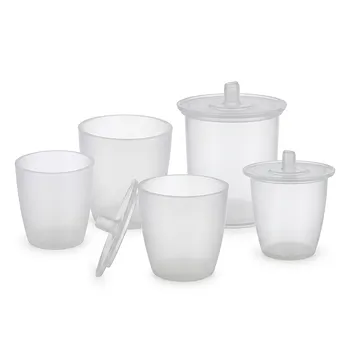
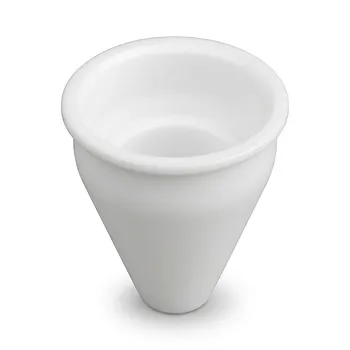
- High Purity PFA Crucible and Corrosion Resistant PTFE Beaker for Trace Analysis and Custom Laboratory Applications
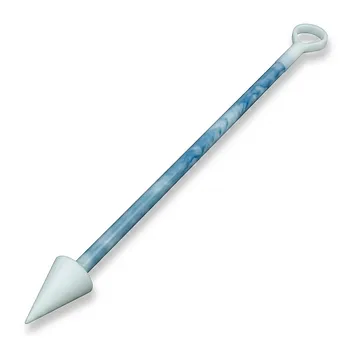
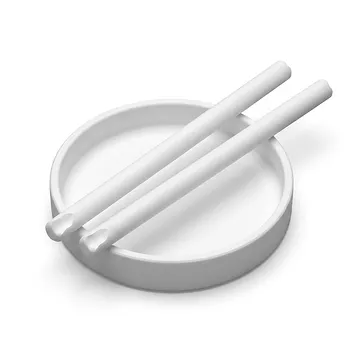
- High Purity Custom PTFE Solid Sampler for Laboratory Extraction and Chemical Analysis Polytetrafluoroethylene Sampling Probe with Customizable Length
- High Performance Customizable PTFE Reaction Vessel and Corrosion Resistant Polytetrafluoroethylene Flask for Chemical Laboratory Use
People Also Ask
- How does PTFE's melting behavior affect custom lab apparatus? Key insights for manufacturing.
- What are the primary fabrication methods for PTFE laboratory apparatus? Expert Insights into Fluoropolymer Engineering
- What does the technological maturity of PTFE mean for the quality and reliability of standard laboratory apparatus? Achieve consistent lab results with mature PTFE tech.
- What is the chemical compatibility range for PTFE laboratory apparatus? Explore Near-Universal Chemical Resistance.
- What are the primary chemical resistance properties of PTFE laboratory apparatus? Unmatched Purity and Inertness