PTFE and PFA are preferred because they combine extremely high electrical resistance with strong resistance to dielectric breakdown. Their volume resistivity exceeds 10^18 Ω·cm, while dielectric strength is approximately 19.7 kV/mm. These properties suppress current leakage, prevent electrical short circuits, and preserve the signal isolation required for accurate measurements in analytical instruments and electrochemical cells.
PTFE and PFA act as electrically inert barriers between electrodes, sensors, conductive fluids, and instrument hardware. Their high resistivity and dielectric strength reduce stray currents and interference, helping analytical systems produce stable, reproducible results.
Why Electrical Isolation Matters
Preventing Current Leakage
Electrochemical cells often contain conductive electrolytes positioned close to electrodes and sensing electronics. Any unintended conductive path through a component can divert current from the intended circuit and distort the measured response.
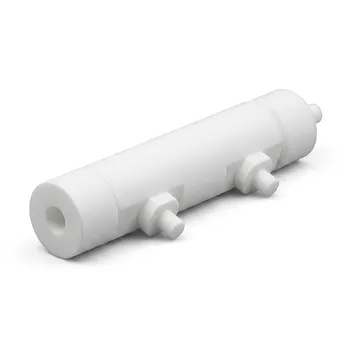
PTFE and PFA resist current flow through their bulk because of their exceptionally high volume resistivity. This makes them effective materials for cell bodies, electrode holders, sensor mounts, insulating spacers, and fluid-transfer fittings.
Reducing Stray Electrical Signals
Sensitive analytical measurements can be affected by small unwanted currents or electrical coupling between nearby components. These effects may appear as baseline instability, measurement drift, noise, or inaccurate signal levels.
High volume resistivity and high surface resistance help prevent current from traveling through or along the insulating component. The result is improved separation between electrical pathways and less interference with the signal generated by the sensor or electrode.
Resisting Electrical Breakdown
Dielectric strength describes the electric field a material can withstand before it breaks down and begins to conduct. PTFE and PFA provide a high dielectric strength of approximately 19.7 kV/mm, giving them substantial resistance to electrical failure under demanding laboratory conditions.
This is important when electrodes operate at elevated potentials or when insulating parts are thin, closely spaced, or exposed to strong electric fields. The material helps maintain isolation instead of allowing an arc or leakage path to develop.
How These Properties Improve Instrument Performance
Preserving Measurement Accuracy
Analytical instruments depend on predictable electrical paths. If insulation allows leakage, the instrument may measure a combination of the intended signal and an unwanted parasitic current.
PTFE and PFA reduce this error by keeping current confined to the designed circuit. That supports more reliable readings in trace analysis, electrochemical characterization, and sensor-based measurements.
Maintaining Electrode-to-Electrode Isolation
An electrochemical cell commonly contains multiple electrodes with different electrical roles. Insulating mounts and cell structures must keep these electrodes electrically separated while remaining mechanically stable.
PTFE and PFA provide that separation without becoming significant alternate current paths. This helps preserve the intended potential and current relationships within the cell.
Supporting High-Frequency Signals
Perfluoropolymers also have low dielectric constants and low dissipation factors. PTFE is reported at approximately 2.1 dielectric constant at 1 MHz, with very low energy loss; PFA offers similarly low-loss behavior.
Low dielectric loss reduces signal attenuation and unwanted coupling, which is valuable in high-frequency instrumentation and electronic testing equipment. The practical benefit is cleaner signal transmission through systems where parasitic capacitance and dielectric losses can affect performance.
Where the Electrical Benefits Are Used
Electrochemical Cell Bodies
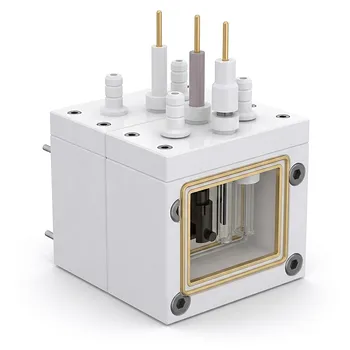
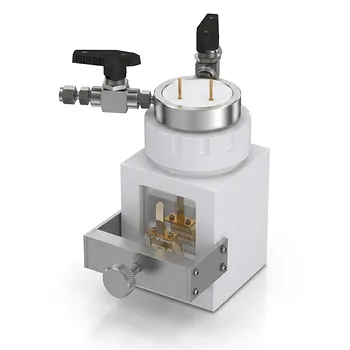
A PTFE or PFA cell body can isolate the electrolyte and electrode assembly from external conductive hardware. This limits unintended current paths while providing the structural enclosure required for the experiment.
Electrode Holders and Sensor Mounts
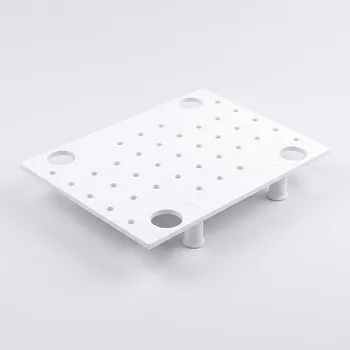
Electrode holders must position conductive elements accurately without electrically connecting them to one another or to the surrounding apparatus. The high resistivity of PTFE and PFA makes them suitable for these precision insulating structures.
Fluid Transfer Fittings and Tubing
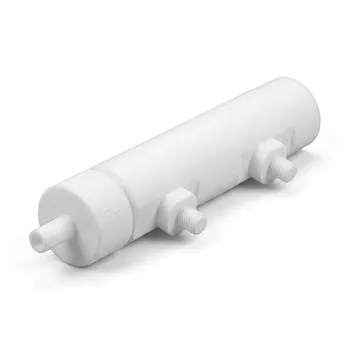
Fluid lines and fittings may pass conductive liquids near electrodes, sensors, or electronic components. Fluoropolymer components help prevent the fluid path and its surrounding hardware from creating unintended electrical connections.
High-Purity Analytical Hardware
Insulating parts in sampling systems, reaction vessels, and testing apparatus must not compromise the electrical environment. PTFE and PFA provide electrical isolation while also supporting the controlled conditions required for precision analysis.
Understanding the Trade-offs
Electrical Properties Depend on Component Design
Material properties alone do not guarantee reliable insulation. Electrical performance also depends on wall thickness, spacing, surface condition, contamination, temperature, applied voltage, and the geometry of the component.
Designers should therefore evaluate the complete assembly rather than relying only on a nominal dielectric-strength value.
Surface Contamination Can Create Leakage Paths
PTFE and PFA have high surface resistance, but deposits from electrolytes, moisture, or conductive samples can create leakage paths across a component's surface. Cleaning procedures, adequate creepage distances, and appropriate sealing remain important.
The fluoropolymer's insulating ability does not eliminate the need for good electrical design and laboratory maintenance.
PTFE and PFA Are Not Identical
Both materials provide excellent insulation, but their processing and mechanical characteristics differ. PFA is melt-processable and often better suited to molded or complex fluid-handling components, while PTFE is widely used for machined parts and applications requiring its specific performance profile.
The choice should account for the component's manufacturing method, dimensions, operating temperature, and mechanical requirements in addition to electrical specifications.
Do Not Confuse Dielectric Strength With Resistivity
Dielectric strength measures resistance to breakdown under a strong electric field. Volume resistivity measures resistance to current through the material, while surface resistance concerns current traveling along its surface.
A sound design considers all three properties because breakdown resistance and everyday leakage control address different failure mechanisms.
Making the Right Choice for Your Goal
PTFE and PFA are most valuable when electrical isolation must remain stable in a compact, conductive, or chemically demanding setup.
- If your primary focus is measurement accuracy: Use PTFE or PFA to isolate electrodes, sensors, and conductive fluids so leakage currents and stray signals do not corrupt the analytical response.
- If your primary focus is high-voltage reliability: Use components with sufficient thickness, spacing, and dielectric-strength margin rather than treating the material rating as the only design requirement.
- If your primary focus is high-frequency signal integrity: Take advantage of the low dielectric constant and low dissipation factor of PTFE and PFA to reduce attenuation and electrical crosstalk.
- If your primary focus is dependable electrochemical cell construction: Combine their electrical insulation with appropriate cleanliness, sealing, and surface-spacing practices to preserve isolation throughout operation.
For analytical instrumentation and electrochemical cells, PTFE and PFA provide the electrical stability needed to keep intended signals measurable, isolated, and trustworthy.
Summary Table:
| Property | PTFE | PFA | Benefit |
|---|---|---|---|
| Volume Resistivity | >10^18 Ω·cm | Similar | Prevents current leakage and stray currents |
| Dielectric Strength | ~19.7 kV/mm | Similar | Resists electrical breakdown and arcing |
| Dielectric Constant (at 1 MHz) | ~2.1 | Low | Reduces signal attenuation and crosstalk |
| Dissipation Factor | Very low | Very low | Minimizes energy loss and signal distortion |
Ensure your analytical instruments and electrochemical cells maintain the highest signal integrity with precision PTFE and PFA components from KINTEK. Our high-performance fluoropolymers are engineered to resist current leakage, prevent electrical interference, and withstand demanding conditions. From custom CNC machined parts to standard labware, we deliver reliable solutions that enhance measurement accuracy and equipment durability. Contact us today to discuss your specific requirements and elevate your lab's performance.
Related Products
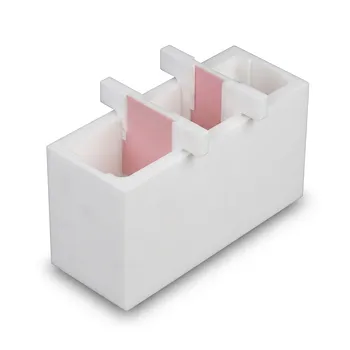
- Corrosion Resistant PTFE Electrochemical Cell for New Energy Research Inert Insulating Customizable Lab Reaction Vessel
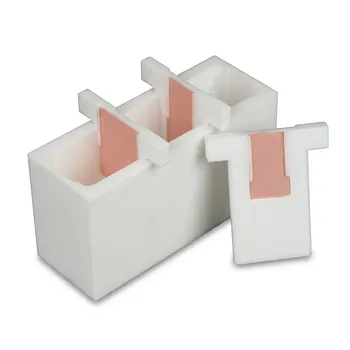
- White PTFE Electrolytic Cell with Movable Slider and Insulated Lid for Fluorine Corrosion Resistance
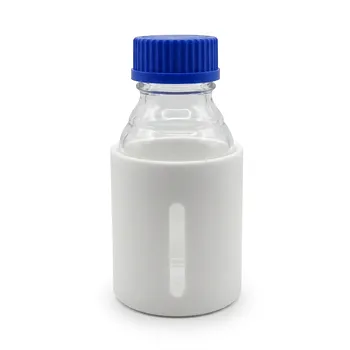
- Custom PTFE Thermal Insulation Sleeves Laboratory Vessel Condensation Jackets Virgin Fluoropolymer Machined Components
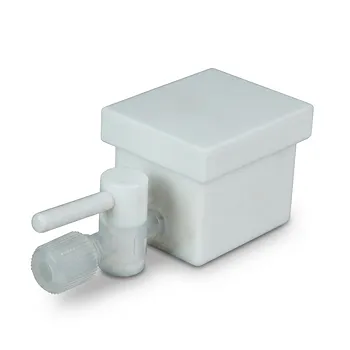
- Custom PTFE Corrosion Resistant Insulating Electrophoresis Reaction Cell with Septum and Valves for Low Background Trace Analysis
- Custom PTFE Insulating Gaskets and Corrosion Resistant Fluoropolymer Seals for Industrial Electrical Applications
People Also Ask
- How do custom PTFE electrochemical cells improve the accuracy of stability testing for alkaline catalysts compared to glass cells?
- How does the hydrophobicity of PTFE benefit electrochemical measurements? Enhance Stability and Precision in Your Lab
- What makes PTFE an ideal construction material for custom electrochemical cells and electronic analytical instrumentation housings? Discover superior chemical resistance and electrical insulation
- Why must seawater electrolysis test cells have high corrosion resistance? Protect catalyst stability & data accuracy.
- What are the key steps for structural integrity in molded PTFE lab reaction vessels? Master fine powder processing.