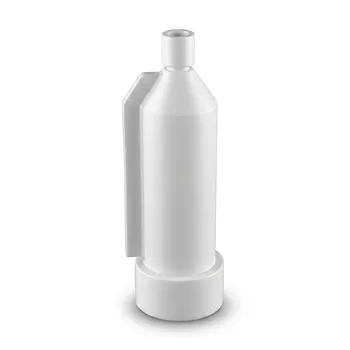
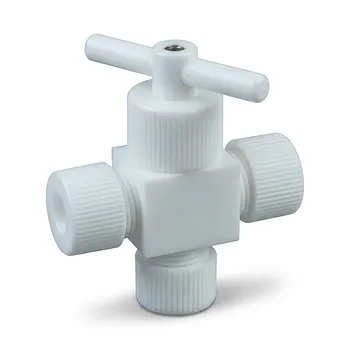
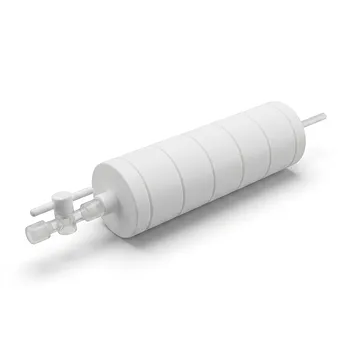
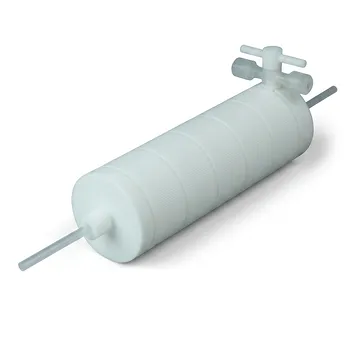
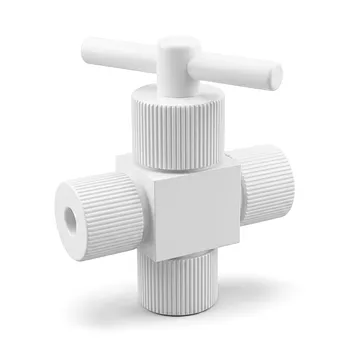
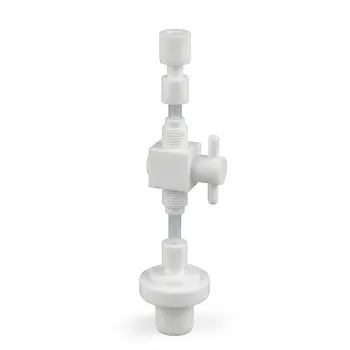
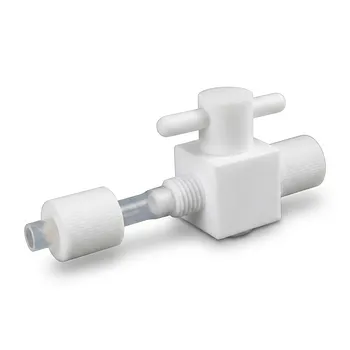
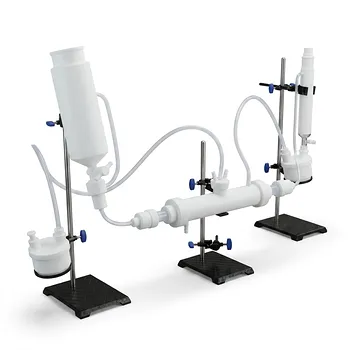
High-precision PTFE valves and fittings are the industry standard for chemical laboratory fluid transport due to their near-universal chemical inertness and exceptional sealing capabilities. These components ensure that high-purity reagents and corrosive chemicals remain uncontaminated and securely contained, which is essential for maintaining the accuracy of automated processes like titration and sampling.
High-precision PTFE components solve the dual challenge of chemical aggression and the need for absolute purity. By providing a leak-proof, non-reactive fluid path, they guarantee both operational safety and the integrity of sensitive experimental data.
Exceptional Chemical Resilience and Purity
Universal Chemical Compatibility
PTFE (Polytetrafluoroethylene) is preferred because it is chemically inert to almost all strong acids, bases, and organic solvents. This makes it a "universal" material for laboratories handling diverse and aggressive reagents that would degrade metal or lower-grade plastic fittings.
Prevention of Secondary Contamination
The material possesses extremely low levels of extractables, meaning it does not leach impurities into the fluid stream. This high-purity profile is critical for microfluidic experiments and high-purity chemical dispensing where even trace contaminants can ruin results.
Non-Stick Surface Properties
PTFE has an extremely low surface energy, which prevents solvents and reagents from adhering to the interior walls of the fluid path. This characteristic significantly reduces the risk of cross-contamination between different batches or samples in automated synthesis.
Mechanical Precision and Sealing Integrity
Zero-Leakage Connections
High-precision manufacturing processes ensure that valves and fittings provide a superior fluid seal, which is vital for preventing hazardous leaks. This precision is especially important in complex reaction paths where maintaining a vacuum or specific pressure is necessary.
Supporting Automation Accuracy
In systems like automated sampling or acid-base titration, the mechanical consistency of high-precision valves ensures repeatable flow rates. Without this precision, automation software cannot accurately calculate reagent volumes, leading to experimental error.
Anti-Aging and Thermal Stability
PTFE maintains its integrity across a wide operational temperature range and resists the "aging" effects of steam and UV exposure. This ensures the fluid transfer system remains stable over long durations, even in demanding environments involving heat or sterilization.
Understanding the Trade-offs
Physical Limitations of Fluoropolymers
While PTFE is chemically superior, it is softer than metals and can be prone to "cold flow" or creep under sustained high pressure. Users must ensure that fittings are not over-tightened, as this can permanently deform the seal and lead to eventual leaks.
Pressure and Temperature Constraints
Although PTFE handles temperature well, its pressure rating decreases as temperature increases. In high-pressure reactor applications, high-precision PTFE-lined stainless steel components may be required rather than pure PTFE to provide necessary structural support.
Cost vs. Performance
High-precision PTFE components represent a higher initial investment compared to standard plastics like polypropylene. However, the cost of failure—reagent loss, equipment damage, or compromised data—usually outweighs the price difference in professional laboratory settings.
How to Apply This to Your Project
When selecting components for your fluid control system, consider the specific demands of your reagents and the level of automation required.
- If your primary focus is High-Purity Synthesis: Prioritize high-precision PTFE or PFA components to minimize extractables and prevent cross-contamination via non-stick surfaces.
- If your primary focus is Handling Corrosive Acids: Ensure all wetted parts of your valves are PTFE-lined to prevent catastrophic corrosion and ensure long-term operational safety.
- If your primary focus is Automated Titration: Invest in high-precision machined valves to guarantee the mechanical repeatability necessary for accurate volume dispensing.
By aligning your material choice with the chemical and mechanical demands of your process, you ensure a reliable, safe, and highly accurate laboratory environment.
Summary Table:
| Feature | Advantage | Laboratory Benefit |
|---|---|---|
| Chemical Inertness | Resists nearly all acids & solvents | Safe handling of aggressive reagents |
| High Purity | Extremely low extractables | Prevents sample & reagent contamination |
| Non-Stick Surface | Low surface energy | Minimizes cross-contamination & waste |
| Sealing Integrity | Zero-leakage precision | Ensures operational safety & vacuum stability |
| Precision Machining | Consistent mechanical flow | Reliable accuracy for automated titration |
Elevate Your Lab’s Precision with KINTEK
Maximize the integrity of your experimental data with high-performance fluoropolymer solutions from KINTEK. We specialize in providing a comprehensive range of PTFE and PFA laboratory supplies designed to withstand the most aggressive chemical environments.
From everyday basic labware (beakers, measuring cylinders, crucibles, dishes, reagent/wash bottles, centrifuge and digestion tubes) and high-purity trace analysis instruments to comprehensive fluid transfer components (tubing, fittings, valves), KINTEK ensures absolute purity. Our expertise extends to sample prep and filtration tools (separatory funnels, burettes, filters, pipettes, tweezers, spatulas) and advanced derivative apparatus like custom electrochemical cells, battery testing fixtures, and microwave digestion vessels.
Why Choose KINTEK?
- Custom Fabrication: End-to-end custom CNC machining for complex, non-standard parts.
- Material Focus: Exclusive dedication to high-performance PTFE and PFA.
- Scalability: From bespoke laboratory setups to high-volume consumable orders.
Ensure zero-leakage and zero-contamination in your fluid paths. Contact our technical experts today to discuss your project!
References
- Abdul Shakoor, Shahid Atiq. Synergistic Improvements in Ionic Conductivity, Diffusion Dynamics, and Transference Numbers for LaNiO<sub>3</sub>/MXene Supercapacitor Electrodes. DOI: 10.1002/batt.202500014
This article is also based on technical information from Kintek Knowledge Base .
Related Products
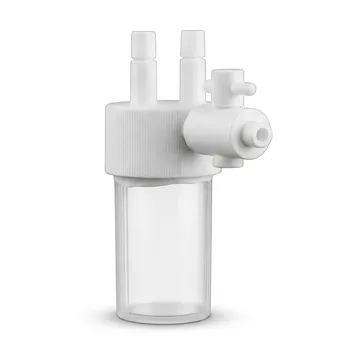
- Custom PTFE Reaction Lid with Integrated Valve and Fitting Corrosion Resistant No Leaching PFA FEP Bottle Cap System
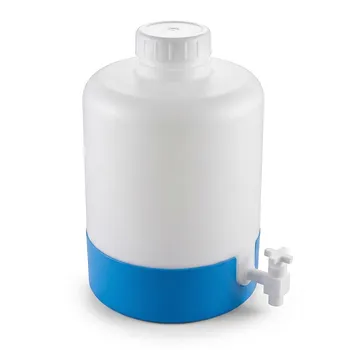
- High Purity PTFE Faucet Corrosion Resistant Polytetrafluoroethylene Drum Valve Customizable Lab Chemical Fluid Control
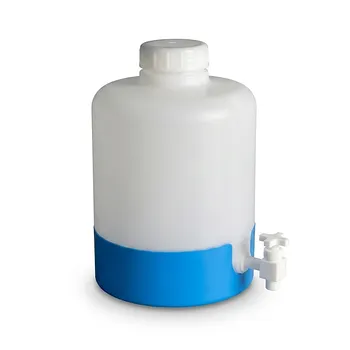
- High Corrosion Resistant PTFE Faucet Polytetrafluoroethylene Valve for Chemical Storage Drums and Fluid Transfer Systems Customizable Industrial Grade
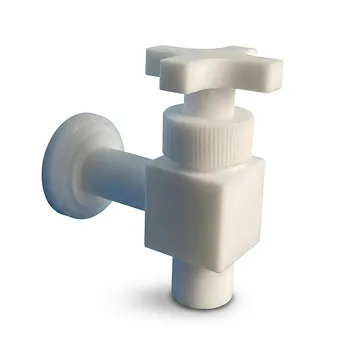
- Corrosion Resistant PTFE Polytetrafluoroethylene Valve and Customizable Laboratory Fluid Dispensing Faucet for Aggressive Chemical Handling in Industrial Storage Tanks and Plastic Drums
- High Purity PTFE Corrosion Resistant Reaction Vessel with Luer Fittings and Caps for Trace Analysis
People Also Ask
- What are the advantages of PTFE lids for jacketed and process vessels? Achieve Superior Durability & Chemical Resistance
- What are the electrical insulation properties of PTFE caps? Superior Dielectric Performance for Demanding Applications
- What material grades are available for PTFE caps? Choose the Right Grade for Purity or Performance
- What are the specialized types of PTFE caps and their uses? Ensure Sample Integrity and Safety
- What are the reusability and durability characteristics of PTFE-lined bottle caps? Engineered for Repeated, Reliable Use