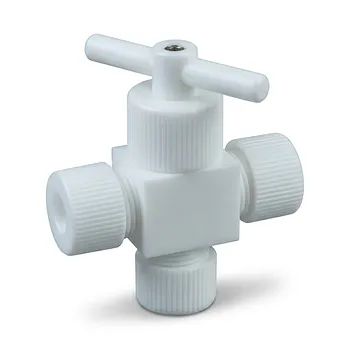
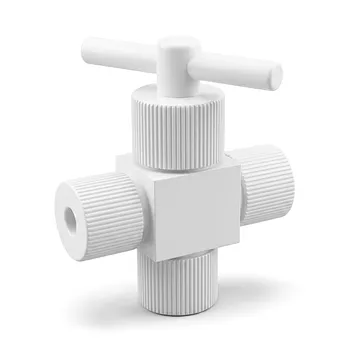
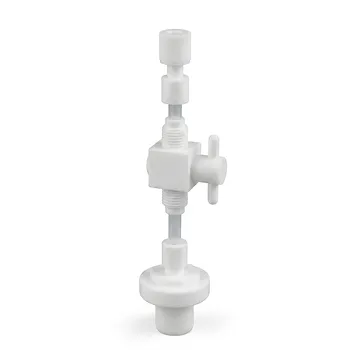
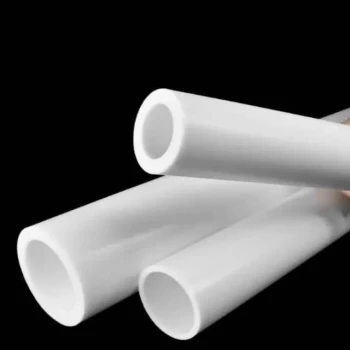
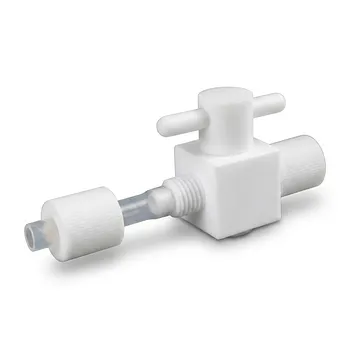
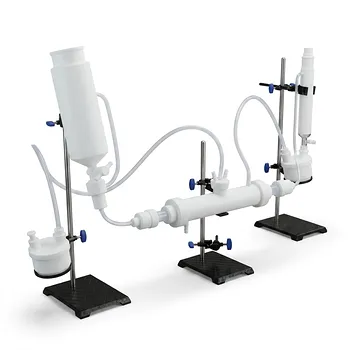
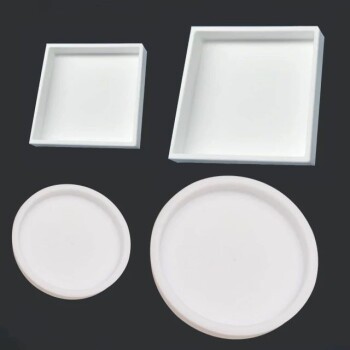
PTFE components are the definitive choice for handling highly reactive reagents due to their near-universal chemical inertness and non-contaminating nature. Unlike metal alloys that can corrode or leach ions into a process, PTFE remains stable when exposed to strong oxidants, reductants, and organic solvents. This ensures both the structural integrity of the fluid system and the high purity of the chemical output.
PTFE valves and fittings provide a critical safety barrier by eliminating metallic corrosion and ion leaching. This dual protection preserves the purity of sensitive reactions while extending the operational lifespan of equipment in the most aggressive chemical environments.
The Chemical Inertness Advantage
Universal Resistance to Aggressive Media
PTFE (polytetrafluoroethylene) is virtually non-reactive to almost all chemicals, including strong acids like hydrofluoric, nitric, and sulfuric acid. This near-complete inertness allows a single valve design to be used across diverse chemical processes without risk of material degradation.
Elimination of Catalytic Contamination
Metal components often release metal ions into the fluid stream through microscopic corrosion. In precision synthesis, these ions can act as unwanted catalysts, altering reaction pathways or ruining the purity of the final product. PTFE eliminates this risk entirely.
Stability Against Reactive Halogens
Many metals react violently or corrode rapidly when exposed to halogens and strong bases. PTFE maintains its structural stability and sealing integrity in these environments, preventing the "seizing" or swelling often seen in inferior materials.
Performance and Operational Reliability
Non-Stick Surfaces and Flow Consistency
The low surface energy of PTFE prevents the buildup of polymers, precipitates, and residues. This non-stick quality ensures that flow coefficients remain consistent over time and significantly reduces maintenance downtime.
Self-Lubricating Properties and Lower Torque
PTFE is inherently self-lubricating, which allows for lower actuation torque in valve operations. This reduces wear on moving parts and extends the service life of the valve compared to unlined metal alternatives that require external lubricants.
Superior Sealing Integrity
Because PTFE does not rust or pit, the sealing surfaces remain pristine throughout the component's life. This prevents hazardous leaks and ensures that the system remains vacuum-tight or pressure-stable during critical operations.
Understanding the Trade-offs
Temperature and Pressure Interplay
While PTFE is rated for temperatures up to 250 degrees Celsius, its mechanical strength decreases as temperature rises. In high-pressure applications, pure PTFE components may "creep" or deform unless they are supported by a metal housing or reinforcement.
Mechanical Vulnerability
PTFE is a relatively soft material compared to stainless steel or Hastelloy. It is more susceptible to mechanical damage from abrasive slurries or external impacts, which is why many industrial designs utilize a metal outer body with a PTFE inner lining.
Permeability Concerns
In extremely niche applications involving certain highly pressurized gases, PTFE can exhibit slight permeability. While negligible for most liquid reagents, it is a factor that must be considered when designing systems for ultra-high vacuum or specific gas-phase reactions.
How to Apply This to Your Project
When selecting between PTFE and metal components, your decision should be guided by the specific reactivity of your reagents and the purity requirements of your process.
- If your primary focus is product purity: Utilize PTFE wetted parts to eliminate the risk of heavy metal ion contamination and ensure a clean synthetic pathway.
- If your primary focus is high-pressure safety: Opt for PTFE-lined metal valves, which combine the chemical resistance of fluoropolymers with the structural "armor" of a metal body.
- If your primary focus is reducing maintenance: Choose PTFE fittings to leverage their non-stick properties, which prevent residue buildup and clogging in complex piping.
Choosing PTFE for reactive fluid handling transforms a potential point of failure into a reliable, long-term asset for chemical processing.
Summary Table:
| Feature | PTFE/PFA Components | Metal Components |
|---|---|---|
| Chemical Resistance | Near-universal; resistant to strong acids & halogens | Susceptible to corrosion, oxidation, and pitting |
| Contamination Risk | Zero ion leaching; maintains high-purity output | Risks metallic ion leaching and catalytic interference |
| Maintenance | Non-stick surface; self-lubricating; low torque | Prone to residue buildup, seizing, and scaling |
| Surface Integrity | Remains smooth and pristine over time | Can develop microscopic pits that compromise seals |
| Operational Life | Extended in aggressive chemical environments | Reduced due to material degradation and rust |
Upgrade Your Reactive Fluid Systems with KINTEK
Protect the integrity of your sensitive reactions by eliminating metallic contamination. KINTEK manufactures a comprehensive range of high-performance laboratory supplies crafted exclusively from PTFE and PFA. From essential fluid transfer components like tubing, fittings, and valves to complex standard or custom reaction apparatus, we provide the inert solutions your research demands.
Whether you require everyday consumables (O-rings, gaskets, stirring bars) or bespoke, custom CNC-machined parts for advanced battery testing or electrochemical cells, KINTEK delivers end-to-end fabrication excellence. Benefit from our absolute focus on high-performance fluoropolymers to ensure your lab maintains the highest standards of safety and purity.
Contact our engineering team today to discuss your custom project or high-volume order!
References
- Wenrui Sun, Ying Li. Modification of Nickel–Cobalt–Manganese Cathode Material Prepared Using Hydrothermal Method under Pulsed High Magnetic Field. DOI: 10.1002/cnma.202500015
This article is also based on technical information from Kintek Knowledge Base .
Related Products
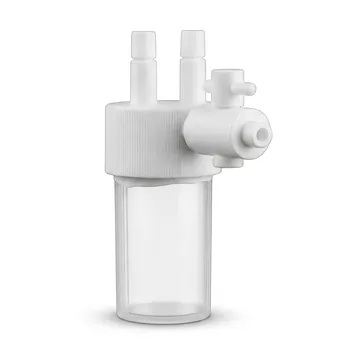
- Custom PTFE Reaction Lid with Integrated Valve and Fitting Corrosion Resistant No Leaching PFA FEP Bottle Cap System
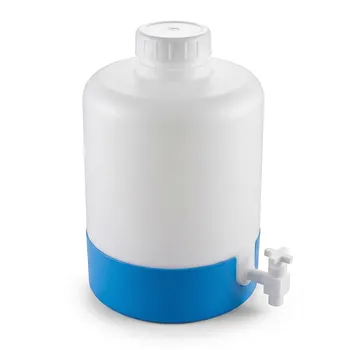
- High Purity PTFE Faucet Corrosion Resistant Polytetrafluoroethylene Drum Valve Customizable Lab Chemical Fluid Control
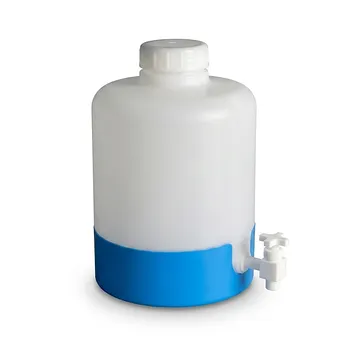
- High Corrosion Resistant PTFE Faucet Polytetrafluoroethylene Valve for Chemical Storage Drums and Fluid Transfer Systems Customizable Industrial Grade
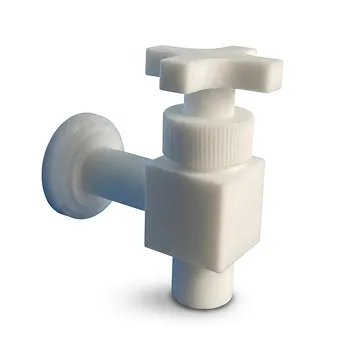
- Corrosion Resistant PTFE Polytetrafluoroethylene Valve and Customizable Laboratory Fluid Dispensing Faucet for Aggressive Chemical Handling in Industrial Storage Tanks and Plastic Drums
- High Purity PTFE Corrosion Resistant Reaction Vessel with Luer Fittings and Caps for Trace Analysis
People Also Ask
- What are the advantages of PTFE lids for jacketed and process vessels? Achieve Superior Durability & Chemical Resistance
- What are the electrical insulation properties of PTFE caps? Superior Dielectric Performance for Demanding Applications
- What material grades are available for PTFE caps? Choose the Right Grade for Purity or Performance
- Why are high-precision PTFE valves and fittings preferred for fluid transport in chemical laboratory applications?
- What are the specialized types of PTFE caps and their uses? Ensure Sample Integrity and Safety