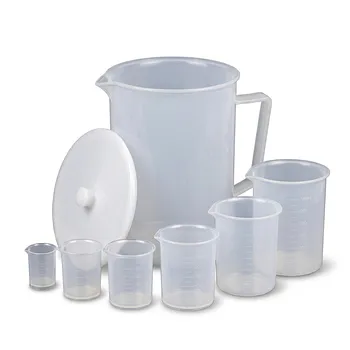
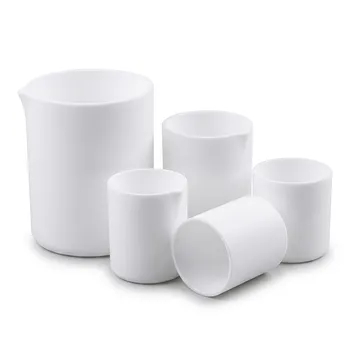
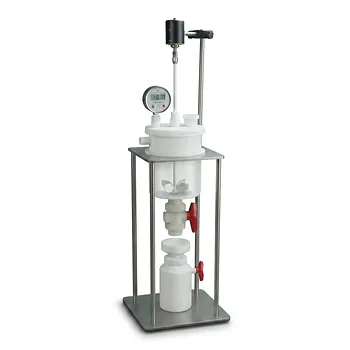
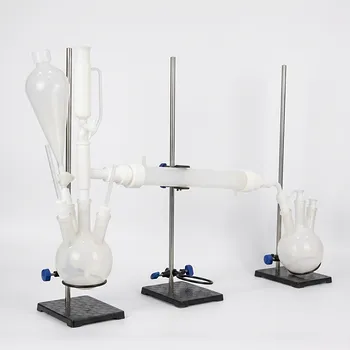
PTFE and PFA are uniquely suited because they combine chemical inertness, thermal stability, and exceptionally low surface energy. These properties allow laboratory apparatus to handle aggressive fluorinated reagents, strongly surface-active solvents, and phase-separated chemical systems with minimal corrosion, leaching, adsorption, or sample carryover. PTFE provides maximum chemical resistance and low friction, while PFA adds melt-processability, transparency, weldability, and greater design flexibility.
Fluorinated chemical systems challenge both the bulk material and its surface. PTFE and PFA address both problems: their strong C–F structures resist chemical and thermal attack, while their low-energy surfaces minimize adhesion, contamination, and difficult fluid residues.
Why Fluorinated Chemical Systems Are Difficult to Handle
Surface activity creates unusual interface behavior
Fluorinated amphiphiles and solvents can self-assemble strongly, exhibit low critical micelle concentrations, and produce very low interfacial tensions. As a result, they may spread across, penetrate, or organize at apparatus surfaces differently from conventional aqueous or organic liquids.
This matters in tubing, vessels, valves, and fittings because surface interactions can affect fluid retention, sample recovery, phase separation, and cross-contamination.
Aggressive chemistry increases material demands
Fluorinated reagents are often used alongside strong acids, bases, oxidizing environments, and organic solvents. The apparatus must therefore resist not only the fluorinated species themselves but also the broader chemical environment and elevated processing temperatures.
Conventional polymers may swell, soften, crack, leach additives, or become contaminated under these conditions.
How PTFE and PFA Address the Problem
Strong carbon–fluorine bonding limits chemical degradation
The fluorinated molecular structure gives PTFE and PFA exceptional resistance to chemical attack. They are resistant to nearly all common strong acids, bases, and organic solvents, making them suitable for aggressive reagent handling and high-purity processing.
This resistance reduces the risk of corrosion, swelling, dissolution, and chemical decomposition that can compromise apparatus integrity or alter a sample.
Low surface energy reduces unwanted adhesion
PTFE and PFA have very low surface free energy and low critical surface tension. This generally produces non-stick behavior and reduces the tendency of many liquids, residues, and particulates to remain attached to the apparatus wall.
In practical terms, this can improve:
- Sample recovery during decanting and transfer
- Drainage from vessels and tubing
- Resistance to residue buildup
- Cleaning and decontamination
- Control of cross-contamination
However, “non-wetting” should not be treated as universal. Fluorinated liquids can have unusually low surface tensions and may interact favorably with fluorinated surfaces, so actual wetting depends on the specific fluid, temperature, pressure, roughness, and surface condition.
Low adsorption protects analytical purity
High-purity PTFE and PFA contribute very low background contamination and minimal surface adsorption compared with many conventional materials. They do not readily contribute metal ions or other extractable species to a sample.
That is especially important in trace analysis, ultra-pure electrolyte handling, digestion procedures, and high-precision measurements, where contamination at very low concentrations can distort results.
Thermal stability preserves dimensional and chemical performance
Laboratory processes may combine aggressive chemistry with heating, digestion, solvent treatment, or thermal cycling. PTFE and PFA retain useful chemical and mechanical performance across broad temperature ranges compared with ordinary laboratory plastics.
This allows the same material family to be used for:
- Heated reaction and digestion vessels
- Tubing and transfer lines
- Valve bodies and fittings
- Seals and gaskets
- Custom-machined apparatus
Low friction supports reliable fluid handling
PTFE has an exceptionally low coefficient of friction. This helps reduce resistance in moving interfaces, valve components, and fluid pathways.
Lower friction can support smoother operation and reduce the tendency of residues or particles to remain trapped in transfer components, although system geometry and fluid properties still determine actual flow behavior.
Why PTFE and PFA Are Both Used
PTFE is preferred for maximum inertness
PTFE is often the default choice where the primary requirement is the broadest possible chemical resistance, low friction, and high-temperature capability. It is widely used in high-purity seals, vessels, tubing, liners, and custom CNC-machined components.
Its main limitation is processing: PTFE does not melt-process like conventional thermoplastics, which makes complex fabrication more difficult.
PFA enables more complex apparatus designs
PFA retains chemical and thermal performance close to PTFE while being melt-processable. This allows manufacturers to produce clearer, weldable, and more geometrically complex components.
PFA is therefore valuable for:
- Transparent vessels and tubing
- Welded fluid systems
- Specialized fittings
- High-purity valve bodies
- Microwave digestion vessels
- Electrochemical cell components
The choice is therefore not simply “PTFE versus PFA.” It is often maximum inertness and machinability versus fabrication flexibility and visibility.
Why Low Surface Energy Matters More in Fluorinated Systems
Surface effects can influence sample recovery
When liquids form low-interfacial-tension films or organized aggregates, even small amounts of retained material can affect concentration, phase composition, or subsequent measurements.
Low-energy fluoropolymer surfaces help limit persistent residue, although complete elimination of retention cannot be assumed for every fluorinated formulation.
Reduced surface interaction limits contamination pathways
A laboratory component can contaminate a sample by releasing material from its bulk or by retaining material from a previous operation. PTFE and PFA address both pathways through chemical stability and low adsorption.
This is particularly important where the apparatus is reused or where the sample contains highly active electrolytes, reactive solvents, or trace-level analytes.
Minimal moisture absorption improves consistency
Fluoropolymers absorb very little moisture. This is useful when water contamination changes solvent activity, electrolyte behavior, reaction kinetics, or measured thermodynamic properties.
The benefit is greatest when the apparatus is properly cleaned, dried, and stored; material selection alone cannot compensate for poor handling procedures.
Understanding the Trade-offs
No fluoropolymer is suitable for every condition
PTFE and PFA are highly resistant, but they are not universally immune to all chemicals, temperatures, radiation levels, mechanical loads, or processing conditions. Compatibility must be checked against the specific reagent mixture, temperature, pressure, and exposure time.
Surface repellency is system-dependent
Low surface energy reduces adhesion for many substances, but fluorinated liquids may wet fluoropolymer surfaces more readily than water or conventional organic liquids. The correct design target is not absolute non-wetting; it is controlled, low-contamination surface interaction.
Mechanical performance may limit use
PTFE is relatively soft and can deform under sustained load or elevated temperature. PFA offers useful processing advantages, but neither should be selected solely on chemical compatibility if the component must withstand high pressure, severe abrasion, or tight dimensional tolerances.
Fabrication and cost require consideration
PTFE can be difficult to process into intricate shapes, while PFA processing requires specialized equipment. Both materials may cost more than conventional polymers, but the higher initial cost can be justified when contamination, failure, or replacement would be expensive.
Making the Right Choice for Your Goal
The best material depends on whether chemical inertness, process visibility, geometry, or mechanical performance is the dominant requirement.
- If your primary focus is maximum chemical resistance: Choose high-purity PTFE for vessels, liners, seals, tubing, and machined parts exposed to severe chemical environments.
- If your primary focus is complex or welded geometry: Choose PFA when melt-processability, transparency, or weldable construction is important without giving up high chemical resistance.
- If your primary focus is ultra-trace analytical purity: Use high-purity PTFE or PFA and control cleaning, drying, storage, and handling procedures to minimize adsorption and background contamination.
- If your primary focus is fluid transfer reliability: Use fluoropolymer tubing, valves, and fittings while verifying wetting, pressure, temperature, and phase-behavior characteristics for the actual fluorinated formulation.
PTFE and PFA are effective not because fluorinated liquids always avoid fluoropolymer surfaces, but because these materials provide an unusually stable, clean, low-interaction platform for managing chemically aggressive and interfacially complex systems.
Summary Table:
| Property | PTFE | PFA |
|---|---|---|
| Chemical resistance | Excellent | Excellent |
| Thermal stability | High | High |
| Surface energy | Very low | Very low |
| Processability | Difficult (non-melt) | Melt-processable, weldable |
| Transparency | Opaque | Translucent |
| Friction coefficient | Very low | Low |
| Typical Applications | Vessels, liners, seals, tubing, custom parts | Transparent tubing, vessels, fittings, welded systems |
Elevate your lab's performance with our premium PTFE and PFA apparatus. Designed for the most demanding fluorinated systems, our products ensure purity, durability, and efficiency. Contact us today to discuss your specific requirements and benefit from our expert guidance and custom machining capabilities.
Related Products
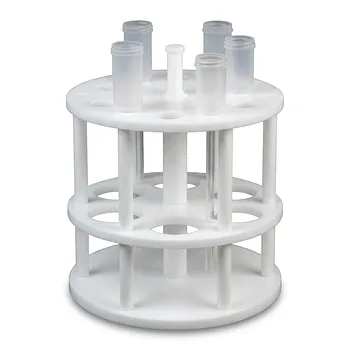
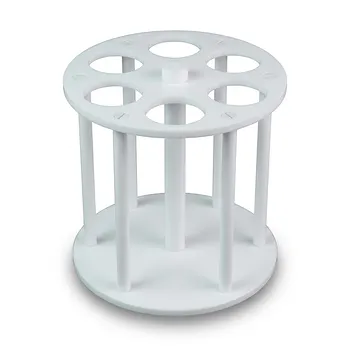
- Custom PFA Microcolumn Racks and PTFE Machined Low Background Corrosion Resistant Laboratory Fixtures
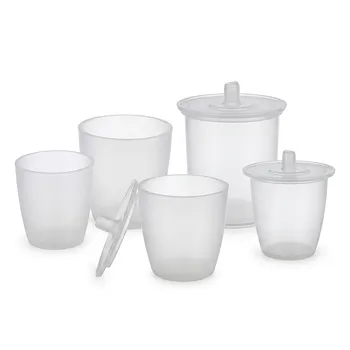
- High Purity PFA Crucible and Corrosion Resistant PTFE Beaker for Trace Analysis and Custom Laboratory Applications
- PTFE PFA Vacuum Filtration System Corrosion Resistant Customizable Shatterproof Laboratory Device
- Custom PTFE Constant Pressure Separatory Funnel Corrosion Resistant Low Background Labware for PFA Flasks
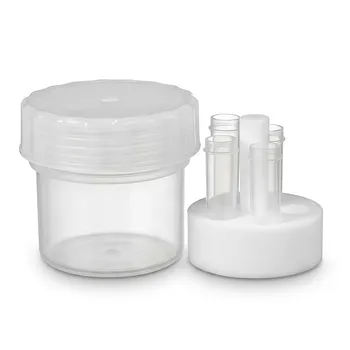
- Corrosion Resistant PTFE Support with PFA Transparent Reaction Tank and High Purity PFA Sampling Tube for Trace Analysis
People Also Ask
- What other PTFE lab accessories are commonly used? Essential Tools for Chemical Resistance & Purity
- How does high fluorination in perfluorinated polymers improve chemical resistance and thermal stability of lab apparatus? Discover the science behind PTFE and PFA's superior performance.
- What inherent material characteristics of non-melt-processable PTFE make it suitable for manufacturing high-purity laboratory containers and custom-machined apparatus?
- How do extreme temperatures and harsh chemical environments affect PTFE and PFA lab apparatus? Achieve Reliable Performance in Demanding Conditions
- What material considerations are critical for laboratory apparatus when performing cage-opening reactions on fluorinated silsesquioxanes using strong superacids? Choose PTFE/PFA for inertness and purity