HALS are often thermally constrained during fluoropolymer curing because their organic chemistry may not withstand the formulation’s baking cycle. High-temperature curing can decompose or volatilize HALS before they provide long-term UV protection, reducing their radical-scavenging effectiveness. The relevant constraint is the relationship between the HALS system’s thermal stability, the curing temperature, exposure time, atmosphere, and the presence of reactive formulation components.
The key issue is not simply whether a HALS survives the nominal oven temperature, but whether it remains chemically intact throughout the complete high-temperature cure. When the process approaches or exceeds the stabilizer’s thermal tolerance, inorganic UV protection or a more heat-resistant stabilization strategy may be more reliable.
Why High-Temperature Curing Challenges HALS
HALS are organic stabilizers
HALS protect fluoropolymers primarily by interrupting photo-oxidative radical reactions created by UV exposure. Their organic molecular structure provides excellent UV stabilization, but it also gives them a finite resistance to heat.
During an aggressive bake, HALS may undergo thermal degradation, volatilization, or chemical transformation. Any of these outcomes can reduce the concentration of active stabilizer remaining in the cured coating or compound.
Cure temperature and dwell time both matter
Fluoropolymer processing can routinely involve temperatures around 204°C, with short-term exposure sometimes reaching approximately 232°C to 249°C, depending on the material and process controls. These temperatures should not be treated as universal HALS limits because the actual tolerance depends on the specific HALS chemistry and formulation.
A lower temperature held for a long period can be as damaging as a higher temperature held briefly. The complete thermal history, including ramp rate, peak temperature, dwell time, and cooling profile, must therefore be evaluated.
Thermal exposure can reduce later UV performance
HALS degradation may not be obvious immediately after curing. The formulation can appear acceptable while retaining less active stabilizer for service.
This creates a delayed durability problem: the coating or component may initially meet appearance and mechanical requirements but show premature chalking, discoloration, embrittlement, or loss of gloss during outdoor exposure.
How the Fluoropolymer Cure Changes the Risk
The polymer’s thermal limit is not the HALS limit
Fluoropolymers are generally known for high thermal resistance, but the usable processing window of the polymer does not establish the safe processing window for every additive. A fluoropolymer matrix may tolerate a cure cycle that causes a HALS package to lose activity.
The formulation must therefore be assessed as a system. Resin stability, additive stability, pigment behavior, catalysts, residual solvents, and the surrounding atmosphere can all influence the result.
Reactive ingredients can accelerate degradation
Lewis acids, including BF3 complexes, can catalyze fluoropolymer decomposition at temperatures below the material’s normal thermal degradation range. Similar chemical interactions may also alter the stability or performance of organic additives.
This is especially important when the formulation contains catalysts, acid-generating species, reactive cross-linking components, or contaminants that can interact with the HALS or polymer during baking.
The atmosphere affects thermal behavior
Elevated-temperature curing can promote oxidation or other degradation pathways when oxygen, moisture, or reactive vapors are present. The relevant conditions may differ between air ovens, inert processing environments, enclosed equipment, and post-curing operations with local exhaust.
Thermal screening should reproduce the intended atmosphere rather than relying only on a temperature rating from an isolated material datasheet.
What Happens When HALS Do Not Survive the Cure
Stabilizer concentration falls
The most direct failure mode is loss of active HALS through decomposition or volatilization. The cured formulation then contains less effective UV stabilizer than the original formulation design assumed.
This can be particularly significant in thin coatings, where a relatively small absolute loss can represent a substantial fraction of the total additive package.
Degradation products may affect appearance
Thermal decomposition can contribute to discoloration, haze, odor, or extractable residues. These effects may be caused by the HALS, the polymer, other additives, or interactions among them.
A visual change should not automatically be attributed to HALS failure, but it is a useful signal that the cure cycle requires chemical and thermal investigation.
Fluoropolymer decomposition creates separate hazards
When fluoropolymer materials exceed their practical thermal limits or are heated for too long, hazardous byproducts can include hydrogen fluoride, carbon monoxide, carbonyl fluoride, and fluorocarbon monomer traces. These emissions are a polymer-processing hazard, distinct from the loss of HALS performance.
Dedicated local exhaust ventilation near mixers, extruders, hot presses, and post-curing ovens is necessary when the process could generate these vapors.
Understanding the Trade-offs
HALS offer strong UV protection but limited process latitude
HALS are attractive because they can provide efficient long-term protection against radical-driven weathering. Their limitation is that the same organic stabilizer package may not tolerate the thermal history required to cure a fluoropolymer formulation.
Choosing HALS solely for outdoor UV performance can therefore produce an additive that is well suited to service conditions but poorly suited to manufacturing conditions.
Inorganic absorbers improve thermal robustness
Inorganic UV absorbers such as carbon black or titanium dioxide are generally preferred for high-temperature fluoropolymer applications when thermal resistance is the dominant concern. They can withstand severe baking conditions more reliably than many organic stabilizers.
However, they may affect color, opacity, dispersion, surface appearance, electrical properties, or other application-specific requirements. Their use requires evaluating the full performance target rather than treating them as a universal replacement.
Shorter exposure is not automatically safe
A short-term processing temperature cited for a fluoropolymer describes the material’s allowable exposure under specified conditions. It does not prove that a HALS additive remains intact during that exposure.
The formulation should be validated at the actual peak temperature and dwell time, with additive retention and post-cure UV performance measured directly.
Thermal stability claims require comparable test conditions
A reported decomposition temperature is not the same as a maximum use temperature. Test atmosphere, heating rate, sample size, additive concentration, and measurement method can change the observed result.
Comparisons are meaningful only when the test conditions approximate the intended cure cycle and the relevant HALS concentration is represented.
How to Apply This to Your Formulation
Start by defining the complete cure profile and then compare it with measured HALS retention and performance after baking.
- If your primary focus is maximum outdoor UV durability: Use HALS only after confirming that the complete curing cycle preserves its active concentration and post-cure weathering performance.
- If your primary focus is high-temperature processing reliability: Prioritize inorganic UV absorbers or stabilization systems specifically demonstrated to withstand the required bake conditions.
- If your primary focus is a demanding catalyst-containing formulation: Screen HALS compatibility with Lewis acids and other reactive ingredients before selecting the additive package.
- If your primary focus is process safety: Maintain strict thermal monitoring and dedicated local exhaust because fluoropolymer overheating can release corrosive and toxic decomposition products independently of HALS behavior.
The right stabilizer is the one that survives manufacturing, remains effective in service, and fits the formulation’s chemical and safety constraints.
Summary Table:
| Constraint | Impact on HALS | Mitigation Strategy |
|---|---|---|
| Cure Temperature | Decomposition or volatilization above thermal tolerance | Select HALS with higher thermal stability or use inorganic absorbers |
| Exposure Time | Longer dwell times increase degradation | Minimize dwell time or use faster curing systems |
| Atmosphere | Oxygen and moisture accelerate oxidation | Use inert gas blanketing or vacuum curing |
| Reactive Ingredients | Lewis acids (e.g., BF3) catalyze degradation | Avoid incompatible catalysts or use protective additives |
| Polymer Matrix | Polymer thermal limit does not guarantee additive stability | Validate full formulation under actual cure conditions |
Ensure your fluoropolymer formulations maintain UV protection after high-temperature curing. Our expertise in PTFE and PFA labware and custom machining helps you optimize additive systems. Contact us today to discuss your specific requirements and leverage our high-performance materials for reliable results.
Related Products
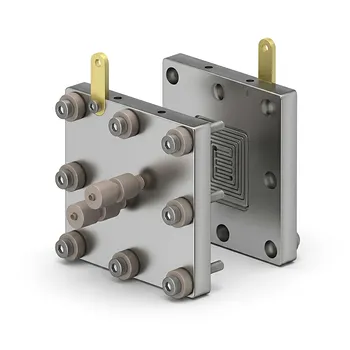
- Bipolar Plate Membrane Electrode Assembly MEA Electrolysis Cell for Electrocatalysis and Carbon Dioxide Reduction Research
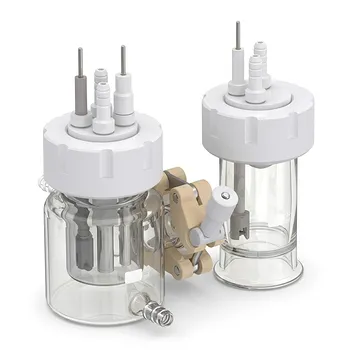
- H Type Replaceable Membrane Electrochemical Cell with Sampling Port for Gas Liquid Phase Reactions
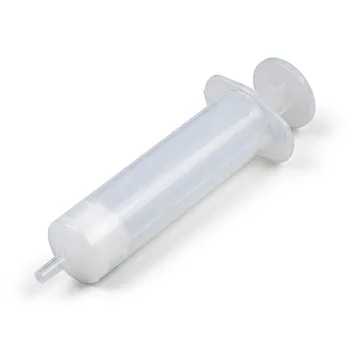
- High Purity PFA Syringe 10ml Corrosion Resistant Translucent Fluoropolymer Sampling Unit for Trace Analysis
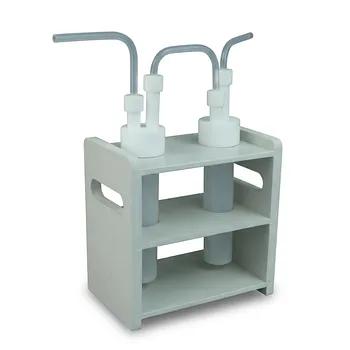
- Custom PTFE Acid Resistant Support Rack Multi Hole PFA Hydrogen Absorption System Bracket
- PTFE Photoelectrochemical Cell with Quartz Window for Photoelectrolysis and Electrocatalysis Testing
People Also Ask
- What role do fluoropolymers play in custom electrochemical cells? Achieve inert, precise, and reliable test setups
- What is the role of overpotential (overvoltage) in electrolytic cell operation? Optimize Kinetics & Selectivity
- How do sol-gel ceramic-like coatings compare to fluoropolymer materials regarding maximum temperature capability and hardness? Discover the key differences for fluid processing and surface coating applications.
- Why are statistical amphiphilic copolymers preferred over block copolymers for stabilizing inorganic nanoparticles targeted for perfluorinated polymer composites? Discover rapid stabilization & matrix compatibility.
- How do FEP and PTFE compare regarding continuous operating temperature and thermal stability for chemical handling components? Discover which polymer offers superior heat resistance for your lab.