Overpotential is the mandatory "extra" voltage required to drive an electrochemical reaction at a practical rate beyond what thermodynamics theoretically predicts. It represents the energy needed to overcome kinetic barriers at the electrode surface, such as the resistance encountered during the formation and release of gas bubbles.
Overpotential acts as the kinetic bridge between theoretical chemistry and real-world application, dictating both the total energy consumption of a cell and the specific chemical products it yields. It is the primary factor that allows engineers to manipulate reaction selectivity in complex solutions.
The Kinetic Barrier to Reaction Speed
Beyond Thermodynamic Predictions
Standard electrode potentials tell us the minimum voltage at which a reaction is possible under ideal conditions. In practice, this theoretical value is rarely enough to produce a measurable current because it does not account for the internal resistance of the chemical steps.
Overcoming Activation Energy
Every electrochemical reaction requires an initial "push" to rearrange atoms and transfer electrons at the electrode-electrolyte interface. Overpotential provides this necessary energy to bypass the activation barrier, ensuring the reaction proceeds at a speed useful for industrial or laboratory purposes.
The Role of Gas Evolution
Kinetic barriers are particularly high when a reaction produces gas, such as hydrogen or oxygen. The physical process of forming a bubble and detaching it from the electrode requires significant extra voltage, making gas-evolving reactions some of the most energy-intensive in electrochemistry.
Overpotential as a Tool for Selectivity
The Case of Brine Electrolysis
In the electrolysis of aqueous sodium chloride (brine), thermodynamics suggests that oxygen should form at the anode before chlorine. However, the high overpotential for oxygen evolution on most electrodes effectively "stalls" that reaction, allowing chlorine gas to form preferentially.
Controlling Reaction Outcomes
By selecting specific electrode materials that increase or decrease overpotential for certain ions, chemists can "filter" which reactions occur. This kinetic control allows for the production of specific chemicals even when they are not the most thermodynamically favored options in a mixture.
Understanding the Trade-offs
The Cost of Energy Efficiency
While overpotential is necessary to make reactions happen, it is fundamentally a form of energy waste. This extra voltage is typically dissipated as heat, increasing the operational costs of the electrolytic cell and requiring sophisticated cooling systems.
Material Degradation and Stability
High overpotentials can place significant stress on electrode materials, leading to faster corrosion or mechanical failure. Engineers must balance the desire for high reaction rates against the long-term durability of the cell components.
How to Apply This to Your Project
When designing or operating an electrolytic system, your approach to overpotential should align with your specific performance targets.
- If your primary focus is Energy Efficiency: Select specialized catalysts or electrode coatings designed to minimize overpotential, reducing the "voltage tax" and lowering power consumption.
- If your primary focus is Product Purity: Manipulate the overpotential of competing reactions by adjusting electrode materials or temperature to ensure only the desired chemical species is produced.
- If your primary focus is High Throughput: Increase the applied voltage to provide a higher overpotential, which will accelerate the reaction rate at the cost of higher heat generation.
Mastering overpotential is the key to transforming theoretical electrochemical equations into efficient and predictable industrial processes.
Summary Table:
| Feature | Role in Electrolysis | Impact on Performance |
|---|---|---|
| Kinetic Bridge | Overcomes activation energy barriers | Drives reactions at practical rates |
| Selectivity Tool | Filters competing chemical reactions | Ensures production of desired species |
| Gas Evolution | Drives bubble formation and release | High energy requirement for gas products |
| Energy Trade-off | Dissipates extra voltage as heat | Balances throughput vs. power costs |
Elevate Your Electrochemical Research with KINTEK Precision
Optimizing overpotential requires more than just theory—it demands high-performance equipment that can withstand rigorous electrolytic environments. KINTEK specializes in manufacturing virtually all imaginable laboratory supplies crafted from PTFE and PFA, ensuring maximum chemical resistance and zero contamination for your most sensitive trace analysis and reaction setups.
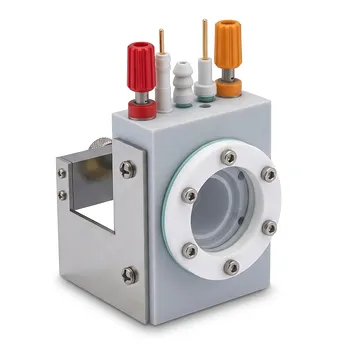
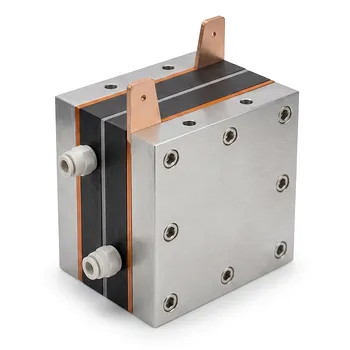
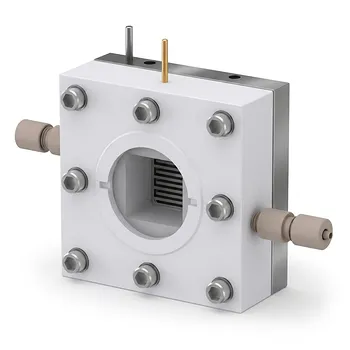
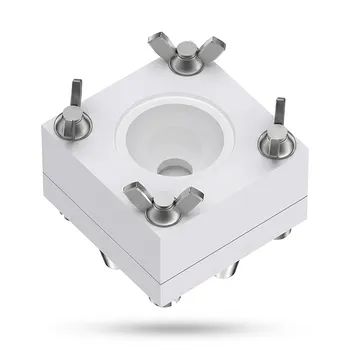
Whether you need standard labware (beakers, reagent bottles, and carboys), fluid transfer components (tubing, valves, and fittings), or advanced derivative apparatus like standard/custom electrochemical cells and battery testing fixtures, we have you covered. Our end-to-end custom CNC fabrication allows us to deliver everything from complex non-standard machined parts to high-volume bespoke laboratory setups tailored to your specific research needs.
Ready to enhance your lab's efficiency and precision?
Contact KINTEK Experts Today to discuss your custom fluoropolymer requirements and find the perfect high-performance solution for your next project.
Related Products
- White PTFE Electrolytic Cell with Movable Slider and Insulated Lid for Fluorine Corrosion Resistance
- Custom PTFE Electrolytic Cell Corrosion Resistant Low Background Reaction Vessel with Inlet Outlet Ports
- All PTFE H Type Replaceable Membrane Electrolytic Cell for High Purity Divided Electrochemical Analysis
- Gas Diffusion Electrode Electrolytic Cell Electrochemical Flow Cell
- Replaceable Membrane H Type Electrochemical Cell for Three Electrode Gas Aeration Experiments
People Also Ask
- How do custom PTFE electrochemical cells improve the accuracy of stability testing for alkaline catalysts compared to glass cells?
- How does the hydrophobicity of PTFE benefit electrochemical measurements? Enhance Stability and Precision in Your Lab
- How are electrolytic cells utilized in the Hall-Héroult process? Optimizing Purity and Energy Efficiency
- What are the primary components required for the construction of a standard electrolytic cell? Essential Hardware Guide
- How is current efficiency calculated in the context of an electrolytic cell? Formula and Optimization Guide