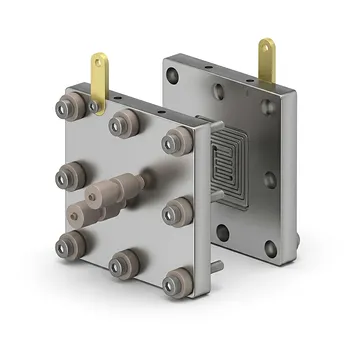
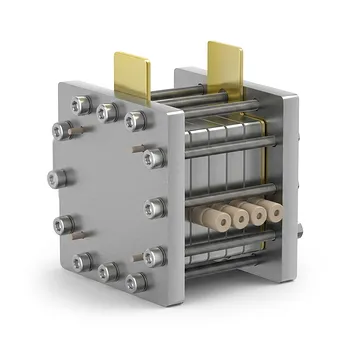
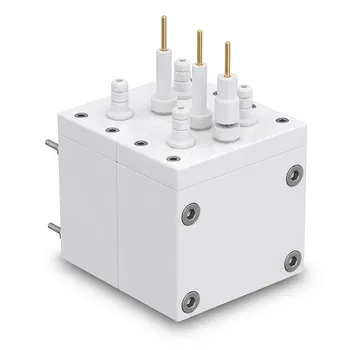
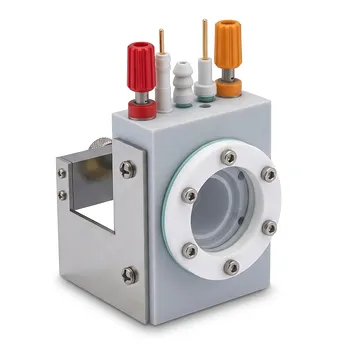
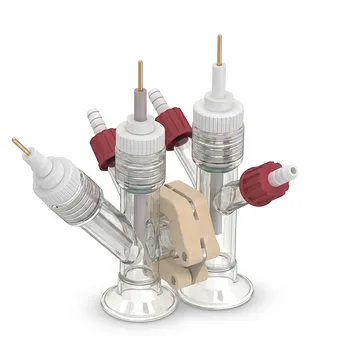
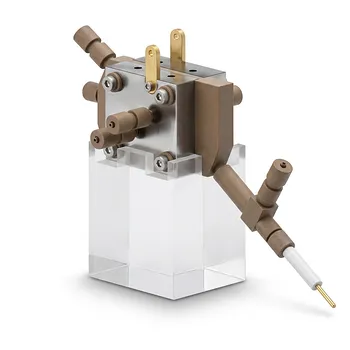
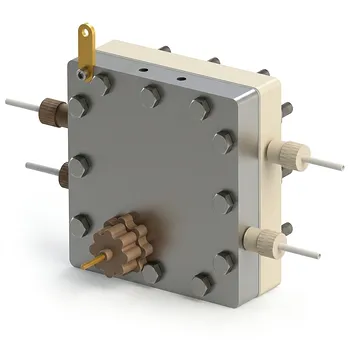
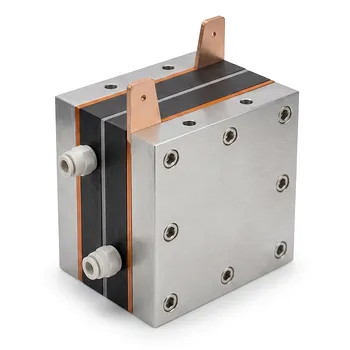
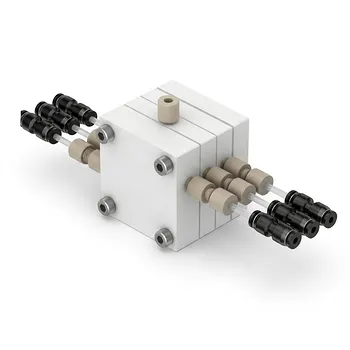
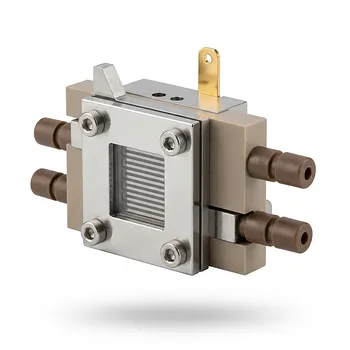
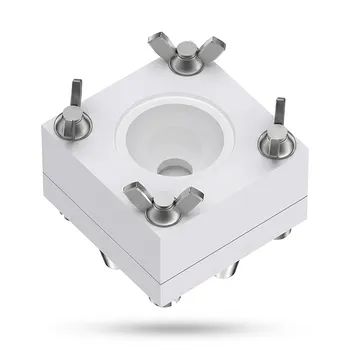
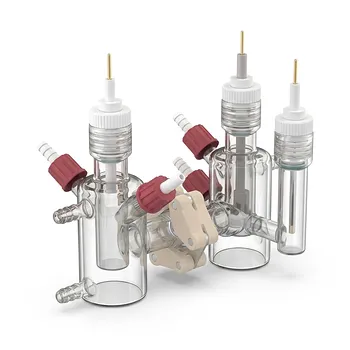
Fluoropolymers provide the chemically inert, electrically insulating foundation for custom electrochemical cells and electrolyzers. PTFE and PFA are used to machine cell bodies, endplates, gaskets, electrode holders, tubing, valves, and fittings that contact aggressive acidic or alkaline electrolytes. Perfluorinated ionomers serve a different role: they function as ion-selective membranes that enable ionic transport while separating reactants.
The main value of fluoropolymers is control: they contain the electrolyte, isolate electrical paths, resist corrosion, and minimize contamination so measured performance reflects the electrodes, membrane, and catalyst—not the test hardware.
Why Fluoropolymers Matter in Electrochemical Hardware
They contain aggressive electrolytes
Electrolyzers, fuel cells, and redox flow cells may expose components to strongly acidic, alkaline, oxidizing, or otherwise reactive solutions. PTFE and PFA provide broad chemical resistance, helping cell components retain their structure during extended testing.
This is particularly important when the vessel, seals, and fluid paths are continuously exposed to electrolyte rather than only used for occasional sample handling.
They prevent unwanted electrical conduction
PTFE and PFA have strong dielectric and electrical-insulating properties. When used around electrodes, current collectors, and flow channels, they help prevent stray currents, unintended short circuits, and parasitic electrochemical paths.
This electrical isolation improves measurement integrity, especially in cells with closely spaced electrodes or complex electrode arrangements.
They reduce corrosion and contamination
Unlike metallic or less-compatible construction materials, fluoropolymers do not readily introduce corrosion products into the electrolyte. Their non-stick surfaces also reduce adhesion, scaling, and residue accumulation.
That helps preserve electrolyte composition and is valuable for trace analysis, catalyst testing, battery fixtures, and repeatable long-duration experiments.
How Fluoropolymers Shape Cell Construction
Cell bodies and endplates
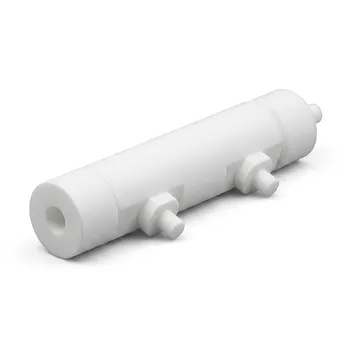
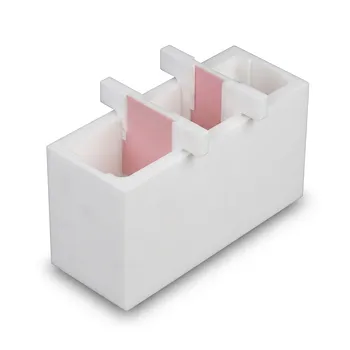
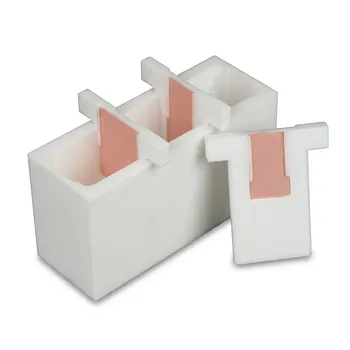
Custom-machined PTFE or PFA cell bodies can define the electrolyte chamber, electrode spacing, membrane position, and flow path. Endplates provide mechanical closure while maintaining electrical isolation from the active region.
CNC machining makes it possible to produce non-standard geometries for specific electrode layouts, laboratory-scale flow fields, or specialized reaction volumes.
Gaskets, seals, and compression interfaces
Fluoropolymer components can form gaskets and sealing surfaces between the cell body, membrane, and endplates. Maintaining seal integrity is essential because leakage can change electrolyte concentration, create safety hazards, and invalidate measurements.
The selected material and seal design must still account for compression, temperature, pressure, surface finish, and chemical exposure.
Electrode accessories and fixtures
PTFE and PFA can be used for electrode holders, spacers, guides, and other accessories that position active materials without participating in the electrochemical reaction. Their insulation helps define current paths and prevents hardware from becoming an unintended electrode.
These fixtures are especially useful when experiments require precise and repeatable electrode spacing.
Fluid delivery components
Tubing, valves, fittings, reservoirs, and manifolds made from compatible fluoropolymers help deliver electrolyte and reaction products without exposing the fluid to corrodible metals. This is important in recirculating electrolyzers and redox flow systems.
The same principle applies to custom reaction apparatus used with highly corrosive chemistries, including electrochemical fluorination processes involving anhydrous hydrogen fluoride.
How They Support Cell Operation
They preserve controlled test conditions
A chemically stable cell body does not consume electrolyte, release corrosion products, or introduce an easily reacting vessel surface. This creates a more controlled environment in which changes in current, voltage, efficiency, or degradation can be attributed more confidently to the active materials.
For research work, this repeatability is often as important as the initial chemical resistance.
They support operation across temperature ranges
PTFE and PFA retain useful chemical and insulating performance across a broad temperature range. This allows custom cells to support experiments that vary temperature while maintaining stable containment and electrical isolation.
However, the usable range depends on mechanical load, pressure, exposure time, and the specific fluoropolymer grade.
They enable complex and specialized architectures
Fluoropolymers can be precision-machined into microchannels, recesses, ports, membrane seats, hydrothermal liners, and other geometries that are difficult to obtain with standard glassware or off-the-shelf cells.
This design flexibility allows researchers to match the hardware to the experiment instead of forcing the experiment into a standard cell format.
The Distinct Role of Perfluorinated Ionomers
Ionomers transport ions selectively
Perfluorinated ionomers are not simply structural replacements for PTFE. Their ionic functional groups allow them to conduct selected ions while separating reactants and products.
In fuel cells and some electrolyzers, the membrane is therefore an active electrochemical component, controlling ionic transport and helping prevent direct mixing of reaction streams.
Structural fluoropolymers provide the surrounding infrastructure
PTFE and PFA generally serve as the chemically resistant vessel, insulation, sealing, and fluid-handling materials. They create the stable environment in which the ionomer membrane and electrodes operate.
Keeping these roles distinct helps with material selection: the membrane must provide the required ion transport, while the cell hardware must provide containment, insulation, and mechanical support.
Understanding the Trade-offs
Chemical resistance is not absolute
Fluoropolymers resist a very wide range of chemicals, but no material is universally immune under every combination of temperature, pressure, concentration, radiation, and exposure time. Permeation, swelling, creep, and degradation must be evaluated for the actual operating conditions.
Claims of “complete inertness” should therefore be treated as application-dependent rather than unconditional.
Mechanical stiffness can limit design
PTFE is chemically robust but relatively soft and prone to creep under sustained compression. This can affect threaded connections, gasket loads, dimensional accuracy, and long-term sealing.
PFA may offer advantages where melt-processability, transparency, or different mechanical characteristics are useful, but the final choice should follow the cell’s temperature, pressure, and fabrication requirements.
Fluoropolymers are electrically insulating
Insulation is beneficial around electrodes, but it becomes a limitation wherever the design requires current conduction. Electrodes, current collectors, and electrical contacts must use separate conductive materials that are themselves compatible with the electrolyte.
A fluoropolymer cell body cannot replace a conductive current path.
Fabrication quality affects performance
Poor machining, unsuitable surface finishes, trapped voids, or incorrect compression can cause leaks, inconsistent flow, and variable electrode spacing. Custom CNC fabrication improves design flexibility, but it does not eliminate the need for dimensional inspection and compatibility testing.
Membrane and seal compatibility still matter
A chemically resistant vessel does not guarantee that the membrane, catalyst binder, adhesive, or seal will survive. The complete assembly must be evaluated as a system because electrolyte, temperature, potential, pressure, and cycling can affect each material differently.
Making the Right Choice for Your Goal
Fluoropolymers are most effective when selected as part of the entire electrochemical system rather than as a universal substitute for every component.
- If your primary focus is chemical containment: Use compatible PTFE or PFA for cell bodies, reservoirs, tubing, valves, fittings, and wetted seals, while verifying the actual electrolyte, temperature, pressure, and exposure duration.
- If your primary focus is measurement accuracy: Use fluoropolymer fixtures and insulating structures to minimize corrosion, contamination, stray currents, and unintended side reactions.
- If your primary focus is custom geometry: Use precision-machined fluoropolymer parts to create specialized electrode layouts, flow channels, membrane seats, and reaction volumes.
- If your primary focus is ion transport: Select a suitable perfluorinated ionomer membrane based on the required ion conductivity, chemical environment, and separation function; do not treat structural PTFE or PFA as a membrane substitute.
- If your primary focus is long-term operation: Evaluate creep, sealing, permeation, thermal limits, and compatibility across the complete assembly, including conductive and catalytic components.
With proper material and design validation, fluoropolymers make custom electrochemical hardware more inert, controllable, repeatable, and durable.
Summary Table:
| Role | Key Benefit |
|---|---|
| Contain aggressive electrolytes | Broad chemical resistance extends cell life and prevents leaks. |
| Electrical insulation | Prevents stray currents and short circuits, enhancing measurement accuracy. |
| Reduce corrosion/contamination | Non-stick surface minimizes residue and preserves electrolyte purity. |
| Custom geometry | CNC-machined parts enable specialized electrode layouts and flow channels. |
| Thermal stability | Retains performance across a wide temperature range, supporting varied experiments. |
| Ionomer membranes | Provide selective ion transport, essential for fuel cells and electrolyzers. |
Elevate your electrochemical research with custom PTFE/PFA components from KINTEK. Our precision-machined cell bodies, electrode holders, and fluid systems ensure chemical resistance, electrical isolation, and design flexibility tailored to your exact specs. Whether you need standard labware or complex custom electrolyzers, we deliver high-purity, corrosion-resistant solutions for aggressive chemistries. Contact us today to optimize your cell's performance and achieve repeatable results. Get in touch with our experts.
Related Products
- Custom PTFE Electrolytic Cell Corrosion Resistant Low Background Reaction Vessel with Inlet Outlet Ports
- Corrosion Resistant PTFE Electrochemical Cell for New Energy Research Inert Insulating Customizable Lab Reaction Vessel
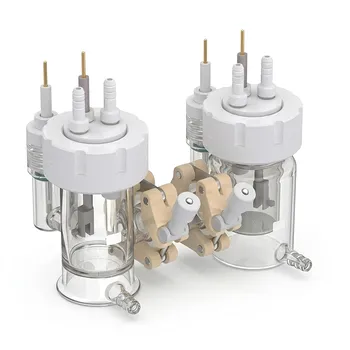
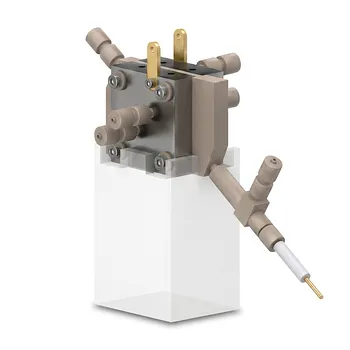
- Replaceable Membrane H Type Electrochemical Cell Jacketed Split Electrolysis Cell for Laboratory Research
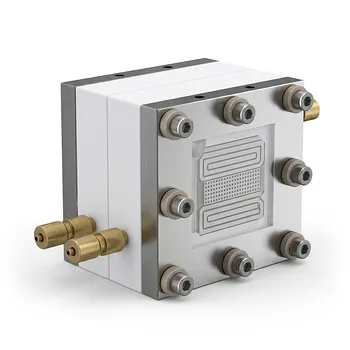
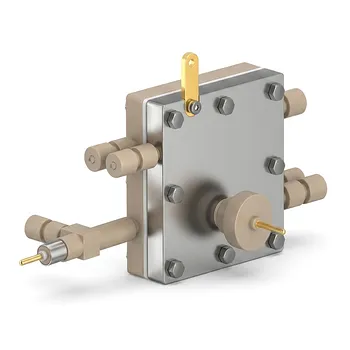
- Replaceable Flow Channel Membrane Electrode Assembly Electrochemical Cell MEA Electrolyzer for PEM Water Electrolysis and Carbon Dioxide Reduction Research
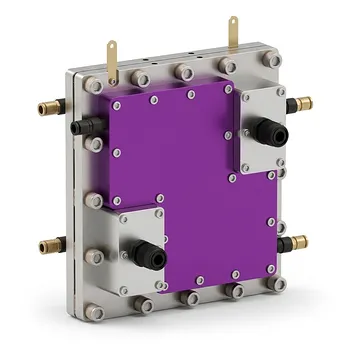
- Bipolar Plate Membrane Electrode Assembly MEA Electrolysis Cell for Electrocatalysis and Carbon Dioxide Reduction Research
People Also Ask
- Why are high-purity PTFE or PFA reaction vessels recommended for the synthesis of PANI-TiC hybrid materials? - Guide
- Ion Activation Reaction Vessel Requirements: Why PTFE is Critical for Membrane Performance
- Why is a PTFE reaction vessel required for Ti3C2Tx MXene synthesis? Ensure Safe HF Etching & High Purity
- Why is a high-quality PTFE reaction vessel required for the etching preparation of Ti3C2Tx MXene? Ensure Pure Synthesis.
- Why are fluoroplastic (PTFE) reaction vessels recommended for Methylene Blue (MB) adsorption kinetic experiments?