Standard & Customized Electrochemical Cells
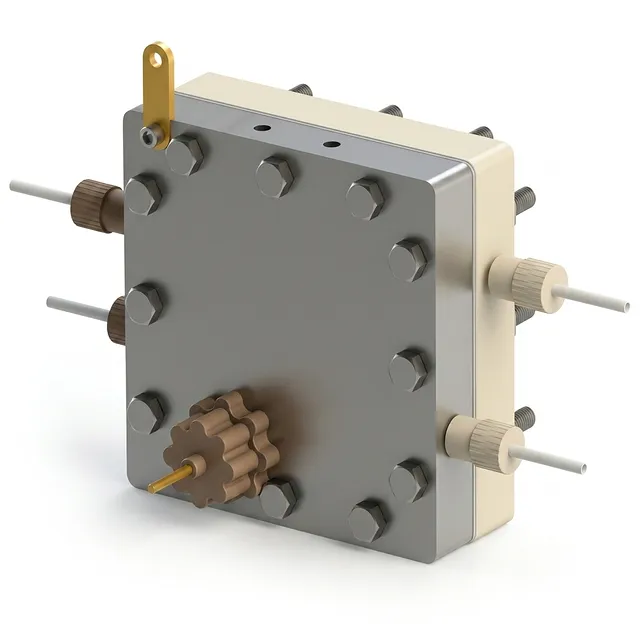
Membrane Electrode Assembly Electrolyzer Cell with Non Metallic PEEK Cathode and Titanium Anode
Item Number : PL-DJ27
Price varies based on specs and customizations
- Cathode Plate Material
- PEEK (Polyetheretherketone)
- Anode Plate Material
- High-Purity Titanium (Ti)
- Flow Field Area
- 50 mm x 50 mm (Customizable)

Shipping:
Contact us to get shipping details Enjoy On-time Dispatch Guarantee.
Why Choose Us
Easy ordering process, quality products, and dedicated support for your business success.
Product Overview
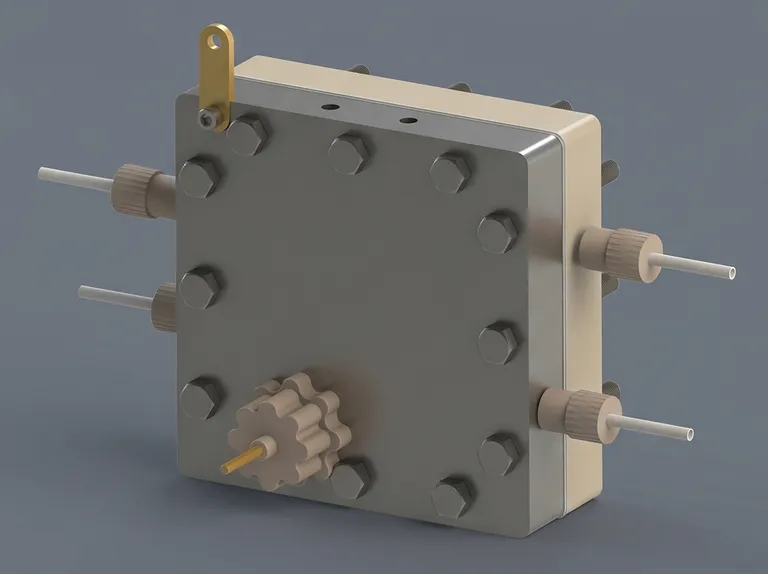
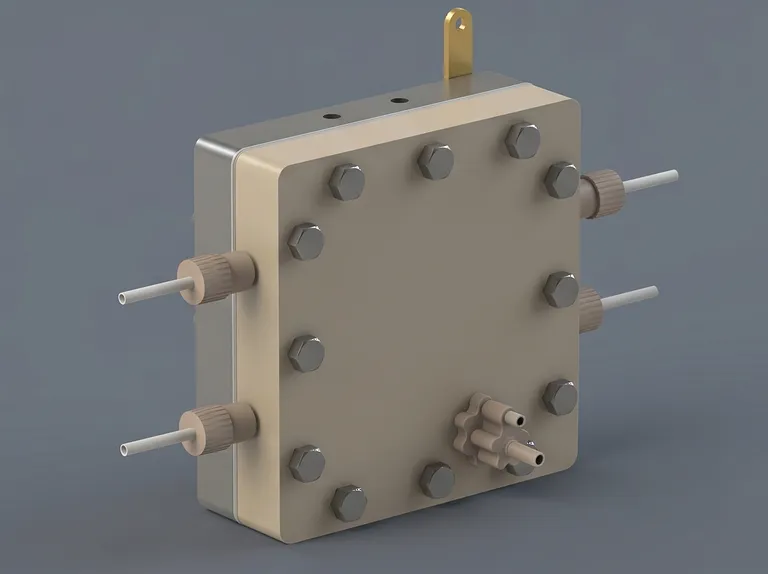
This zero-gap membrane electrode assembly electrolyzer cell delivers exceptional performance for advanced electrochemical research and development. Utilizing an optimized zero-gap architecture, this system ensures direct contact between catalyst layers and the ion exchange membrane, which significantly shortens the ion migration path, reduces ohmic resistance, and minimizes electrolyte consumption for unmatched energy efficiency.
Designed primarily for carbon dioxide reduction and energy conversion research, this cell serves green technology labs, academic institutions, and chemical engineering companies. It enables investigators to transition seamlessly from benchtop trials to scalable industrial-grade operations.
Engineered with a non-metallic PEEK cathode and a high-purity titanium anode, the unit guarantees structural integrity and chemical inertness under rigorous testing cycles. Users can confidently perform high-current electrolysis processes, securing repeatable and highly accurate data across thousands of operating hours.
Key Features
- Advanced Zero-Gap Cell Architecture: The internal configuration of this cell is engineered for zero-gap operation, positioning the catalyst layer directly in contact with the ion exchange membrane. By minimizing the distance between the anode and cathode, this architecture significantly shortens the ion migration path, which dramatically lowers internal ohmic resistance and minimizes energy consumption. It enables researchers to achieve stable, high-efficiency runs even at demanding industrial-grade current densities exceeding 300 mA cm⁻².
- Corrosion-Resistant Non-Metallic PEEK Cathode: The cathode plate is precision-machined from premium Polyetheretherketone (PEEK). This advanced polymer provides unparalleled chemical resistance against aggressive reagents and intermediates produced during cathodic reduction. Because it is completely non-metallic, it eliminates the risk of transition metal ion cross-contamination, ensuring that your experimental catalyst evaluations remain pure and free from background catalytic interference.
- High-Purity Titanium Anode Plate: To withstand the harsh oxidizing environment of anodic half-reactions, the anode plate is fabricated from high-purity titanium. This material choice offers superior durability and high resistance to oxidation and acid corrosion. Its robust mechanical properties prevent physical deformation over prolonged thermal and electrical cycles, ensuring uniform pressure distribution across the membrane assembly.
- Integrated Thermal Management Systems: Designed for high-temperature electrolysis, the anode plate comes standard with a pre-drilled φ4mm heating rod hole and a φ4mm thermocouple hole. This allows researchers to insert heating cartridges and thermal probes directly into the plate body. Achieving precise, real-time temperature control ensures high thermal stability and allows for the deep thermodynamic profiling of electrocatalytic reactions.
- Optimized Serpentine Flow Channels: The fluidics system features a precision CNC-machined serpentine flow field covering a standard 50mm x 50mm channel area. This serpentine design maximizes reactant retention time and ensures exceptionally uniform gas and liquid distribution across the active membrane area. It prevents stagnant zones and localized dry-outs, resulting in steady reactant feed rates and consistent mass transfer dynamics.
- Premium Bi-Metallic Conductive Terminals: The cell features distinct, high-performance electrical connectors optimized for each electrode. The cathode is equipped with a robust titanium conductive terminal, which can be easily swapped for other materials depending on experiment requirements. The anode features a gold-plated copper terminal, offering excellent electrical conductivity and minimizing contact resistance to ensure high energy efficiency.
- Modular and Highly Configurable Assembly: Built for versatility, this system features a modular design that facilitates swift disassembly, cleaning, and reconfiguration. Researchers can effortlessly swap key materials such as the cathode carbon paper, the membrane, or the anode diffusion layers (including options like carbon paper, titanium oxide, or metal foam). This ease of reconfiguration accelerates sample-throughput and speeds up testing of different materials.
- High-Pressure Gas-Tight Sealing: Equipped with a heavy-duty stainless steel bolt assembly and chemically inert gaskets, this cell establishes a hermetic, leak-proof environment. The clamping pressure is distributed evenly across all points to prevent gas crossover and liquid bypass, ensuring safe operation during high-pressure gas-phase electrolysis experiments such as carbon dioxide reduction.
Applications
| Application | Description | Key Benefit |
|---|---|---|
| Carbon Dioxide Reduction (CO2RR) | Utilizing the zero-gap structure to reduce gaseous carbon dioxide into valuable C1/C2 chemicals (such as carbon monoxide, formic acid, or ethylene) at high current densities. | Eliminates mass transport limitations and minimizes ohmic losses, enabling stable operation above 300 mA cm⁻² to mimic industrial output. |
| Proton Exchange Membrane (PEM) Electrolysis | Evaluating anode and cathode catalyst coatings, membrane durability, and water split efficiency under acidic conditions. | The high-purity titanium anode resists extreme acidic and oxidizing potentials, preventing degradation and ensuring reliable long-term testing. |
| Anion Exchange Membrane (AEM) Electrolysis | Investigating hydroxide transport, non-noble metal catalyst performance, and system stability under highly alkaline environments. | The non-metallic PEEK cathode provides excellent chemical inertness against concentrated alkaline solutions, protecting the system from chemical attack. |
| Electro-Organic Synthesis | Performing complex organic synthesis reactions, including the electrochemical reduction of organic acids or oxidation of biomass-derived alcohols. | The modular design allows for the easy swapping of carbon paper, metal foams, and custom electrode terminals to tailor to specific reaction parameters. |
| Thermal & Thermodynamic Analysis | Running electrolysis reactions at elevated temperatures to study kinetics and thermodynamic energy efficiency. | Built-in φ4mm heating rod and thermocouple ports allow real-time thermal monitoring and direct heat application, maximizing reaction rates. |
| Gas Diffusion Layer & Catalyst Studies | Subjecting different gas diffusion layers (carbon papers, titanium meshes, metal foams) to accelerated degradation tests under high current stress. | The heavy-duty, uniform bolt clamping system ensures repeatable electrical contact pressure, isolating degradation to the target material. |
Technical Specifications
The technical architecture of the PL-DJ27 Membrane Electrode Assembly Electrolyzer Cell is defined by its meticulous selection of high-grade materials and precise dimensional tolerances. Each component has been optimized to handle high electrical currents, extreme pH values, and elevated operating temperatures. The non-metallic cathode construction ensures that transition metal dissolution and subsequent redeposition onto the membrane are completely prevented. Meanwhile, the robust titanium anode plate stands up to the severe oxygen-evolution potentials without oxidizing or degrading.
The built-in thermal management features are critical for researchers studying the temperature-dependency of reaction kinetics. Running electrolysis reactions at elevated temperatures is known to reduce activation overpotentials and increase ion conductivity through the exchange membrane, thereby boosting overall cell efficiency. By utilizing the integrated φ4 mm heating rod and thermocouple ports, user-defined temperature profiles can be maintained with high accuracy.
| Technical Parameter | Specification Detail (Model: PL-DJ27) |
|---|---|
| Cathode Plate Material | PEEK (Polyetheretherketone) - Non-metallic |
| Anode Plate Material | High-Purity Titanium (Ti) |
| Flow Field Geometry | Precision CNC-Machined Serpentine Flow Channel |
| Active Flow Channel Area | 50 mm × 50 mm (Customizable to user specifications) |
| Cathode Conductive Terminal | Replaceable Titanium Electrode |
| Anode Conductive Terminal | Gold-Plated Copper (Cu) |
| Anode Integration Ports | Standard φ4 mm Heating Rod Hole & Standard φ4 mm Thermocouple Hole |
| Cathode Gas Diffusion Medium | Standard Carbon Paper |
| Anode Diffusion Medium Compatibility | Carbon Paper / Titanium Oxide / Metal Foam |
| Fluid Interface Connections | Cathode Outlet, Anode Inlet, Anode Outlet |
| Sealing System | High-Performance Chemical-Resistant Gaskets |
| Max Operating Current Density | >300 mA cm⁻² (Depending on membrane/catalyst) |
| Clamping Assembly | High-Tensile Stainless Steel Bolts |
Why Choose This Product
- Uncompromising Material Quality: At KINTEK, we leverage our deep, industry-leading expertise in high-performance fluoropolymers and engineering plastics to deliver cells machined to the highest tolerances. The choice of premium PEEK and high-purity titanium ensures that this system stands up to the most corrosive reagents without contaminating your precious samples.
- Precision Custom CNC Machining Capabilities: Unlike off-the-shelf standard products, we provide extensive custom CNC machining services. The standard 50mm x 50mm channel area can be custom-scaled or reshaped to match your specific system layouts, flow configurations, or specialized sensor mounts, tailored precisely to your laboratory needs.
- Industrial-Grade Efficiency & Scale: The optimized zero-gap architecture replicates the real-world conditions of industrial electrolyzers. By allowing stable operation at current densities exceeding 300 mA cm⁻², our cell provides researchers with a highly scalable testing platform that yields commercially relevant data.
- Complete Modular Customizability: Every part of the cell is engineered for modularity. From the replaceable titanium cathode terminals to the multiple anode diffusion options (carbon paper, titanium oxide, metal foam), this cell offers unparalleled flexibility, enabling researchers to run multiple distinct chemical protocols with a single hardware unit.
- Comprehensive Engineering Support: KINTEK backs every purchase with end-to-end technical support from our dedicated application engineers. We assist you in selecting the right membrane, diffusion layers, and thermal management configurations to ensure your system integrates flawlessly with your existing gas chromatography and potentiostat setups.
Contact KINTEK today to receive a personalized quote or to discuss custom channel dimensions and material upgrades tailored to your technical specifications.
Trusted by Industry Leaders

REQUEST A QUOTE
Our professional team will reply to you within one business day. Please feel free to contact us!
Related Products
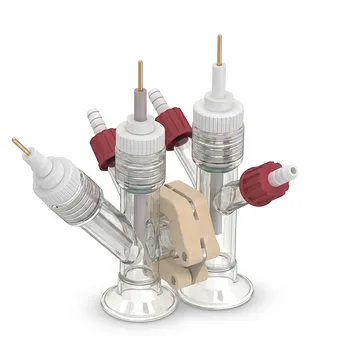
Replaceable Membrane H Type Electrochemical Cell for Three Electrode Experiments with High Borosilicate Glass and PTFE Sealing Components
Optimize your electrochemical research with our premium H-type cell featuring a replaceable membrane design, high borosilicate glass construction, and leak-free PTFE seals. The system is ideal for precise three-electrode testing under strictly controlled inert or reactive gas purge environments.
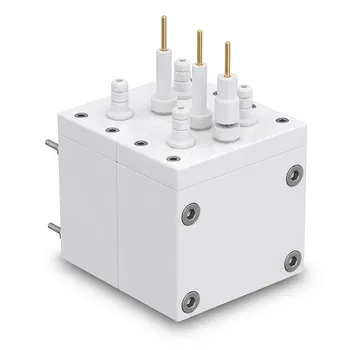
All PTFE H Type Replaceable Membrane Electrolytic Cell for High Purity Divided Electrochemical Analysis
Optimize electrochemical research with this all PTFE H type replaceable membrane electrolytic cell. Engineered for advanced three electrode testing, this chemically inert system provides excellent gas tightness and minimal ohmic resistance drop for accurate quantitative catalytic reaction analysis.
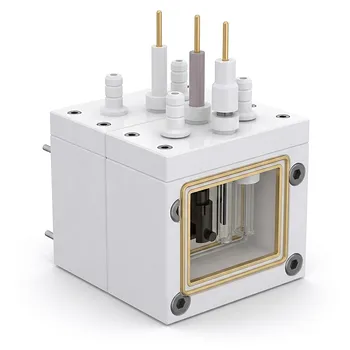
All PTFE Exchangeable Membrane Electrochemical Cell Dual Chamber Three Electrode Photoelectrochemical Cell for Laboratory Trace Analysis
Optimize your laboratory testing with this premium all PTFE exchangeable membrane electrochemical cell featuring a dual chamber design, precise electrode alignment, and customizable volumes from 30ml to 500ml for demanding research, impedance spectroscopy, and corrosion analysis.
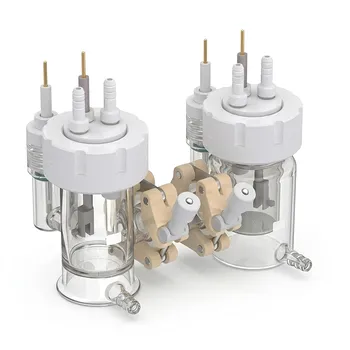
Replaceable Membrane H Type Electrochemical Cell Jacketed Split Electrolysis Cell for Laboratory Research
This high performance replaceable membrane H type electrochemical cell features an integrated Luggin capillary, advanced PTFE rotating seals, and double jacketed water bath options to ensure maximum precision, stability, and gas tight consistency in demanding laboratory research applications.
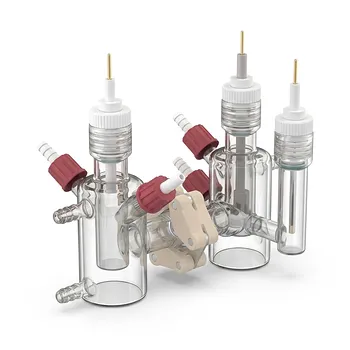
Replaceable Membrane H Type Electrochemical Cell for Three Electrode Gas Aeration Experiments
Achieve precise electrochemical measurements with this premium replaceable membrane H-type cell, designed with an integrated Luggin capillary to minimize IR drop during advanced three-electrode testing and highly controlled gas-purged laboratory analysis.
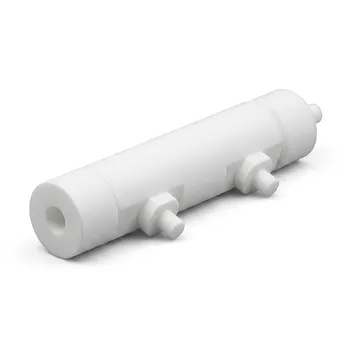
Custom PTFE Electrolytic Cell Corrosion Resistant Low Background Reaction Vessel with Inlet Outlet Ports
Discover professional high-purity custom PTFE electrolytic cells designed for precision electrochemical analysis. Featuring extreme corrosion resistance and low background interference, these reaction vessels offer customizable inlet/outlet ports for seamless integration into demanding industrial or laboratory fluid systems.
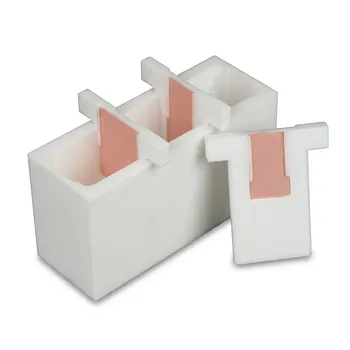
White PTFE Electrolytic Cell with Movable Slider and Insulated Lid for Fluorine Corrosion Resistance
Engineered for extreme chemical resistance this customizable PTFE electrolytic cell features a movable slider and superior insulation ideal for fluorine rich environments ensuring high purity results in semiconductor and electrochemical research applications and advanced manufacturing.
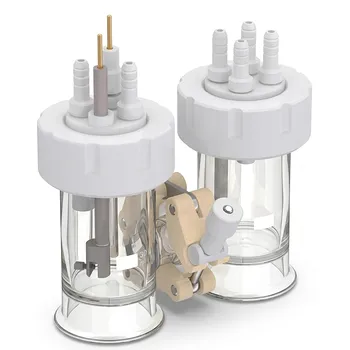
H Type Replaceable Membrane Electrochemical Cell for Three Electrode System Jacketed Single Layer Gas Purging
Optimize your electrochemical research with our premium H-type replaceable membrane cell designed for versatile three-electrode systems featuring high borosilicate glass, reliable PTFE seals, customizable jacketed configurations, and advanced sub-surface gas purge designs for precision laboratory analysis.
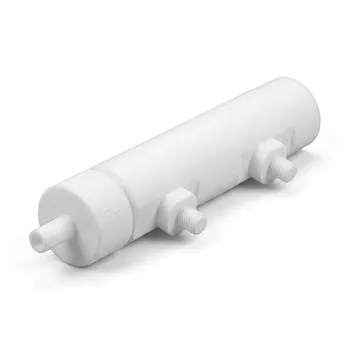
High Purity Custom PTFE Reaction Cell Electrolytic Tank for Semiconductor and Polysilicon Industrial Applications
Discover custom PTFE reaction cells and electrolytic tanks designed for semiconductor and polysilicon manufacturing. These corrosion-resistant units ensure high purity in trace analysis and chemical processing, offering unmatched durability and thermal stability for demanding laboratory and industrial applications.
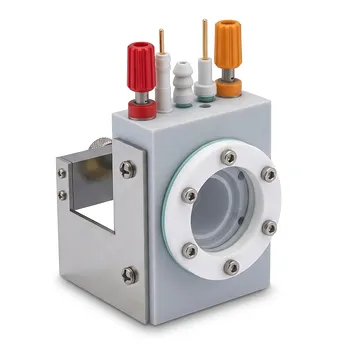
PTFE Photoelectrochemical Cell with Quartz Window for Photoelectrolysis and Electrocatalysis Testing
Engineered for high precision research, this premium PTFE photoelectrochemical cell features a high transmittance quartz window, a customizable active area, and a secure screw compression seal, ensuring unparalleled chemical resistance and stable electrical contacts during demanding photoelectrocatalytic analyses.
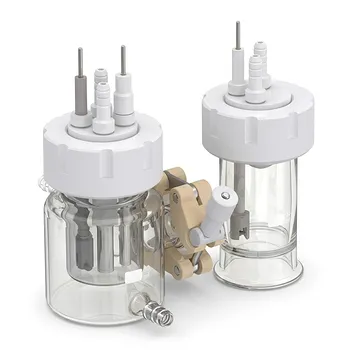
H Type Replaceable Membrane Electrochemical Cell with Sampling Port for Gas Liquid Phase Reactions
This premium H-type electrochemical cell with a replaceable membrane and sampling port features high-purity borosilicate glass, robust PTFE rotation plugs, and efficient dual-chamber separation for advanced electrocatalysis, nitrogen reduction, and carbon dioxide reduction applications.
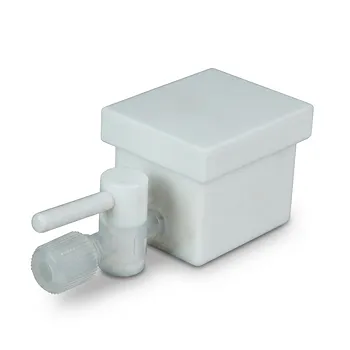
Custom PTFE Corrosion Resistant Insulating Electrophoresis Reaction Cell with Septum and Valves for Low Background Trace Analysis
Optimize trace analysis with our custom PTFE corrosion-resistant reaction cells. Featuring insulating electrophoresis designs with integrated septums and valves, these high-purity systems ensure low background and zero metal precipitation for demanding industrial laboratory and chemical research applications today.
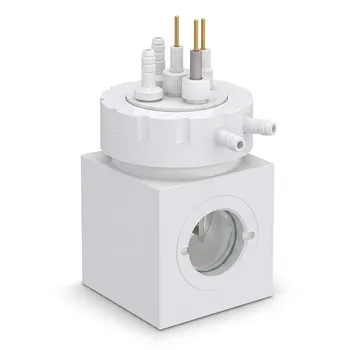
All PTFE Photoelectrochemical Cell with Quartz Window for Three Electrode Electrochemistry
Discover our premium all PTFE photoelectrochemical cell designed for advanced three electrode testing. Featuring a high transmittance detachable quartz window, 360 degree rotatable lid, and secure O ring seals, this chemical resistant unit ensures maximum precision and exceptional durability.
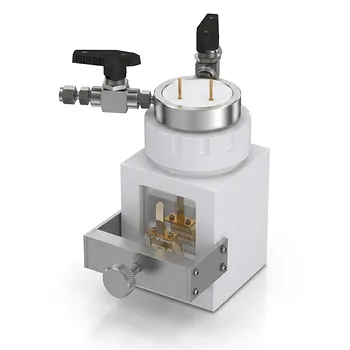
Corrosion Resistant PTFE Photoelectrochemical Cell High Purity All PTFE Three Electrode Test Cell with Quartz Window
High purity PTFE photoelectrochemical cell designed for precise three electrode testing featuring an ultra high transmission detachable quartz window robust leakproof sealing and customizable volumes from thirty to five hundred milliliters for advanced laboratory research and chemical analysis
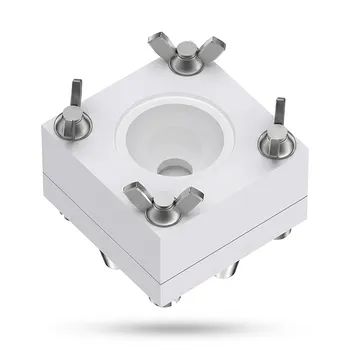
PTFE Flat Plate Working Electrode Electrochemical Cell for Sheet Samples Corrosion Testing and SEM Sample Preparation
This high purity PTFE electrochemical cell enables precise corrosion testing and SEM preparation for flat sheet samples featuring a customizable one square centimeter exposure area and a robust chemical resistant dual layer clamping design for reliable laboratory research analyses
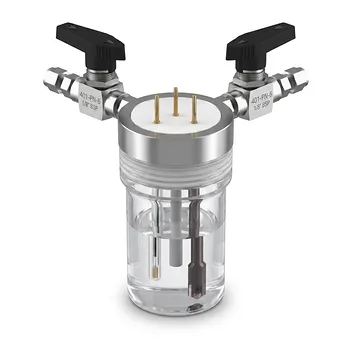
Straight Five Port Hermetic Electrochemical Cell with Internal Plug In Design and PTFE Lid
Premium high performance straight five port hermetic electrochemical cell with advanced PTFE lids and borosilicate glass. Perfect for precise three electrode laboratory analysis, gas purging, and controlled reactions with absolute sealing integrity.
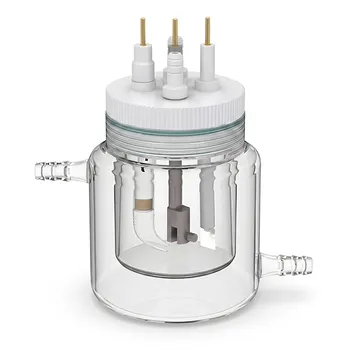
Sealed Glass Electrochemical Cell with Jacketed Temperature Control and Chemical Resistant PTFE Lid
Optimize your analytical research with our premium five port sealed electrochemical cell featuring a chemical resistant polytetrafluoroethylene lid and jacketed temperature control. Engineered for precise three electrode systems, this robust vessel delivers outstanding reliability for critical laboratory research applications.

Grade RT Anion Exchange Membrane for Alkaline Water Electrolysis and Carbon Dioxide Reduction
Optimize your electrochemical research with this premium Grade RT anion exchange membrane, engineered for high efficiency alkaline water electrolysis and carbon dioxide reduction, delivering superior mechanical strength, stable conductivity, and exceptional operational stability up to sixty degrees Celsius.
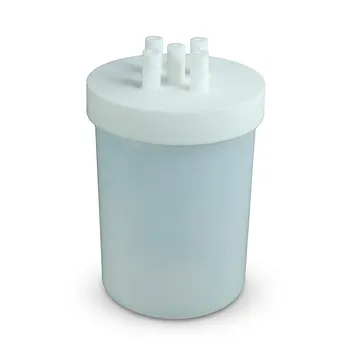
High Purity PFA Reaction Vessel 4L Water Oxygen Separation Tank for Proton Exchange Membrane Electrolysis Experiments Customizable Laboratory Fluid Component
Optimize PEM electrolysis research with our 4L high-purity PFA water-oxygen separation tank. Engineered for total chemical inertness, this customizable vessel prevents catalyst poisoning and membrane degradation, ensuring high-accuracy experimental results in demanding electrochemical and industrial green hydrogen laboratory applications.

High-Performance Anion Exchange Membrane for Green Hydrogen Production
Discover our premium anion exchange membrane (AEM) engineered for alkaline water electrolysis, fuel cells, and CO2 reduction. Delivers high conductivity, excellent alkali resistance, and mechanical durability. Ideal for cost-effective green hydrogen, available with custom thicknesses and PTFE reinforcement.