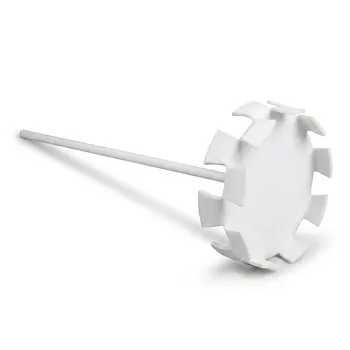
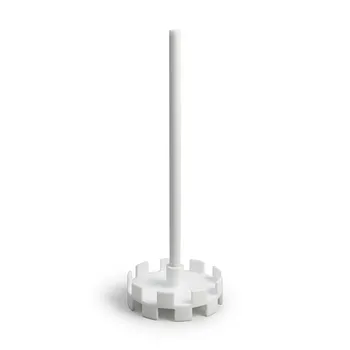
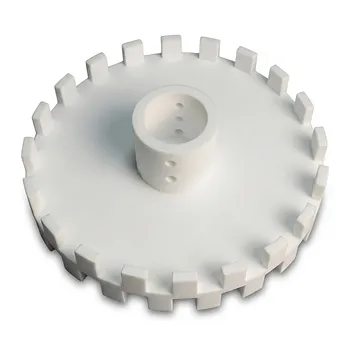
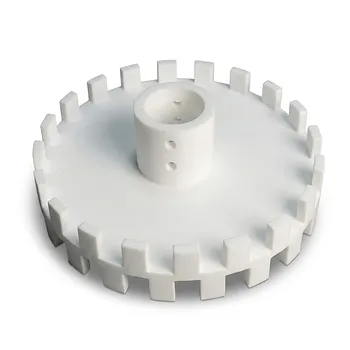
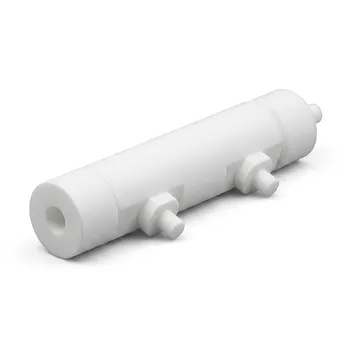
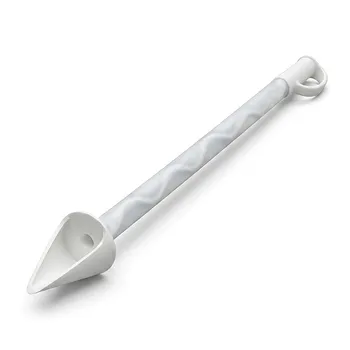
The PTFE shroud is the critical component that transforms a simple metal tip into a precision hydrodynamic instrument. It functions as a protective and functional sheath that controls mass transport by ensuring a reproducible, laminar flow of electrolyte across the electrode surface. By isolating the non-working areas of the electrode and maintaining a fixed geometry, the shroud allows for the precise application of mathematical models to determine electrochemical kinetic parameters.
The PTFE shroud ensures that the electrochemical signals measured are a result of controlled mass transport rather than erratic fluid dynamics. It provides the necessary boundary conditions—both physical and chemical—required for the accurate use of the Levich and Koutecký-Levich equations.
Controlling Hydrodynamics and Mass Transport
Creating the Hydrodynamic Sheath
The geometry of the PTFE shroud is engineered to form a hydrodynamic sheath around the rotating electrode. As the electrode spins, the shroud pulls the electrolyte toward the disk in a predictable manner, creating a reproducible hydrodynamic boundary layer.
Maintaining Laminar Flow
At high rotation speeds, fluid behavior can easily become turbulent, which would make kinetic analysis impossible. The smooth, cylindrical surface of the PTFE shroud ensures that the fluid flow remains laminar, allowing the electrolyte to move uniformly across the active electrode area.
Enabling the Levich Equation
The precise control of flow provided by the shroud is what makes the Levich equation applicable. Because the shroud keeps the boundary layer thickness constant at a given rotation speed, researchers can accurately calculate the diffusion coefficient and electron transfer numbers.
Physical and Electrical Isolation
Defining the Active Surface Area
The shroud acts as an electrical insulator, encapsulating the sides of the electrode material (such as platinum, gold, or glassy carbon). This ensures that only the flat, circular cross-section at the bottom is exposed to the electrolyte, which is vital for calculating accurate current density.
Chemical Inertness in Corrosive Media
PTFE is chosen for its extreme chemical inertia, which prevents the shroud from reacting with acidic or basic electrolytes. This isolation ensures that the measured current is purely from the electrocatalyst and not from the corrosion of the electrode's internal housing or support structure.
Prevention of Surface Contamination
The non-stick nature of PTFE prevents the accumulation of metallic microparticles or reaction byproducts on the shroud itself. This is essential for maintaining the purity of the environment, especially when measuring sensitive oxygen reduction reactions or hydrogen peroxide selectivity.
Understanding the Trade-offs and Limitations
Mechanical Alignment and Eccentricity
While the shroud is designed for stability, any misalignment during assembly can lead to eccentricity (wobbling). Even a minor wobble disrupts the laminar flow, introducing noise into the data and rendering the standard hydrodynamic equations invalid.
Material Wear and Thermal Limits
PTFE is softer than the metal electrodes it houses, meaning it can be prone to mechanical wear or deformation over long periods of high-speed rotation. Additionally, while it is thermally stable, extreme temperature fluctuations can cause the PTFE to expand or contract at a different rate than the electrode core, potentially creating gaps where the electrolyte can leak.
Hydrophobic Bubble Trapping
Because PTFE is naturally hydrophobic, air bubbles can occasionally become trapped at the interface between the shroud and the electrode disk. These bubbles block the active area and lead to significant errors in current measurement unless the electrode is properly "wetted" before the experiment.
How to Optimize Your RDE Setup
Recommendations for Experimental Success
- If your primary focus is Kinetic Precision: Ensure the shroud surface is flush with the electrode disk. Any recession or protrusion will disrupt the laminar flow and invalidate your Levich plots.
- If your primary focus is Corrosive Environments: Regularly inspect the seal between the PTFE and the electrode core. Chemical ingress behind the shroud can lead to "crevice corrosion" and ghost currents.
- If your primary focus is High-Speed Testing: Check for mechanical vibration or shaft run-out. Use a shroud with a balanced geometry to minimize the risk of turbulence at speeds exceeding 2,000 RPM.
By maintaining the integrity of the PTFE shroud, you ensure that your rotating disk electrode functions as a predictable, high-precision tool for electrochemical discovery.
Summary Table:
| Function | Benefit | Impact on Results |
|---|---|---|
| Hydrodynamic Control | Ensures laminar electrolyte flow | Accurate use of Levich equations |
| Electrical Insulation | Defines active surface area | Precise current density measurement |
| Chemical Inertness | Resists corrosive electrolytes | Pure signals without housing interference |
| Surface Integrity | Prevents byproduct buildup | Reliable, repeatable data collection |
Elevate your electrochemical research with KINTEK’s high-performance fluoropolymer solutions. From everyday basic labware like PTFE beakers and PFA reagent bottles to specialized apparatus including custom electrochemical cells, electrode accessories, and hydrothermal synthesis liners, we provide the precision your experiments demand. Our end-to-end custom CNC fabrication allows us to deliver everything from complex, non-standard machined parts to high-volume orders with an absolute focus on high-performance materials. Contact us today to see how our bespoke laboratory setups can optimize your fluid transfer and sample preparation workflows!
Related Products
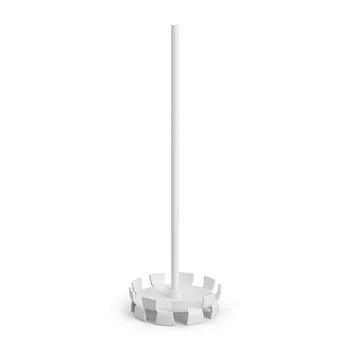
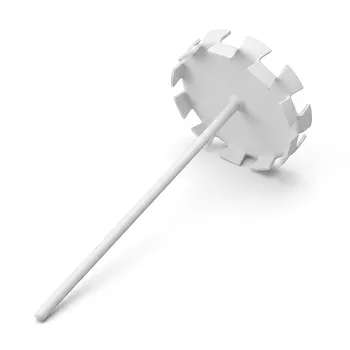
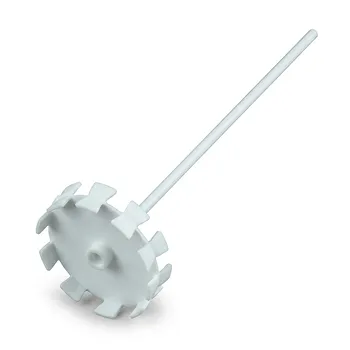
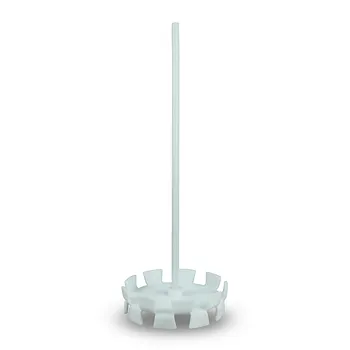
- Custom PTFE Dispersing Disc and Stirring Rod for Chemical Processing and Laboratory Mixing
- High Purity Corrosion Resistant PTFE Dispersion Disk and Inert Stirring Paddle for Food Pharmaceutical and Cosmetic Mixing
- Corrosion Resistant PTFE Stirring Paddle and Customizable Toothed Dispersion Disk for Chemical Pharmaceutical Mixing
- Corrosion Resistant PTFE Dispersing Disc and High Temperature Propeller Stirring Paddle for Laboratory Chemical Mixing
- PTFE Dispersion Disk Food Cosmetic Grade Non Stick Corrosion Resistant Large Stirring Paddle Customizable Impeller
People Also Ask
- How do PTFE rods contribute to energy efficiency in industrial applications? Reduce Friction & Power Consumption
- What are PTFE rods and how are they manufactured? A Guide to Their Properties and Production
- What are the different types of PTFE rods available based on manufacturing technology? Choose the Right Type for Your Project
- How are PTFE rods utilized in electronic and electrical applications? Unlock Superior Performance & Reliability
- How are Teflon rods applied in the automotive and aerospace industries? Solve Friction, Heat, and Chemical Challenges