All Questions
Why Is Ptfe Preferred Over Other Polymers For Housing Reference Electrodes? Ensuring Stability In Harsh Environments
Discover why PTFE is the top choice for reference electrode housings, offering unmatched chemical inertness and electrochemical stability.
What Are The Mechanical Considerations For Using Ptfe Jackets In High-Pressure Electrochemical Cells? - Managing Creep
Learn how to manage viscoelastic creep in PTFE jackets for high-pressure cells using PEEK reinforcement and dynamic compression for lasting seals.
What Role Does A Ptfe Shroud Play In Rotating Disk Electrode (Rde) Applications? Ensure Precision Hydrodynamics
Learn how PTFE shrouds control laminar flow and mass transport in RDE setups for precise electrochemical kinetic analysis and Levich equation accuracy.
What Structural Components Typically Make Up A Ptfe Electrode Jacket Assembly? Optimize Your Electrochemical Measurements
Learn about the 4 key components of PTFE electrode jacket assemblies and how they ensure chemical resistance and signal precision in your lab.
What Is The Continuous Service Temperature Range For Ptfe Electrode Jackets? Stability From -200°C To +260°C
Learn why PTFE electrode jackets excel from -200°C to +260°C, offering unmatched chemical inertness and thermal stability for lab environments.
What Are The Electrical Insulation Properties Of Ptfe That Make It Suitable For Electrode Jacketing? High Signal Accuracy
Discover how PTFE's high resistivity and dielectric strength prevent leakage currents and ensure precision in electrochemical electrode jacketing.
How Does The Chemical Inertness Of Ptfe Contribute To The Performance Of Electrode Jackets? Ensure Reliable Test Data
Learn how PTFE's chemical inertness prevents ion leaching and parasitic reactions in electrode jackets, ensuring accurate electrochemical results.
What Is The Primary Function Of A Ptfe Electrode Jacket? Enhance Measurement Precision And Chemical Protection
Discover how PTFE electrode jackets ensure data integrity by providing electrical insulation and chemical resistance in aggressive environments.
What Are The Technical Limitations And Safety Considerations For Ptfe Electrode Jackets? Master Thermal & Mechanical Limits
Discover the thermal and mechanical limitations of PTFE electrode jackets. Learn how to prevent creep and toxic fume release for safer lab operations.
What Mechanical And Fabrication Advantages Do Ptfe Electrode Jackets Provide? Strength & Precision For Lab Applications
Learn how PTFE electrode jackets offer superior machinability, thermal resilience (-200°C to +250°C), and mechanical protection for lab electrodes.
What Are The Anti-Fouling Characteristics Of Ptfe Electrode Bodies? Enhance Sensor Accuracy With Non-Stick Technology
Learn how PTFE’s low surface energy and hydrophobicity prevent fouling, reduce signal drift, and lower maintenance costs in continuous monitoring.
How Do Ptfe Jackets Contribute To The Performance Of Electrochemical Reactors And Fuel Cells? Boost Isolation & Purity
Learn how PTFE jackets provide electrical isolation, chemical resistance, and contamination-free performance for electrochemical cells and fuel cells.
How Do Ptfe Electrode Jackets Benefit Cyclic Voltammetry And Trace-Metal Analysis? Achieve High-Purity Precision
Discover how PTFE electrode jackets ensure analytical integrity by preventing contamination and parasitic currents in high-sensitivity electrochemistry.
What Are The Thermal And Electrical Performance Specifications For Ptfe Electrode Jackets? High-Precision Lab Guide
Learn the thermal limits (-200°C to +250°C) and electrical specs (60 MV/m dielectric strength) of PTFE electrode jackets for precision lab results.
What Is The Chemical Resistance Range Of Ptfe Electrode Jackets? Unmatched Durability For Aggressive Lab Environments.
Discover the chemical resistance of PTFE electrode jackets. Resists HF, strong acids, and solvents while preventing contamination in trace analysis.
What Are The Primary Functions And Material Properties Of Ptfe Electrode Jackets? Precision Shielding For Lab Electrodes
Discover the key functions and properties of PTFE electrode jackets, including chemical inertness and superior insulation for precise sensor protection.
Related Products

PTFE Deep Evaporating Dishes Customizable Laboratory and Industrial Solutions
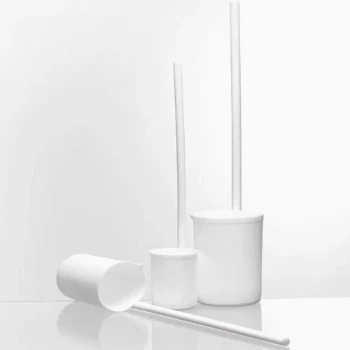
PTFE Chemical Solvent Sampling Spoon

Large Scale PTFE Beakers and Flasks for High Temperature Corrosion Resistant Laboratory Applications with Custom CNC Fabrication
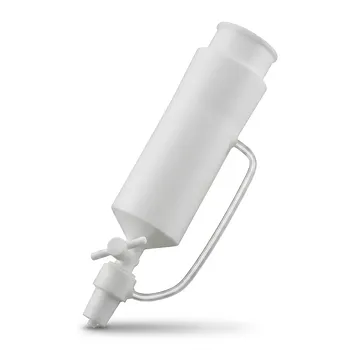
Custom PTFE Constant Pressure Separatory Dropping Funnel Corrosion Resistant Low Background Labware Trace Analysis Dropping Funnel
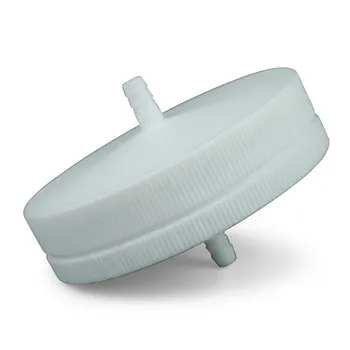
PTFE Membrane Filter Holder for Aerosol Environmental Monitoring and Low Concentration Particulate Matter Sampling Chemical Resistant Air Quality Analysis Component