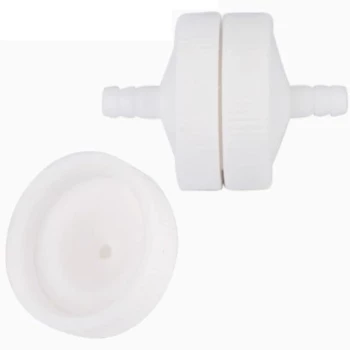
The chemical inertness of PTFE is the fundamental safeguard for electrochemical accuracy. It ensures that electrode jackets remain non-reactive in the presence of aggressive media, preventing the degradation of the jacket material itself. This stability eliminates the risk of ion leaching or parasitic reactions, which would otherwise compromise the purity of the electrolyte and the integrity of the test data.
Core Takeaway: PTFE’s near-universal chemical resistance provides a "blank slate" environment for electrochemistry by preventing material degradation and ion leaching. This ensures that the electrical signals measured are a result of the intended reaction rather than contamination or jacket failure.
The Molecular Foundation of Chemical Inertness
The Strength of Carbon-Fluorine Bonds
The performance of PTFE electrode jackets stems from the stable carbon-fluorine (C-F) bonds that form the polymer's backbone. These bonds are exceptionally strong and resist attack from almost all acids, bases, organic solvents, and oxidizing agents.
Resilience Against Aggressive Media
Because of this molecular stability, PTFE jackets can withstand high-stress environments such as hydrofluoric acid, concentrated sulfuric acid, and superacids. This makes PTFE the industry standard for applications where traditional polymers would swell, dissolve, or decompose.
Protecting Analytical Integrity and Purity
Prevention of Ion Leaching
A critical contribution of chemical inertness is the prevention of ion leaching into the electrolyte. If a jacket material reacts with the solution, it can release contaminants that shift reference potentials and introduce errors into high-purity analytical results.
Elimination of Parasitic Reactions
Inertness ensures that no parasitic reactions occur between the electrode holder and the electrolyte. By remaining non-reactive, PTFE ensures that the measured current represents only the faradaic processes occurring at the exposed electrode surface, rather than secondary reactions with the housing.
Stability in Advanced Battery Testing
PTFE is essential for testing modern energy storage systems, as it resists aggressive battery electrolytes like lithium hexafluorophosphate in carbonate solvents. Its ability to remain stable without swelling or degrading allows for the long-term monitoring of lithium-ion and solid-state battery chemistries.
Enhancing Electrical and Physical Performance
High-Performance Electrical Isolation
Beyond chemical stability, PTFE possesses an exceptionally high volume resistivity (>10¹⁸ Ω·cm) and high dielectric strength. These properties allow the jacket to minimize leakage currents and stray capacitance, ensuring that the electrical signal remains confined to the intended path.
Hermetic Sealing and Low Friction
PTFE's chemical resilience facilitates hermetic sealing in electrochemical reactors and fuel cell fixtures. Its low-friction properties prevent components from seizing during assembly, allowing for a tight fit that protects internal electrical contacts from electrolyte attack.
Understanding the Trade-offs and Limitations
Vulnerability to Specific Conditions
While PTFE is nearly universal in its resistance, it is not entirely invincible. It can be attacked by alkaline metals, chlorotrifluoride, and basic fluorine, particularly when these substances are subjected to high temperatures and pressures.
Mechanical Considerations
While chemically inert, PTFE is a relatively soft fluoropolymer compared to some engineering plastics. In high-pressure environments, users must be aware of its tendency to "creep" or deform under mechanical load, which may require reinforced designs for specific reactor types.
Choosing the Right Approach for Your Application
How to Apply This to Your Project
Selecting a PTFE jacket depends on the specific chemical and electrical demands of your experiment.
- If your primary focus is aggressive acid analysis: Use high-density PTFE jackets to ensure zero leaching and total resistance to corrosive agents like hydrofluoric acid.
- If your primary focus is battery research: Leverage PTFE’s stability in organic carbonate solvents to ensure long-term reference measurement stability without jacket swelling.
- If your primary focus is high-precision signal detection: Prioritize PTFE for its high volume resistivity to minimize leakage currents and ensure faradaic accuracy.
By utilizing PTFE's unique chemical and electrical properties, you ensure that your experimental results are a true reflection of your chemistry rather than a product of material failure.
Summary Table:
| Feature | Impact on Performance | Key Benefit |
|---|---|---|
| C-F Bond Stability | Resists aggressive acids & organic solvents | Universal chemical resilience |
| Non-Leaching | Prevents electrolyte contamination | High analytical purity and precision |
| No Parasitic Reactions | Eliminates secondary reactions with housing | Accurate faradaic process measurement |
| Electrical Isolation | High volume resistivity (>10¹⁸ Ω·cm) | Minimizes leakage currents & noise |
| Low Friction | Facilitates hermetic sealing | Protects electrical contacts from attack |
Precision-Engineered Fluoropolymer Solutions for Your Research
Elevate your electrochemical accuracy with KINTEK’s high-performance labware. We maintain an absolute focus on high-performance fluoropolymers, providing the chemical inertness and electrical isolation your experiments demand.
From everyday basic labware (beakers, crucibles, and reagent bottles) and fluid transfer components (tubing, valves, and fittings) to advanced tools like custom electrochemical cells, battery testing fixtures, and microwave digestion vessels, KINTEK is your ultimate source for PTFE and PFA laboratory supplies.
Backed by end-to-end custom CNC fabrication, we deliver everything from high-volume standard orders to complex, non-standard machined parts tailored to your unique specifications.
Ready to safeguard your data? Contact KINTEK today for a custom quote!
Related Products
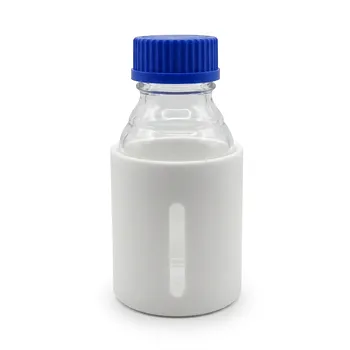
- Custom PTFE Thermal Insulation Sleeves Laboratory Vessel Condensation Jackets Virgin Fluoropolymer Machined Components
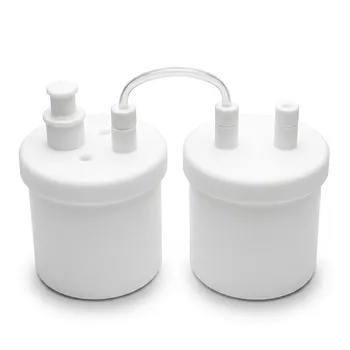
- Custom PTFE Absorption Bottle with Condensation Jacket Corrosion Resistant Low Background High Purity
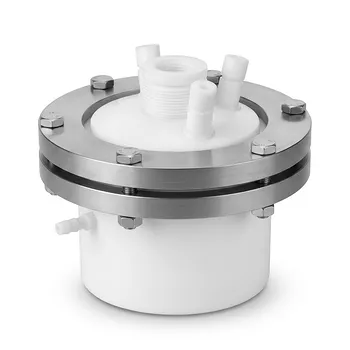
- Custom PTFE Reaction Apparatus Flange Sealed Corrosion Resistant Jacketed Vessel with Stirring Bar and Thermometer Ports
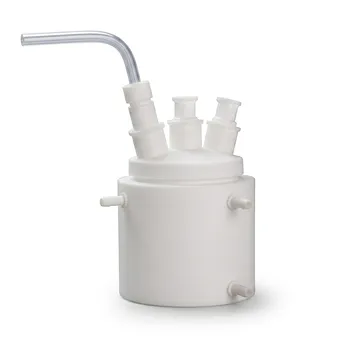
- PTFE Continuous Reaction System Jacketed Constant Pressure Dropping Funnel Corrosion Resistant HF Resistant Customizable
- PTFE Anti Scald Heat Insulation Sleeve Hot Plate Support Feet Laboratory Benchtop Protection Customizable Thermal Barrier
People Also Ask
- What is the temperature range for different types of PTFE polymer seal jackets? Find the Right Material for Extreme Temperatures
- Why is PTFE used in electrical applications? Unmatched Insulation for High-Performance Components
- How do PTFE electrode jackets benefit cyclic voltammetry and trace-metal analysis? Achieve High-Purity Precision
- What mechanical and fabrication advantages do PTFE electrode jackets provide? Strength & Precision for Lab Applications
- What are the technical limitations and safety considerations for PTFE electrode jackets? Master Thermal & Mechanical Limits