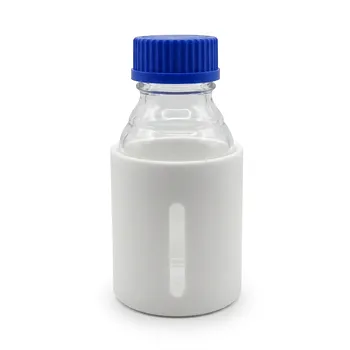
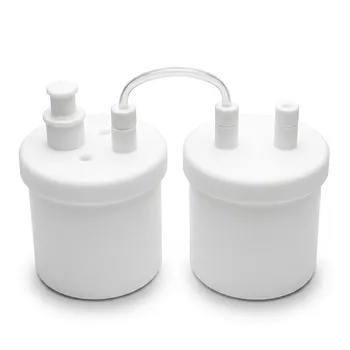
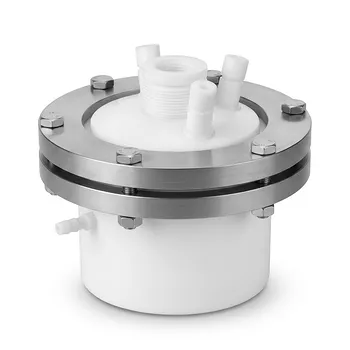
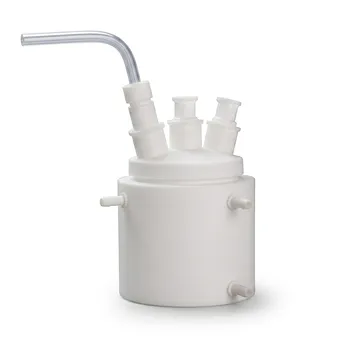
PTFE electrode jackets are the industry standard for maintaining electrochemical purity. In cyclic voltammetry and trace-metal analysis, these jackets act as chemically inert sheaths that isolate the electrode shaft from the test solution. By ensuring that the electrochemical reaction occurs exclusively at the active sensing tip, PTFE eliminates background noise and prevents the leaching of contaminants that could compromise sensitive data.
The primary benefit of PTFE electrode jackets lies in their ability to provide a "clean" environment by combining total chemical inertness with high electrical resistivity. This ensures that the analytical results reflect the chemistry of the sample rather than the degradation of the electrode housing.
Preserving Analytical Integrity in Harsh Environments
Eliminating Leachable Contaminants
The carbon-fluorine bonds in PTFE are exceptionally stable, making the material resistant to almost all acids, bases, and organic solvents. In trace-metal analysis, this is critical because it prevents the electrode body from leaching metallic ions into the electrolyte.
Resisting Chemical Degradation
Unlike other plastics or glass, PTFE can withstand aggressive media such as hydrofluoric or concentrated sulfuric acid. This chemical resilience ensures that the electrode's structural integrity remains intact during long-term cyclic voltammetry experiments in corrosive environments.
Facilitating Easy Decontamination
The non-stick surface of PTFE prevents the buildup of chemical residues, microemulsions, or biological films. This allows for rapid, thorough cleaning between tests, which is essential for preventing cross-contamination in high-sensitivity applications.
Enhancing Precision through Structural Design
Defining the Active Sensing Area
The jacket securely holds the metal wire or disk, shielding the internal conductors from the electrolyte. This ensures that the effective surface area of the electrode is limited strictly to the exposed tip, which is vital for calculating accurate current densities.
Preventing Parasitic Currents
PTFE provides excellent electrical insulation along the entire length of the electrode shaft. By preventing the electrolyte from contacting the internal wiring, it eliminates parasitic currents and side reactions that would otherwise distort the voltammetric signal.
Versatile Lab Integration
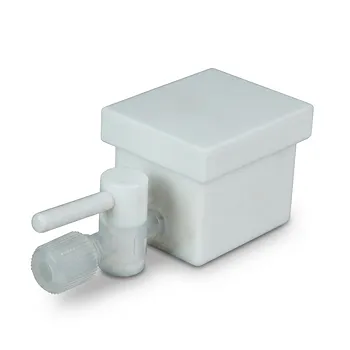
PTFE is highly machinable, allowing it to be formed into cell lids, multi-ring junctions, or specialized fittings. These precision-machined components facilitate nitrogen purging to remove oxygen and provide airtight seals that prevent solvent evaporation during testing.
Understanding the Trade-offs
Mechanical Deformation and Cold Flow
While PTFE is rigid enough for most lab applications, it is susceptible to "cold flow," where the material deforms slightly under constant mechanical pressure. This may require occasional inspection of seals and fittings to ensure they remain airtight over long periods of use.
Thermal Conductivity Limitations
PTFE is a thermal insulator, meaning it does not dissipate heat quickly. In high-power electrochemical reactors where significant heat is generated, the jacket may not provide the thermal stabilization that a metallic or ceramic housing might offer.
Porosity in Specific Forms
While solid PTFE is impermeable, certain porous PTFE plugs used in reference electrodes must be handled carefully. If the porosity is compromised by crystallization or debris, it can increase the electrical resistance of the cell and introduce potential errors in potential measurements.
Making the Right Choice for Your Goal
To maximize the performance of your electrochemical setup, consider the specific requirements of your application:
- If your primary focus is ultra-trace metal analysis: Use high-purity PTFE jackets to ensure zero leaching of transition metals into your sample at the parts-per-billion level.
- If your primary focus is cyclic voltammetry of volatile solvents: Invest in precision-machined PTFE cell lids with integrated ports to provide a hermetic seal against air ingress and evaporation.
- If your primary focus is high-temperature electrochemical reactions: Monitor the jacket for signs of mechanical softening or deformation, as PTFE’s structural properties can change near its upper thermal limits.
By leveraging the unique chemical and electrical properties of PTFE, you ensure that your data is a precise reflection of the electrochemical system under study.
Summary Table:
| Benefit | Impact on Analysis | Key Applications |
|---|---|---|
| Chemical Inertness | Zero leaching of metallic ions | Ultra-trace metal analysis |
| Electrical Insulation | Eliminates parasitic currents | Cyclic Voltammetry (CV) |
| Non-stick Surface | Prevents cross-contamination | High-sensitivity testing |
| Precise Machining | Defines active sensing area | Accurate current density |
| Acid Resistance | Durable in harsh media | Corrosive electrolyte work |
Precision Engineering for Your Most Sensitive Research
At KINTEK, we understand that analytical integrity depends on the quality of your materials. We manufacture virtually all imaginable laboratory supplies crafted from high-performance PTFE and PFA. From everyday basic labware—like beakers, crucibles, and reagent bottles—to advanced components like high-purity trace analysis instruments, specialized fluid transfer parts, and custom-machined electrochemical cells, we have you covered.
Whether you need standard consumables or bespoke, non-standard CNC-fabricated parts for battery testing or microwave digestion, our end-to-end expertise ensures your setup is free from contamination and optimized for performance.
Ready to upgrade your lab's efficiency? Contact KINTEK today to discuss your custom fluoropolymer requirements!
Related Products
- Custom PTFE Thermal Insulation Sleeves Laboratory Vessel Condensation Jackets Virgin Fluoropolymer Machined Components
- Custom PTFE Absorption Bottle with Condensation Jacket Corrosion Resistant Low Background High Purity
- Custom PTFE Reaction Apparatus Flange Sealed Corrosion Resistant Jacketed Vessel with Stirring Bar and Thermometer Ports
- PTFE Continuous Reaction System Jacketed Constant Pressure Dropping Funnel Corrosion Resistant HF Resistant Customizable
- PTFE Anti Scald Heat Insulation Sleeve Hot Plate Support Feet Laboratory Benchtop Protection Customizable Thermal Barrier
People Also Ask
- What is the temperature range for different types of PTFE polymer seal jackets? Find the Right Material for Extreme Temperatures
- Why is PTFE used in electrical applications? Unmatched Insulation for High-Performance Components
- What mechanical and fabrication advantages do PTFE electrode jackets provide? Strength & Precision for Lab Applications
- What are the technical limitations and safety considerations for PTFE electrode jackets? Master Thermal & Mechanical Limits
- What are the primary functions and material properties of PTFE electrode jackets? Precision Shielding for Lab Electrodes